What role does vacuum thermal processing play in the phase evolution of Ni2MnSn alloys? Master L21 Phase Purity
Updated 4 months ago
Vacuum thermal processing is the critical catalyst for achieving structural phase purity in Ni2MnSn alloys. By providing a controlled, oxygen-free environment, it enables precise heat treatment between 230°C and 600°C, allowing for the controlled melting of tin and subsequent diffusion. This specific thermal window is essential for converting unstable intermediate phases into the highly ordered and stable L21 Heusler phase.
Vacuum thermal processing serves as a dual-purpose mechanism that facilitates the chemical diffusion necessary for phase evolution while simultaneously protecting reactive elements from oxidation. This process is the definitive method for transforming raw, stressed powders into dense, structurally stable alloys.
Driving Phase Transformation through Controlled Diffusion
The Transition to the L21 Heusler Phase
The primary role of vacuum thermal processing is to facilitate the diffusion reactions required to reach a stable state. In Ni2MnSn alloys, the heat treatment triggers the controlled melting of tin (Sn), which acts as a medium for atomic movement. This movement is what allows the material to reorganize from disordered intermediate phases into the desired L21 Heusler structure.
Elimination of Internal Stresses
High-energy ball milling, often used to prepare these alloys, introduces significant internal stresses and lattice defects. Vacuum processing provides the thermal energy necessary to relax these stresses without exposing the material to atmospheric contaminants. This stress relief is vital for ensuring the alloy's mechanical longevity and predictable magnetic properties.
Precision Temperature Management
The vacuum environment allows for uniform heating across the 230°C to 600°C range. This precision is necessary because the phase evolution of Ni2MnSn is sensitive to temperature fluctuations. A stable vacuum prevents localized "hot spots" that could lead to non-uniform phase distribution.
The Impact of Vacuum and Pressure on Microstructure
Preventing Oxidative Interference
At the high temperatures required for sintering and phase evolution, elements like manganese (Mn) and tin (Sn) are highly susceptible to oxidation. Vacuum levels as high as 1×10⁻⁵ Pa effectively exclude oxygen, ensuring the chemical stoichiometry of the alloy remains intact. This preservation of chemistry is fundamental to achieving the correct electronic and magnetic characteristics of the Heusler phase.
Densification via Vacuum Hot Pressing
When a vacuum hot press is utilized, mechanical pressure is applied simultaneously with high heat. This thermo-mechanical coupling drives directional diffusion, which helps eliminate interface defects and internal porosity. The result is a material that approaches its theoretical density while maintaining a fine-grained structure.
Suppression of Abnormal Grain Growth
The vacuum environment, particularly when paired with pressure, allows for lower sintering temperatures and shorter holding times. By reducing the thermal budget required for densification, the system suppresses abnormal grain growth. This ensures that the final Ni2MnSn alloy possesses a homogeneous microstructure, which is critical for consistent performance.
Understanding the Trade-offs and Pitfalls
Volatilization Risks
While the vacuum protects against oxidation, extremely high vacuum levels at elevated temperatures can lead to the volatilization of certain alloy components. If the temperature exceeds the stability limit of the tin or manganese components, the material may lose mass, resulting in a shift away from the intended Ni2MnSn stoichiometry.
Cooling Rate Sensitivities
The phase evolution does not end at the peak temperature; the cooling stage in a vacuum furnace is equally critical. Rapid cooling may "freeze" unwanted high-temperature phases or introduce thermal shocks. Conversely, excessively slow cooling in a vacuum can be time-consuming and may lead to unwanted secondary phase precipitation.
Pressure Limitations in Hot Pressing
In a vacuum hot press, applying excessive axial pressure too early in the heating cycle can trap gases or volatiles within the pellet. This can lead to internal micro-cracking or "bloating" once the pressure is released. The timing of the pressure application must be synchronized with the material's plasticity and the evacuation of gases.
How to Apply This to Your Project
Making the Right Choice for Your Goal
- If your primary focus is achieving maximum phase purity: Utilize a vacuum furnace with a long soaking time between 400°C and 600°C to allow for complete L21 Heusler phase transformation.
- If your primary focus is high mechanical density: Use a vacuum hot press to apply axial pressure (approx. 20 MPa), which will collapse pores and refine the grain structure during the diffusion process.
- If your primary focus is preventing chemical deviation: Ensure your vacuum system maintains a level of at least 1×10⁻³ Pa to prevent the oxidation of manganese, which can degrade the alloy's magnetic properties.
Vacuum thermal processing remains the gold standard for transforming raw metallic mixtures into high-performance, phase-pure Ni2MnSn Heusler alloys.
Summary Table:
| Feature | Role in Ni2MnSn Evolution | Key Benefit |
|---|---|---|
| High Vacuum | Prevents reactive element oxidation | Maintains stoichiometry of Mn and Sn |
| Thermal Control | Precise 230°C–600°C heating | Enables Sn-mediated diffusion to L21 phase |
| Hot Pressing | Applied axial pressure (approx. 20 MPa) | Eliminates porosity for theoretical density |
| Stress Relief | Lattice defect relaxation | Restores magnetic and mechanical properties |
Elevate Your Material Research with Precision Sample Preparation
Achieving the perfect L21 Heusler phase requires more than just heat—it requires a controlled environment and precise mechanical application. At our facility, we provide complete laboratory sample preparation solutions tailored for advanced material science.
Whether you are refining Ni2MnSn alloys or developing new functional materials, we specialize in high-performance powder processing and compaction equipment. Our extensive range includes:
- Advanced Milling: Planetary ball mills, jet mills, and cryogenic grinders for stress-controlled powder preparation.
- Sizing & Mixing: Vibratory sieve shakers and high-efficiency powder/defoaming mixers.
- Precision Compaction: A full spectrum of hydraulic presses, including Cold/Warm Isostatic Presses (CIP/WIP) and Vacuum Hot Presses designed for superior densification and phase stability.
Ready to optimize your alloy's microstructure and performance? Contact us today to discuss how our specialized lab equipment can bring your material synthesis to the next level!
References
- Florin Popa, I. Chicinaş. Phase Evolution by Annealing of Mechanically Activated Ni, Mn, and Sn Elemental Powders Mixture with the Ni2MnSn Heusler Compound Ratio. DOI: 10.3390/ma18245642
Mentioned Products
- 非介入式材料均质机真空脱泡行星搅拌高粘度混合设备
- Industrial Vacuum Kneader for High-Viscosity Silicone, Rubber, and Compound Mixing
- Dual Cup Vacuum Centrifugal Mixer Planetary Paste Defoaming Machine Industrial Material Processor
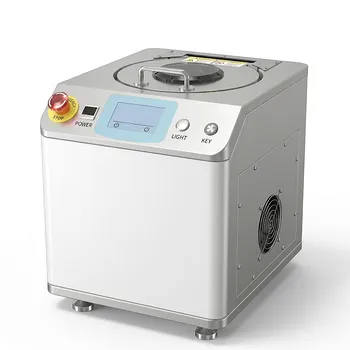
- High Efficiency Vacuum Planetary Centrifugal Mixer and Defoaming Machine for Industrial Material Research and Precise Laboratory Powder Dispersion
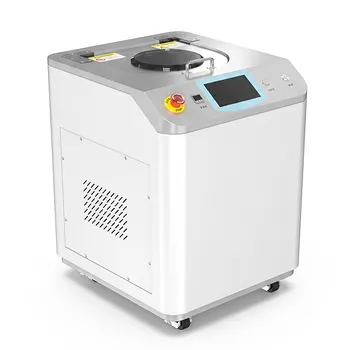
- High Speed Vacuum Planetary Centrifugal Mixer and Defoamer for Industrial Paste Processing
People Also Ask
- How does a planetary vacuum defoaming mixer help magnesium calcium phosphate slurries? Achieve Flawless 3D Printed Bone
- Why is vacuum defoaming necessary for PDMS mixtures before microwave irradiation curing? Key to Structural Integrity
- What role does a vacuum defoaming mixer play in BNT MLCC slurry? Ensure High Dielectric Strength & Pinhole-Free Prep
- Why is a vacuum defoaming mixer essential for DLP 3D printing ceramic slurries? Key to Structural Integrity
- What is the purpose of using a high-vacuum defoaming mixer for SiC/Cf composites? Optimize Density and Strength

Tech Team · PowderPreparation
Last updated on Jun 03, 2026
Related Products
非介入式材料均质机真空脱泡行星搅拌高粘度混合设备
Industrial Vacuum Kneader for High-Viscosity Silicone, Rubber, and Compound Mixing
Dual Cup Vacuum Centrifugal Mixer Planetary Paste Defoaming Machine Industrial Material Processor
High Efficiency Vacuum Planetary Centrifugal Mixer and Defoaming Machine for Industrial Material Research and Precise Laboratory Powder Dispersion
High Speed Vacuum Planetary Centrifugal Mixer and Defoamer for Industrial Paste Processing

High Viscosity Planetary Centrifugal Mixing and Vacuum Defoaming Machine for Laboratory Material Preparation
High Viscosity Planetary Centrifugal Vacuum Mixer for Material Defoaming and Uniform Mixing
Industrial Planetary Centrifugal Vacuum Defoaming Mixer for High Viscosity Paste and Powder Homogenization