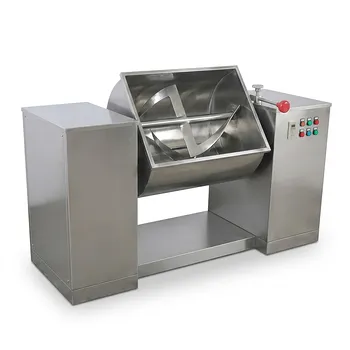
What role does high-efficiency stirring equipment play in Co/Mg/La catalyst prep? Ensure Superior Homogeneity
Updated 4 months ago
In the synthesis of Co/Mg/La catalysts, high-efficiency stirring equipment acts as the critical engine for chemical homogeneity.
The equipment provides the continuous, vigorous mechanical power required to uniformly disperse precipitating agents, such as KOH and $K_2CO_3$, into nitrate solutions. By preventing localized concentration spikes and pH fluctuations, it ensures that cobalt, magnesium, and lanthanum ions are distributed evenly at the molecular level, which is the foundational requirement for a high-quality catalyst precursor.
High-efficiency stirring is the primary mechanism for maintaining chemical equilibrium during the coprecipitation stage, ensuring that multi-component metal ions integrate into a single, uniform precursor phase. This prevents the formation of segregated chemical zones that would otherwise degrade the catalyst's final activity and structural integrity.
Overcoming Localized Gradients in Coprecipitation
Prevention of pH Hotspots
When precipitating agents are added to a metal nitrate solution, they can create localized zones of high alkalinity if not instantly dispersed. High-efficiency stirring neutralizes these "hotspots" by rapidly mixing the droplets into the bulk solution, maintaining a stable pH environment throughout the reaction vessel.
Maintaining Ionic Dispersion
The equipment ensures that the cobalt, magnesium, and lanthanum components make full, simultaneous contact with the precipitating agents. This vigorous movement prevents ions from settling or reacting prematurely, facilitating a synchronized precipitation process that is essential for complex multi-metal systems.
Eliminating Component Gradients
By providing constant power, the stirring equipment eliminates "dead zones" within the slurry where chemical concentrations might differ. This leads to a homogeneous precursor slurry with stable rheological properties, ensuring that the final material has a consistent composition from the top of the batch to the bottom.
The Impact on Precursor Quality
Facilitating Molecular-Level Homogeneity
High-efficiency stirring is not merely about mixing; it is about achieving distribution at the molecular level. This precise level of dispersion is critical for forming the specific nanocrystalline structures required for high-performance Co/Mg/La catalysts during subsequent solid-state reactions.
Enhancing Surface Wettability and Charge
Advanced stirring equipment, often operating at speeds of 200–300 r/min, can improve the charge distribution and wettability of particle surfaces. This mechanical action helps prevent the agglomeration of ultra-fine particles, ensuring that the active metal sites remain accessible and finely dispersed.
Improving Experimental Repeatability
The use of high-precision equipment with controlled shear forces and rotation speeds removes human error from the mixing process. This consistency ensures that every batch of catalyst precursor has the same chemical footprint, which is vital for both academic research and industrial scaling.
Understanding the Trade-offs
Shear Stress vs. Particle Morphology
While high-intensity stirring is necessary for mixing, excessive shear forces can inadvertently break down delicate precipitate structures. Finding the balance between "vigorous power" and "controlled shear" is essential to avoid damaging the intended morphology of the Co/Mg/La precursor.
Heat Generation in Large Batches
Continuous, high-power stirring generates mechanical heat, which can subtly alter the solubility of the metal nitrates or the rate of precipitation. In precision catalyst preparation, this temperature rise must be monitored or compensated for to maintain the integrity of the chemical reaction.
Energy Consumption and Equipment Wear
High-efficiency equipment often requires more maintenance and energy to provide the necessary torque for viscous slurries. For large-scale production, the benefits of molecular-level uniformity must be weighed against the operational costs of running high-precision machinery over extended periods.
Applying Stirring Strategies to Your Project
Recommendations for Catalyst Development
- If your primary focus is maximizing catalytic activity: Prioritize high-precision stirring equipment that allows for fine-tuning of shear forces to ensure the absolute maximum dispersion of active Co/Mg/La sites.
- If your primary focus is batch-to-batch consistency: Utilize automated stirring systems with programmable rotation speeds to eliminate pH fluctuations caused by inconsistent manual dripping of precipitating agents.
- If your primary focus is preventing particle agglomeration: Select equipment capable of maintaining high speeds (above 200 r/min) to optimize the surface charge and wettability of the ultra-fine precursor particles.
By mastering the mechanical dynamics of the coprecipitation stage, you ensure that the complex chemistry of Co/Mg/La catalysts is built upon a foundation of absolute uniformity.
Summary Table:
| Key Function | Impact on Coprecipitation | Benefit to Catalyst Precursor |
|---|---|---|
| pH Stabilization | Eliminates localized alkaline hotspots | Ensures stable chemical equilibrium |
| Ionic Dispersion | Facilitates molecular-level mixing | Prevents component segregation |
| Shear Control | Optimizes surface wettability | Prevents particle agglomeration |
| Gradient Removal | Eliminates "dead zones" in slurry | Guarantees batch-to-batch repeatability |
Elevate your material synthesis with precision-engineered equipment! At [Brand Name], we provide complete laboratory sample preparation solutions for material science, specializing in advanced powder processing. Whether you need high-efficiency powder mixers and defoaming mixers to achieve perfect molecular homogeneity, or require high-performance mills (planetary ball, jet, rotor) and sieve shakers for particle refinement, we have the expertise you need. Our full spectrum of hydraulic presses—including Cold/Warm Isostatic Presses (CIP/WIP), vacuum hot presses, and XRF pellet presses—ensures your catalyst precursors are processed to the highest standards. Contact us today to discover how our equipment can optimize your laboratory workflows and enhance your catalyst performance!
References
- Hubert Ronduda, Wioletta Raróg‐Pilecka. Boosting the Catalytic Performance of Co/Mg/La Catalyst for Ammonia Synthesis by Selecting a Pre-Treatment Method. DOI: 10.3390/catal11080941
Mentioned Products
- Continuous Feeding Grinder High Efficiency Pulverizer for Lab Sample Preparation
- High Efficiency Vacuum Planetary Centrifugal Mixer and Defoaming Machine for Industrial Material Research and Precise Laboratory Powder Dispersion
- High Efficiency High Speed Grinder Laboratory Mill 1300W 25000rpm
- High Efficiency High Speed Grinder 2200W 25000 RPM Laboratory Sample Preparation
- High-Speed Simple Disperser for Efficient Mixing, Dispersion, and Emulsification
People Also Ask
- Why must soil samples be ground before XRD or XRF analysis? Ensure Precision & Homogeneity in Lab Results
- What is the function of a laboratory blender for mixed fuels? Achieving Microscopic Uniformity for Accurate Analysis
- What is the function of a laboratory pulverizer in Boerhavia diffusa-based adsorbent prep? Maximize Surface Area
- What are the technical advantages of using a high-speed laboratory pulverizer for grinding tablets into powders? 20K RPM
- What is the function of laboratory-scale pulverizing equipment in bio-adsorptive film prep? Maximize Surface Area

Tech Team · PowderPreparation
Last updated on Jun 03, 2026
Related Products
Continuous Feeding Grinder High Efficiency Pulverizer for Lab Sample Preparation
High Efficiency Vacuum Planetary Centrifugal Mixer and Defoaming Machine for Industrial Material Research and Precise Laboratory Powder Dispersion
High Efficiency High Speed Grinder Laboratory Mill 1300W 25000rpm
High Efficiency High Speed Grinder 2200W 25000 RPM Laboratory Sample Preparation
High-Speed Simple Disperser for Efficient Mixing, Dispersion, and Emulsification

High Energy Omnidirectional Planetary Ball Mill 16L
High Viscosity Planetary Centrifugal Mixing and Vacuum Defoaming Machine for Laboratory Material Preparation
Small High Speed Grinder for Laboratory Sample Preparation
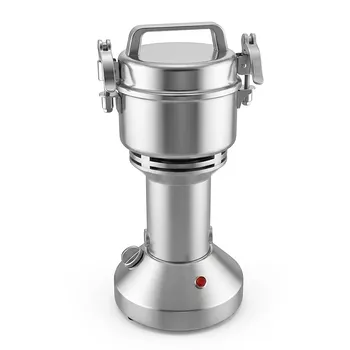
Small High Speed Upright Grinder for Laboratory Sample Preparation
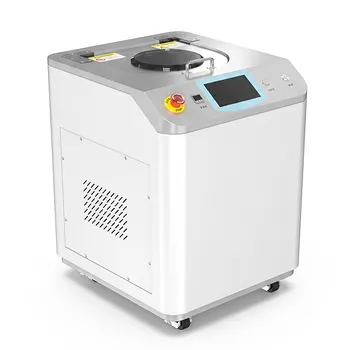
High Speed Vacuum Planetary Centrifugal Mixer and Defoamer for Industrial Paste Processing
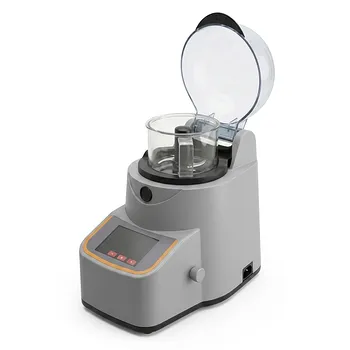
Industrial Knife Mill for Food and Biological Sample Preparation High Speed Laboratory Homogenizer
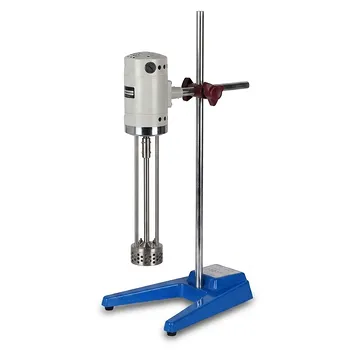
High Shear Laboratory Emulsifier for Mixing and Homogenization
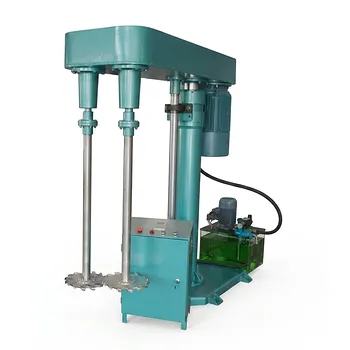
Hydraulic Double Shaft Disperser for High Viscosity Liquid Mixing and Dispersion

Vertical Production Planetary Ball Mill for High Throughput Powder Processing
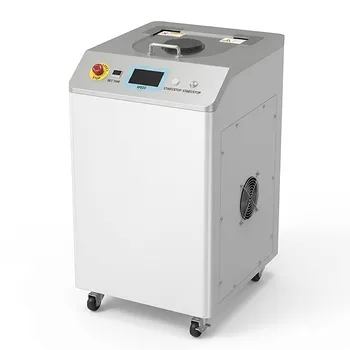
High Viscosity Planetary Centrifugal Vacuum Mixer for Material Defoaming and Uniform Mixing
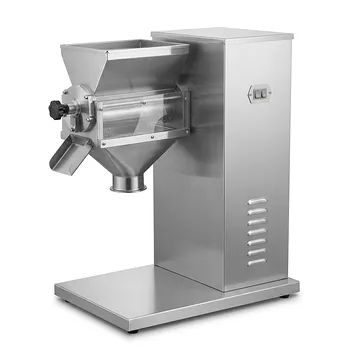
Small Swing Granulator Efficient Powder Granulation for Pharmaceutical Chemical Food Industries
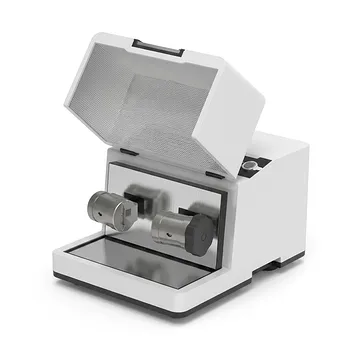
Heating Temperature Controlled High Energy Vibratory Ball Mill
Dual Cup Vacuum Centrifugal Mixer Planetary Paste Defoaming Machine Industrial Material Processor
Horizontal Ribbon Mixer for Uniform Powder and Slurry Mixing