What role does an industrial cutting mill play in sea buckthorn waste processing? Efficient Biomass Pretreatment
Updated 4 months ago
The primary role of an industrial cutting mill in processing sea buckthorn waste is to execute high-speed physical degradation, converting bulky stems, branches, and roots into a precise particle size range of 1–4 mm. This mechanical reduction dramatically increases the specific surface area of the biomass, which is the critical prerequisite for unlocking active ingredients and improving the material's nutritional availability for livestock.
Core Takeaway: An industrial cutting mill serves as the essential first step in biomass valorization by using mechanical shear to break down rigid lignocellulosic structures, thereby maximizing the efficiency of subsequent chemical extraction and biological conversion processes.
Mechanical Transformation of Sea Buckthorn Biomass
High-Speed Shearing and Pulverization
The industrial cutting mill utilizes high-speed shearing forces to pulverize the heterogeneous components of sea buckthorn, including tough stems and fibrous roots.
By forcing the material through specific aperture screens, the mill ensures the biomass reaches a uniform particle size, typically between 1 mm and 4 mm.
Increasing Specific Surface Area
The most significant physical outcome of this process is the massive increase in the exposed surface area relative to the volume of the material.
This increased exposure is vital because it eliminates diffusion-controlled transport limitations, allowing solvents or microbes to interact more freely with the internal structures of the plant.
Enhancing Value Through Structural Degradation
Facilitating Active Ingredient Extraction
By reducing the sea buckthorn waste to fine particles, the mill allows for deeper solvent penetration during the extraction of bioactive compounds.
This process is similar to how mills are used for Birch bark, where size reduction significantly improves the extraction rate of high-value compounds like ethanol-soluble nutrients.
Improving Livestock Feed Digestibility
For agricultural waste intended for animal feed, cutting mills facilitate the destruction of the dense lignocellulosic cell wall.
This physical breakdown allows rumen microbes to penetrate the material more effectively, which can increase the in vitro true digestibility of sea buckthorn stems by more than double.
Ensuring Operational Consistency
Beyond chemical and biological benefits, the mill provides homogenization, ensuring that the raw material supply is consistent for downstream machinery.
This consistency prevents feeding blockages and ensures that subsequent processes, such as high-pressure molding or fine grinding, operate with high precision and reliability.
Understanding the Trade-offs and Limitations
Energy Consumption vs. Particle Fineness
While reducing sea buckthorn to a micron-scale powder increases reactivity, it also requires significantly higher energy inputs.
Operators must balance the desired "fineness" of the biomass with the operational costs of the mill to ensure the processing remains economically viable.
Heat Generation and Nutrient Integrity
High-speed mechanical shearing generates friction-induced heat, which can potentially degrade sensitive bioactive compounds within the sea buckthorn.
If the primary goal is the extraction of heat-sensitive antioxidants, cooling systems or controlled throughput speeds must be managed to prevent thermal damage to the raw material.
Dust Management and Material Loss
Processing dry agricultural waste into 1–4 mm particles creates significant amounts of fine dust, which poses both a respiratory hazard and a risk of material loss.
Effective cyclone separation or filtration systems are necessary to capture these fines and maintain a safe, efficient working environment.
Applying Cutting Mill Technology to Your Project
Recommendations Based on Processing Goals
- If your primary focus is bioactive extraction: Prioritize a mill setup that achieves a 1–2 mm particle size to maximize solvent contact and extraction yields.
- If your primary focus is livestock feed production: Focus on destroying the lignocellulosic bonds through intense mechanical force to maximize rumen microbe penetration and digestibility.
- If your primary focus is biofuel or biocoke production: Ensure the mill provides high uniformity in the 4 mm range to facilitate stable high-pressure molding and consistent thermal decomposition.
Properly calibrated mechanical pretreatment is the foundation of turning sea buckthorn waste into a high-value industrial resource.
Summary Table:
| Key Aspect | Impact of Industrial Cutting Mill |
|---|---|
| Mechanism | High-speed mechanical shearing and pulverization |
| Particle Size | Uniform reduction to a 1–4 mm range |
| Surface Area | Massive increase, eliminating diffusion-controlled limits |
| Bio-Extraction | Enhanced solvent penetration for active ingredients |
| Feed Quality | Destroyed lignocellulosic walls for 2x higher digestibility |
| Consistency | Homogenized output for stable downstream processing |
Optimize Your Biomass Processing with Our Precision Equipment
Turning agricultural waste into high-value resources requires the right mechanical foundation. We provide complete laboratory sample preparation solutions for material science, specializing in high-performance powder processing and compaction equipment designed to meet rigorous industrial standards.
Our extensive product lines include:
- Size Reduction & Milling: Industrial cutting mills, planetary ball mills, jet mills, disc mills, rotor mills, and jaw/roll crushers.
- Sieving & Mixing: Vibratory and air-jet sieve shakers, test sieves, and advanced powder/defoaming mixers.
- Advanced Compaction: A full spectrum of hydraulic presses, including Cold/Warm Isostatic Presses (CIP/WIP), standard lab presses, XRF pellet presses, and vacuum hot presses.
Whether you are aiming to maximize bioactive extraction or improve livestock feed digestibility, our experts are ready to help you select the ideal equipment for your specific sea buckthorn or biomass project.
Contact us today to enhance your lab's efficiency and output!
References
- Anna Andersone, Галина Телышева. Granulated Animal Feed and Fuel Based on Sea Buckthorn Agro-Waste Biomass for Sustainable Berry Production. DOI: 10.3390/su151411152
Mentioned Products
- Industrial Cutting Mill for Tough Fibrous and Soft Materials
- Heavy Metal Free RoHS WEEE Testing Sample Pretreatment Cutting Mill Industrial Solid Waste Grinder for Plastics and Electronics
- Portable Cutting Mill for Laboratory Sample Preparation and RoHS WEEE Compliance Testing
- Heavy Duty Horizontal Planetary Ball Mill for Efficient Industrial Grinding and Sample Preparation
- Cross Beater Mill for Brittle Material Grinding and Continuous Fine Crushing Industrial Sample Preparation
People Also Ask
- Why is a cutting mill utilized for processing fibrous Agarwood distillation waste? Efficient Shearing Solutions
- What is the role of a cutting mill equipped with a 1 mm screen in the preliminary preparation of Maguey fibers?
- What is the purpose of using a laboratory cutting mill for two-stage grinding? Optimize WPC Particles for 3D Printing
- How is a universal cutting mill used to achieve precise size control of hop fibers for material reinforcement? Guide
- What are the functions of an industrial cutting mill and a vibratory sieve shaker in the preparation of bamboo microfibers?

Tech Team · PowderPreparation
Last updated on Jun 03, 2026
Related Products
Industrial Cutting Mill for Tough Fibrous and Soft Materials
Heavy Metal Free RoHS WEEE Testing Sample Pretreatment Cutting Mill Industrial Solid Waste Grinder for Plastics and Electronics
Portable Cutting Mill for Laboratory Sample Preparation and RoHS WEEE Compliance Testing
Heavy Duty Horizontal Planetary Ball Mill for Efficient Industrial Grinding and Sample Preparation
Cross Beater Mill for Brittle Material Grinding and Continuous Fine Crushing Industrial Sample Preparation
Laboratory Knife Mill for Large Volume Sample Homogenization and Food Preparation
High Speed Laboratory Knife Mill for Oily Fibrous and Wet Sample Homogenization
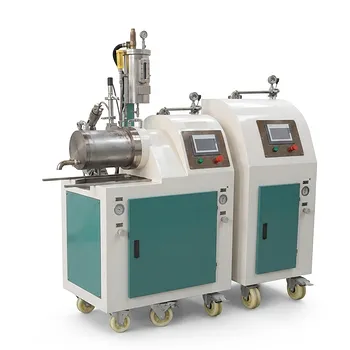
Mass Production Nano Sand Mill for Industrial Nanomaterial Grinding and Dispersion
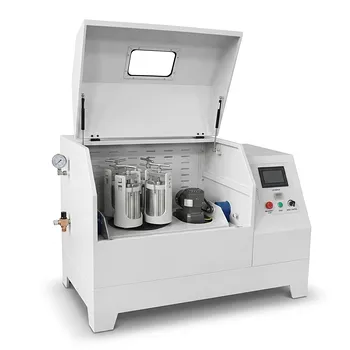
Vertical Production Planetary Ball Mill for High Throughput Powder Processing
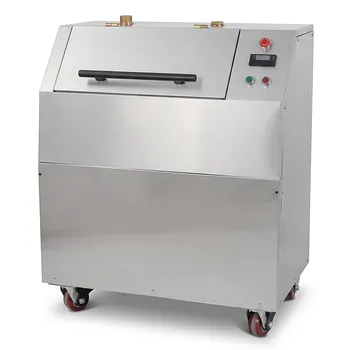
Vibratory Disc Mill for Rapid Fine Grinding and High Throughput Sample Preparation of Hard and Brittle Materials
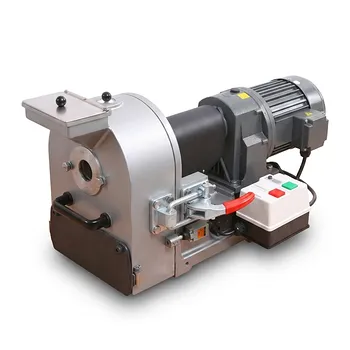
Laboratory Disc Mill for Fine Sample Preparation of Hard and Brittle Materials
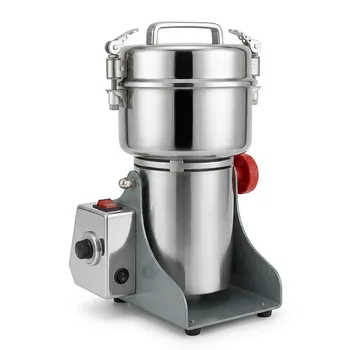
Versatile Industrial Crusher for Laboratory Crushing and Material Processing
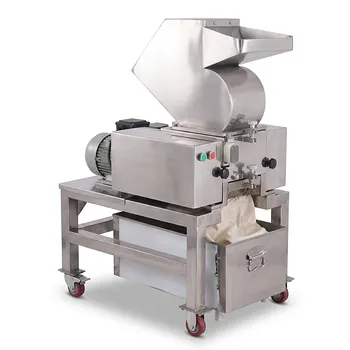
Stainless Steel Coarse Crusher for Pharmaceutical Food and Plastic Material Processing
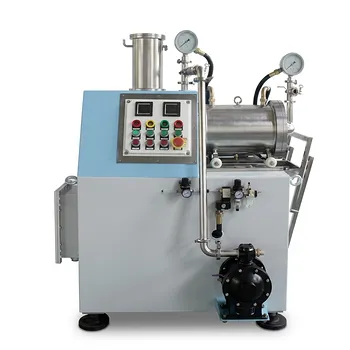
Horizontal Bead Mill for Nanoscale Grinding and Advanced Material Powder Processing
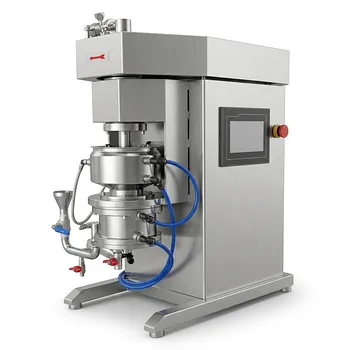
Small Ceramic Structure Laboratory Sand Mill Nanoscale Grinding Dispersion Equipment Seal-less Screen-less Design
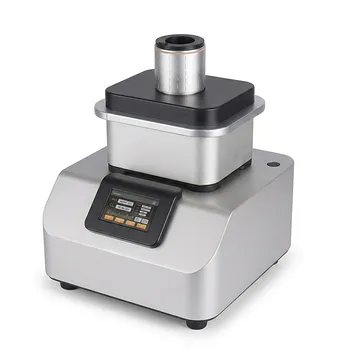
Ultra Centrifugal Mill High Speed Laboratory Grinder for Fibrous and Brittle Sample Preparation
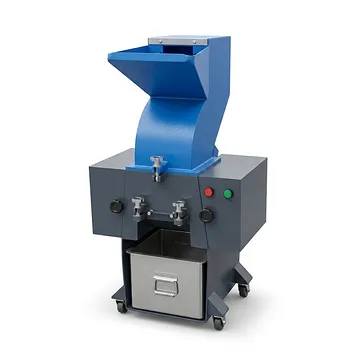
Heavy-Duty Crusher for Laboratory and Industrial Material Size Reduction
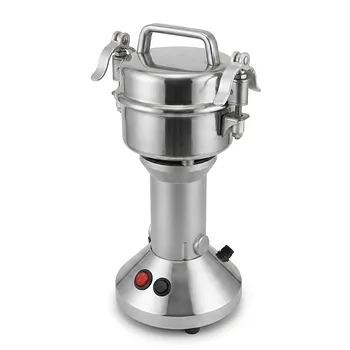
Continuous Feeding Grinding Mill for Dry Fibrous Tough and Hard Materials in Laboratory and Small Production
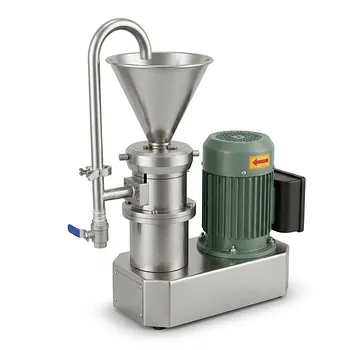
Small Laboratory Colloid Mill for Ultra-Fine Wet Grinding and Emulsification