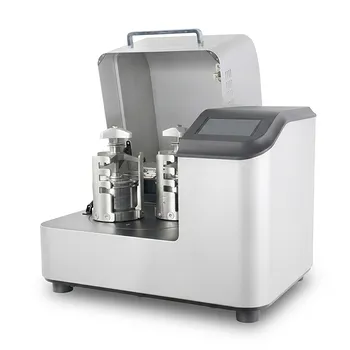
How is a universal cutting mill used to achieve precise size control of hop fibers for material reinforcement? Guide
Updated 4 months ago
Precise size control of hop fibers is achieved by utilizing a universal cutting mill equipped with interchangeable sieves. This mechanical process transforms pre-crushed hop bine fibers into short fibers of a specific nominal length. By selecting sieves with defined apertures, typically ranging from 0.25 mm to 2 mm, researchers can strictly regulate the geometry of the reinforcement material.
The core advantage of using a universal cutting mill lies in its ability to standardize fiber dimensions, allowing for the deliberate manipulation of the fiber aspect ratio. This precision is essential for determining how specific fiber sizes influence the mechanical properties and reinforcement efficiency of biocomposites.
The Mechanics of Size Precision
Utilizing Interchangeable Sieve Apertures
The primary mechanism for size control is the installation of interchangeable sieves within the milling chamber. These sieves feature specific apertures, such as 0.25 mm, 1 mm, and 2 mm, which act as a physical filter. Only fibers that have been reduced to a size smaller than the aperture can pass through, ensuring a consistent maximum fiber length.
The Role of Mechanical Cutting
The mill employs a high-speed mechanical cutting action to process pre-crushed hop bine fibers. This shear force breaks down the long, irregular bines into uniform short fibers. This repeatable process is necessary to eliminate the natural variability found in raw agricultural byproducts.
Impact on Material Reinforcement
Managing the Fiber Aspect Ratio
Precise milling allows researchers to control the aspect ratio (the ratio of length to diameter) of the hop fibers. The aspect ratio is a critical factor in composite science, as it dictates how effectively stress is transferred from the matrix to the fiber. By varying sieve sizes, engineers can optimize this ratio for specific load-bearing requirements.
Influencing Reinforcement Effects
The size of the fiber directly impacts the "reinforcement effect" within a biocomposite. Standardizing fiber length through a cutting mill ensures that the resulting material exhibits predictable mechanical behavior. This consistency is vital when studying the relationship between fiber morphology and the final strength of the composite.
Understanding the Trade-offs
Sieve Blinding and Throughput
Using very fine sieves, such as the 0.25 mm aperture, can lead to "blinding," where fibers clog the screen. This reduces processing speed and may require more frequent maintenance to ensure the output remains consistent.
Risk of Mechanical Degradation
While precision is a benefit, over-processing fibers in a cutting mill can lead to structural damage or excessive "fines" (dust-like particles). These ultra-fine particles often lack the structural integrity required for effective reinforcement and can weaken the final composite if not managed correctly.
How to Apply This to Your Project
Optimizing Fiber Processing for Your Goal
- If your primary focus is maximum structural strength: Utilize larger sieves, such as the 2 mm aperture, to maintain a higher aspect ratio and improve the load-carrying capacity of the fibers.
- If your primary focus is a smooth surface finish or complex geometry: Opt for the 0.25 mm or 1 mm sieves to produce finer fibers that integrate more easily into tight mold spaces or thin-walled parts.
By mastering the mechanical variables of the cutting mill, you can transform raw hop waste into a high-performance, engineered reinforcement for modern biocomposites.
Summary Table:
| Feature | Specification | Impact on Reinforcement |
|---|---|---|
| Sieve Apertures | 0.25 mm, 1.0 mm, 2.0 mm | Defines maximum fiber length and geometry |
| Milling Mechanism | High-speed mechanical shear | Eliminates natural variability in agricultural bines |
| Key Metric | Fiber Aspect Ratio (L/D) | Dictates stress transfer from matrix to fiber |
| Processing Goal | Fiber Standardization | Ensures predictable mechanical behavior in composites |
Elevate Your Material Science Research with Precision Sample Prep
Are you looking to optimize the mechanical properties of your biocomposites? [Brand Name] provides complete laboratory sample preparation solutions specifically designed for material science and powder processing.
Whether you are refining hop fibers or engineering advanced ceramics, our extensive product line supports every stage of your workflow. We specialize in high-precision universal cutting mills, planetary ball mills, and jet mills for achieving exact fiber morphologies. To finalize your material testing, we manufacture a full spectrum of hydraulic presses, including Cold/Warm Isostatic Presses (CIP/WIP), vacuum hot presses, and XRF pellet presses.
Why choose our solutions?
- Precision & Consistency: Achieve the exact particle size and aspect ratio your research demands.
- Comprehensive Range: From jaw crushers for initial breakdown to sieve shakers for final grading.
- Specialized Expertise: Tailored equipment for powder mixing, defoaming, and high-pressure compaction.
Transform your raw materials into high-performance engineered reinforcements.
Contact our technical team today for a consultation
References
- Nicole Harder, Amar K. Mohanty. Hop natural fiber-reinforced poly(butylene succinate-<i>co</i>-butylene adipate) (PBSA) biodegradable plastics: effect of fiber length on the performance of biocomposites. DOI: 10.1039/d2ma00831a
Mentioned Products
- Industrial Cutting Mill for Tough Fibrous and Soft Materials
- Portable Cutting Mill for Laboratory Sample Preparation and RoHS WEEE Compliance Testing
- High Speed Laboratory Grinder Efficient Stainless Steel Powder Pulverizer Universal Material Science Mill for Sample Preparation
- Heavy Metal Free RoHS WEEE Testing Sample Pretreatment Cutting Mill Industrial Solid Waste Grinder for Plastics and Electronics
- High Energy Omnidirectional Planetary Ball Mill 20L
People Also Ask
- Why is a cutting mill utilized for processing fibrous Agarwood distillation waste? Efficient Shearing Solutions
- What role does an industrial cutting mill play in sea buckthorn waste processing? Efficient Biomass Pretreatment
- What is the role of a cutting mill equipped with a 1 mm screen in the preliminary preparation of Maguey fibers?
- What is the purpose of using a laboratory cutting mill for two-stage grinding? Optimize WPC Particles for 3D Printing
- What are the functions of an industrial cutting mill and a vibratory sieve shaker in the preparation of bamboo microfibers?

Tech Team · PowderPreparation
Last updated on Jun 03, 2026
Related Products
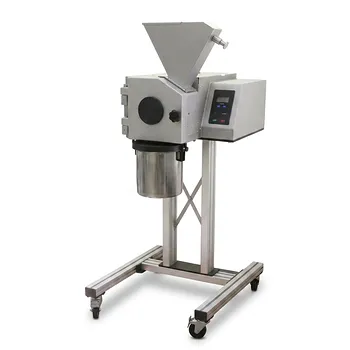
Industrial Cutting Mill for Tough Fibrous and Soft Materials
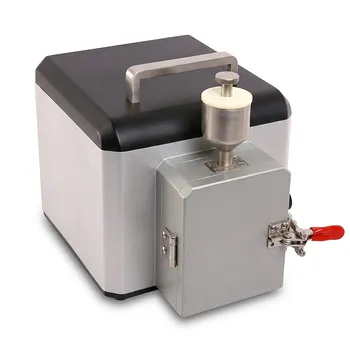
Portable Cutting Mill for Laboratory Sample Preparation and RoHS WEEE Compliance Testing
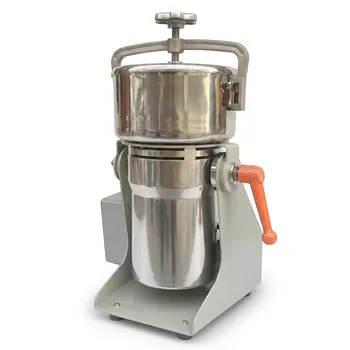
High Speed Laboratory Grinder Efficient Stainless Steel Powder Pulverizer Universal Material Science Mill for Sample Preparation
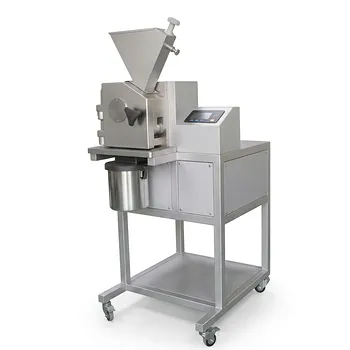
Heavy Metal Free RoHS WEEE Testing Sample Pretreatment Cutting Mill Industrial Solid Waste Grinder for Plastics and Electronics
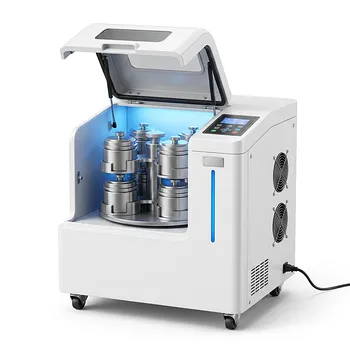
High Energy Omnidirectional Planetary Ball Mill 20L
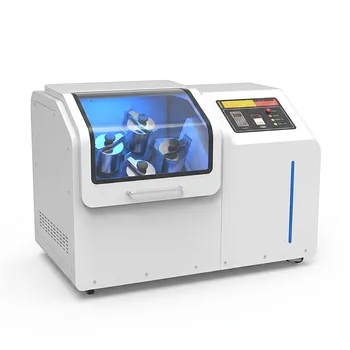
High Energy Omnidirectional Planetary Ball Mill 16L
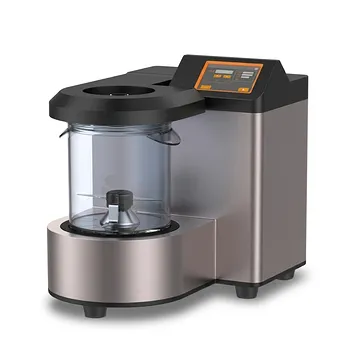
Laboratory Knife Mill for Large Volume Sample Homogenization and Food Preparation

Industrial Knife Mill for Food and Biological Sample Preparation High Speed Laboratory Homogenizer
High Speed Laboratory Knife Mill for Oily Fibrous and Wet Sample Homogenization
Small Airflow Ultra-Fine Grinder for Laboratory Sample Preparation
Laboratory Disc Mill for Fine Sample Preparation of Hard and Brittle Materials
Multifunctional High Efficiency High Speed Laboratory Grinder
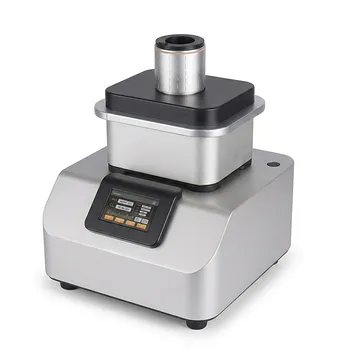
Ultra Centrifugal Mill High Speed Laboratory Grinder for Fibrous and Brittle Sample Preparation
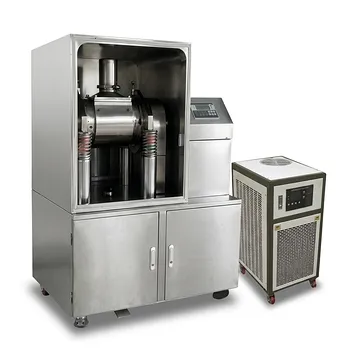
Small Vibrating Ultrafine Grinder for Traditional Chinese Medicine
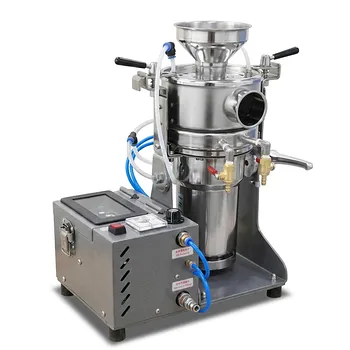
Water Cooled Pulse Jet Ultrafine Grinder
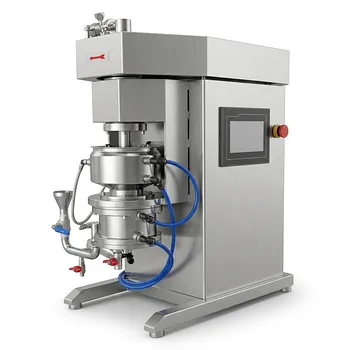
Small Ceramic Structure Laboratory Sand Mill Nanoscale Grinding Dispersion Equipment Seal-less Screen-less Design
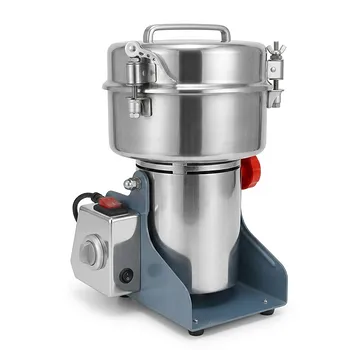
Small High-Speed Grinder for Efficient Laboratory Sample Preparation
Small Laboratory Colloid Mill for Ultra-Fine Wet Grinding and Emulsification
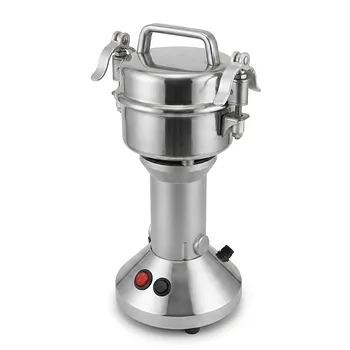
Continuous Feeding Grinding Mill for Dry Fibrous Tough and Hard Materials in Laboratory and Small Production