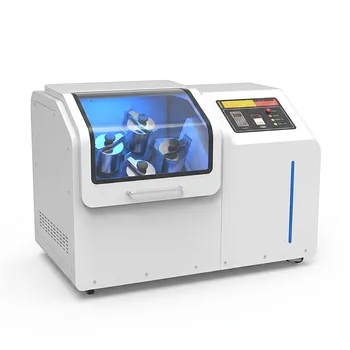
What is the role of a cutting mill equipped with a 1 mm screen in the preliminary preparation of Maguey fibers?
Updated 5 months ago
In the preliminary preparation of Maguey fibers, a cutting mill equipped with a 1 mm screen serves as the critical mechanism for transforming raw, dry fibers into a uniform particulate state. This specific configuration ensures a consistent fineness that maximizes the material's surface area, which is essential for facilitating complete and efficient chemical reactions during subsequent processing stages.
The primary role of the 1 mm cutting mill is to standardize raw Maguey fibers into high-surface-area particles, ensuring that downstream chemical treatments like alkalization and bleaching achieve maximum thoroughness and consistency.
The Engineering Logic of the 1 mm Screen
Achieving Particle Uniformity
The 1 mm screen acts as a precise mechanical gate, ensuring that no fiber particle exits the mill until it has reached the target dimensions. This uniformity is vital because it prevents "shading" or uneven processing where larger chunks might remain untreated at their core.
Maximizing Specific Surface Area
By pulverizing the fibers into 1 mm particles, the mill dramatically increases the contact surface area available for liquid reagents. This allows chemical agents to penetrate the material simultaneously and evenly, rather than struggling to reach the center of dense fiber bundles.
Optimizing Downstream Chemical Reactions
Enhancing Alkali Treatment
During alkali treatment, the increased surface area provided by the 1 mm milling allows for a rapid and exhaustive reaction with the fiber's hemicellulose and lignin. This results in a more purified cellulose structure and improved mechanical properties for the final application.
Improving Bleaching Efficiency
A consistent 1 mm particle size ensures that bleaching agents can interact with the pigments across the entire volume of the material. This eliminates the risk of blotchy or uneven coloration, resulting in a high-quality, aesthetically uniform fiber product.
Understanding the Trade-offs and Challenges
Thermal Degradation Risks
Industrial milling at such fine scales generates significant mechanical heat, which can potentially damage the organic structure of Maguey fibers. It is critical to monitor milling temperatures to ensure the fibers do not lose their structural integrity before chemical processing begins.
Energy and Dust Management
Utilizing a 1 mm screen requires higher energy consumption compared to coarser grinds due to the extended dwell time inside the mill. Additionally, the resulting fine particles can create dust management challenges, necessitating robust filtration systems to maintain a safe and efficient workspace.
Best Practices for Fiber Preparation
Maximizing Quality in Your Process
To achieve the best results with Maguey fiber preparation, consider how your specific output goals align with the milling process.
- If your primary focus is reaction speed: Use the 1 mm screen to ensure the highest possible surface-to-volume ratio, which accelerates chemical uptake.
- If your primary focus is material yield: Regularly inspect the screen for wear or clogging, as a damaged 1 mm mesh can lead to inconsistent particle sizes and wasted material.
- If your primary focus is chemical consistency: Ensure the fibers are completely dry before milling to prevent clumping, which can bypass the benefits of the 1 mm sizing.
Proper mechanical reduction is the essential bridge between raw botanical material and high-performance industrial fiber.
Summary Table:
| Key Role | Technical Benefit | Impact on Fiber Quality |
|---|---|---|
| Particle Standardization | Ensures 1 mm uniform dimensions | Eliminates "shading" and untreated fiber cores |
| Surface Area Expansion | Increases contact points for reagents | Accelerates chemical uptake and reaction speed |
| Mechanical Pulverization | Breaks down dense fiber bundles | Results in a more purified cellulose structure |
| Consistent Feedstock | Uniform particulate state | Ensures even coloration during bleaching processes |
Elevate Your Material Preparation with Precision Engineering
Achieving consistent results in material science starts with superior sample preparation. At our facility, we provide complete laboratory solutions specializing in high-performance powder processing and compaction equipment. Whether you are refining natural fibers like Maguey or developing advanced ceramics, our technology ensures your materials meet the most rigorous standards.
Our extensive product line includes:
- Precision Milling: Rotor mills, planetary ball mills, jet mills, and cryogenic grinders for optimal particle size reduction.
- Advanced Compaction: A full spectrum of hydraulic presses, including Cold/Warm Isostatic Presses (CIP/WIP), vacuum hot presses, and XRF pellet presses.
- Material Processing: Sieve shakers, powder mixers, and industrial crushers.
We help you maximize specific surface area and ensure chemical consistency to accelerate your research and production. Contact us today to optimize your laboratory workflow and discover how our specialized equipment can bring unparalleled efficiency to your material development.
References
- Erwin C. Sumarago, Kendra Felizimarie Magsico. Production and Characterization of Nanocellulose from Maguey (Agave cantala) Fiber. DOI: 10.3390/polym16101312
Mentioned Products
- Industrial Cutting Mill for Tough Fibrous and Soft Materials
- Heavy Metal Free RoHS WEEE Testing Sample Pretreatment Cutting Mill Industrial Solid Waste Grinder for Plastics and Electronics
- Portable Cutting Mill for Laboratory Sample Preparation and RoHS WEEE Compliance Testing
- High Speed Laboratory Knife Mill for Oily Fibrous and Wet Sample Homogenization
- Laboratory Knife Mill for Large Volume Sample Homogenization and Food Preparation
People Also Ask
- Why is a cutting mill utilized for processing fibrous Agarwood distillation waste? Efficient Shearing Solutions
- What role does an industrial cutting mill play in sea buckthorn waste processing? Efficient Biomass Pretreatment
- What is the purpose of using a laboratory cutting mill for two-stage grinding? Optimize WPC Particles for 3D Printing
- How is a universal cutting mill used to achieve precise size control of hop fibers for material reinforcement? Guide
- What are the functions of an industrial cutting mill and a vibratory sieve shaker in the preparation of bamboo microfibers?

Tech Team · PowderPreparation
Last updated on May 14, 2026
Related Products
Industrial Cutting Mill for Tough Fibrous and Soft Materials
Heavy Metal Free RoHS WEEE Testing Sample Pretreatment Cutting Mill Industrial Solid Waste Grinder for Plastics and Electronics
Portable Cutting Mill for Laboratory Sample Preparation and RoHS WEEE Compliance Testing

High Speed Laboratory Knife Mill for Oily Fibrous and Wet Sample Homogenization
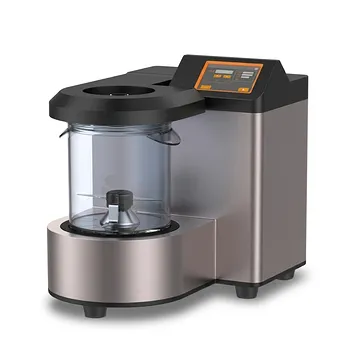
Laboratory Knife Mill for Large Volume Sample Homogenization and Food Preparation

Industrial Knife Mill for Food and Biological Sample Preparation High Speed Laboratory Homogenizer
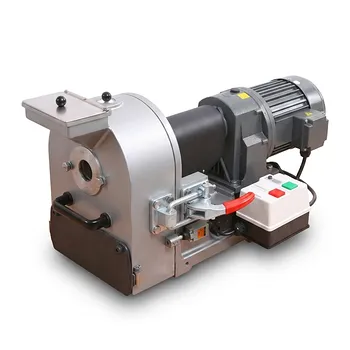
Laboratory Disc Mill for Fine Sample Preparation of Hard and Brittle Materials
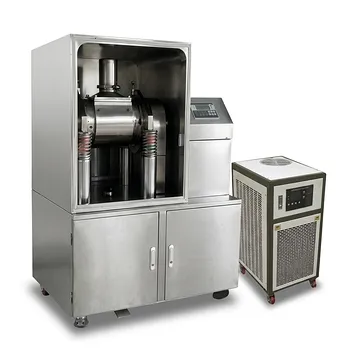
Small Vibrating Ultrafine Grinder for Traditional Chinese Medicine
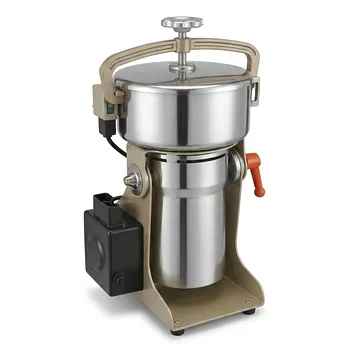
Multifunctional High Efficiency High Speed Laboratory Grinder

Ultra Centrifugal Mill High Speed Laboratory Grinder for Fibrous and Brittle Sample Preparation
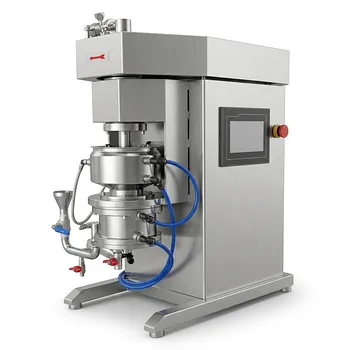
Small Ceramic Structure Laboratory Sand Mill Nanoscale Grinding Dispersion Equipment Seal-less Screen-less Design
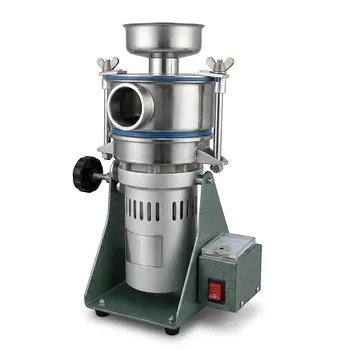
Small Airflow Ultra-Fine Grinder for Laboratory Sample Preparation
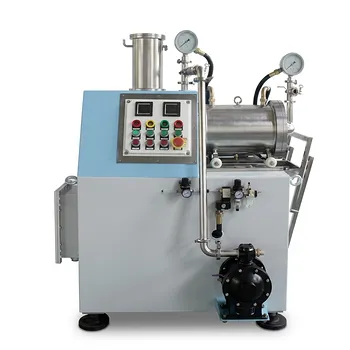
Horizontal Bead Mill for Nanoscale Grinding and Advanced Material Powder Processing
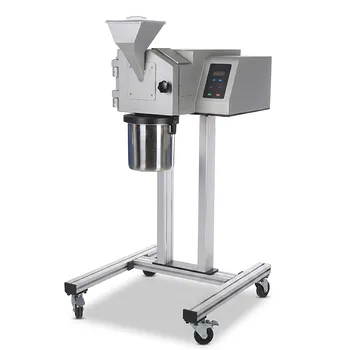
Cross Beater Mill for Brittle Material Grinding and Continuous Fine Crushing Industrial Sample Preparation
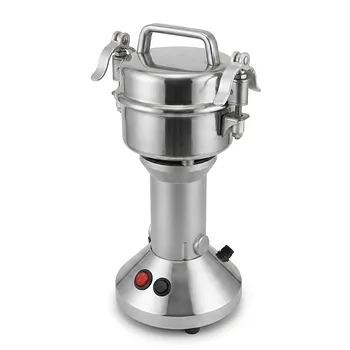
Continuous Feeding Grinding Mill for Dry Fibrous Tough and Hard Materials in Laboratory and Small Production
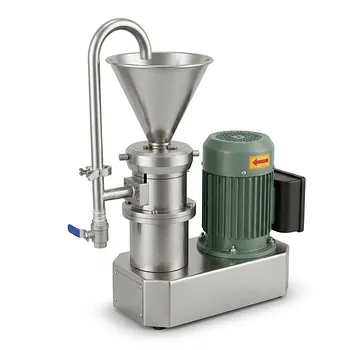
Small Laboratory Colloid Mill for Ultra-Fine Wet Grinding and Emulsification
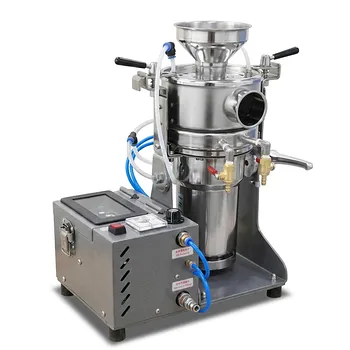
Water Cooled Pulse Jet Ultrafine Grinder
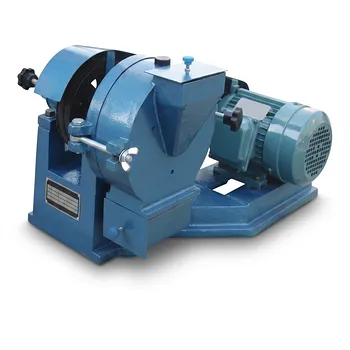
Laboratory Disc Mill for Ore and Mineral Sample Preparation
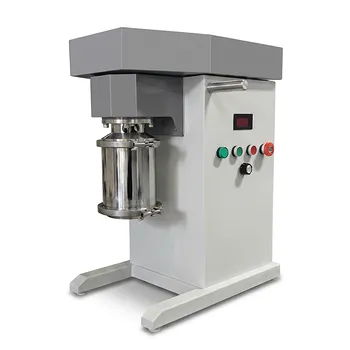
Nano Laboratory Bead Mill Desktop Sub Micron Sand Mill Screenless Seal Less Powder Grinder