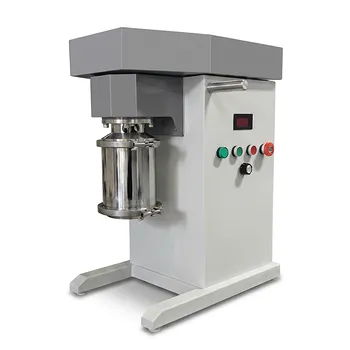
What is the purpose of using a laboratory cutting mill for two-stage grinding? Optimize WPC Particles for 3D Printing
Updated 5 months ago
Precise particle size control is the primary objective. Using a laboratory cutting mill for two-stage grinding—specifically transitioning from a larger screen (e.g., 1mm) to a finer one (e.g., 0.25mm)—ensures the wood particles achieve a uniform size and low aspect ratio. This level of precision is critical for preventing clogs and ensuring a smooth, consistent flow of Wood-Plastic Composite (WPC) through the narrow nozzles of 3D printers.
The two-stage grinding process converts raw wood and polymer matrices into highly uniform powders that maximize mixing efficiency. By refining particle morphology, this method ensures the resulting composite meets the strict rheological requirements necessary for additive manufacturing.
Optimizing Particle Morphology for 3D Printing
Achieving Ultra-Fine Gradation
The two-stage process allows for a gradual reduction in material size, which prevents the equipment from overloading while ensuring the final output is fine enough for 3D printing. By using a 0.25mm screen in the second stage, operators can produce wood particles that are small enough to pass through standard extrusion nozzles without causing blockages.
Reducing Particle Aspect Ratio
Laboratory cutting mills are particularly effective at managing the shape of the particles, not just the size. For heat-modified wood, which is more brittle, the mill produces smaller, more uniform particles with lower aspect ratios, which significantly improves the flowability of the final WPC filament.
Managing Material Brittleness
The cutting mechanism is ideal for materials that exhibit increased brittleness due to pretreatment. This efficiency ensures that the wood components are pulverized into discrete particles rather than being shredded into long, irregular fibers that could compromise the integrity of the 3D printed part.
Enhancing Material Homogenization and Bonding
Increasing Specific Surface Area
Reducing both the wood and the polymer matrices (such as PLA or TPU) to fine powders drastically increases their specific surface area. This physical change is essential for achieving a high degree of mixing uniformity when the components are physically blended before melt-compounding.
Improving Adhesion and Coverage
A higher specific surface area allows the polymer matrix to coat the wood particles more effectively during the compounding phase. This improved coverage leads to a more consistent material foundation, reducing the risk of structural weak points in the final 3D printed object.
Ensuring Test Accuracy
Uniform particle sizes contribute to more reliable laboratory testing, such as Melt Flow Rate (MFR) and thermal analysis. By reducing material non-uniformity through secondary grinding, researchers can minimize measurement errors and ensure the WPC behaves predictably during the printing process.
Understanding the Trade-offs
Process Time vs. Precision
While two-stage grinding provides superior particle control, it is a more time-intensive process than single-step high-energy milling. Organizations must weigh the need for extreme precision against the throughput requirements of their specific project.
Thermal Management Concerns
Mechanical grinding generates heat, which can potentially affect the chemical properties of the wood or the melting point of the polymer matrices. It is vital to monitor temperatures during the cutting process to ensure the thermal integrity of the raw materials is not compromised before they reach the 3D printer.
Equipment Maintenance and Wear
Finer screens, particularly the 0.25mm size, are more susceptible to wear and potential clogging if the raw material has high moisture content. Regular maintenance and ensuring the material is sufficiently dry are necessary to maintain the precision of the cutting mill.
How to Apply This to Your Project
- If your primary focus is nozzle reliability: Use a strict two-stage grinding process ending with a 0.25mm screen to eliminate oversized particles that cause printer downtime.
- If your primary focus is mechanical strength: Prioritize the two-stage method to increase the surface area of the wood particles, ensuring a stronger bond between the wood and the plastic matrix.
- If your primary focus is process efficiency: Consider high-energy milling for one-step processing if your printer nozzle diameter is large enough to accommodate less uniform particle distributions.
By mastering the two-stage grinding process, you ensure that your WPC materials possess the physical consistency required for high-quality, reliable additive manufacturing.
Summary Table:
| Feature/Stage | Process Detail | Impact on 3D Printing |
|---|---|---|
| Stage 1 Grinding | 1.0mm Screen | Prevents equipment overload; initial size reduction |
| Stage 2 Grinding | 0.25mm Screen | Achieves ultra-fine gradation; prevents nozzle clogs |
| Morphology | Low Aspect Ratio | Ensures smooth flow and consistent extrusion |
| Surface Area | High Specific Area | Enhances polymer-to-wood adhesion and strength |
| Homogeneity | Uniform Distribution | Reliable MFR testing and thermal analysis |
Elevate Your Material Research with Expert Sample Preparation
Achieving the perfect particle morphology for WPC and advanced composites requires precision at every step. We provide complete laboratory sample preparation solutions for material science, specializing in high-performance powder processing and compaction equipment.
Whether you are refining wood-polymer blends or processing advanced ceramics, our extensive product line supports your entire workflow:
- Size Reduction: Jaw/roll crushers, liquid nitrogen cryogenic grinders, and versatile mills (planetary ball, jet, sand/bead, disc, rotor).
- Classification & Mixing: Vibratory/air-jet sieve shakers and high-efficiency powder/defoaming mixers.
- Compaction & Pelleting: A full spectrum of hydraulic presses, including Cold/Warm Isostatic Presses (CIP/WIP), standard lab presses, XRF pellet presses, and vacuum hot presses.
Ready to optimize your WPC 3D printing workflow? Contact our technical experts today to discover the ideal milling or pressing solution for your laboratory’s unique requirements!
References
- Daša Krapež Tomec, Mirko Kariž. Effect of thermal modification of wood particles for wood-PLA composites on properties of filaments, 3D-printed parts and injection moulded parts. DOI: 10.1007/s00107-023-02018-2
Mentioned Products
- Industrial Cutting Mill for Tough Fibrous and Soft Materials
- Heavy Metal Free RoHS WEEE Testing Sample Pretreatment Cutting Mill Industrial Solid Waste Grinder for Plastics and Electronics
- Portable Cutting Mill for Laboratory Sample Preparation and RoHS WEEE Compliance Testing
- High Speed Laboratory Knife Mill for Oily Fibrous and Wet Sample Homogenization
- Laboratory Knife Mill for Large Volume Sample Homogenization and Food Preparation
People Also Ask
- Why is a cutting mill utilized for processing fibrous Agarwood distillation waste? Efficient Shearing Solutions
- What role does an industrial cutting mill play in sea buckthorn waste processing? Efficient Biomass Pretreatment
- What is the role of a cutting mill equipped with a 1 mm screen in the preliminary preparation of Maguey fibers?
- How is a universal cutting mill used to achieve precise size control of hop fibers for material reinforcement? Guide
- What are the functions of an industrial cutting mill and a vibratory sieve shaker in the preparation of bamboo microfibers?

Tech Team · PowderPreparation
Last updated on May 14, 2026
Related Products
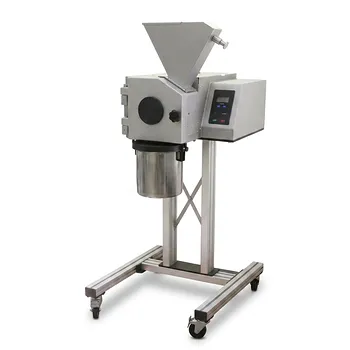
Industrial Cutting Mill for Tough Fibrous and Soft Materials
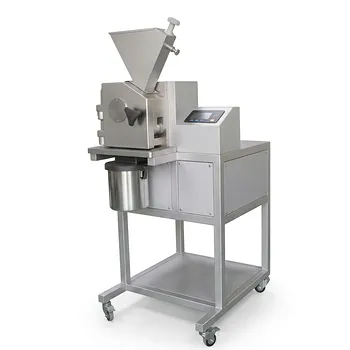
Heavy Metal Free RoHS WEEE Testing Sample Pretreatment Cutting Mill Industrial Solid Waste Grinder for Plastics and Electronics
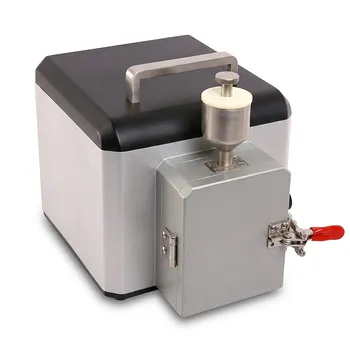
Portable Cutting Mill for Laboratory Sample Preparation and RoHS WEEE Compliance Testing
High Speed Laboratory Knife Mill for Oily Fibrous and Wet Sample Homogenization
Laboratory Knife Mill for Large Volume Sample Homogenization and Food Preparation
Laboratory Disc Mill for Fine Sample Preparation of Hard and Brittle Materials

Industrial Knife Mill for Food and Biological Sample Preparation High Speed Laboratory Homogenizer
Ultra Centrifugal Mill High Speed Laboratory Grinder for Fibrous and Brittle Sample Preparation
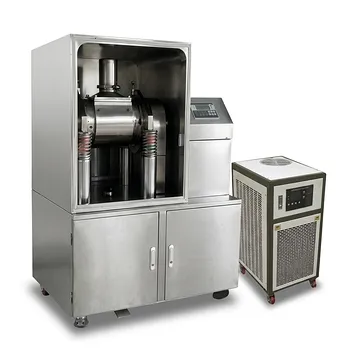
Small Vibrating Ultrafine Grinder for Traditional Chinese Medicine
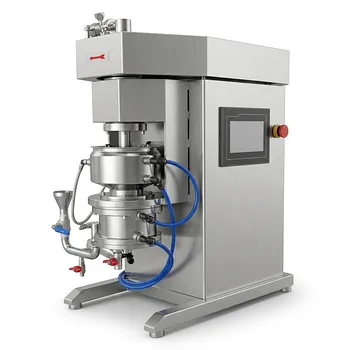
Small Ceramic Structure Laboratory Sand Mill Nanoscale Grinding Dispersion Equipment Seal-less Screen-less Design
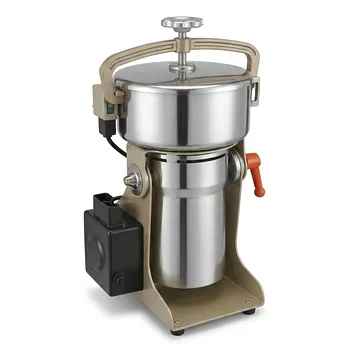
Multifunctional High Efficiency High Speed Laboratory Grinder
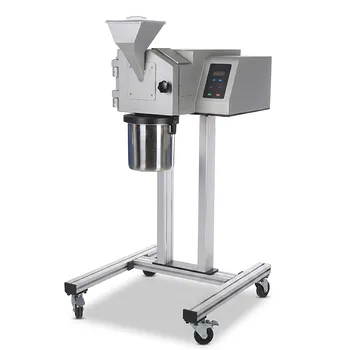
Cross Beater Mill for Brittle Material Grinding and Continuous Fine Crushing Industrial Sample Preparation
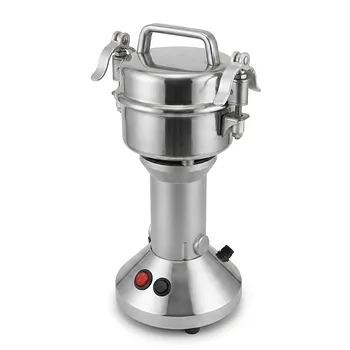
Continuous Feeding Grinding Mill for Dry Fibrous Tough and Hard Materials in Laboratory and Small Production
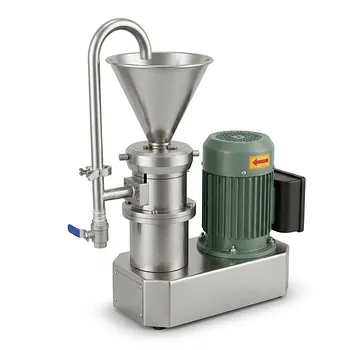
Small Laboratory Colloid Mill for Ultra-Fine Wet Grinding and Emulsification
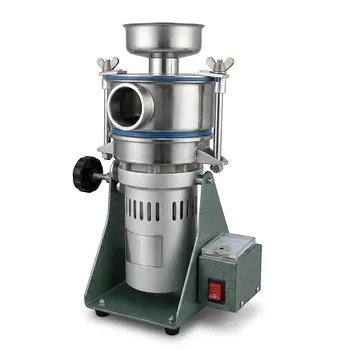
Small Airflow Ultra-Fine Grinder for Laboratory Sample Preparation
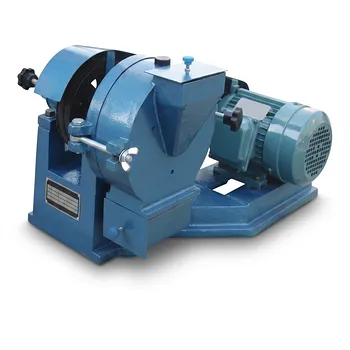
Laboratory Disc Mill for Ore and Mineral Sample Preparation

Vertical Square Planetary Ball Mill for Laboratory Sample Preparation and Nanoscale Grinding
Water Cooled Pulse Jet Ultrafine Grinder
High Energy Omnidirectional Planetary Ball Mill 16L