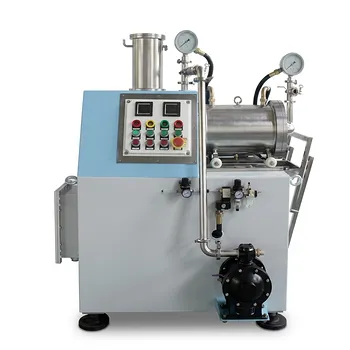
What are the functions of an industrial cutting mill and a vibratory sieve shaker in the preparation of bamboo microfibers?
Updated 4 months ago
The preparation of high-quality bamboo microfibers relies on a precise two-stage mechanical process: size reduction and size classification. An industrial cutting mill refines pre-treated bamboo bundles into a pulverized state, while a vibratory sieve shaker isolates these particles into specific size grades—such as 150 µm, 250 µm, or 425 µm. This sequence ensures sample consistency, which is critical for analyzing degradation efficiency and mechanical performance in downstream applications.
By combining high-precision cutting with standardized vibratory classification, researchers eliminate particle size variability. This control prevents material defects like stress concentration and ensures predictable results in chemical or mechanical processing.
The Role of the Industrial Cutting Mill in Fiber Refinement
Processing Post-Treatment Fiber Bundles
The primary function of the industrial cutting mill is to further refine bamboo fiber bundles that have already undergone steam explosion treatment. This step is essential for breaking down the tough, fibrous structure into a format that can be easily manipulated in a laboratory or industrial setting.
Achieving Material Homogeneity
Through mechanical pulverization, the mill transforms irregular bamboo fibers into a homogenous powder. This homogenization is the prerequisite for all subsequent testing, as it provides a uniform starting material for the classification stage.
Precision Classification via Vibratory Sieve Shakers
Mechanical Fractioning and Three-Dimensional Motion
A vibratory sieve shaker uses an electromagnetic drive to generate a controlled three-dimensional throwing motion. This motion ensures that the bamboo material is evenly distributed across the sieve surface, allowing finer particles to migrate through the mesh while larger particles remain above.
Adherence to Global Standards
To ensure scientific accuracy, these shakers utilize test sieves meeting ASTM E11 standards. This precision allows researchers to isolate specific particle size grades, ensuring that the fibers used in experiments are within a strictly defined range.
Why Precise Particle Size Distribution is Critical
Enhancing Composite Mechanical Performance
Uniform particle size is vital when bamboo microfibers are used as fillers in materials like silicone rubber or polymer matrices. Accurate classification prevents stress concentration caused by irregular, oversized particles, which would otherwise compromise the mechanical integrity of the composite.
Optimizing Chemical Reactivity and Dispersion
In processes like dilute acid hydrolysis, uniform fiber size ensures kinetic stability and prevents localized over-reaction or under-reaction. Furthermore, precise size control increases the effective specific surface area, facilitating thorough physical contact and uniform dispersion during melt extrusion processes.
Understanding Technical Trade-offs and Limitations
Heat Generation and Material Integrity
Industrial cutting mills can generate significant heat during the pulverization process. If not carefully managed, this thermal energy can degrade the organic components of the bamboo, potentially altering the very chemical properties the researcher intended to study.
Sieve Blinding and Clogging
During the vibratory classification of microfibers, "blinding" can occur when fibers become wedged in the mesh openings. This is particularly common with high-aspect-ratio fibers, which may require specialized anti-blinding aids or specific pulse-vibration settings to maintain accuracy.
Maximizing Results in Bamboo Microfiber Preparation
To achieve the best results in your fiber preparation workflow, consider the following recommendations based on your specific objectives:
- If your primary focus is mechanical strength in composites: Use the sieve shaker to isolate a narrow particle range (e.g., 125 µm) to eliminate large particles that act as stress concentrators.
- If your primary focus is chemical conversion or hydrolysis: Prioritize a smaller particle size to maximize specific surface area, ensuring the cutting mill is set to a high refinement level before sieving.
- If your primary focus is foam microstructure stability: Utilize a laboratory-grade vibratory shaker to isolate fibers between 90 and 106 µm to prevent cell wall collapse caused by fiber aggregation.
The synergy between controlled mechanical cutting and standardized vibratory sieving is the only way to ensure the structural and chemical reliability of bamboo-based micro-materials.
Summary Table:
| Equipment | Primary Function | Key Benefit | Technical Standard/Mechanism |
|---|---|---|---|
| Industrial Cutting Mill | Mechanical Pulverization | Achieves material homogeneity and fiber refinement | High-speed cutting for post-treatment bundles |
| Vibratory Sieve Shaker | Size Classification | Isolates specific particle grades (e.g., 150 µm) | 3D electromagnetic motion (ASTM E11) |
Elevate Your Material Research with Precision Sample Preparation
Consistency is the foundation of scientific breakthrough. At our core, we provide complete laboratory sample preparation solutions tailored for material science and powder processing.
Whether you are refining biomass like bamboo microfibers or processing advanced ceramics, our extensive equipment line ensures your samples meet the highest standards:
- Size Reduction: Specialized crushers (jaw/roll), liquid nitrogen cryogenic grinders, and high-performance mills (planetary ball, jet, sand/bead, disc, rotor).
- Size Classification: Precision vibratory and air-jet sieve shakers equipped with standardized test sieves to eliminate particle size variability.
- Mixing & Homogenization: Industrial-grade powder mixers and high-speed defoaming mixers.
- Compaction & Pelleting: A full spectrum of hydraulic presses, including Cold/Warm Isostatic Presses (CIP/WIP), XRF pellet presses, and advanced vacuum hot presses.
Ready to eliminate stress concentration and optimize the chemical reactivity of your materials? Contact our technical experts today to find the perfect equipment configuration for your laboratory needs.
References
- Luis Garzón, Darío Cruz. Thermo-Mechanical and Fungi Treatment as an Alternative Lignin Degradation Method for Bambusa oldhamii and Guadua angustifolia Fibers. DOI: 10.3390/jof8040399
Mentioned Products
- Industrial Cutting Mill for Tough Fibrous and Soft Materials
- Heavy Metal Free RoHS WEEE Testing Sample Pretreatment Cutting Mill Industrial Solid Waste Grinder for Plastics and Electronics
- Ultra Centrifugal Mill High Speed Laboratory Grinder for Fibrous and Brittle Sample Preparation
- Continuous Feeding Grinding Mill for Dry Fibrous Tough and Hard Materials in Laboratory and Small Production
- Mass Production Nano Sand Mill for Industrial Nanomaterial Grinding and Dispersion
People Also Ask
- Why is a cutting mill utilized for processing fibrous Agarwood distillation waste? Efficient Shearing Solutions
- What role does an industrial cutting mill play in sea buckthorn waste processing? Efficient Biomass Pretreatment
- What is the role of a cutting mill equipped with a 1 mm screen in the preliminary preparation of Maguey fibers?
- What is the purpose of using a laboratory cutting mill for two-stage grinding? Optimize WPC Particles for 3D Printing
- How is a universal cutting mill used to achieve precise size control of hop fibers for material reinforcement? Guide

Tech Team · PowderPreparation
Last updated on May 14, 2026
Related Products
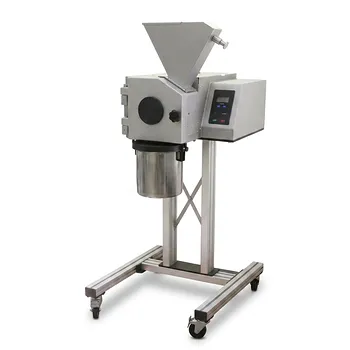
Industrial Cutting Mill for Tough Fibrous and Soft Materials
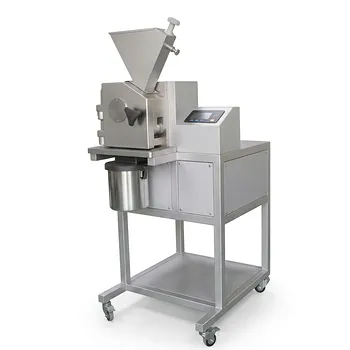
Heavy Metal Free RoHS WEEE Testing Sample Pretreatment Cutting Mill Industrial Solid Waste Grinder for Plastics and Electronics
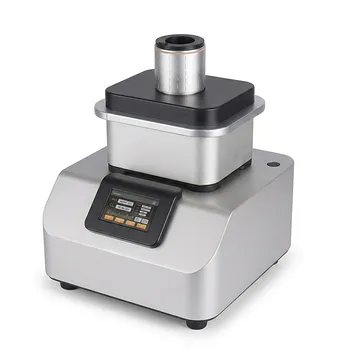
Ultra Centrifugal Mill High Speed Laboratory Grinder for Fibrous and Brittle Sample Preparation
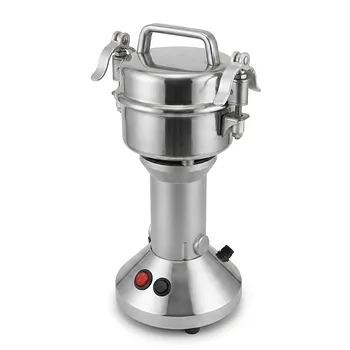
Continuous Feeding Grinding Mill for Dry Fibrous Tough and Hard Materials in Laboratory and Small Production
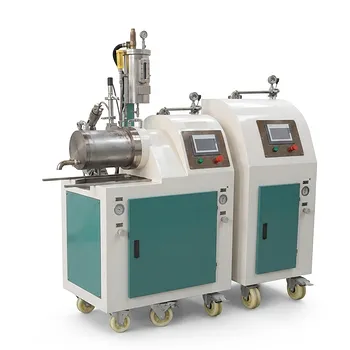
Mass Production Nano Sand Mill for Industrial Nanomaterial Grinding and Dispersion
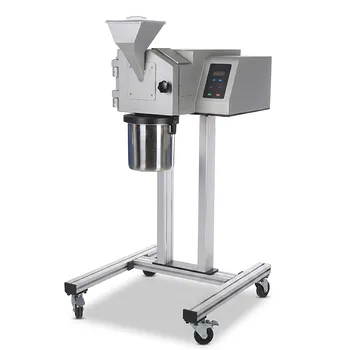
Cross Beater Mill for Brittle Material Grinding and Continuous Fine Crushing Industrial Sample Preparation

High Speed Laboratory Knife Mill for Oily Fibrous and Wet Sample Homogenization

Portable Cutting Mill for Laboratory Sample Preparation and RoHS WEEE Compliance Testing

Industrial Knife Mill for Food and Biological Sample Preparation High Speed Laboratory Homogenizer