What role does a planetary ball mill play in Mn-B precursor preparation? Key to High-Energy Mechanical Activation
Updated 4 months ago
In the synthesis of manganese boride (Mn-B), the planetary ball mill acts as the primary vehicle for high-energy precursor preparation. It utilizes intense shear and impact forces to mix manganese and boron powders at precise atomic ratios, ensuring microscopic homogenization. This process significantly increases the reactive surface area of the powders, creating the essential physical foundation required for subsequent microwave synthesis.
The planetary ball mill transforms raw elemental powders into a highly reactive precursor by maximizing component contact and inducing mechanical activation, which lowers the energy barriers for the final chemical reaction.
The Mechanics of High-Energy Homogenization
The planetary ball mill is not a simple mixer; it is a high-energy device that fundamentally alters the physical state of the raw materials.
Achieving Precise Atomic Distribution
By utilizing high-speed rotation and centrifugal forces, the mill ensures that manganese and boron are distributed uniformly at the microscopic scale. This high component homogenization is critical because any localized imbalance in the atomic ratio would result in an impure final boride product.
Enhancing Contact Surface Area
The impact forces generated by the grinding media break down powder agglomerations and reduce the overall particle size. This refinement of the powder increases the specific surface area, allowing for a much higher density of contact points between the manganese and boron particles.
Reducing Diffusion Distances
In solid-state reactions, the speed of the reaction is often limited by how far atoms must travel to meet. The milling process minimizes these diffusion distances, ensuring that the subsequent synthesis reaction can proceed rapidly and completely.
Mechanical Activation and Reactive Surface Chemistry
Beyond simple physical mixing, the planetary ball mill imparts energy into the powder particles themselves, a process known as mechanical activation.
Lowering Synthesis Energy Barriers
The high-frequency impact and friction induce lattice defects and strain within the powder particles. This mechanical activation increases the internal energy of the precursor, effectively lowering the temperature or time required for the powders to react during synthesis.
Preparing for Microwave Synthesis
The mill establishes a critical foundation for microwave synthesis reactions by ensuring the powder mixture is sensitive to electromagnetic energy. A well-milled, homogeneous precursor absorbs and distributes heat more evenly, preventing "hot spots" and ensuring a uniform phase transformation into manganese boride.
Understanding the Trade-offs and Potential Pitfalls
While the planetary ball mill is highly effective, it introduces specific challenges that must be managed to ensure the quality of the Mn-B precursor.
Risk of Impurity Contamination
The high-energy environment can lead to wear and tear on the milling jars and grinding balls. If the materials of the milling media (such as steel or alumina) are not carefully selected, trace contaminants can be introduced into the manganese boride precursor, potentially altering its final properties.
Thermal Build-up and Agglomeration
Excessive milling speeds or durations can generate significant heat within the jar. This thermal energy can sometimes cause the fine powders to re-agglomerate or cold-weld, which counteracts the goal of particle refinement and can reduce the overall reactivity of the mixture.
Optimizing Precursor Preparation for Your Goal
To achieve the best results in manganese boride synthesis, the milling parameters must be aligned with the desired characteristics of the final material.
- If your primary focus is high chemical purity: Use milling jars and balls made of hardened materials like tungsten carbide or zirconia to minimize media wear and contamination.
- If your primary focus is rapid synthesis kinetics: Increase the milling energy or duration to maximize mechanical activation and surface area, ensuring the precursor reacts quickly during the microwave stage.
- If your primary focus is phase uniformity: Prioritize a lower-speed, longer-duration milling cycle to ensure the most thorough distribution of manganese and boron atoms without excessive heat build-up.
Properly executed planetary ball milling is the decisive step that determines the efficiency and quality of the resulting manganese boride.
Summary Table:
Impact of Planetary Ball Milling on Mn-B Synthesis
| Key Mechanism | Effect on Precursor | Benefit for Final Synthesis |
|---|---|---|
| Microscopic Homogenization | Ensures precise atomic distribution of Mn and B. | Prevents phase impurities and localized imbalances. |
| Particle Refinement | Drastically increases specific surface area. | Reduces diffusion distances for faster reactions. |
| Mechanical Activation | Induces lattice defects and internal strain. | Lowers energy barriers and synthesis temperatures. |
| Controlled Environment | Prevents contamination (with correct media). | Ensures high chemical purity of the final boride. |
Optimize Your Mn-B Synthesis with Advanced Sample Prep
Achieving high-purity manganese boride requires precision at the precursor stage. Our Laboratory Solutions specializes in providing complete laboratory sample preparation solutions for material science, ensuring your powders reach the perfect state for reactive synthesis.
We offer a comprehensive range of equipment designed for high-performance research:
- Advanced Milling: Planetary ball mills, jet mills, disc mills, and liquid nitrogen cryogenic grinders for ultimate refinement.
- Precision Compaction: A full spectrum of hydraulic presses, including Cold/Warm Isostatic Presses (CIP/WIP), standard lab presses, and vacuum hot presses.
- Processing & Sizing: Jaw/roll crushers, powder mixers, defoaming mixers, and vibratory/air-jet sieve shakers.
Ready to enhance your lab's efficiency and material quality? Contact our experts today to find the ideal equipment for your powder processing and compaction needs!
References
- Yuhang Hai, Bin Jiang. Nanoscale multi-gradient ordered architectures driven exceptional strength and ductility in low thermal expansion magnesium alloy. DOI: 10.1038/s41467-025-67684-7
Mentioned Products
- 8L Planetary Ball Mill for Laboratory Grinding and Sample Preparation
- Heavy Duty Horizontal Planetary Ball Mill for Efficient Industrial Grinding and Sample Preparation
- Vertical Square Planetary Ball Mill for Laboratory Sample Preparation and Nanoscale Grinding
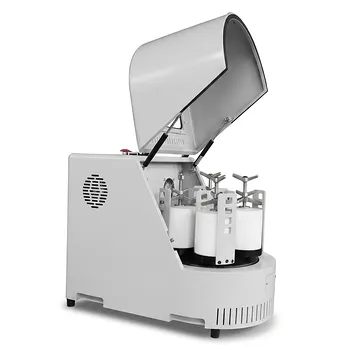
- Vertical Semi Circular Planetary Ball Mill for Laboratory Precision Grinding
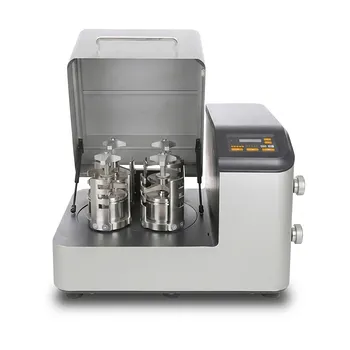
- High Energy Planetary Ball Mill for Nano Scale Grinding and Mechanical Alloying
People Also Ask
- How does mechanized planetary ball milling compare to manual agate grinding? Optimize sulfide standard material precision.
- What role does a planetary ball mill play in the synthesis of Er-doped PMN-PT ceramics? Enhancing Homogeneity & Purity
- What is the role of a planetary ball mill in the synthesis of biomass-based CaO catalysts? Maximize Surface Activity
- What is the core role of a planetary ball mill in the preparation of modified cellulose fillers? Key Insights
- How does a planetary ball mill contribute to processing waste eggshells into biological fillers? Precision Refinement

Tech Team · PowderPreparation
Last updated on May 14, 2026
Related Products

8L Planetary Ball Mill for Laboratory Grinding and Sample Preparation

Heavy Duty Horizontal Planetary Ball Mill for Efficient Industrial Grinding and Sample Preparation

Vertical Square Planetary Ball Mill for Laboratory Sample Preparation and Nanoscale Grinding
Vertical Semi Circular Planetary Ball Mill for Laboratory Precision Grinding

High Energy Planetary Ball Mill for Nano Scale Grinding and Mechanical Alloying
Planetary Ball Mill 12L

Vertical Production Planetary Ball Mill for High Throughput Powder Processing
Horizontal Light Duty Planetary Ball Mill for Laboratory Sample Preparation

360° Rotating Omnidirectional Laboratory Planetary Ball Mill for Homogeneous Ultra-Fine Grinding and Mixing

High Energy Laboratory Planetary Ball Mill for Nano Grinding and Material Science Sample Preparation
High Energy Planetary Ball Mill for Nano Scale Grinding and Colloidal Mixing in Material Science Research
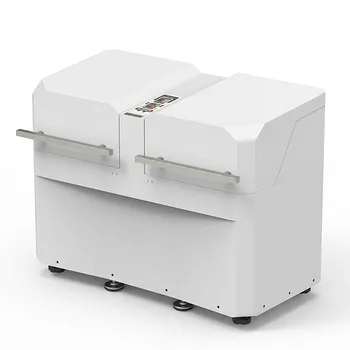
Dual Station Planetary Ball Mill 24L
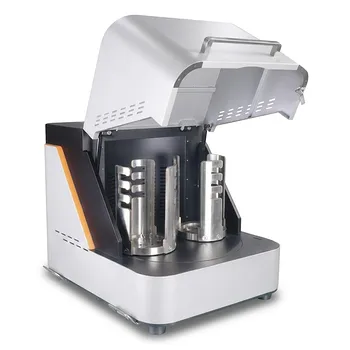
High Energy Laboratory Planetary Ball Mill for Nano Grinding and Colloidal Mixing of Hard and Brittle Materials

High Energy Omnidirectional Planetary Ball Mill 16L

Miniature Planetary Ball Mill with Vacuum Grinding and High Efficiency for Laboratory Sample Preparation
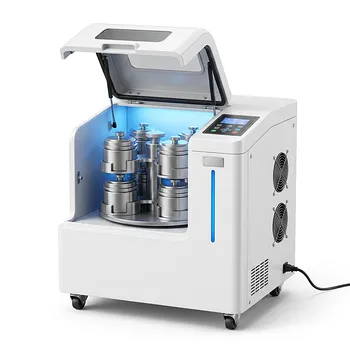
High Energy Omnidirectional Planetary Ball Mill 20L

Nano High Energy Vibratory Ball Mill for Laboratory Sample Preparation
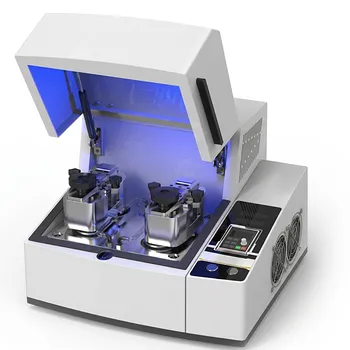
Laboratory Nano High Energy Ball Mill Ultrafine Grinding Mechanical Alloying
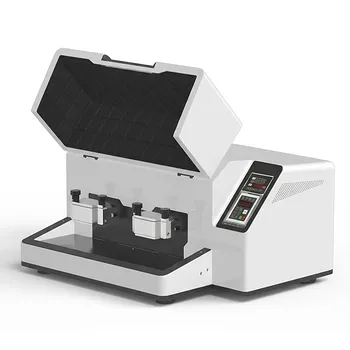
Nanoscale High-Energy Vibratory Ball Mill for Laboratory Sample Preparation, Mechanochemistry, and Mechanical Alloying