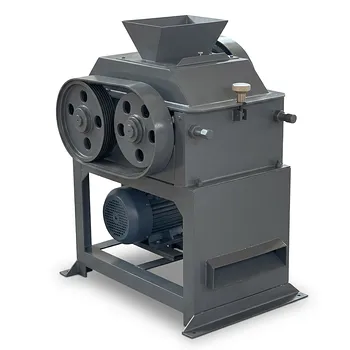
What role does a laboratory hot press play in PZT/PVDF composite film fabrication? Boost Beta-Phase & Density
Updated 5 months ago
A laboratory hot press is the primary instrument used to activate the piezoelectric properties and ensure the structural integrity of multilayer PZT/PVDF composite films. By applying simultaneous high temperature (typically around 170°C) and high pressure (up to 40 MPa), the press drives the essential transition of the PVDF polymer from a non-functional state to an electroactive one. This process also ensures that multiple layers are fused into a single, dense, and defect-free functional material.
The laboratory hot press transforms a passive mixture of ceramic particles and polymer into a high-performance sensor by optimizing the crystalline structure and eliminating internal porosity through controlled thermal pressure.
Driving the Crystalline Phase Transition
Conversion to the Electroactive Beta-Phase
The most critical role of the hot press is facilitating the phase transition of the PVDF matrix. It provides the energy required to shift the polymer from the non-electroactive alpha-phase to the electroactive beta-phase.
Without this specific crystalline orientation, the composite film would lack the necessary piezoelectric response. The combination of heat and pressure aligns the molecular chains, which is fundamental for generating a voltage output under mechanical stress.
Alignment of Piezoelectric Domains
Beyond the polymer matrix, the hot pressing process promotes the alignment of piezoelectric domains within the PZT particles. This alignment is vital for enhancing the piezoelectric constant (d33).
By stabilizing these domains under pressure during the cooling phase, the hot press ensures the final film achieves maximum sensitivity. This result is crucial for applications in energy harvesting and tactile sensing.
Enhancing Structural Integrity and Adhesion
Matrix Flow and Particle Encapsulation
As the hot press reaches the melting or softening point of the PVDF, the polymer matrix begins to flow. This flow allows the PVDF to tightly encapsulate the PZT particles, creating a seamless composite.
This encapsulation is necessary to reduce porosity and internal air bubbles. Eliminating these voids is critical because air pockets can lead to dielectric breakdown and mechanical failure under load.
Interlayer Bonding in Multilayer Structures
For multilayer films (such as 3-layer or 5-layer structures), the hot press provides the chemical bonding and physical interlocking required for cohesion. High unit pressure ensures that the individual layers merge into a single unit without delamination risks.
The result is a significant improvement in the material’s modulus of elasticity and static bending strength. This structural stability ensures the film remains functional over thousands of mechanical cycles.
Achieving Dimensional Precision
Uniform Thickness and Density
A high-precision laboratory hot press allows for the preparation of films with uniform thickness, often ranging from 90 µm to 2 mm depending on the mold. This precision is essential for ensuring that experimental results are comparable and repeatable.
Consistent thickness leads to uniform capacitance and voltage output across the entire surface of the film. This uniformity is a prerequisite for standardized testing and industrial scaling.
Eliminating Internal Micropore Defects
Residual air and solvent evaporation can leave behind internal micropores that weaken the film. The application of staged pressure during the molding process forces these defects out of the material.
By densifying the composite, the hot press produces a "flat, dense experimental specimen." This high density is directly linked to improved mechanical strength and more predictable piezoelectric performance.
Understanding the Trade-offs
Temperature Sensitivity and Degradation
Applying excessive heat can lead to the thermal degradation of the PVDF polymer or the curing agents. If the temperature exceeds the stable range (often above 200°C), the material may lose its mechanical flexibility and turn brittle.
Pressure vs. Particle Integrity
While high pressure (e.g., 40 MPa) is necessary for densification, excessive force can cause the brittle PZT ceramic particles to fracture. Finding the balance between "high enough to eliminate pores" and "low enough to protect the filler" is a primary challenge in the fabrication process.
Controlled Cooling Rates
The rate at which the hot press cools down significantly influences the final crystallization behavior. Rapid cooling might "freeze" the polymer in an amorphous state, while controlled, slower cooling can further optimize the crystalline orientation and density.
How to Apply This to Your Fabrication Process
Successful fabrication requires aligning your hot press parameters with your specific performance goals.
- If your primary focus is Maximum Piezoelectric Sensitivity: Prioritize the beta-phase transition by maintaining a steady temperature near 170°C and using high pressure to ensure tight PZT/PVDF contact.
- If your primary focus is Durability and Longevity: Focus on the "staged heating" and "closure time" to ensure perfect interlayer bonding and the complete elimination of internal micropores.
- If your primary focus is Experimental Consistency: Use high-precision molds and constant pressure control (e.g., 100 bar) to maintain a uniform film thickness within a 10 µm tolerance.
By mastering the balance of thermal energy and mechanical pressure, you transform a simple composite blend into a sophisticated, high-performance piezoelectric device.
Summary Table:
| Key Role | Physical Mechanism | Resulting Benefit |
|---|---|---|
| Phase Transition | Conversion from Alpha to Beta-phase | High piezoelectric sensitivity (d33) |
| Structural Integrity | Interlayer bonding & PZT encapsulation | Elimination of pores and delamination |
| Dimensional Control | High-precision molding & pressure | Uniform film thickness & voltage output |
| Material Density | Forced expulsion of air/solvent voids | Improved mechanical bending strength |
Optimize Your Piezoelectric Material Fabrication
Achieving the perfect beta-phase transition and structural density in PZT/PVDF composite films requires high-precision thermal and mechanical control. We provide complete laboratory sample preparation solutions for material science, specializing in advanced powder processing and compaction equipment.
Our extensive line of hydraulic presses includes:
- Laboratory Hot Presses & Vacuum Hot Presses for dense, defect-free film fabrication.
- Cold/Warm Isostatic Presses (CIP/WIP) for uniform material compaction.
- Standard Lab & XRF Pellet Presses for versatile sample preparation.
From initial crushing and milling (planetary, jet, or cryogenic) to final precision pressing, our equipment is designed to ensure experimental consistency and high-performance results.
Ready to elevate your research? Contact our experts today to find the ideal hot press solution for your laboratory.
References
- Suprapto Suprapto, Muhammad Fathul Hikmawan. Multilayer PZT/PVDF Composite Films for High-Performance Force Sensor and Energy Harvesting Applications.. DOI: 10.1088/1742-6596/2908/1/012029
Mentioned Products
- 6-Ton Small Single-Punch Tablet Press — Laboratory Powder & Granule Tableting Equipment / Tablet Forming Machine
- 5 Ton Single Punch Tablet Press Laboratory Small Batch Production
- Manual Tablet Press with Dual Scale Pressure Gauge for Pharmaceutical Food Chemical Laboratory Sample Preparation
- 6 Ton Variable Frequency Single Punch Tablet Press
- High Speed Swing Type Laboratory Pulverizer for Fine Powder Grinding and Sample Preparation
People Also Ask
- What is the function of a laboratory press in Cr-Ti alloy evaluation? Quantify Fracture Stress & Strength
- What is the function of a laboratory press in assessing the hydrophobic performance of modified vermiculite fillers?
- What is the core function of a laboratory press in the forming of ceramic filter element green bodies? Maximize Density.
- What is the function of a laboratory press in the preparation of ceramic feed rods? Master Density and Precision
- Why is vacuum sealing and flexible packaging necessary for Aluminum Titanate powders during CIP? Ensure Peak Density

Tech Team · PowderPreparation
Last updated on May 14, 2026
Related Products
6-Ton Small Single-Punch Tablet Press — Laboratory Powder & Granule Tableting Equipment / Tablet Forming Machine
5 Ton Single Punch Tablet Press Laboratory Small Batch Production
Manual Tablet Press with Dual Scale Pressure Gauge for Pharmaceutical Food Chemical Laboratory Sample Preparation
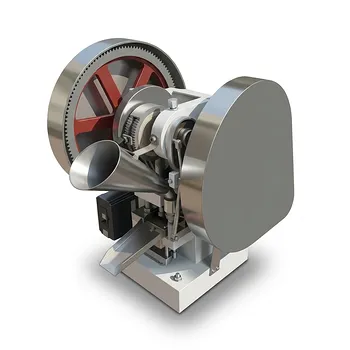
6 Ton Variable Frequency Single Punch Tablet Press
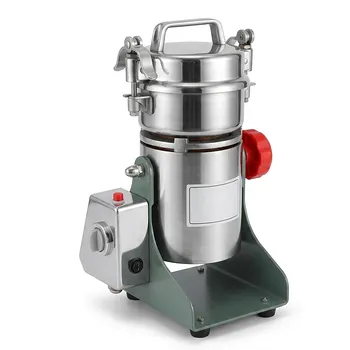
High Speed Swing Type Laboratory Pulverizer for Fine Powder Grinding and Sample Preparation

Small Trace Sample High Speed Pulverizer Grinder Laboratory Powder Mill
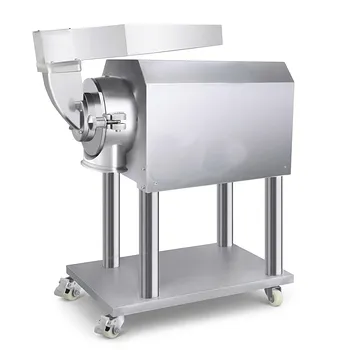
High Speed Small Laboratory Crusher for Dry Material Sample Preparation

Small High-Speed Laboratory Grinder for Powder Processing

Automatic Vibrating Powder Feeder for Laboratory Material Processing Precision Vibratory Hopper Feeder for Granular and Powder Material Handling Industrial Grade Vibrating Tray Feeder for Consistent Material Sample Preparation
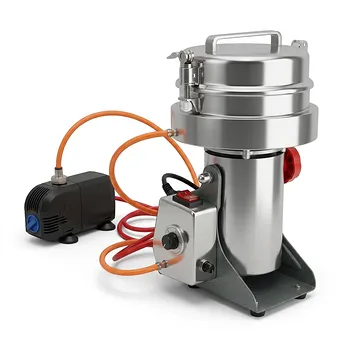
Water Cooled High Speed Grinder with Cryogenic Option for Laboratory Sample Preparation
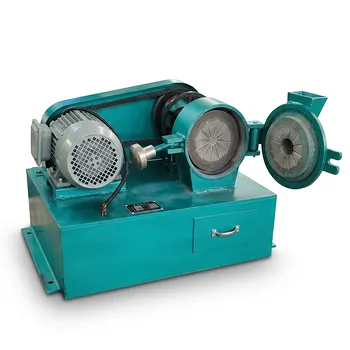
Laboratory Disc Mill Medium Hard Material Grinding Coal Coke Ore Pulverizer
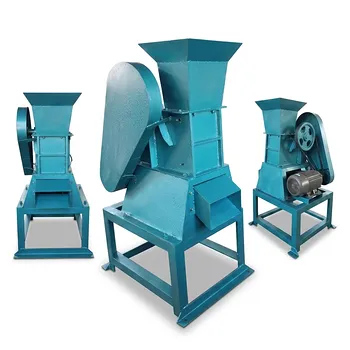
Custom Raised Height Laboratory Jaw Crusher for Precision Sample Preparation in Material Science
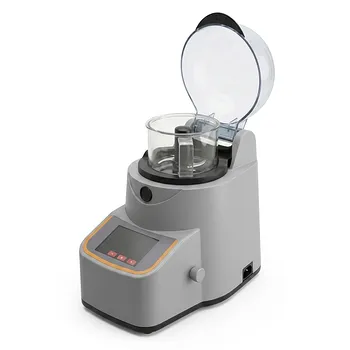
Industrial Knife Mill for Food and Biological Sample Preparation High Speed Laboratory Homogenizer
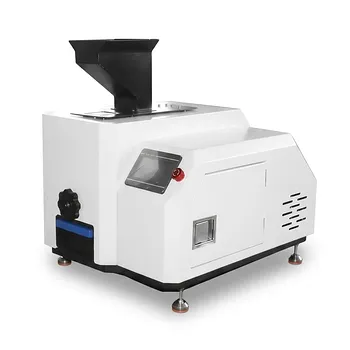
Laboratory Jaw Crusher 2025 Model for Ore and Brittle Material Crushing
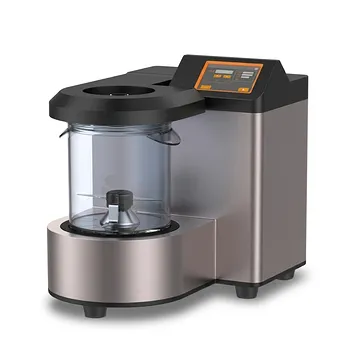
Laboratory Knife Mill for Large Volume Sample Homogenization and Food Preparation
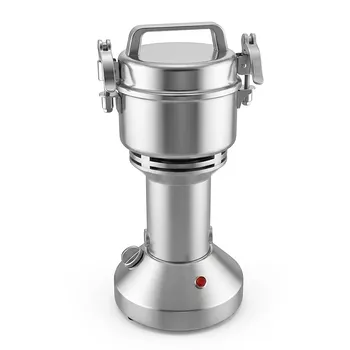
Small High Speed Upright Grinder for Laboratory Sample Preparation
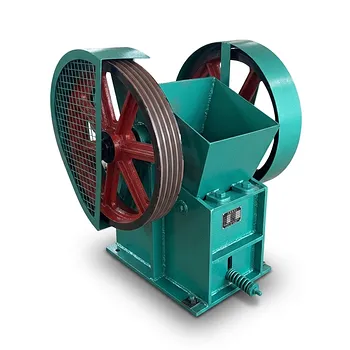
150x250mm Laboratory Jaw Crusher for Medium Hard Material Crushing and Sample Preparation
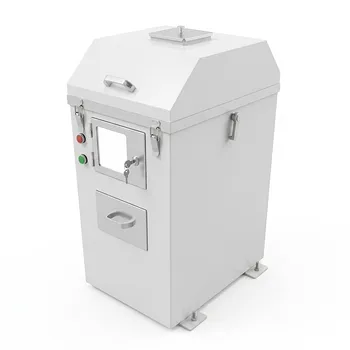
Sealed Double Roll Crusher for Laboratory Sample Preparation of Medium Hardness Materials
Laboratory Sealed Hammer Blade Crusher Divider for High Hardness Sample Preparation