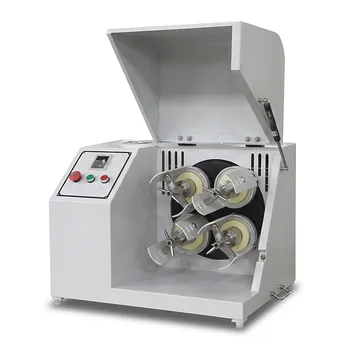
What role does a high-energy planetary ball mill play in processing HC-Sn mixtures? Optimize Battery Material Performance
Updated 4 months ago
High-energy planetary ball milling serves as the critical mechanism for achieving energy-level homogenization and mechanical alloying in hard carbon-tin (HC-Sn) composites. By applying high-frequency impact and shear forces, the mill transforms separate precursor powders into a refined, uniform mixture where tin particles are distributed at the micron or nanometer scale within the hard carbon matrix.
The primary role of the high-energy planetary ball mill is to facilitate mechanical alloying and particle refinement, ensuring a uniform distribution of tin within hard carbon to enhance electrochemical reactivity. However, this process requires precise control to prevent structural damage to the carbon matrix that can compromise battery efficiency.
Mechanisms of Material Transformation
High-Frequency Impact and Shear
The planetary motion creates a high-energy environment where grinding media collide with the material at extreme velocities. These impact and shear forces are responsible for the forced mechanical mixing of the hard carbon and tin powders.
Particle Size Refinement
The mill effectively pulverizes carbonized blocks and metal powders into submicron or nano-scale particles. This reduction in size increases the specific surface area, which is vital for improving the rate capability of the resulting battery electrode.
Mechanical Alloying and Homogenization
Beyond simple mixing, the high energy induces intense plastic deformation, allowing tin to integrate deeply with the hard carbon. This prevents component segregation and ensures that the active materials are uniformly distributed at the atomic or molecular scale.
Enhancing Electrochemical Performance
Managing Volume Expansion
In materials like tin, which undergo significant volume changes during lithiation or sodiation, ball milling can induce solid-state amorphization. This amorphous structure provides better ductility, helping to mitigate the mechanical stresses that lead to particle pulverization and capacity fade.
Improving Conductivity and Reactivity
By breaking down large agglomerates and ensuring a uniform blend of active substances and conductive additives, the mill enhances electronic conductivity. This homogenization leads to more consistent electrochemical reactions across the entire electrode surface.
Optimizing Slurry Coating
The precise control over particle size distribution achieved during milling directly impacts the quality of the electrode manufacturing process. Uniformly sized particles improve the rheology of the battery slurry, leading to smoother, more consistent coatings on the current collector.
Understanding the Trade-offs
Risk of Structural Damage
While high energy is required for mixing, excessive milling can damage the internal microporous structure of the hard carbon. These micropores are often essential for ion storage; destroying them can lead to a significant loss in storage capacity.
Over-Pulverization and Surface Area
There is a "sweet spot" for particle size; over-pulverization can create an excessively high surface area. This often leads to increased side reactions with the electrolyte, which negatively impacts the initial coulombic efficiency (ICE) and long-term electrochemical stability.
Energy-Level Mixing vs. Material Fatigue
The energy required to achieve a stable solid solution must be balanced against the mechanical fatigue of the material. Intense milling can introduce high dislocation densities, which, while sometimes beneficial for hardness, may create defects that trap ions irreversibly.
How to Apply This to Your Process
When integrating a high-energy planetary ball mill into your battery material production, your approach should vary based on your specific performance targets:
- If your primary focus is High Rate Capability: Prioritize particle refinement and the disruption of disordered carbon stacking to maximize the active surface area and ion diffusion pathways.
- If your primary focus is Cycle Life and Stability: Use moderate energy settings to induce amorphization in the tin phase while carefully preserving the microporous architecture of the hard carbon.
- If your primary focus is High Initial Coulombic Efficiency (ICE): Limit milling time and speed to prevent over-pulverization, thereby minimizing the surface area exposed to electrolyte degradation.
The successful implementation of high-energy milling rests on balancing the necessity of atomic-scale homogenization against the preservation of the carbon matrix's structural integrity.
Summary Table:
| Key Mechanism | Main Benefit for HC-Sn Mixtures | Potential Trade-off/Risk |
|---|---|---|
| Mechanical Alloying | Atomic-scale homogenization of Sn in Hard Carbon | Structural damage to carbon micropores |
| Particle Refinement | Increased specific surface area & rate capability | Over-pulverization reduces Coulombic efficiency |
| Solid-State Amorphization | Mitigates Sn volume expansion during cycling | Higher dislocation density may trap ions |
| Energy-Level Mixing | Enhanced electronic conductivity & slurry quality | Mechanical fatigue of the material matrix |
Elevate Your Battery Material Research with Precision Engineering
Achieving the perfect balance between material homogenization and structural integrity is critical for next-generation energy storage. At our laboratory equipment division, we provide complete laboratory sample preparation solutions tailored for material science.
We specialize in high-performance powder processing equipment, including:
- Advanced Mills: High-energy planetary ball mills, jet mills, and liquid nitrogen cryogenic grinders for nano-scale refinement.
- Compaction Solutions: A full spectrum of hydraulic presses, including Cold/Warm Isostatic Presses (CIP/WIP), vacuum hot presses, and XRF pellet presses.
- Sieving & Mixing: Precision vibratory sieve shakers and high-efficiency defoaming mixers.
Whether you are refining hard carbon-tin composites or optimizing electrode slurries, our expertise ensures you get consistent, scalable results. Contact us today to find the ideal solution for your lab!
References
- Giovanni Gammaitoni, Matteo Bianchini. Spray-dried hard carbon–Sn composites for energy-dense Na-ion batteries. DOI: 10.1039/d5eb00188a
Mentioned Products
- High Energy Laboratory Planetary Ball Mill for Nano Grinding and Colloidal Mixing of Hard and Brittle Materials
- High Energy Planetary Ball Mill for Nano Scale Grinding and Colloidal Mixing in Material Science Research
- High Energy Omnidirectional Planetary Ball Mill 16L
- High Energy Omnidirectional Planetary Ball Mill 20L
- 8L Planetary Ball Mill for Laboratory Grinding and Sample Preparation
People Also Ask
- What role does a high-energy planetary ball mill play in processing quenched bioactive glass? Achieve Nano-Scale Precision
- What role does a high-energy planetary ball mill play in magnesium-based hydrogen storage alloy preparation?
- What is the primary function of a high-energy planetary ball mill in Ni2MnSn synthesis? Optimize Solid-State Alloying.
- What role does a planetary ball mill play in nano-mineral filler prep? Achieve Sub-100nm Precision & Performance
- What is the role of a high-energy planetary ball mill in Li2ZrO3 and LBS prep? Achieve Superior Electrolyte Density

Tech Team · PowderPreparation
Last updated on Jun 03, 2026
Related Products

High Energy Laboratory Planetary Ball Mill for Nano Grinding and Colloidal Mixing of Hard and Brittle Materials
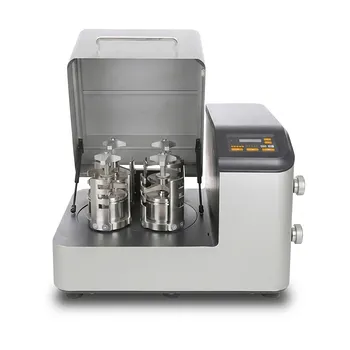
High Energy Planetary Ball Mill for Nano Scale Grinding and Colloidal Mixing in Material Science Research

High Energy Omnidirectional Planetary Ball Mill 16L
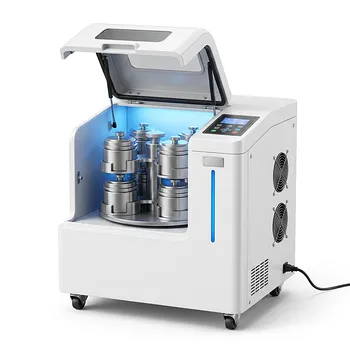
High Energy Omnidirectional Planetary Ball Mill 20L

8L Planetary Ball Mill for Laboratory Grinding and Sample Preparation
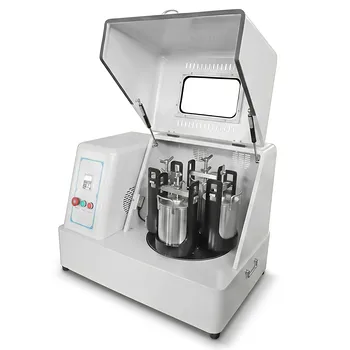
Vertical Square Planetary Ball Mill for Laboratory Sample Preparation and Nanoscale Grinding

High Energy Laboratory Planetary Ball Mill for Nano Grinding and Material Science Sample Preparation

Miniature Planetary Ball Mill with Vacuum Grinding and High Efficiency for Laboratory Sample Preparation
Planetary Ball Mill 12L

Vertical Production Planetary Ball Mill for High Throughput Powder Processing

High Energy Planetary Ball Mill for Nano Scale Grinding and Mechanical Alloying
Heavy Duty Horizontal Planetary Ball Mill for Efficient Industrial Grinding and Sample Preparation
360° Rotating Omnidirectional Laboratory Planetary Ball Mill for Homogeneous Ultra-Fine Grinding and Mixing
Dual Station Planetary Ball Mill 24L
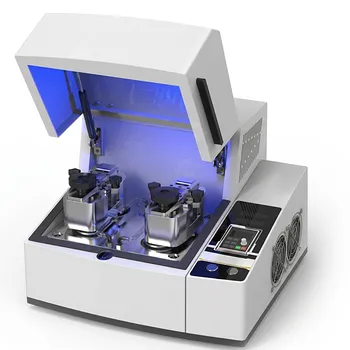
Laboratory Nano High Energy Ball Mill Ultrafine Grinding Mechanical Alloying

High Energy Hybrid Vibratory Ball Mill for Grinding Mixing and Cell Disruption
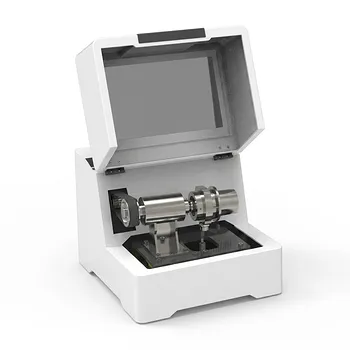
Single Tank High Energy Vibratory Ball Mill for Laboratory Grinding and Mixing
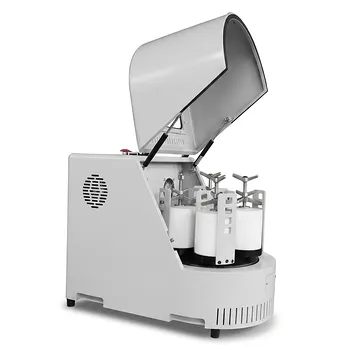
Vertical Semi Circular Planetary Ball Mill for Laboratory Precision Grinding

Nano High Energy Vibratory Ball Mill for Laboratory Sample Preparation