What role do standard test sieves play in the manufacturing process of CNF/PA6 composite powders? Ensure Particle Quality
Updated 3 months ago
Standard test sieves serve as the essential quality control gate for Cellulose Nanofiber (CNF)/Polyamide 6 (PA6) composite powders by ensuring precise particle size classification. By removing oversized particles and agglomerates—specifically those larger than 173 micrometers using an 80-mesh sieve—the sieving process guarantees that the powder meets the rigorous requirements for industrial processing. This standardization is critical for achieving the necessary flowability and packing density for advanced manufacturing techniques like Powder Bed Fusion (PBF).
The core role of test sieves in CNF/PA6 production is to transform raw, ground material into a highly uniform powder by eliminating structural inconsistencies. This process directly dictates the surface finish, internal density, and mechanical reliability of the final 3D-printed or sintered components.
The Critical Role of Particle Classification
Removing Oversized Particles and Agglomerates
In the manufacturing of CNF/PA6 composites, materials are often subjected to cryogenic ball milling, which can leave behind oversized particles or clusters. Standard test sieves effectively filter out these inconsistencies, such as particles exceeding 173 micrometers, which would otherwise compromise the material's integrity.
Optimizing Powder Bed Fusion (PBF) Performance
For PBF 3D printing to be successful, the powder must be leveled into thin, perfectly flat layers. Precise particle size distribution ensures that the leveling blade or roller can spread the composite powder without dragging or creating voids.
Improving Internal Density and Surface Quality
A uniform particle size allows for tighter packing of the powder during the fusion process. This leads to higher internal density and a smoother surface finish on the printed parts, as there are no large, stray particles to create irregularities.
Enhancing Material Flow and Processing Stability
Improving Flowability for Feeding Systems
In processes like cold spray or automated feeding, powder flowability is paramount. By removing powder agglomerates formed during grinding, sieves ensure a stable and continuous powder feed, which is essential for uniform coating thickness and quality.
Ensuring Uniformity in Sintering and Molding
When using Spark Plasma Sintering (SPS), the powder must fill the molds evenly to prevent density variations. Sieving with a 0.3mm aperture acts as a granulation step, breaking up loose lumps and ensuring the powder flows into every corner of the mold.
Refining Fiber Consistency
Standard test sieves are also used during the initial refining of wet cellulose pulp or bacterial cellulose nanofibers. They intercept coarse, un-dissociated particles that failed to break down during mechanical processing, ensuring the resulting fibers have a uniform length and texture.
Understanding the Trade-offs and Limitations
The Challenge of Mesh Blinding
Very fine powders, particularly those containing nanofibers, have a tendency to clog or "blind" the sieve mesh. This requires constant monitoring and potentially the use of ultrasonic deblinding systems to maintain a consistent flow and accurate classification.
Mechanical Limits of Sieving
While sieves are excellent for classification, they cannot correct fundamental issues in the milling process. If the primary grinding stage is inefficient, a sieve will simply remove a large portion of the material as waste rather than refining it, leading to low material yield.
Impact on Processing Speed
Higher precision requirements (finer meshes) often lead to slower throughput in the manufacturing line. Manufacturers must balance the need for extreme uniformity with the economic necessity of high-volume production.
How to Apply This to Your Manufacturing Process
Making the Right Choice for Your Goal
To achieve the best results with CNF/PA6 composite powders, your choice of sieve and processing stage must align with your final production method.
- If your primary focus is PBF 3D Printing: Utilize an 80-mesh (173μm) sieve to ensure the powder bed levels correctly and achieves high part density.
- If your primary focus is Cold Spray Coating: Focus on removing agglomerates after cryogenic milling to ensure continuous, non-clogging powder flow.
- If your primary focus is SPS or Molding: Use a 0.3mm precision sieve as a granulation tool to break up lumps formed during the drying process for uniform mold filling.
- If your primary focus is Fiber Consistency: Employ precision meshes (such as 212 μm) during the wet pulp stage to remove coarse, un-dissociated fibers before they are integrated into the PA6 matrix.
By treating the sieving process as a foundational step rather than an afterthought, you ensure the technical and commercial success of your CNF/PA6 composite materials.
Summary Table:
| Manufacturing Stage | Role of Test Sieving | Key Benefit |
|---|---|---|
| Post-Milling | Removes oversized particles & agglomerates | Ensures material integrity & structural consistency |
| PBF 3D Printing | Precise particle size classification | Improves bed leveling, packing density & surface finish |
| Feeding & Coating | Eliminates lumps and clusters | Guarantees stable flow and uniform coating thickness |
| SPS & Molding | Granulation and lump breaking | Ensures uniform mold filling and consistent internal density |
Optimize Your Composite Material Production with KINTEK
Achieve unmatched precision in your material science research and manufacturing. KINTEK provides complete laboratory sample preparation solutions designed to meet the rigorous demands of CNF/PA6 processing.
Our specialized equipment range includes:
- Powder Processing: Advanced crushers, liquid nitrogen cryogenic grinders, and high-energy mills (planetary, jet, and disc).
- Classification & Mixing: Precision vibratory and air-jet sieve shakers with high-quality test sieves, alongside powder and defoaming mixers.
- Compaction Excellence: A full spectrum of hydraulic presses, including Cold/Warm Isostatic Presses (CIP/WIP), vacuum hot presses, and XRF pellet presses.
Whether you are refining nanofibers or perfecting powders for Powder Bed Fusion, our tools ensure the uniformity and reliability your project requires. Contact our technical experts today to discuss your specific laboratory needs and discover how KINTEK can enhance your workflow.
References
- Ryota Inoue, Takashi Date. Characteristics of CNF-reinforced PA6 for PBF 3D Printers. DOI: 10.2524/jtappij.78.236
Mentioned Products
- Laboratory Vibratory Test Sieve Shaker for Precision Particle Size Analysis and Powder Grading
- Laboratory Air Jet Sieving Machine for Fine Powder Particle Size Analysis and Deagglomeration
- Small Laboratory Vibratory Sieve Shaker for Powder Gradation and Particle Size Analysis
- High Speed Air Induced Ultrafine Pulverizer Laboratory Superfine Powder Mill for Pharmaceutical and Material Science Sample Preparation
- Vertical Production Planetary Ball Mill for High Throughput Powder Processing
People Also Ask
- What role does a laboratory sieve shaker play in determining PDI? Achieve Precision in Biomass Quality Testing
- What are the functions of sieve shakers for coconut shell powder? Achieve Precise Particle Size & Quality Control.
- What function does a laboratory sieve shaker perform in the PSD analysis of residual soil? Ensure Precise Grading
- What is the role of a laboratory sieve shaker in the preparation of plantain peel adsorbents? Standardize Particle Size
- What is the function of a laboratory vibratory sieve shaker? Enhance Coal Particle Size Distribution (PSD) Analysis

Tech Team · PowderPreparation
Last updated on Jun 03, 2026
Related Products
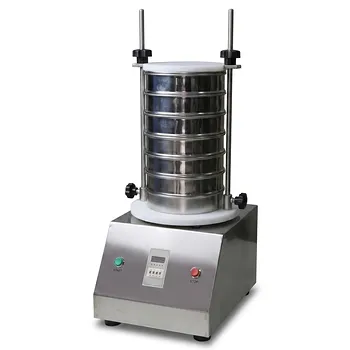
Laboratory Vibratory Test Sieve Shaker for Precision Particle Size Analysis and Powder Grading
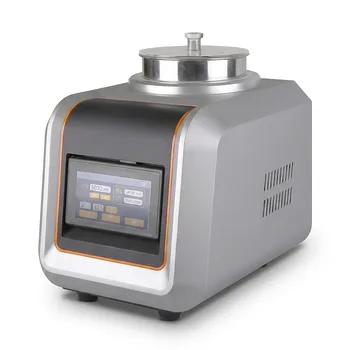
Laboratory Air Jet Sieving Machine for Fine Powder Particle Size Analysis and Deagglomeration
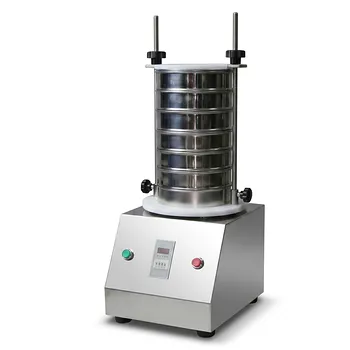
Small Laboratory Vibratory Sieve Shaker for Powder Gradation and Particle Size Analysis
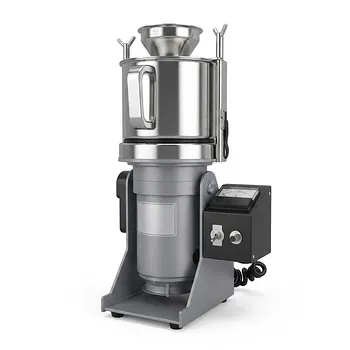
High Speed Air Induced Ultrafine Pulverizer Laboratory Superfine Powder Mill for Pharmaceutical and Material Science Sample Preparation

Vertical Production Planetary Ball Mill for High Throughput Powder Processing
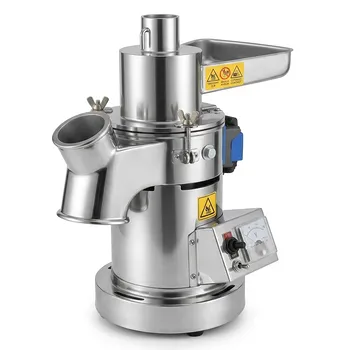
Continuous Feeding Grinder High Efficiency Pulverizer for Lab Sample Preparation
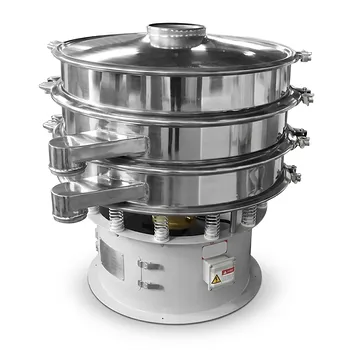
Three Dimensional Rotary Vibrating Sieve
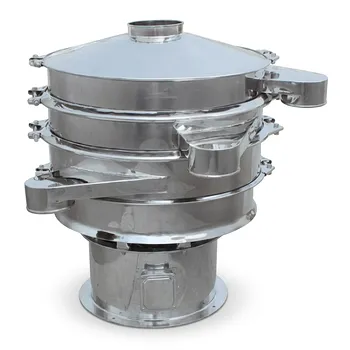
Stainless Steel Rotary Vibrating Sieve High Precision Circular Vibratory Separator Industrial Powder Grading Machine Multi Layer Sifting Equipment
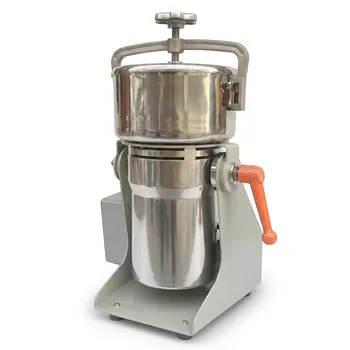
High Speed Laboratory Grinder Efficient Stainless Steel Powder Pulverizer Universal Material Science Mill for Sample Preparation
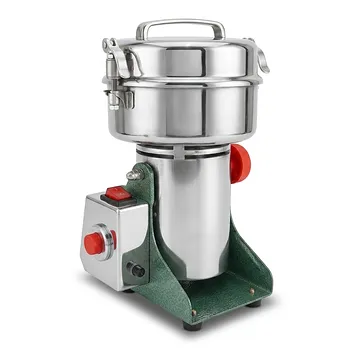
Small High-Speed Laboratory Grinder for Powder Processing
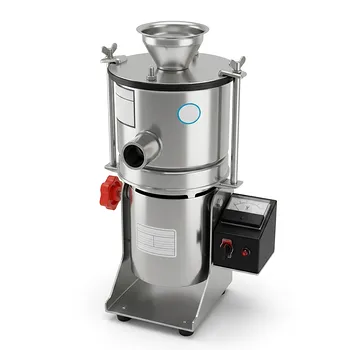
Air Guided Ultrafine Pulverizer High Speed Laboratory Powder Grinder for Chemical and Material Processing