What role do standard test sieves and mechanical sieve shakers play in the physical analysis of phosphate coarse tailings?
Updated 3 months ago
Standard test sieves and mechanical sieve shakers are the primary instruments used to categorize phosphate coarse tailings into specific size fractions through defined aperture sizes. This process allows technicians to determine the Particle Size Distribution (PSD), which is the foundational metric for understanding how valuable phosphorus and unwanted gangue minerals are distributed throughout the material.
The core role of these tools is to provide a precise physical profile of tailings, enabling engineers to identify mineral enrichment patterns and optimize downstream processing stages like crushing, grinding, and separation.
Determining Particle Size Distribution (PSD)
Identifying Mineral Enrichment Patterns
Standard test sieves allow for the precise separation of tailings into distinct grain sizes, such as fractions larger than 2mm or smaller than 1mm. By analyzing these individual fractions, researchers can identify which size ranges contain the highest concentration of phosphorus versus gangue minerals.
Establishing Critical Engineering Indicators
Mechanical sieve shakers assist in calculating vital statistical markers, such as the D80 (the size at which 80% of the sample passes). These indicators provide the essential physical data required to establish a complete PSD curve, which is the baseline for all subsequent metallurgical testing.
Mapping Physical Composition
By utilizing a series of sieves with varying mesh apertures, the analysis reveals the mass percentage of each particle size group. This mapping is critical for determining whether the coarse tailings require further liberation or if they are suitable for immediate disposal or alternative use.
Operational Mechanisms of Analysis
High-Frequency Mechanical Vibration
Laboratory shakers utilize high-frequency vibration to ensure that particles are constantly agitated and presented to the sieve apertures. This mechanical drive forces the separation of mixed-grain samples more efficiently and consistently than manual shaking.
Multi-Layered Sieve Configurations
Technicians stack sieves in a nested hierarchy, with the largest apertures at the top and the finest at the bottom. This allows a single mechanical cycle to separate a bulk sample into multiple, well-defined size fractions simultaneously, ensuring repeatability in the data.
Dry and Wet Sieving Capabilities
While many analyses use dry sieving, mechanical shakers can also support wet sieving for material containing fine particles or clays that tend to agglomerate. This flexibility ensures that the fine particle content—those passing through a 75μm or No. 200 sieve—is accurately accounted for in the final report.
Strategic Impact on Processing
Optimizing Crushing and Grinding
The data generated by sieve analysis directly informs the configuration of crushing and grinding circuits. By knowing the exact size of the particles, engineers can adjust mill settings to avoid over-grinding, which saves energy and prevents the creation of excessive "slimes" that hinder recovery.
Selecting Separation Technologies
Understanding the PSD is the first step in deciding between gravity separation or flotation processes. If the valuable phosphorus is concentrated in coarser fractions, gravity-based methods may be prioritized; if it is locked in fine particles, flotation becomes the necessary route.
Understanding the Trade-offs
Limits of Physical Dimensions
Sieve analysis measures the second-smallest dimension of a particle, which can lead to inaccuracies if the material is highly elongated or needle-like. While excellent for coarse tailings, sieving becomes increasingly difficult and less accurate for particles significantly smaller than 38 or 45 micrometers.
Mechanical Attrition
The vigorous action of a mechanical shaker can sometimes cause particle degradation, where softer minerals break down during the test itself. This can lead to a "fines shift" in the data, potentially misrepresenting the actual size distribution of the material as it exists in the production line.
Maintenance and Calibration
Standard test sieves are precision instruments that wear over time, leading to aperture enlargement. Regular calibration and replacement are mandatory; otherwise, the data used to optimize a multi-million dollar processing plant will be fundamentally flawed.
Applying Analysis to Process Design
Analysis of phosphate coarse tailings should be used as a roadmap for operational efficiency and resource recovery.
- If your primary focus is maximizing mineral recovery: Use sieve analysis to identify the "liberation size" where phosphorus is most easily separated from gangue.
- If your primary focus is reducing operational costs: Focus on D80 data to calibrate grinding mills, ensuring you are not wasting energy by grinding material finer than necessary.
- If your primary focus is environmental stability: Use the PSD to determine the drainage and compaction characteristics of the tailings for safer storage in tailings facilities.
Precise physical analysis through sieving transforms raw tailings into actionable data, ensuring that every subsequent processing decision is rooted in the actual physical characteristics of the material.
Summary Table:
| Analysis Stage | Key Mechanism/Metric | Strategic Impact on Processing |
|---|---|---|
| Size Fractioning | Particle Size Distribution (PSD) | Identifies phosphorus vs. gangue enrichment |
| Statistical Mapping | D80 Calculation | Calibrates grinding circuits to save energy |
| Physical Separation | High-Frequency Vibration | Ensures repeatable data for process design |
| Advanced Testing | Wet & Dry Sieving Capabilities | Accurately accounts for fine particle content |
Precision Solutions for Your Material Science Laboratory
Accurate physical analysis of phosphate tailings is the first step toward operational efficiency. We provide complete laboratory sample preparation solutions designed to give you total control over your material characteristics.
From initial size reduction to final powder compaction, our specialized equipment ensures your research is backed by precise, repeatable data. Our extensive product lines include:
- Sieving & Analysis: Vibratory and air-jet sieve shakers with a full range of precision test sieves.
- Milling & Grinding: Planetary ball mills, jet mills, and liquid nitrogen cryogenic grinders for ultimate liberation.
- Crushing & Mixing: Heavy-duty jaw/roll crushers and high-efficiency powder or defoaming mixers.
- Advanced Compaction: A full spectrum of hydraulic presses, including Cold/Warm Isostatic Presses (CIP/WIP), hot presses, and vacuum hot presses.
Whether you are a researcher optimizing mineral recovery or a distributor seeking reliable OEM/ODM support, we deliver the tools you need to succeed.
Ready to enhance your lab's performance? Contact our experts today to discuss your specific application and find the perfect equipment solution.
References
- Khadija Lalam, Ahmed Chebak. Evaluation and Optimization of Phosphate Recovery from Coarse Rejects Using Reverse Flotation. DOI: 10.3390/su16198614
Mentioned Products
- Stainless Steel Laboratory Vibratory Test Sieve Shaker
- Laboratory Vibratory Test Sieve Shaker for Precision Particle Size Analysis and Powder Grading
- Small Laboratory Vibrating Sieve Shaker for Precise Particle Size Analysis
- Small Laboratory Vibratory Sieve Shaker for Powder Gradation and Particle Size Analysis
- 三维电磁微量振动筛分仪
People Also Ask
- What function does a laboratory vibratory sieve shaker serve in the production process of metakaolin? Optimize Reactivity
- Why is a precision laboratory vibratory sieve shaker necessary for particle size control? Optimize Biomass Carbonization
- What is the function of a laboratory vibratory sieve shaker? Enhance Coal Particle Size Distribution (PSD) Analysis
- What role do laboratory vibratory sieve shakers and test sieves play before the molding of Nb-Cu composite powders?
- What is the primary function of a laboratory vibratory sieve shaker in the evaluation of sand liquefaction potential?

Tech Team · PowderPreparation
Last updated on Jun 03, 2026
Related Products
Stainless Steel Laboratory Vibratory Test Sieve Shaker
Laboratory Vibratory Test Sieve Shaker for Precision Particle Size Analysis and Powder Grading
Small Laboratory Vibrating Sieve Shaker for Precise Particle Size Analysis
Small Laboratory Vibratory Sieve Shaker for Powder Gradation and Particle Size Analysis
三维电磁微量振动筛分仪
Laboratory Air Jet Sieving Machine for Fine Powder Particle Size Analysis and Deagglomeration
Stainless Steel Rotary Vibrating Sieve High Precision Circular Vibratory Separator Industrial Powder Grading Machine Multi Layer Sifting Equipment
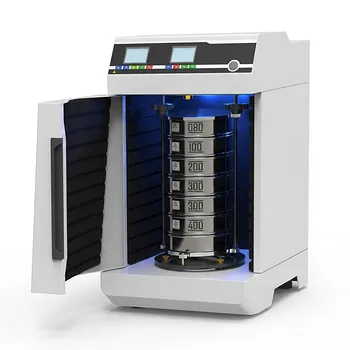
Laboratory Dry and Wet Three Dimensional Vibratory Sieve Shaker for Particle Analysis
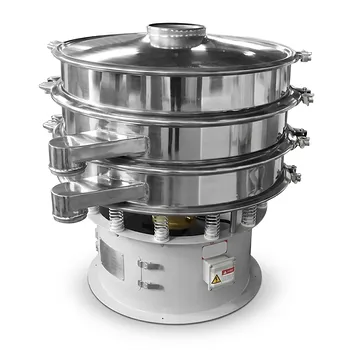
Three Dimensional Rotary Vibrating Sieve
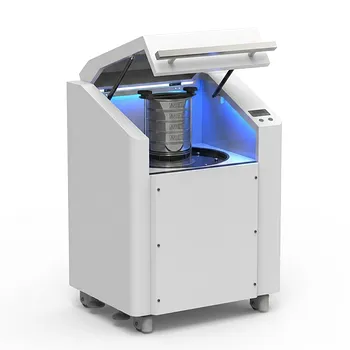
High Frequency Cabinet Type Three-Dimensional Rotary Vibrating Sieve Shaker for Dry Sieving and Particle Classification
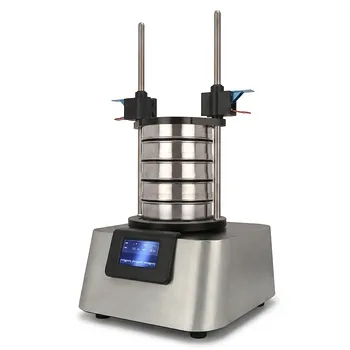
Vibratory Sieve Shaker Electromagnetic 3D Motion Powder Particle Size Analyzer for Dry and Wet Sieving
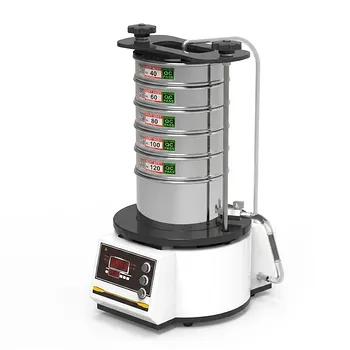
High Frequency Wet Three-Dimensional Vibrating Sieve Shaker for Dry and Wet Particle Size Analysis
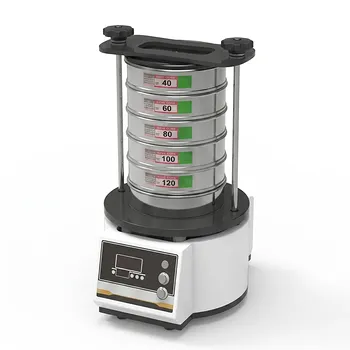
Dry Three Dimensional Vibratory Sieve Shaker
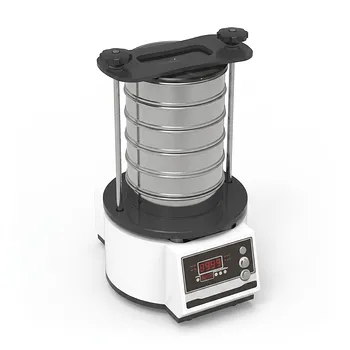
Tapping Oscillating Sieve Shaker for Dry and Wet Particle Size Analysis
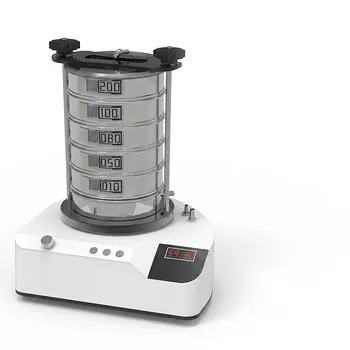
Heavy Duty Dry Three Dimensional Vibratory Sieve Shaker for Particle Separation
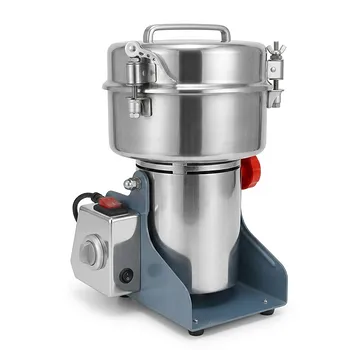
Small High-Speed Grinder for Efficient Laboratory Sample Preparation
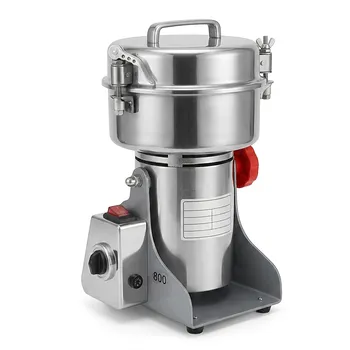
Small High-Speed Laboratory Grinder for Rapid Sample Preparation
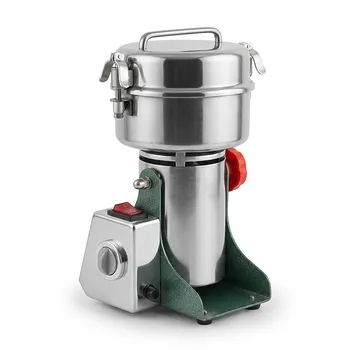
Small High-Speed Swing Grinder for Laboratory Sample Preparation
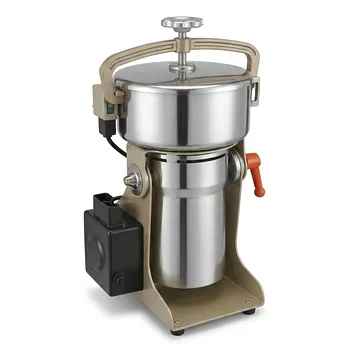
Multifunctional High Efficiency High Speed Laboratory Grinder