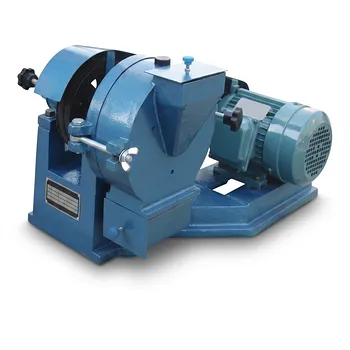
What role do lab sieves & shakers play in quantifying the TSI of quartz? Get precise thermal strength analysis.
Updated 4 months ago
Laboratory test sieves and vibratory sieve shakers are the essential tools for quantifying the Thermal Strength Index (TSI) by performing multi-stage particle size analysis of quartz residues. Following thermal and mechanical stress tests, these devices separate the material into precise size fractions, such as +16mm and 10-16mm. This separation provides the empirical data required to calculate the TSI, which serves as a vital indicator of a material's ability to withstand extreme furnace temperatures.
The primary role of sieving equipment in TSI determination is to categorize post-stress quartz fragments into specific size classes, providing the mathematical basis for measuring material degradation. This process allows engineers to scientifically predict how quartz from different origins will react to the severe thermal fluctuations of industrial processing.
The Mechanics of TSI Quantification
Multi-Stage Particle Size Analysis
After quartz is subjected to high-heat and mechanical stress, it begins to crack and disintegrate into smaller fragments. Vibratory sieve shakers automate the separation of these fragments by passing the material through a stack of graduated mesh screens. This multi-stage analysis ensures that every gram of residue is accounted for in its respective size category.
Defining Specific Size Fractions
The calculation of the Thermal Strength Index relies on the weight of specific fractions, typically focusing on larger remnants like the +16mm and 10-16mm cohorts. Precision sieving ensures these boundaries are strictly maintained, preventing "near-size" particles from falling into the wrong category. This accuracy is critical because even minor weighing errors in these fractions can lead to an incorrect TSI value.
The Science of Thermal Resistance
Quantifying Raw Material Cracking
TSI is essentially a measure of a material's internal structural integrity when faced with sudden expansion and contraction. By using laboratory test sieves, researchers can quantify exactly how much a sample has "crumbled" during testing. This data transforms a qualitative observation of "cracking" into a reproducible, scientific metric.
Evaluating Furnace Suitability
The ultimate goal of determining the TSI is to evaluate whether a specific source of quartz is suitable for high-temperature furnace environments. Material with a poor TSI will disintegrate rapidly, leading to clogging, uneven heat distribution, and reduced yield. Precision sieving allows operators to screen out low-quality raw materials before they reach the production line.
Precision Requirements and Equipment Role
Consistency in Particle Grading
To ensure the TSI is comparable across different batches or origins, the sieving process must be highly repeatable. Vibratory sieve shakers provide controlled vertical and circular motion, which ensures that particles are presented to the mesh openings in a consistent manner. This eliminates the human error associated with manual shaking.
Verification of Material Behavior
Beyond TSI, these tools help define the effective particle size distribution and the uniformity coefficient of the processed quartz. In related applications, such as ceramic sintering, this level of precision grading (down to 50 μm or 90 μm) is used to predict linear shrinkage and flexural strength. This broader context reinforces why high-quality sieving is the backbone of quartz quality control.
Understanding the Trade-offs
Equipment Wear and Mesh Blindness
Continuous sieving of hard materials like quartz can lead to abrasive wear on the sieve mesh, which gradually alters the aperture size. If the mesh becomes "blinded" (clogged with particles), the separation becomes inefficient and the resulting TSI data will be skewed. Regular calibration and the use of ultrasonic cleaners are often necessary to maintain accuracy.
Sample Representative Limits
The accuracy of the TSI is highly dependent on the initial sample size and the duration of the shaking cycle. If the sieve stack is overloaded, particles cannot reach the mesh surface, leading to an underestimation of the fines produced during thermal stress. Conversely, excessive shaking time can cause secondary mechanical breakage, artificially inflating the degradation results.
Applying TSI Data to Your Operations
How to Use This Information
The choice of sieving equipment and the rigor of the TSI testing protocol should align with your specific industrial requirements.
- If your primary focus is Raw Material Procurement: Use TSI data from precision sieving to compare quartz from different suppliers, ensuring the material can handle your specific furnace temperature profiles.
- If your primary focus is Process Optimization: Monitor changes in particle size distribution after drying or heating to verify the disintegration performance of your equipment.
- If your primary focus is Product Quality: Use fine-mesh sieving (50-200 μm) to ensure the quartz grading meets the requirements for high-strength ceramic sintering or industrial applications.
Quantifying the Thermal Strength Index through precision sieving is the only way to transform raw material uncertainty into predictable furnace performance.
Summary Table:
| Feature | Role in TSI Quantification | Key Importance |
|---|---|---|
| Vibratory Shaker | Automates multi-stage separation | Ensures repeatability & eliminates human error |
| Test Sieves | Categorizes fragments (e.g., +16mm) | Provides empirical data for TSI calculation |
| Size Fractions | Identifies +16mm and 10-16mm cohorts | Essential basis for measuring material degradation |
| Accuracy | Prevents "near-size" particle errors | Predicts material behavior in extreme heat |
Elevate Your Material Analysis with Precision Solutions
Accurate quantification of the Thermal Strength Index (TSI) is critical for industrial success. At [Company Name], we provide complete laboratory sample preparation solutions tailored for material science.
Whether you need high-performance vibratory or air-jet sieve shakers for quartz grading, or specialized crushers and planetary ball mills for sample reduction, our equipment ensures the repeatable results your research demands. We also manufacture a full spectrum of compaction equipment, including Cold/Warm Isostatic Presses (CIP/WIP) and vacuum hot presses, to support your entire workflow from powder processing to final testing.
Ready to optimize your lab's efficiency and data accuracy?
Contact our experts today for a professional consultation and quote!
References
- Jaroslav Legemza, Jaroslav Briančin. New Approach in Research of Quartzes and Quartzites for Ferroalloys and Silicon Production. DOI: 10.3390/met11040670
Mentioned Products
- Laboratory Vibratory Test Sieve Shaker for Precision Particle Size Analysis and Powder Grading
- 三维电磁微量振动筛分仪
- Laboratory Air Jet Sieving Machine for Fine Powder Particle Size Analysis and Deagglomeration
- Tapping Oscillating Sieve Shaker for Dry and Wet Particle Size Analysis
- Dry Three Dimensional Vibratory Sieve Shaker
People Also Ask
- What role does a laboratory sieve shaker play in determining PDI? Achieve Precision in Biomass Quality Testing
- What are the functions of sieve shakers for coconut shell powder? Achieve Precise Particle Size & Quality Control.
- What function does a laboratory sieve shaker perform in the PSD analysis of residual soil? Ensure Precise Grading
- What is the role of a laboratory sieve shaker in the preparation of plantain peel adsorbents? Standardize Particle Size
- What is the function of a laboratory vibratory sieve shaker? Enhance Coal Particle Size Distribution (PSD) Analysis

Tech Team · PowderPreparation
Last updated on May 14, 2026
Related Products
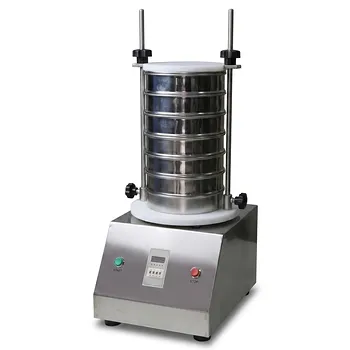
Laboratory Vibratory Test Sieve Shaker for Precision Particle Size Analysis and Powder Grading
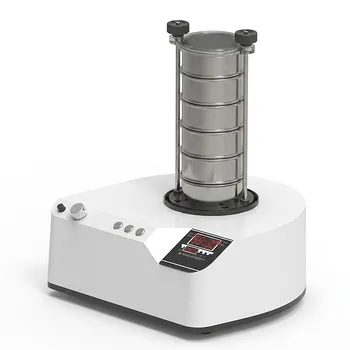
三维电磁微量振动筛分仪
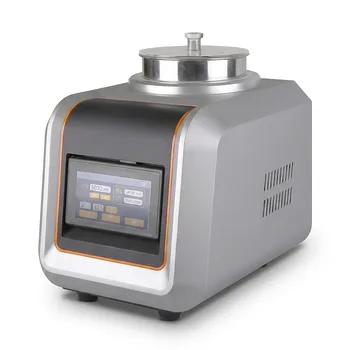
Laboratory Air Jet Sieving Machine for Fine Powder Particle Size Analysis and Deagglomeration
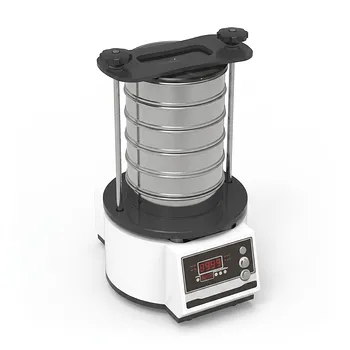
Tapping Oscillating Sieve Shaker for Dry and Wet Particle Size Analysis
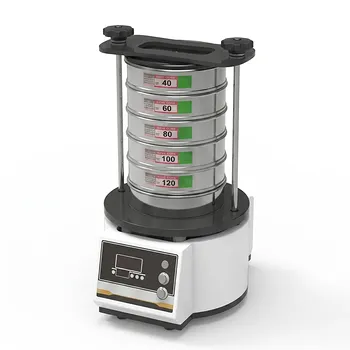
Dry Three Dimensional Vibratory Sieve Shaker
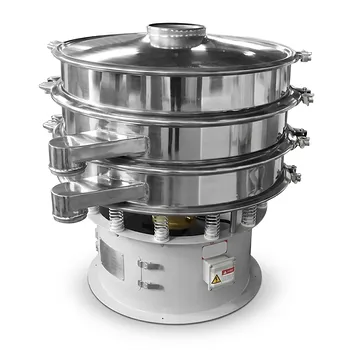
Three Dimensional Rotary Vibrating Sieve
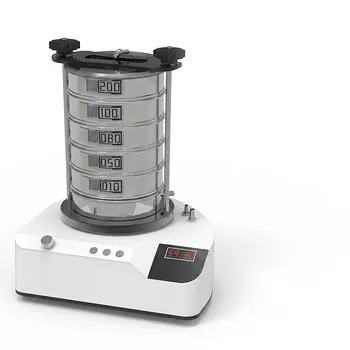
Heavy Duty Dry Three Dimensional Vibratory Sieve Shaker for Particle Separation
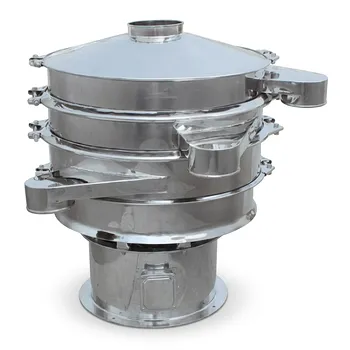
Stainless Steel Rotary Vibrating Sieve High Precision Circular Vibratory Separator Industrial Powder Grading Machine Multi Layer Sifting Equipment
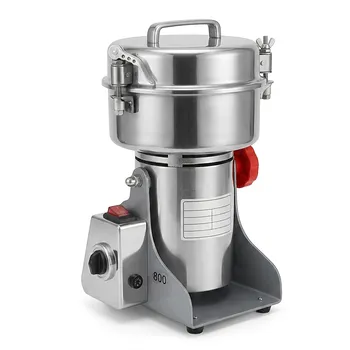
Small High-Speed Laboratory Grinder for Rapid Sample Preparation
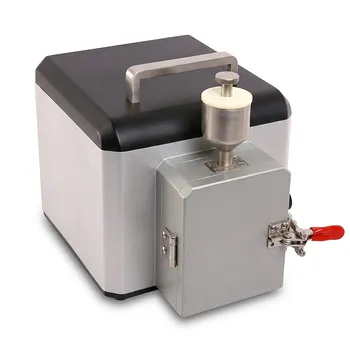
Portable Cutting Mill for Laboratory Sample Preparation and RoHS WEEE Compliance Testing
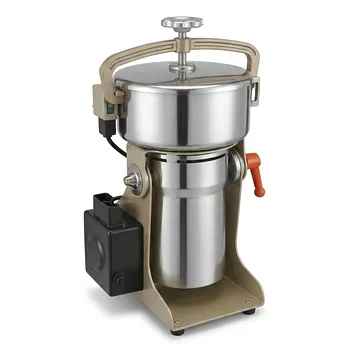
Multifunctional High Efficiency High Speed Laboratory Grinder
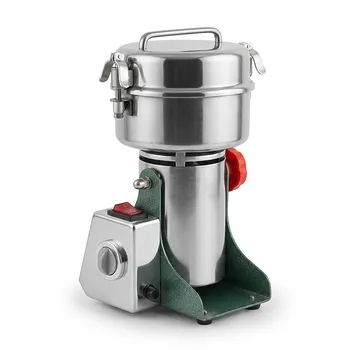
Small High-Speed Swing Grinder for Laboratory Sample Preparation
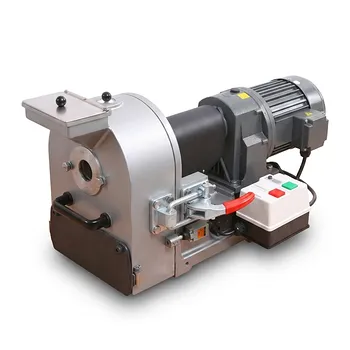
Laboratory Disc Mill for Fine Sample Preparation of Hard and Brittle Materials