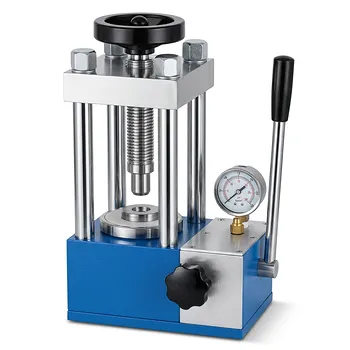
What role do hydraulic presses play in ceramic-steel brazing? Achieve Precise Alignment and Superior Joint Integrity
Updated 5 months ago
Hydraulic presses and precision fixtures serve as the critical mechanical foundation for brazing ceramic and steel. These tools are used to accurately position and pre-fasten the ceramic substrate, filler foils, and steel components before they enter the furnace. By applying controlled assembly pressure, they eliminate gaps and ensure a tight fit, which is essential for uniform heat conduction and atomic diffusion during the brazing cycle.
The primary role of these tools is to optimize the contact interface between dissimilar materials. By minimizing joint clearance and stabilizing the assembly, they ensure predictable heat transfer and high-bond integrity in the final brazed joint.
The Mechanics of Pre-Brazing Assembly
Precision Alignment and Gap Reduction
The primary function of assembly fixtures is to maintain the spatial relationship between the ceramic and steel components. Because these materials often have different thermal expansion rates, precise positioning ensures the filler metal remains exactly where the bond is required.
Hydraulic presses apply specific assembly pressures to "seat" the components together, effectively reducing initial gaps. This tight fit is necessary to prevent the filler foil from shifting or the assembly from becoming misaligned during the transition into the heating chamber.
Enhancing Thermal and Atomic Diffusion
A successful brazed joint depends on efficient heat conduction across the material layers. By compressing the ceramic, filler, and steel, these tools create a high-density contact path that allows heat to flow uniformly through the assembly.
This close contact also promotes atomic diffusion during the brazing process. When the materials are pressed tightly together, the filler metal can more easily migrate into the surfaces of the ceramic and steel, resulting in a consistent and robust brazed seam width.
Broader Applications in Ceramic Preparation
Powder Consolidation and Density Control
Beyond the final assembly, hydraulic presses are often the standard tools for the initial creation of the ceramic components. They are used to compact oxide powders into "green bodies" with specific geometric shapes and internal densities.
Precise pressure control during this stage reduces internal micro-defects and pores. This establishes the necessary structural foundation, ensuring the ceramic can withstand the high-temperature environment of the subsequent sintering and brazing processes.
Verifying Material Load-Bearing Capacity
Hydraulic presses also function as critical quality evaluation tools for the materials involved. They can apply controlled, increasing vertical loads to test the compressive strength of ceramic aggregates or mortars.
By recording the point of failure, engineers can verify if a specific ceramic formulation has the mechanical performance required for its intended application. This data ensures that the ceramic component will not fail under the mechanical stresses experienced during brazing or final use.
Understanding the Trade-offs and Pitfalls
The Risk of Brittle Fracture
While pressure is necessary for a tight fit, ceramics are inherently brittle and sensitive to point-loading. If a hydraulic press applies uneven pressure or exceeds the material's structural limit, it can cause micro-cracks or immediate catastrophic failure.
Thermal Expansion Mismatch
Fixtures must be designed to account for the Coefficient of Thermal Expansion (CTE) differences between the tool, the steel, and the ceramic. If a fixture is too rigid, it may restrict the natural expansion of the parts during heating, leading to high internal stresses and joint failure.
Pressure Consistency vs. Seam Quality
Inconsistent pressure across the assembly surface leads to varying seam widths. This creates "starved joints" where the filler is too thin or large voids where the contact was insufficient, both of which significantly weaken the final bond.
Making the Right Choice for Your Project
High-quality brazing requires a balance between mechanical force and material limitations. Selecting the right assembly strategy depends on your specific performance requirements.
- If your primary focus is joint strength and hermeticity: Prioritize high-precision fixtures that ensure zero-gap contact and uniform pressure across the entire bonding surface.
- If your primary focus is dimensional stability: Utilize hydraulic presses with precision steel molds to ensure the ceramic green bodies have a consistent density before they ever reach the brazing stage.
- If your primary focus is quality control and durability: Use the hydraulic press to perform destructive compressive testing on material samples to verify load-bearing capacity.
Properly calibrated mechanical pressure is the invisible bridge that transforms individual components into a single, high-performance composite structure.
Summary Table:
| Key Role | Impact on Brazing Quality | Risk if Unmanaged |
|---|---|---|
| Alignment & Gap Reduction | Ensures zero-gap contact for uniform filler flow | Misalignment or starved joints |
| Thermal & Atomic Diffusion | Enhances heat conduction and bond strength | Voids and high-stress points |
| Powder Consolidation | Creates dense, defect-free ceramic green bodies | Internal cracks and failure |
| Material Testing | Verifies mechanical load-bearing capacity | Catastrophic brittle fracture |
Optimize Your Brazing Success with Precision Laboratory Solutions
At [Company Name], we provide complete laboratory sample preparation solutions tailored for material science. Our expertise in powder processing and compaction equipment ensures your ceramic and steel components meet the highest standards of integrity before and after brazing.
From high-performance hydraulic presses (CIP/WIP, Lab Presses, and Hot Presses) for superior density control to advanced planetary ball mills and grinders for material preparation, we offer the tools you need to eliminate micro-defects and ensure joint reliability.
Ready to enhance your lab's efficiency and bonding quality? Contact our specialists today to find the perfect equipment for your material processing needs!
References
- Yuqiang Liu, Hongmei Li. Research on Non-Reactive Brazed Connections of Steel/Ceramics. DOI: 10.11648/j.ajasr.20230903.16
Mentioned Products
- Ordinary Type Rotary Tablet Press for Pharmaceutical Chemical Food Electronic Industries
- Hydraulic Double Shaft Disperser for High Viscosity Liquid Mixing and Dispersion
- 6-Ton Small Single-Punch Tablet Press — Laboratory Powder & Granule Tableting Equipment / Tablet Forming Machine
- Enhanced 9 Punch Rotary Tablet Press for Powder Compaction
- 5 Ton Single Punch Tablet Press Laboratory Small Batch Production
People Also Ask
- Why is a laboratory hydraulic press required for FT-IR KBr pellets? Achieve Precise Sample Clarity for ZrC–SiC Analysis
- Why is a laboratory hydraulic press required to compress oyster shell powder before XRF analysis? Improve Data Accuracy.
- Why is vacuum sealing and flexible packaging necessary for Aluminum Titanate powders during CIP? Ensure Peak Density
- What are the advantages of using hardened steel molds and graphite spray for titanium powder? Ensure structural integrity
- What role does a high-strength stainless steel mold kit play in the uniaxial die compaction process? Ensuring Precision

Tech Team · PowderPreparation
Last updated on May 14, 2026
Related Products
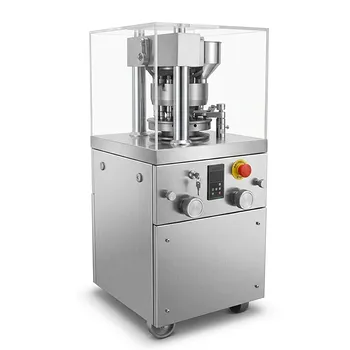
Ordinary Type Rotary Tablet Press for Pharmaceutical Chemical Food Electronic Industries
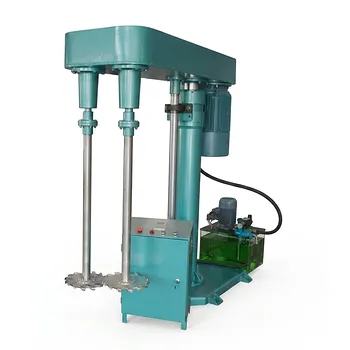
Hydraulic Double Shaft Disperser for High Viscosity Liquid Mixing and Dispersion
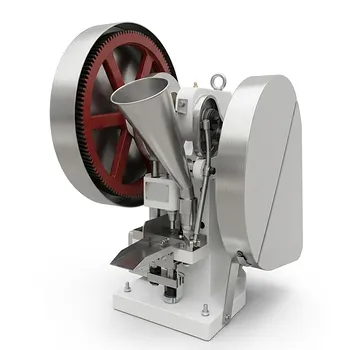
6-Ton Small Single-Punch Tablet Press — Laboratory Powder & Granule Tableting Equipment / Tablet Forming Machine
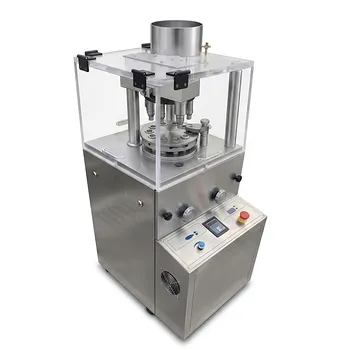
Enhanced 9 Punch Rotary Tablet Press for Powder Compaction
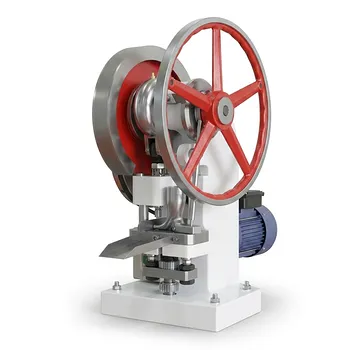
5 Ton Single Punch Tablet Press Laboratory Small Batch Production
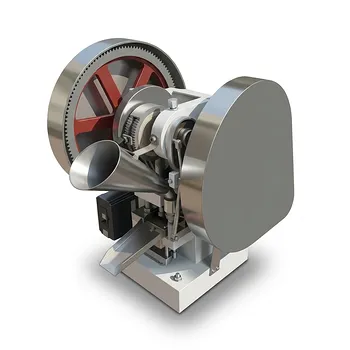
6 Ton Variable Frequency Single Punch Tablet Press