What role do high-tonnage pressing equipment and hydraulic presses play in Al-Al2O3 molding? Optimize Density & Strength
Updated 5 months ago
High-tonnage pressing equipment and hydraulic presses serve as the mechanical engine for "green body" consolidation. These machines apply intense uniaxial static pressure—often ranging from 50 MPa to over 1,200 MPa—to transform loose Al-Al2O3 powder into a dense, geometrically precise compact. This process is essential for expelling interlaminar air and establishing the particle-to-particle contact required for atomic diffusion during sintering.
High-tonnage pressing is the critical bridge between loose powder and a structural solid, providing the mechanical energy necessary to overcome internal friction and rearrange particles into a high-density green compact. Without this controlled densification, subsequent thermal processes like sintering or annealing cannot achieve the required material integrity.
The Mechanics of Powder Consolidation
Particle Rearrangement and Void Reduction
High-tonnage presses apply the force necessary for Al and Al2O3 particles to overcome internal friction. This pressure forces the particles to slide and rotate, filling gaps that naturally occur in loose powder.
By applying significant axial pressure, the equipment triggers plastic deformation in the metal phase (Al), which helps wrap around the harder ceramic phase (Al2O3). This reduces internal voids and creates a cohesive structure.
Expulsion of Interlaminar Air
One of the primary roles of the hydraulic press is the physical removal of air trapped between powder layers. If air remains within the compact, it can cause structural defects or expansion during high-temperature processing.
The steady application of static pressure ensures that air is forced out through the mold clearances. This results in a dense precursor with high relative density, often reaching 70% or more of the theoretical maximum.
Establishing the Foundation for Sintering
Maximizing Particle Contact Area
The efficiency of the subsequent sintering process depends entirely on the proximity of the powder particles. High-tonnage equipment increases the tightness and contact area between the aluminum and alumina phases.
This intimate contact is the physical foundation for atomic diffusion. By minimizing the distance between particles, the press enables the chemical and physical bonding that occurs when the material is later heated.
Development of Green Strength
The hydraulic press provides the compact with "green strength," which is the mechanical integrity required for the part to be handled or machined before it is fired.
Without the high-load capacity of industrial presses (such as a 60-ton total load), the powder would lack the structural bond needed to maintain its geometric shape. This is especially critical for Al-Al2O3 mixtures that do not utilize liquid binders.
Precision Control and Advanced Functionality
Encapsulation of Functional Additives
In specialized applications, such as the creation of metal foams, the press ensures that foaming agents are tightly encapsulated within the metal matrix.
By applying pressures as high as 800 MPa, the hydraulic press prevents the premature escape of gases during the heating phase. This ensures the formation of a uniform, closed-cell structure in the final material.
Managing Reaction Buffers
Precise pressure control allows engineers to tune the porosity of the compact. In self-propagating reactions, the press is used to maintain a specific level of density (e.g., 70%).
This specific density ensures there is enough contact for energy transfer while leaving sufficient "buffer" space to manage gas volume changes during the reaction wave.
Understanding the Trade-offs
Internal Stress vs. Density
While higher pressure generally leads to higher density, it can also introduce residual internal stresses. If the pressure is released too quickly or if the load is uneven, the green compact may experience "capping" or laminations where the material layers separate.
Die Wear and Maintenance
Using industrial-grade high-tonnage equipment—especially at pressures reaching 1200 MPa—accelerates the wear and tear on high-precision steel dies. Achieving extreme densification requires a balance between the desired material properties and the lifespan of the tooling.
Limitations of Uniaxial Pressing
Hydraulic presses typically apply pressure along a single axis. This can lead to density gradients, where the center of the compact is less dense than the areas directly in contact with the punch. This may require secondary processes to ensure total material uniformity.
Applying Pressing Technology to Your Project
Making the Right Choice for Your Goal
To achieve the best results with Al-Al2O3 powders, the pressing strategy must align with the intended final application of the composite.
- If your primary focus is maximum structural density: Utilize high-tonnage industrial presses capable of reaching 800–1200 MPa to eliminate all visible macro-pores.
- If your primary focus is precision handled "green" parts: Focus on a press with high-precision control and a 60-ton load to ensure consistent green strength without cracking.
- If your primary focus is controlled chemical reactions: Calibrate the hydraulic press to achieve a specific relative density (near 70%) to provide a buffer for gas expansion.
- If your primary focus is binder-free ceramic matrices: Use high-load laboratory presses to force particle rearrangement through sheer mechanical force.
The mastery of high-tonnage pressing is the essential first step in transforming raw Al-Al2O3 powders into high-performance engineering materials.
Summary Table:
| Key Role | Impact on Al-Al2O3 Powder | Mechanism of Action |
|---|---|---|
| Particle Rearrangement | Reduces internal voids and porosity | Forces particles to slide and rotate under high pressure |
| Plastic Deformation | Wraps metal phase (Al) around ceramic (Al2O3) | High axial pressure triggers metal phase flow |
| Air Expulsion | Prevents structural defects/expansion | Physically forces interlaminar air through mold clearances |
| Green Strength | Enables handling and machining | Establishes strong mechanical bonds between particles |
| Sintering Foundation | Facilitates atomic diffusion | Maximizes particle-to-particle contact area |
Elevate Your Material Research with Precision Compaction
Achieving the perfect "green body" density is the foundation of high-performance material science. At [Company Name], we provide complete laboratory sample preparation solutions specialized for powder processing and compaction.
Whether you are working with Al-Al2O3 composites or advanced technical ceramics, our extensive equipment line supports every stage of your workflow:
- Advanced Pressing: Cold/Warm Isostatic Presses (CIP/WIP), standard lab presses, XRF pellet presses, and vacuum hot presses.
- Powder Processing: Crushers, liquid nitrogen cryogenic grinders, and high-energy planetary ball or jet mills.
- Refinement & Mixing: Sieve shakers, powder mixers, and vacuum defoaming mixers.
Maximize your material integrity today. Contact our technical experts to find the ideal high-tonnage solution for your specific laboratory or production requirements.
References
- Pravin Malik, Permi Jagadish. Static Deflection and Free Vibration Analysis of Functionally Graded Al-Al₂O₃ Clamped-Free Beams Fabricated by Powder Metallurgy. DOI: 10.7759/s44388-025-03835-2
Mentioned Products
- 6-Ton Small Single-Punch Tablet Press — Laboratory Powder & Granule Tableting Equipment / Tablet Forming Machine
- Enhanced 9 Punch Rotary Tablet Press for Powder Compaction
- 6 Ton Variable Frequency Single Punch Tablet Press
- Vertical Production Planetary Ball Mill for High Throughput Powder Processing
- High Speed Swing Type Laboratory Pulverizer for Fine Powder Grinding and Sample Preparation
People Also Ask
- What is the function of a laboratory press in Cr-Ti alloy evaluation? Quantify Fracture Stress & Strength
- What is the function of a laboratory press in assessing the hydrophobic performance of modified vermiculite fillers?
- What is the core function of a laboratory press in the forming of ceramic filter element green bodies? Maximize Density.
- What is the function of a laboratory press in the preparation of ceramic feed rods? Master Density and Precision
- Why is vacuum sealing and flexible packaging necessary for Aluminum Titanate powders during CIP? Ensure Peak Density

Tech Team · PowderPreparation
Last updated on May 14, 2026
Related Products
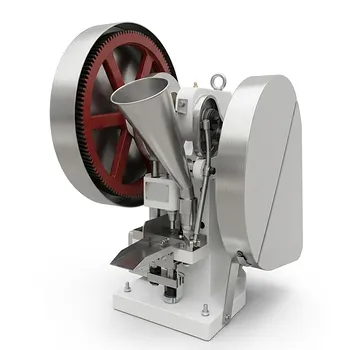
6-Ton Small Single-Punch Tablet Press — Laboratory Powder & Granule Tableting Equipment / Tablet Forming Machine
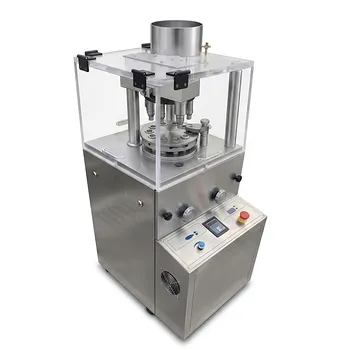
Enhanced 9 Punch Rotary Tablet Press for Powder Compaction
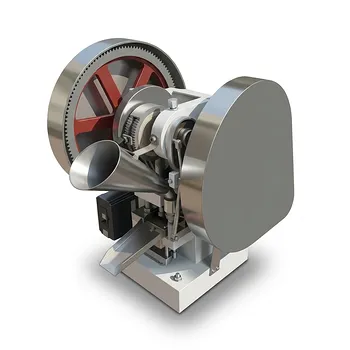
6 Ton Variable Frequency Single Punch Tablet Press

Vertical Production Planetary Ball Mill for High Throughput Powder Processing
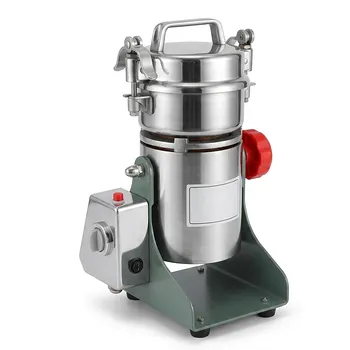
High Speed Swing Type Laboratory Pulverizer for Fine Powder Grinding and Sample Preparation
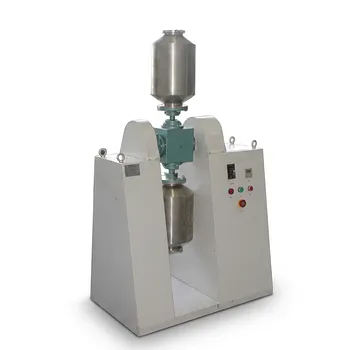
Multi Dimensional Universal Mixer for High Uniformity Powder Blending
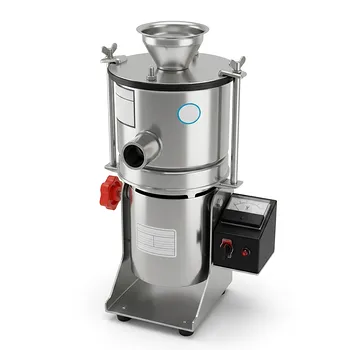
Air Guided Ultrafine Pulverizer High Speed Laboratory Powder Grinder for Chemical and Material Processing
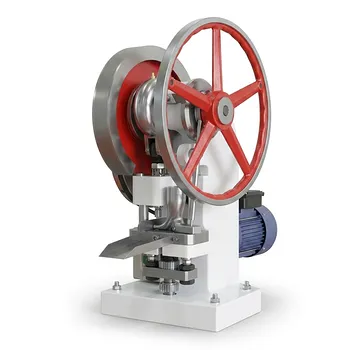
5 Ton Single Punch Tablet Press Laboratory Small Batch Production
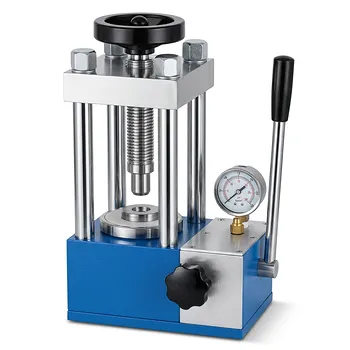
Manual Tablet Press with Dual Scale Pressure Gauge for Pharmaceutical Food Chemical Laboratory Sample Preparation
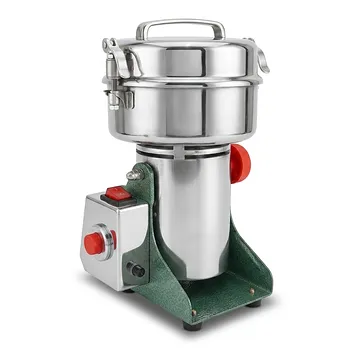
Small High-Speed Laboratory Grinder for Powder Processing
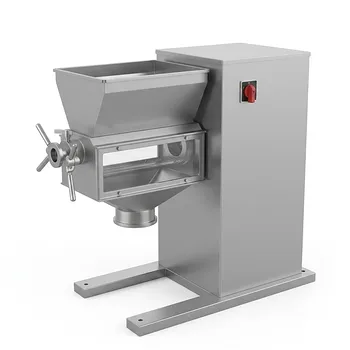
Industrial Swing Granulator for Powder Processing in Pharma Food and Chemical Industries
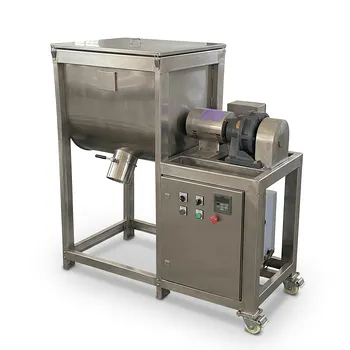
Horizontal Ribbon Mixer for Dry Powder and Slurry Blending