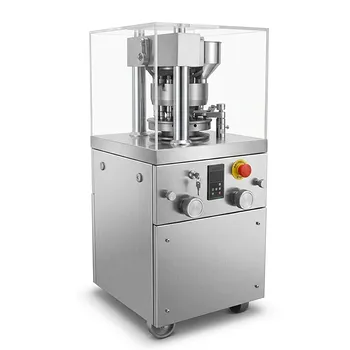
What is the significance of using a laboratory hydraulic press for pelletizing ZnO samples? Enhance FTIR Data Accuracy
Updated 3 months ago
The laboratory hydraulic press is the critical tool for transforming opaque ZnO powder into a transparent medium suitable for infrared analysis. Using a press ensures that infrared light can effectively penetrate the sample by creating a dense, bonded pellet with Potassium Bromide (KBr). Without this process, light scattering from loose particles would obscure the chemical fingerprints, making precise characterization of Zn-O stretching vibrations and surface functional groups impossible.
A hydraulic press eliminates internal voids and light scattering by inducing plastic deformation in the powder mixture, resulting in high-transparency pellets that yield clear, high-resolution FTIR spectra for accurate chemical analysis.
Achieving Optical Transparency through High Pressure
Eliminating Light Scattering
Loose powder particles scatter infrared light in multiple directions, preventing a coherent signal from reaching the detector. The hydraulic press applies several tons of pressure—often up to 5 t/cm²—to eliminate the air gaps between ZnO and KBr particles.
Inducing Plastic Deformation
Under extreme pressure, the KBr carrier material undergoes plastic deformation. This physical change causes the particles to flow and bind tightly around the ZnO nanoparticles, creating a solid, uniform, glass-like disk.
Ensuring Beam Penetration
A high-quality pellet must be transparent to the infrared beam. By creating a dense cylindrical pellet of uniform thickness, the press allows the IR light to pass through the sample with minimal interference, which is necessary for a stable baseline.
Improving Spectral Quality and Data Integrity
Maximizing Signal-to-Noise Ratio
High-pressure compaction results in dense bonding between particles, which significantly improves the signal-to-noise (S/N) ratio. This clarity allows researchers to distinguish subtle spectral features that would otherwise be lost in "noise."
Identifying Functional Groups
The pelletizing process is essential for identifying the specific chemical bonds on the ZnO surface. For example, it allows for the clear observation of the Zn-O stretching vibration, which is the primary fingerprint for the material's composition.
Minimizing Geometric Errors
Using a press removes the geometric errors associated with loose powders. By establishing stable physical contact between particles, the resulting data reflects the intrinsic properties of the ZnO sample rather than artifacts of the sample's physical form.
Critical Constraints and Trade-offs
The Impact of Moisture
KBr is highly hygroscopic, meaning it rapidly absorbs moisture from the environment. If the mixture is not kept dry during the pressing process, water bands will appear in the FTIR spectrum, potentially masking important ZnO peaks.
Pressure Calibration Issues
Applying insufficient pressure results in an opaque, fragile pellet that causes excessive light scattering. Conversely, exceeding the recommended pressure limits can damage the specialized pellet dies or cause the pellet to crack when the pressure is released.
Sample Concentration Balancing
The ratio of ZnO to KBr must be precisely controlled. If the ZnO concentration is too high, the pellet will become too opaque for the IR beam to penetrate; if it is too low, the characteristic absorption peaks may be too weak to analyze.
Best Practices for ZnO Sample Preparation
How to Apply This to Your Project
To achieve the most accurate FTIR characterization of Zinc Oxide, your preparation strategy should align with your specific analytical goals:
- If your primary focus is high-resolution bond analysis: Optimize the KBr-to-ZnO ratio to ensure the absorption peaks remain within the linear range of the detector while maintaining maximum transparency.
- If your primary focus is sample reproducibility: Utilize a manual or automatic hydraulic press with a consistent, calibrated pressure setting (e.g., 5 to 7 tons) to ensure every pellet has uniform thickness and density.
- If your primary focus is avoiding spectral artifacts: Use a vacuum-capable pellet die during the pressing process to remove trapped air and moisture, ensuring a clean baseline.
Mastering the pelletizing process is the fundamental step in unlocking the complex chemical and structural data hidden within Zinc Oxide samples.
Summary Table:
| Feature | Impact on FTIR Characterization | Technical Requirement |
|---|---|---|
| Optical Transparency | Eliminates light scattering; allows IR beam penetration | High-pressure compaction (up to 5 t/cm²) |
| Plastic Deformation | Induces KBr flow to create a solid, glass-like disk | Use of high-purity KBr carrier material |
| Signal-to-Noise Ratio | Improves clarity of Zn-O stretching vibrations | Optimized ZnO-to-KBr concentration ratio |
| Data Integrity | Removes geometric errors associated with loose powders | Consistent, calibrated pressure settings |
| Moisture Control | Prevents water bands from masking important peaks | Vacuum-capable pellet dies |
Elevate Your Material Characterization with Precision Pelletizing
High-quality FTIR data starts with perfect sample preparation. Whether you are analyzing Zinc Oxide or complex nanomaterials, our complete laboratory sample preparation solutions ensure your samples meet the highest standards of optical transparency and structural integrity.
We specialize in professional-grade powder processing and compaction equipment tailored for material science, including:
- Hydraulic Presses: A full spectrum of equipment including standard lab presses, XRF pellet presses, Hot Presses, Vacuum Hot Presses, and specialized Cold/Warm Isostatic Presses (CIP/WIP).
- Milling & Grinding: Precision solutions such as planetary ball mills, jet mills, disc mills, and liquid nitrogen cryogenic grinders.
- Sieving & Mixing: High-performance sieve shakers (vibratory/air-jet), powder mixers, and defoaming mixers.
- Crushers: Robust jaw and roll crushers for primary sample reduction.
Our equipment is designed for researchers and labs that demand reproducibility and precision. Contact us today to find the ideal pressing solution for your application and unlock the full potential of your spectroscopic analysis!
References
- Shashi Kant;Amit Kumar. A Comparative Analysis Of Structural, Optical And Photocatalytic Properties Of ZnO And Ni Doped ZnO Nanospheres Prepared By Sol Gel Method. DOI: 10.5185/amlett.2012.5344
Mentioned Products
- 6-Ton Small Single-Punch Tablet Press — Laboratory Powder & Granule Tableting Equipment / Tablet Forming Machine
- Manual Tablet Press with Dual Scale Pressure Gauge for Pharmaceutical Food Chemical Laboratory Sample Preparation
- 5 Ton Single Punch Tablet Press Laboratory Small Batch Production
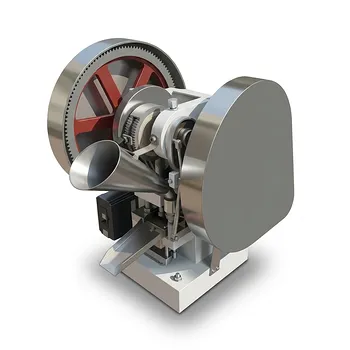
- 6 Ton Variable Frequency Single Punch Tablet Press
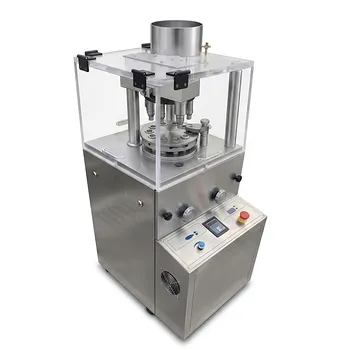
- Enhanced 9 Punch Rotary Tablet Press for Powder Compaction
People Also Ask
- What is the function of a laboratory press in Cr-Ti alloy evaluation? Quantify Fracture Stress & Strength
- What is the function of a laboratory press in assessing the hydrophobic performance of modified vermiculite fillers?
- What is the core function of a laboratory press in the forming of ceramic filter element green bodies? Maximize Density.
- What is the function of a laboratory press in the preparation of ceramic feed rods? Master Density and Precision
- Why is vacuum sealing and flexible packaging necessary for Aluminum Titanate powders during CIP? Ensure Peak Density

Tech Team · PowderPreparation
Last updated on Jun 03, 2026
Related Products
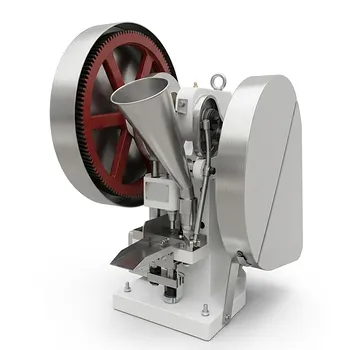
6-Ton Small Single-Punch Tablet Press — Laboratory Powder & Granule Tableting Equipment / Tablet Forming Machine
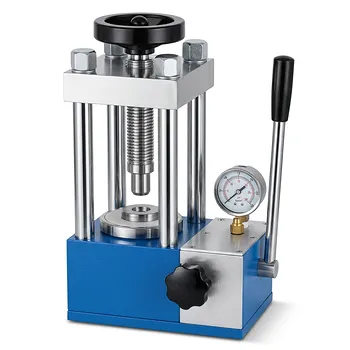
Manual Tablet Press with Dual Scale Pressure Gauge for Pharmaceutical Food Chemical Laboratory Sample Preparation
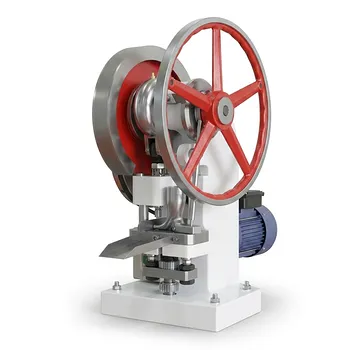
5 Ton Single Punch Tablet Press Laboratory Small Batch Production
6 Ton Variable Frequency Single Punch Tablet Press
Enhanced 9 Punch Rotary Tablet Press for Powder Compaction