What is the role of large-tonnage presses in the initial forming process of porcelain tiles? Key to Density & Strength
Updated 4 months ago
Large-tonnage presses are the mechanical foundation of porcelain tile production, responsible for transforming loose mineral powders into dense, structural "green bodies." By applying immense pressure to precise mixtures of clay, feldspar, and quartz, these machines ensure the raw material has the necessary density to achieve low porosity and high mechanical strength during the subsequent firing process.
The initial pressing stage determines the ultimate quality of the tile; without the extreme compaction provided by large-tonnage presses, porcelain cannot achieve the characteristic density and impermeability required for modern architectural standards.
The Mechanics of Powder Transformation
Mechanical Forging of Raw Materials
The press acts as a forging tool for a specific powder mixture containing fine clay, feldspar, and quartz. This intense mechanical action forces the mineral particles into a tightly interlocked matrix.
Creation of the Green Body
The result of this high-pressure process is known as a green body. This intermediate state must possess enough initial strength to be handled and transported through the production line without crumbling or deforming.
Eliminating Micro-Voids
Large-tonnage pressure is required to remove air from the powder mixture. Eliminating these voids is the first step in ensuring the tile does not develop structural weaknesses during the vitrification process.
Impact on Final Product Performance
Ensuring Low Water Absorption
High-tonnage pressing is the primary factor in achieving low water absorption rates. By maximizing the density of the green body, the material becomes nearly impermeable once it reaches high temperatures in the kiln.
Enhancing Post-Firing Durability
The pressure applied during forming directly correlates to the superior mechanical properties of the finished tile. A well-pressed tile can withstand significant stress and resist wear in high-traffic environments.
Dimensional Stability
Consistent tonnage across the entire surface of the tile ensures uniform density. This uniformity is critical for maintaining precise dimensions and preventing shrinkage variations during the manufacturing cycle.
Understanding the Potential Trade-offs
Pressure Uniformity Challenges
If the press does not distribute force evenly, it can create internal stresses within the green body. These stresses often manifest as warping or "dished" surfaces once the tile is fired.
Sensitivity to Powder Moisture
Large-tonnage presses require the powder mixture to have a highly specific moisture content. If the powder is too dry, it will not bond; if it is too wet, the pressure can cause "bleeding" or structural defects.
Equipment Maintenance and Precision
The immense forces involved require rigorous maintenance of the die sets and hydraulic systems. Even minor misalignments in the press can lead to significant batches of rejected, brittle material.
How to Apply This to Your Project
Making the Right Choice for Your Goal
- If your primary focus is heavy-traffic durability: Ensure the production process utilizes high-tonnage pressing to maximize the density and load-bearing capacity of the stoneware.
- If your primary focus is moisture resistance: Prioritize tiles formed under extreme pressure, as this initial compaction is what enables the low porosity required for wet or outdoor environments.
- If your primary focus is large-format aesthetics: Verify that the pressing technology used is capable of maintaining uniform density across the entire slab to prevent warping.
The precision of the initial forming process is the invisible factor that defines the longevity and performance of every porcelain surface.
Summary Table:
| Key Role | Impact on Production | Performance Benefit |
|---|---|---|
| Powder Compaction | Transforms mineral mix into dense green bodies | High initial strength for handling |
| Void Elimination | Removes air and micro-voids | Low water absorption & porosity |
| Uniform Pressure | Ensures consistent density across surfaces | Dimensional stability & warp prevention |
| Mechanical Forging | Interlocks clay, feldspar, and quartz | Superior post-firing durability |
Optimize Your Material Compaction with Industry-Leading Press Technology
Achieving the perfect green body requires precision, power, and the right equipment. At [Brand Name], we provide complete laboratory sample preparation solutions for material science, specializing in high-performance powder processing and compaction equipment.
Our extensive range includes:
- Hydraulic Presses: Cold/Warm Isostatic Presses (CIP/WIP), standard lab presses, XRF pellet presses, and vacuum hot presses.
- Powder Processing: Planetary ball mills, jet mills, and cryogenic grinders to prepare your raw materials.
- Mixing & Sifting: Advanced powder mixers and air-jet sieve shakers for perfect mixture homogeneity.
Whether you are developing architectural ceramics or advanced technical materials, our expert solutions ensure the structural integrity and quality of your final products. Contact us today to discuss your project needs and find the ideal pressing solution for your laboratory or production line.
References
- Ana Pavlović, Francesco Ubertini. Equipment qualification in testing the flexural resistance of bended ceramic tiles. DOI: 10.5937/fmet1602146p
Mentioned Products
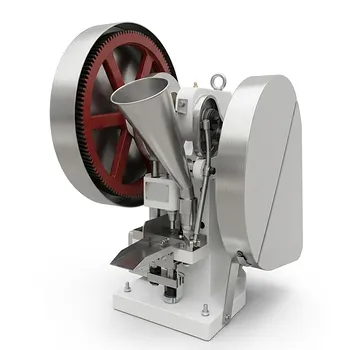
- 6-Ton Small Single-Punch Tablet Press — Laboratory Powder & Granule Tableting Equipment / Tablet Forming Machine
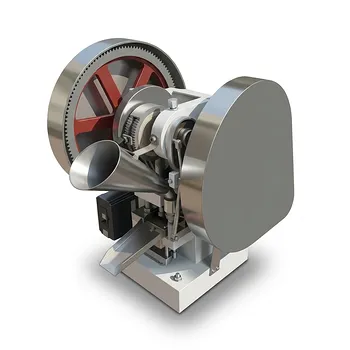
- 6 Ton Variable Frequency Single Punch Tablet Press
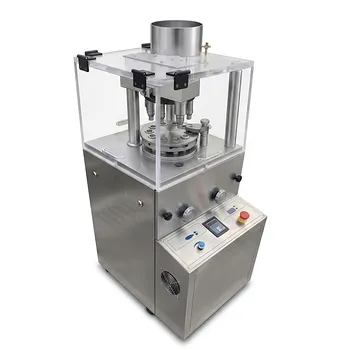
- Enhanced 9 Punch Rotary Tablet Press for Powder Compaction
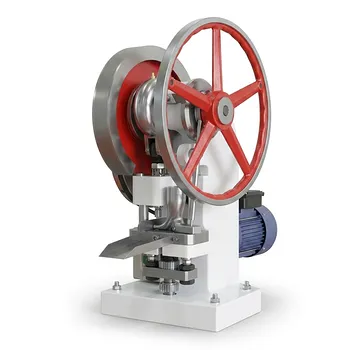
- 5 Ton Single Punch Tablet Press Laboratory Small Batch Production
People Also Ask
- What is the function of a laboratory press in Cr-Ti alloy evaluation? Quantify Fracture Stress & Strength
- What is the function of a laboratory press in assessing the hydrophobic performance of modified vermiculite fillers?
- What is the core function of a laboratory press in the forming of ceramic filter element green bodies? Maximize Density.
- What is the function of a laboratory press in the preparation of ceramic feed rods? Master Density and Precision
- Why is vacuum sealing and flexible packaging necessary for Aluminum Titanate powders during CIP? Ensure Peak Density

Tech Team · PowderPreparation
Last updated on Jun 03, 2026