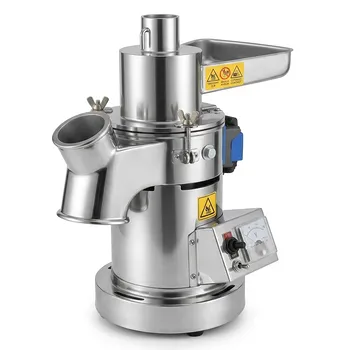
What is the role of integrating high-precision load cells beneath a material sieving apparatus? Enhance Sieving Accuracy
Updated 4 months ago
Integrating high-precision load cells beneath a sieving apparatus provides real-time mass monitoring and automated endpoint detection. By tracking how quickly material accumulates in the collection container, the system can identify the precise moment when the sieving process is complete. This transition from manual observation to data-driven control ensures higher accuracy in sieving efficiency calculations and allows for fully automated experimental workflows.
High-precision load cells transform material sieving from a manual, time-estimated task into a precise, mass-monitored process. This allows the system to automatically terminate the operation once the rate of material passage hits a specific threshold, ensuring consistent results and optimized throughput.
Real-Time Mass Monitoring and Data Capture
Tracking the Mass Growth Curve
Load cells, such as beam force sensors, provide a continuous stream of data regarding the weight of material passing through the mesh. This data forms a mass growth curve, allowing operators to visualize the kinetics of the sieving process as it happens.
Precision in Collection
High-precision sensors ensure that even minute amounts of material are registered as they enter the collection container. This level of detail is critical for sensitive laboratory experiments where material loss or specific yield percentages must be strictly accounted for.
Automated Endpoint Detection
Defining Completion Thresholds
The primary role of these sensors is determining the sieving endpoint. This is reached when the rate of mass increase falls below a pre-defined threshold, signaling that the mesh is no longer passing significant material.
Enabling Automated Termination
Once the threshold is met, the control system can trigger an automatic shutdown. This removes the need for constant human supervision and prevents unnecessary machine wear or energy consumption.
Quantifying Sieving Efficiency
Precise Data for Calculations
Integrating sensors allows for the immediate calculation of sieving efficiency. By comparing the mass of the material collected to the initial input mass, the system can provide instant quantitative feedback on the effectiveness of the current mesh or vibration frequency.
Standardizing Quality Control
In industrial or research settings, this automation ensures that every batch is processed to the same standard. It removes human error and subjectivity, as the machine relies on hard data rather than visual estimation to decide when a job is done.
Understanding the Trade-offs
Vibration Interference and Signal Noise
Since sieving involves intense mechanical agitation, load cells must be properly isolated or the software must employ advanced digital filtering. Without these measures, the mechanical vibration can create "noise" that obscures the actual mass readings.
Calibration and Maintenance
High-precision beam sensors require regular calibration to remain accurate. Additionally, environmental factors like dust accumulation on the sensor or collection assembly can cause weight drift, necessitating frequent "taring" or zeroing of the system.
How to Apply This to Your Project
Real-time mass monitoring is a powerful tool, but its implementation should align with your specific operational goals.
- If your primary focus is process automation: Use the load cell data to trigger a relay that shuts down the sieve shaker once the mass growth rate plateaus to save time and energy.
- If your primary focus is research and development: Focus on the mass growth curve data to compare how different material moisture levels or particle shapes affect the speed of sieving.
- If your primary focus is quality assurance: Set strict mass-threshold parameters to ensure that every sample is processed until an identical endpoint is reached, maximizing repeatability.
By replacing manual timing with active mass monitoring, you elevate your sieving process from a simple mechanical task to a sophisticated, data-driven operation.
Summary Table:
| Key Role | Primary Benefit | Implementation Requirement |
|---|---|---|
| Real-Time Mass Monitoring | Visualizes kinetics & growth curves | Digital filtering for vibration noise |
| Automated Endpoint Detection | Triggers shutdown; saves time/energy | Pre-defined mass rate thresholds |
| Efficiency Quantification | Instant, precise yield calculations | Regular sensor calibration & taring |
| Process Standardization | Eliminates human error & subjectivity | Robust integration with control software |
Elevate Your Material Analysis with Precision Equipment
Is your lab looking to transition from manual estimation to data-driven precision? At [Brand Name], we provide complete laboratory sample preparation solutions tailored for material science. Whether you need advanced vibratory or air-jet sieve shakers equipped with mass monitoring or high-performance mills (planetary, jet, or rotor), we have the expertise to optimize your workflow.
Our extensive product line includes:
- Crushing & Grinding: Jaw/roll crushers and liquid nitrogen cryogenic grinders.
- Powder Processing: Planetary ball mills, disc mills, and high-speed mixers.
- Pressing Solutions: A full spectrum of hydraulic presses, including Cold/Warm Isostatic Presses (CIP/WIP), hot presses, and XRF pellet presses.
Ready to automate your sieving and sample prep? Contact our experts today to find the perfect solution for your powder processing and compaction needs!
References
- Gunter H. Just, Katherine Smith. Development and test of a Lunar Excavation and Size Separation System (LES<sup>3</sup>) for the LUVMI‐X rover platform. DOI: 10.1002/rob.22050
Mentioned Products
- Stainless Steel Laboratory Vibratory Test Sieve Shaker
- Laboratory Dry and Wet Three Dimensional Vibratory Sieve Shaker for Particle Analysis
- Laboratory Vibratory Test Sieve Shaker for Precision Particle Size Analysis and Powder Grading
- Vibratory Sieve Shaker Electromagnetic 3D Motion Powder Particle Size Analyzer for Dry and Wet Sieving
- Small Laboratory Vibrating Sieve Shaker for Precise Particle Size Analysis
People Also Ask
- What function does a laboratory vibratory sieve shaker serve in the production process of metakaolin? Optimize Reactivity
- Why is a precision laboratory vibratory sieve shaker necessary for particle size control? Optimize Biomass Carbonization
- What is the function of a laboratory vibratory sieve shaker? Enhance Coal Particle Size Distribution (PSD) Analysis
- What role do laboratory vibratory sieve shakers and test sieves play before the molding of Nb-Cu composite powders?
- What is the primary function of a laboratory vibratory sieve shaker in the evaluation of sand liquefaction potential?

Tech Team · PowderPreparation
Last updated on Jun 03, 2026
Related Products
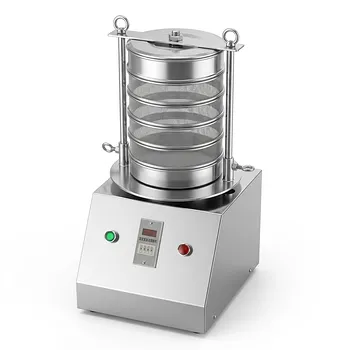
Stainless Steel Laboratory Vibratory Test Sieve Shaker
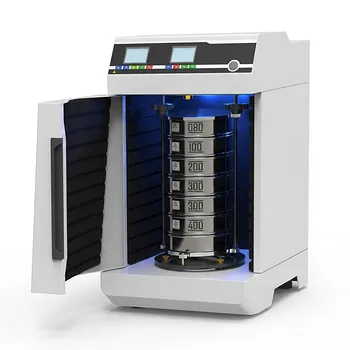
Laboratory Dry and Wet Three Dimensional Vibratory Sieve Shaker for Particle Analysis

Laboratory Vibratory Test Sieve Shaker for Precision Particle Size Analysis and Powder Grading

Vibratory Sieve Shaker Electromagnetic 3D Motion Powder Particle Size Analyzer for Dry and Wet Sieving

Small Laboratory Vibrating Sieve Shaker for Precise Particle Size Analysis

Small Laboratory Vibratory Sieve Shaker for Powder Gradation and Particle Size Analysis
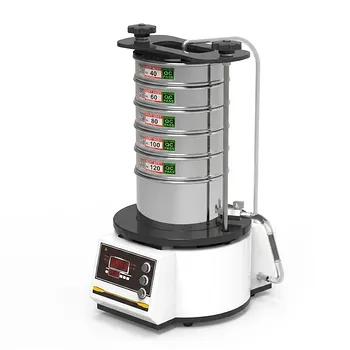
High Frequency Wet Three-Dimensional Vibrating Sieve Shaker for Dry and Wet Particle Size Analysis

三维电磁微量振动筛分仪

Heavy Duty Dry Three Dimensional Vibratory Sieve Shaker for Particle Separation

Dry Three Dimensional Vibratory Sieve Shaker
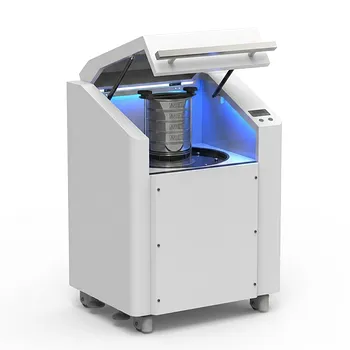
High Frequency Cabinet Type Three-Dimensional Rotary Vibrating Sieve Shaker for Dry Sieving and Particle Classification

Tapping Oscillating Sieve Shaker for Dry and Wet Particle Size Analysis
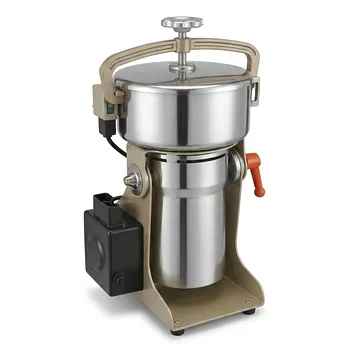
Multifunctional High Efficiency High Speed Laboratory Grinder
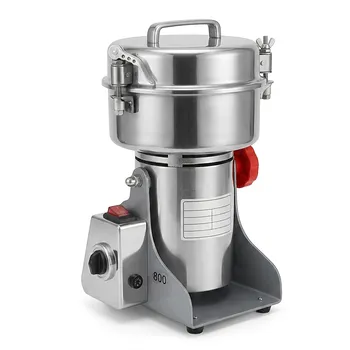
Small High-Speed Laboratory Grinder for Rapid Sample Preparation
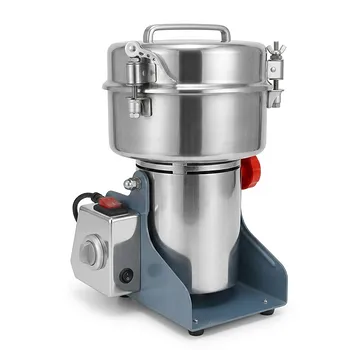
Small High-Speed Grinder for Efficient Laboratory Sample Preparation
Custom Raised Height Laboratory Jaw Crusher for Precision Sample Preparation in Material Science