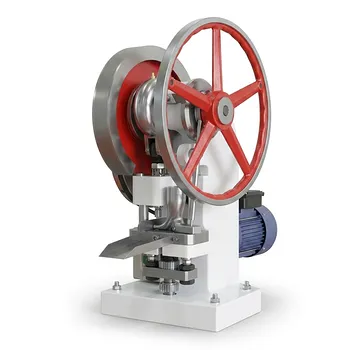
What is the role of high-pressure forming equipment in the preparation of crystalline cellulose sheet samples?
Updated 3 months ago
High-pressure forming equipment is the definitive tool for converting loose crystalline cellulose into structurally sound, dense test specimens. By applying precise pressure—typically around 32 MPa—within a specialized mold, these machines force crystalline particles to rearrange and bond. This process transforms the raw material into a cohesive sheet with the mechanical integrity required for rigorous laboratory analysis.
The central role of a hydraulic press in cellulose sample preparation is to achieve microstructural densification and uniformity. By eliminating internal voids and ensuring tight particle bonding, the equipment creates standardized specimens that yield accurate, repeatable data for tensile and elastic modulus testing.
Mechanisms of Material Consolidation
Particle Rearrangement and Bonding
The application of high pressure causes individual crystalline cellulose particles to shift and fill interstitial spaces. This forced rearrangement leads to tight bonding between particles, which is the foundation of the sheet's structural strength. Without this precise pressure, the material would remain a loose powder or a fragile aggregate.
Elimination of Internal Voids
A primary function of the hydraulic press is the expulsion of trapped gases and the removal of pores. By creating a dense, continuous internal microstructure, the equipment prevents the formation of "green body" defects that would otherwise lead to premature failure during testing. This ensures that the physical properties measured are inherent to the material, not the result of structural flaws.
Microstructural Continuity
Advanced equipment, such as vacuum hot presses, combines pressure with a uniform thermal field. This combination ensures that the internal microstructure is consistent throughout the entire sample. Such microstructural continuity is vital for preventing density gradients that can skew mechanical data.
Ensuring Accuracy in Mechanical Testing
Standardization of Test Specimens
To obtain valid results for tensile strength and elastic modulus, samples must meet strict geometric and density standards. High-pressure forming equipment allows researchers to produce sheets with consistent thickness and density. This standardization is the only way to ensure that test results are comparable across different batches and studies.
Reliability and Repeatability
Precision laboratory presses provide controlled pressure environments that minimize human error. By automating the compaction process, researchers can replicate the exact conditions of sample formation. This level of control is critical for producing defect-free specimens that yield repeatable data during subsequent mechanical stress tests.
Understanding the Trade-offs and Pitfalls
Pressure Sensitivity and Over-Compaction
While high pressure is necessary for densification, exceeding the optimal pressure limit can lead to particle crushing or internal stress. If the pressure is too high, the cellulose crystals may undergo structural damage that alters their natural mechanical behavior. Conversely, insufficient pressure results in a high porosity gradient, rendering the sample too brittle for accurate measurement.
Temperature and Thermal Degradation
In processes involving heat, such as using a hot press, maintaining a uniform thermal field is a significant challenge. If the temperature is not perfectly controlled, the cellulose may suffer from thermal degradation or uneven curing. This creates localized weak spots that compromise the integrity of the entire crystalline sheet.
How to Optimize Your Sample Preparation
Effective sample preparation requires aligning your equipment settings with your specific analytical goals.
- If your primary focus is mechanical property verification: Prioritize a press with precision pressure control to ensure your specimens meet the exact density requirements for standardized tensile and modulus testing.
- If your primary focus is microstructural research: Utilize a vacuum-assisted hydraulic press to maximize pore elimination and ensure the highest possible level of internal continuity for imaging and diffraction studies.
- If your primary focus is high-throughput screening: Implement a mold system that allows for the simultaneous pressing of multiple samples to maintain consistency across large datasets while reducing preparation time.
The strategic use of high-pressure forming equipment is the essential bridge between raw cellulose material and the production of high-fidelity, scientifically valid test specimens.
Summary Table:
| Key Mechanism | Function in Preparation | Impact on Research |
|---|---|---|
| Particle Rearrangement | Forces crystalline particles to bond at ~32 MPa | Foundation of structural strength |
| Void Elimination | Expels trapped gases and removes internal pores | Prevents premature failure in testing |
| Pressure Control | Ensures consistent thickness and density | Enables repeatable, standardized data |
| Thermal Uniformity | Maintains even heat (Vacuum Hot Presses) | Prevents thermal degradation/weak spots |
Elevate Your Material Research with Precision Forming Solutions
Achieving accurate tensile and elastic modulus data starts with flawless sample preparation. At our core, we provide complete laboratory sample preparation solutions tailored for material science, specializing in advanced powder processing and compaction equipment.
Whether you are working with crystalline cellulose or complex alloys, our extensive range of equipment ensures your specimens are defect-free and structurally sound:
- Compaction Excellence: A full spectrum of hydraulic presses, including Cold/Warm Isostatic Presses (CIP/WIP), standard lab presses, XRF pellet presses, and Vacuum Hot Presses for maximum microstructural continuity.
- Material Processing: High-performance crushers (jaw/roll), liquid nitrogen cryogenic grinders, and versatile mills (planetary ball, jet, sand, disc, and rotor).
- Refinement & Mixing: Sieve shakers (vibratory/air-jet), various test sieves, and precision powder or defoaming mixers.
Don’t let inconsistent sample density compromise your results. Let our experts help you select the ideal equipment for your specific analytical goals.
Contact us today to optimize your lab’s efficiency!
References
- Neng Ayu Arini, Dwiria Wahyuni. Analisis Pengaruh Waktu Hidrolisis Terhadap Sifat Mekanis Selulosa Kristalin Dari Campuran Serbuk Gergaji Kayu Belian, Bengkirai, Jati dan Meranti. DOI: 10.26418/positron.v5i2.12136
Mentioned Products
- Ordinary Type Rotary Tablet Press for Pharmaceutical Chemical Food Electronic Industries
- Hydraulic Double Shaft Disperser for High Viscosity Liquid Mixing and Dispersion
- Enhanced 9 Punch Rotary Tablet Press for Powder Compaction
- 6 Ton Variable Frequency Single Punch Tablet Press
- Manual Tablet Press with Dual Scale Pressure Gauge for Pharmaceutical Food Chemical Laboratory Sample Preparation
People Also Ask
- Why is a laboratory hydraulic press required for FT-IR KBr pellets? Achieve Precise Sample Clarity for ZrC–SiC Analysis
- Why is a laboratory hydraulic press required to compress oyster shell powder before XRF analysis? Improve Data Accuracy.
- Why is vacuum sealing and flexible packaging necessary for Aluminum Titanate powders during CIP? Ensure Peak Density
- What are the advantages of using hardened steel molds and graphite spray for titanium powder? Ensure structural integrity
- What role does a high-strength stainless steel mold kit play in the uniaxial die compaction process? Ensuring Precision

Tech Team · PowderPreparation
Last updated on Jun 03, 2026
Related Products
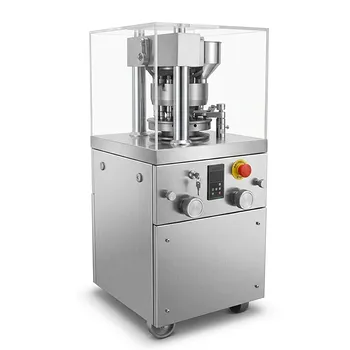
Ordinary Type Rotary Tablet Press for Pharmaceutical Chemical Food Electronic Industries
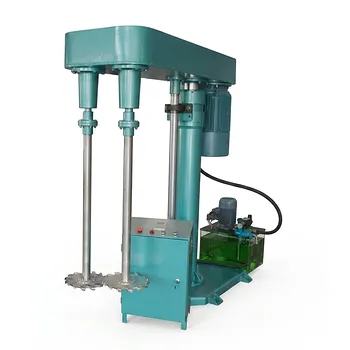
Hydraulic Double Shaft Disperser for High Viscosity Liquid Mixing and Dispersion
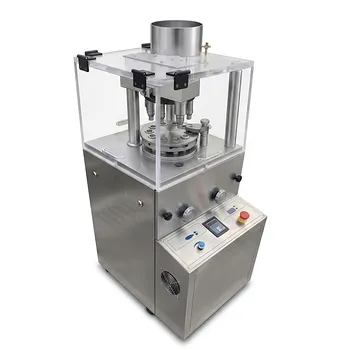
Enhanced 9 Punch Rotary Tablet Press for Powder Compaction
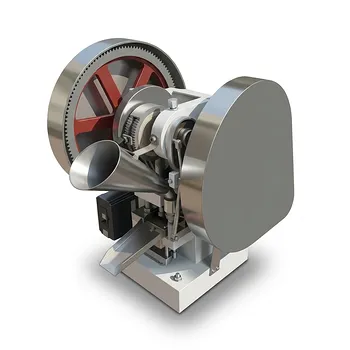
6 Ton Variable Frequency Single Punch Tablet Press
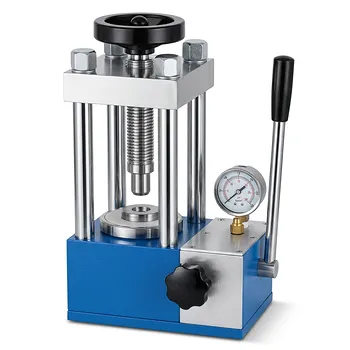
Manual Tablet Press with Dual Scale Pressure Gauge for Pharmaceutical Food Chemical Laboratory Sample Preparation
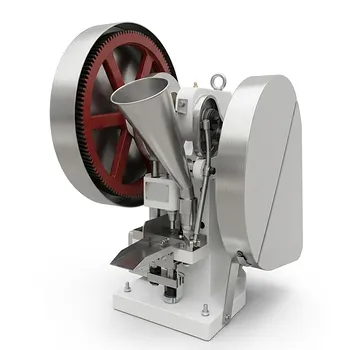
6-Ton Small Single-Punch Tablet Press — Laboratory Powder & Granule Tableting Equipment / Tablet Forming Machine