What is the role of an XRF pellet press in the chemical characterization of blood clam shell waste? Master Precision.
Updated 4 months ago
The XRF pellet press serves as the critical bridge between raw blood clam shell waste and precise chemical data. It transforms loose, heterogeneous shell powder into a dense, solid disc with a perfectly flat surface. This standardization is mandatory for X-ray Fluorescence (XRF) spectrometry to produce repeatable results regarding the shell's elemental and mineralogical composition.
An XRF pellet press ensures that blood clam shell samples are presented to the spectrometer with uniform density and a consistent geometric plane. By eliminating the physical inconsistencies of loose powder, the press enables the high-precision detection of both structural components and trace environmental contaminants.
Achieving Structural Uniformity for Analysis
High-Pressure Compaction
The press uses uniaxial hydraulic force to compress finely ground shell powder into a solid, high-density pellet. This process removes internal air pockets and ensures a consistent mass-to-volume ratio across the entire specimen.
Surface Planarity and Smoothness
A perfectly flat sample surface is vital because XRF signals are extremely sensitive to surface topography. The press utilizes precision dies to create a smooth geometric plane, allowing the X-ray beam to interact uniformly with the sample without "shadowing" effects.
Mechanical Stability
Blood clam shell waste can be fragile or abrasive once powdered. The pelletizing process creates a mechanically stable specimen that is easy to handle and can be safely inserted into the spectrometer's vacuum or helium-purged chambers without risking powder contamination of the optics.
Enhancing Chemical Detection Sensitivity
Mitigating X-Ray Signal Scattering
Loose powders cause X-rays to scatter unpredictably, which increases "noise" and obscures the actual chemical signal. Pellets provide a stable, solid matrix that minimizes scattering and maximizes the signal-to-noise ratio for more accurate readings of major elements like Calcium.
Trace Element Quantification
For environmental characterization, detecting trace heavy metals like Lead (Pb), Cadmium (Cd), or Arsenic (As) in shell waste is often a priority. The high density achieved by the pellet press improves the detection limits for these trace elements compared to analyzing loose materials.
Improving Light Element Detection
Detection of lighter elements, often found in the organic-rich matrix of biological shells, is significantly enhanced by compaction. The press ensures that the sample is concentrated enough for the spectrometer to register the weak signals typical of low-atomic-number elements.
Understanding Technical Trade-offs and Pitfalls
The Necessity of Fine Grinding
A pellet press cannot compensate for poor sample preparation. If the clam shell waste is not ground to a uniform particle size (typically below 75 microns) before pressing, the pellet will suffer from "matrix inhomogeneities" that skew the chemical data.
The Use of Binding Agents
Some shell samples may not naturally adhere under pressure, leading to pellets that crack or crumble. While adding a binder (like cellulose or wax) solves this, it introduces a dilution factor that must be accounted for during the quantitative calculation of the shell’s original chemistry.
Pressure Calibration
Applying too much pressure can cause some materials to laminate or "cap," while too little pressure results in a porous pellet. Finding the specific hydraulic "sweet spot" for clam shell calcium carbonate is essential for maintaining the integrity of the sample surface.
Optimizing Your Characterization Workflow
To ensure the highest data quality when analyzing blood clam shell waste, your approach should be dictated by your specific research or industrial goal.
- If your primary focus is regulatory compliance for heavy metals: Ensure the pellet press is set to maximum rated pressure to achieve the highest possible density, which optimizes the detection of trace contaminants.
- If your primary focus is structural calcium carbonate purity: Prioritize the use of a high-quality, polished die set to create an ultra-smooth surface, as surface finish directly impacts the accuracy of major element readings.
- If your primary focus is high-throughput screening: Utilize an automated hydraulic press to ensure that every pellet in the batch is subjected to identical pressure and dwell times for maximum repeatability.
Standardizing your sample preparation with a pellet press is the most effective way to turn raw waste into high-quality, actionable chemical intelligence.
Summary Table:
| Feature | Benefit for Clam Shell Analysis | Impact on XRF Results |
|---|---|---|
| High-Pressure Compaction | Eliminates air pockets and internal voids | Ensures consistent mass-to-volume ratio |
| Surface Planarity | Creates a perfectly flat geometric plane | Minimizes X-ray signal scattering and shadows |
| Mechanical Stability | Solidifies fragile or abrasive shell powder | Safe handling and protection of lab optics |
| Increased Density | Concentrates trace elements (Pb, Cd, As) | Lowers detection limits and improves sensitivity |
| Standardization | Uniform pressure and dwell times | Guaranteed repeatability across large batches |
Elevate Your Material Analysis with Professional Sample Prep
Turning raw blood clam shell waste into actionable chemical data requires more than just a spectrometer—it requires perfect sample preparation. At [Your Brand Name], we provide complete laboratory sample preparation solutions for material science, specializing in high-performance powder processing and compaction equipment.
Whether you are analyzing bio-calcium purity or environmental heavy metals, our extensive line of equipment ensures your samples meet the highest standards:
- Sample Reduction: High-efficiency crushers (jaw/roll) and precision mills (planetary ball, jet, rotor) for uniform particle size.
- Pellet Preparation: A full spectrum of Hydraulic Presses, including standard lab presses, XRF pellet presses, and automated systems for maximum repeatability.
- Advanced Compaction: Specialized Cold/Warm Isostatic Presses (CIP/WIP), hot presses, and vacuum hot presses for complex material research.
- Processing Tools: Liquid nitrogen cryogenic grinders, sieve shakers, and high-uniformity powder mixers.
Ready to optimize your characterization workflow? Contact us today to find the ideal press and grinding solution for your laboratory’s specific needs.
References
- Ifal Rahmadani, Ghina Amalia. PEMANFAATAN LIMBAH CANGKANG KERANG DARA SEBAGAI SUBSTITUSI SEMEN TERHADAP KUAT TEKAN BETON. DOI: 10.24912/jmts.v8i2.32276
Mentioned Products
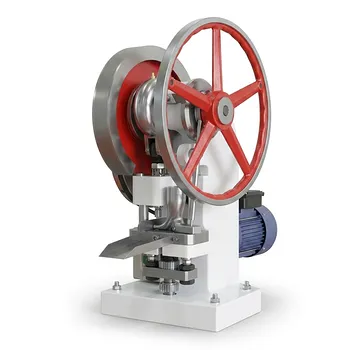
- 6 Ton Variable Frequency Single Punch Tablet Press
- Ordinary Type Rotary Tablet Press for Pharmaceutical Chemical Food Electronic Industries
- Enhanced 9 Punch Rotary Tablet Press for Powder Compaction
- 6-Ton Small Single-Punch Tablet Press — Laboratory Powder & Granule Tableting Equipment / Tablet Forming Machine
- 实验室旋转式压片机 多冲模单压式自动连续压片
People Also Ask
- Why is a laboratory hydraulic press required for FT-IR KBr pellets? Achieve Precise Sample Clarity for ZrC–SiC Analysis
- Why is vacuum sealing and flexible packaging necessary for Aluminum Titanate powders during CIP? Ensure Peak Density
- What are the advantages of using hardened steel molds and graphite spray for titanium powder? Ensure structural integrity
- Why is a laboratory hydraulic press required to compress oyster shell powder before XRF analysis? Improve Data Accuracy.
- What role does a high-strength stainless steel mold kit play in the uniaxial die compaction process? Ensuring Precision

Tech Team · PowderPreparation
Last updated on Jun 03, 2026
Related Products
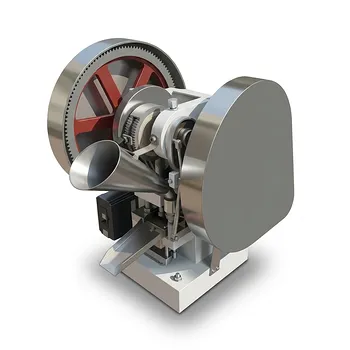
6 Ton Variable Frequency Single Punch Tablet Press
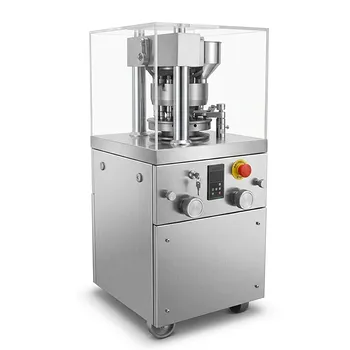
Ordinary Type Rotary Tablet Press for Pharmaceutical Chemical Food Electronic Industries
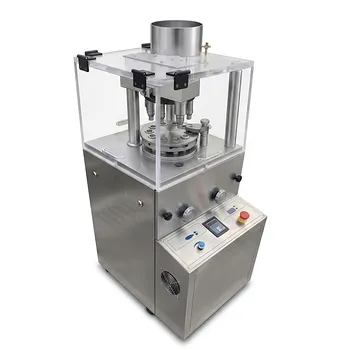
Enhanced 9 Punch Rotary Tablet Press for Powder Compaction
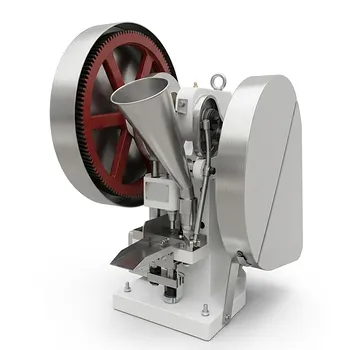
6-Ton Small Single-Punch Tablet Press — Laboratory Powder & Granule Tableting Equipment / Tablet Forming Machine
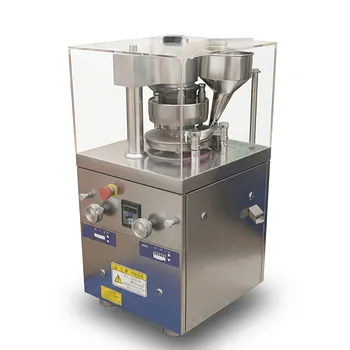
实验室旋转式压片机 多冲模单压式自动连续压片
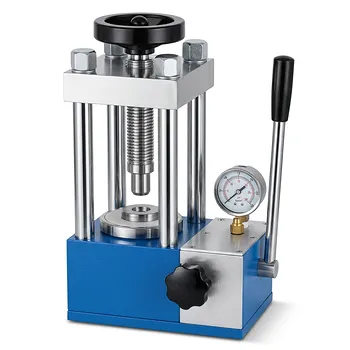
Manual Tablet Press with Dual Scale Pressure Gauge for Pharmaceutical Food Chemical Laboratory Sample Preparation