What is the role of a planetary centrifugal mixer in LMFP slurry? Achieve Perfect Homogeneity & Battery Density
Updated 4 months ago
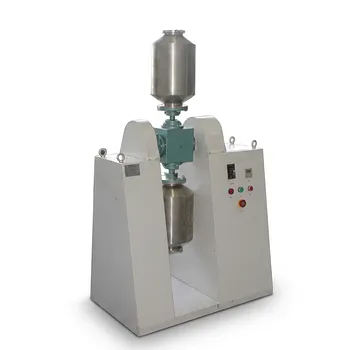
The industrial planetary centrifugal mixer is the primary tool for achieving microscopic homogeneity and air-free consistency in LiMn0.6Fe0.4PO4 (LMFP) cathode slurries. It uses simultaneous revolution and rotation to generate powerful centrifugal forces that disperse active materials, conductive carbon black, and binders within a solvent. Unlike traditional methods, this process is non-contact and operates without mixing blades, ensuring a contaminant-free environment and uniform nano-particle distribution.
By leveraging non-contact centrifugal forces to simultaneously disperse nano-scale powders and eliminate micro-bubbles, the planetary centrifugal mixer ensures a highly stable, uniform slurry. This precision is foundational for producing high-density LMFP electrodes with consistent electrochemical performance.
The Mechanics of Non-Contact Dispersion
Simultaneous Revolution and Rotation
The mixer operates by rotating the material container while it simultaneously revolves around a central axis. This dual-action motion generates intense centrifugal and shear forces that drive the materials into a high-energy convection state.
Blade-Free Mixing Advantages
Because the process relies on internal kinetic energy rather than mechanical paddles, there is no risk of cross-contamination from blade wear. This non-contact approach is critical for maintaining the high purity required for lithium-ion battery chemistries like LMFP.
High-Viscosity Processing
LMFP slurries can become extremely viscous as solids loading increases. The centrifugal mechanism is uniquely capable of processing these high-viscosity materials, ensuring the binder is thoroughly integrated without the "dead zones" common in traditional stirred tanks.
Overcoming Nano-Scale Agglomeration
Breaking Down LMFP Agglomerates
LMFP active materials are often nano-sized, which leads to a natural tendency for particles to clump or "agglomerate." The high-frequency shear forces generated by the mixer effectively break these clusters apart, ensuring every particle is available for electrochemical activity.
Integrating Conductive Carbon Black
Conductive carbon black is notoriously difficult to disperse uniformly due to its low density and high surface area. The planetary mixer forces the carbon black into a deep mixture with the LMFP particles, creating a robust conductive network throughout the slurry.
Achieving Microscopic Homogeneity
Uniformity at the micrometer level is a technical prerequisite for stable battery performance. By ensuring a uniform distribution of the binder (such as PVDF) and active materials, the mixer prevents localized areas of high resistance or structural weakness in the finished electrode.
Precision Defoaming and Coating Quality
Synchronous De-aeration
A standout feature of this technology is its ability to perform synchronous defoaming during the mixing cycle. The centrifugal force naturally pushes heavier slurry components outward, forcing lighter air bubbles to the surface where they collapse.
Eliminating Micro-bubbles
Micro-bubbles trapped in the slurry can cause "pinholes" or thinning during the coating process. By removing these internal air pockets, the mixer ensures a consistent and smooth application of the slurry onto the current collector.
Impact on Electrode Density
Slurry that has been thoroughly degassed and homogenized leads to a much higher electrode density after drying and calendering. This directly translates to improved volumetric energy density and better long-term cycling stability for the LMFP battery.
Understanding the Trade-offs
Heat Generation During High-Intensity Cycles
The intense kinetic energy required to disperse nano-materials can lead to significant internal heat buildup. If not monitored, excessive temperatures may degrade sensitive binders or cause solvent evaporation, altering the slurry's rheology.
Batch Size and Scalability
Planetary centrifugal mixers are often limited by container capacity, making them more common in R&D and pilot-scale production. Scaling to mass production requires multiple units or a transition to different mixing technologies that may struggle to replicate the same degree of de-aeration.
Initial Capital Expenditure
These mixers represent a higher initial investment compared to simple overhead stirrers. However, the reduction in processing time and the elimination of secondary degassing steps often offset these costs over the production lifecycle.
How to Apply This to Your Project
Making the Right Choice for Your Goal
- If your primary focus is maximizing energy density: Prioritize the mixer’s defoaming function to ensure a void-free, high-loading electrode coating.
- If your primary focus is electrochemical consistency: Utilize high-speed revolution settings to ensure the conductive carbon black is perfectly dispersed around the LMFP particles.
- If your primary focus is material purity: Leverage the non-contact, blade-free nature of the equipment to eliminate the risk of metallic contamination during the mixing stage.
By mastering the balance between centrifugal force and processing time, you can transform raw LMFP powder into a high-performance slurry that serves as the foundation for superior battery cells.
Summary Table:
| Key Feature | Functional Benefit | Impact on LMFP Performance |
|---|---|---|
| Non-Contact Mixing | Prevents cross-contamination | Ensures high purity of active materials |
| Dual-Action Motion | Intense shear & convection | Superior dispersion of nano-scale agglomerates |
| Synchronous Defoaming | Eliminates micro-bubbles | Smooth coating without pinholes or defects |
| High-Viscosity Processing | Efficient binder integration | Increased electrode density and cycle stability |
Elevate Your Material Research with Precision Engineering
Are you looking to optimize your LiMn0.6Fe0.4PO4 (LMFP) production? We provide complete laboratory sample preparation solutions for material science, specializing in high-performance powder processing and compaction equipment.
From achieving microscopic homogeneity with our planetary centrifugal and defoaming mixers to fine-tuning particle size with our planetary ball mills, jet mills, and cryogenic grinders, we offer the tools necessary for superior battery performance. Our extensive line also includes:
- Crushers & Sieve Shakers: Jaw/roll crushers and air-jet sieves for precise size control.
- Advanced Hydraulic Presses: A full spectrum of Cold/Warm Isostatic Presses (CIP/WIP), vacuum hot presses, and XRF pellet presses.
Whether you are in R&D or pilot production, our expertise ensures your slurries and electrodes meet the highest industry standards. Contact us today to find the perfect equipment for your lab!
References
- Chanmonirath Chak, Joseph E. Remias. The Effects of Dispersant on Slurry Properties and Electrochemical Behavior of LiMn <sub>0.6</sub> Fe <sub>0.4</sub> PO <sub>4</sub> /Graphite Batteries. DOI: 10.11159/ijmmme.2025.001
Mentioned Products
- Industrial Planetary Centrifugal Vacuum Defoaming Mixer for High Viscosity Paste and Powder Homogenization
- High Efficiency Vacuum Planetary Centrifugal Mixer and Defoaming Machine for Industrial Material Research and Precise Laboratory Powder Dispersion
- Industrial Planetary Centrifugal Vacuum Defoaming Mixer for High Viscosity Paste and Advanced Material Science
- High Speed Vacuum Planetary Centrifugal Mixer and Defoamer for Industrial Paste Processing
- Dual Cup Vacuum Centrifugal Mixer Planetary Paste Defoaming Machine Industrial Material Processor
People Also Ask
- What are the advantages of planetary centrifugal mixers for LSM-CeO2 slurries? Superior Results
- Why is a planetary centrifugal defoaming mixer essential in battery slurry? Achieve High Homogeneity & Degassing
- What process advantages do planetary gravity mixers provide for r-GO/RuO2 electrodes? Achieve Superior Nanoscale Dispersion
- What is the function of industrial planetary centrifugal mixers in 3D printing inks? Achieve Perfect Homogenization
- What are the primary advantages of planetary centrifugal mixers? Master Bladeless Mixing & Vacuum Defoaming

Tech Team · PowderPreparation
Last updated on May 14, 2026
Related Products
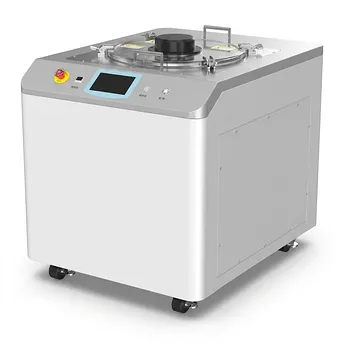
Industrial Planetary Centrifugal Vacuum Defoaming Mixer for High Viscosity Paste and Powder Homogenization
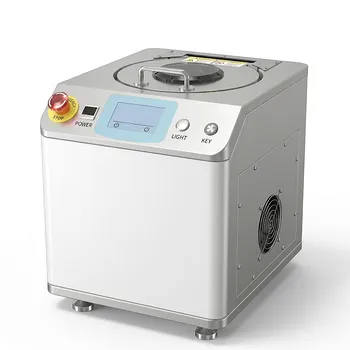
High Efficiency Vacuum Planetary Centrifugal Mixer and Defoaming Machine for Industrial Material Research and Precise Laboratory Powder Dispersion
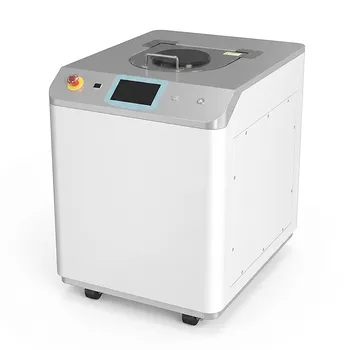
Industrial Planetary Centrifugal Vacuum Defoaming Mixer for High Viscosity Paste and Advanced Material Science
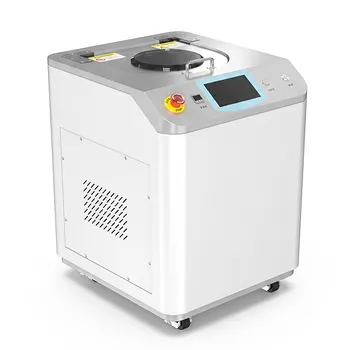
High Speed Vacuum Planetary Centrifugal Mixer and Defoamer for Industrial Paste Processing
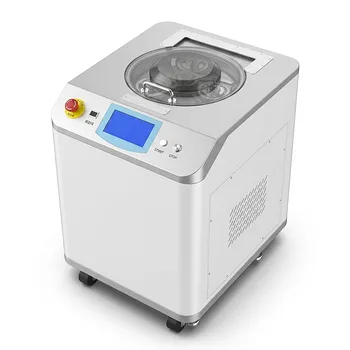
Dual Cup Vacuum Centrifugal Mixer Planetary Paste Defoaming Machine Industrial Material Processor
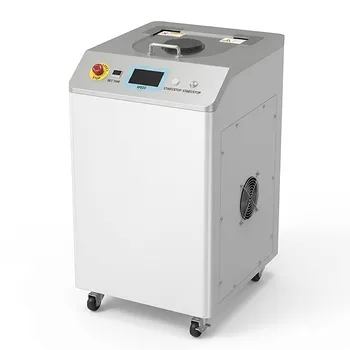
High Viscosity Planetary Centrifugal Vacuum Mixer for Material Defoaming and Uniform Mixing
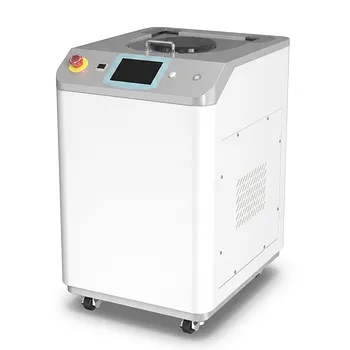
High Viscosity Planetary Centrifugal Mixing and Vacuum Defoaming Machine for Laboratory Material Preparation
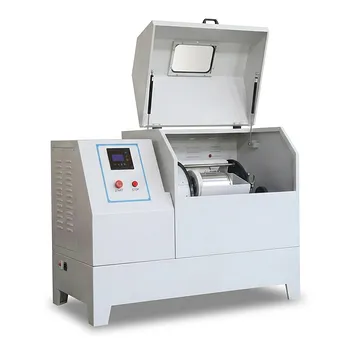
Heavy Duty Horizontal Planetary Ball Mill for Efficient Industrial Grinding and Sample Preparation
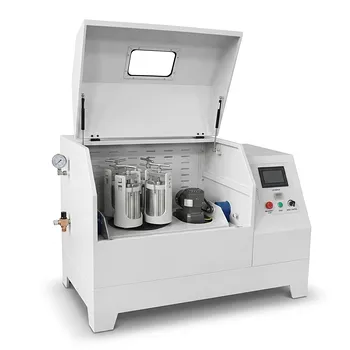
Vertical Production Planetary Ball Mill for High Throughput Powder Processing
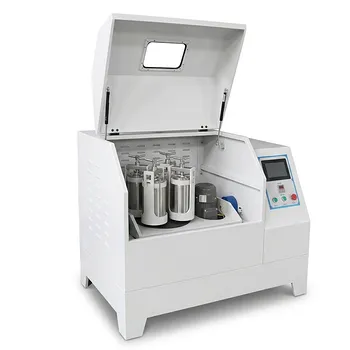
360° Rotating Omnidirectional Laboratory Planetary Ball Mill for Homogeneous Ultra-Fine Grinding and Mixing
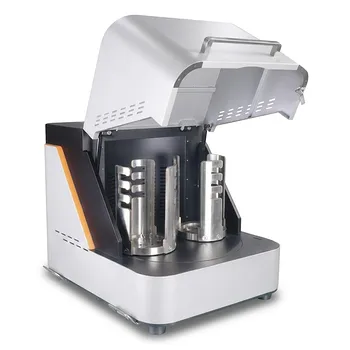
High Energy Laboratory Planetary Ball Mill for Nano Grinding and Colloidal Mixing of Hard and Brittle Materials
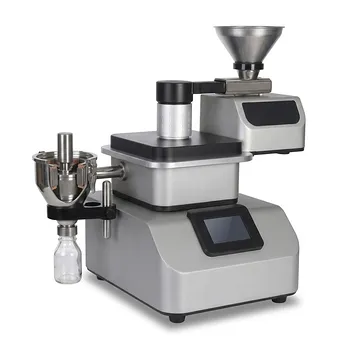
Ultra Centrifugal Mill for Rapid Laboratory Sample Preparation and Fine Powder Grinding
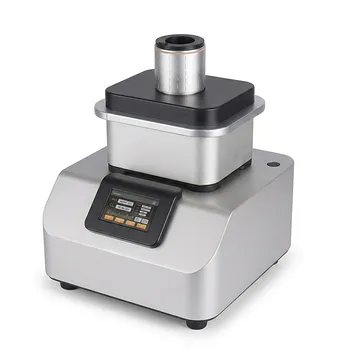
Ultra Centrifugal Mill High Speed Laboratory Grinder for Fibrous and Brittle Sample Preparation
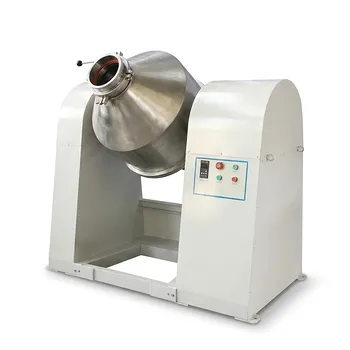
Industrial Double Cone Mixer for Powder Blending and Homogeneous Mixing
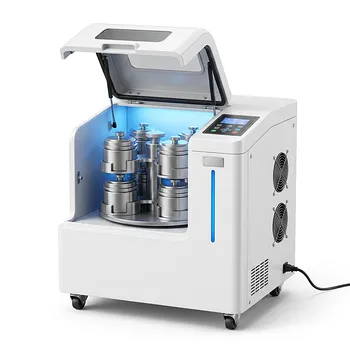
High Energy Omnidirectional Planetary Ball Mill 20L
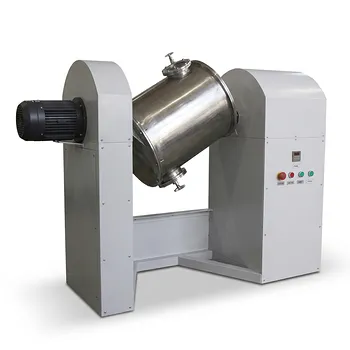
Inclined Mixer for Homogeneous Powder Blending and Grinding
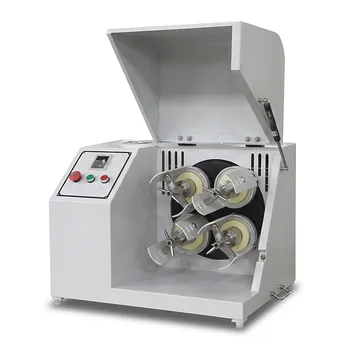
Horizontal Light Duty Planetary Ball Mill for Laboratory Sample Preparation
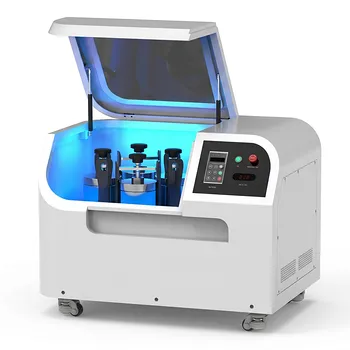
Planetary Ball Mill 12L
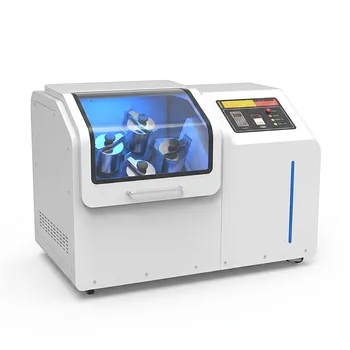
High Energy Omnidirectional Planetary Ball Mill 16L