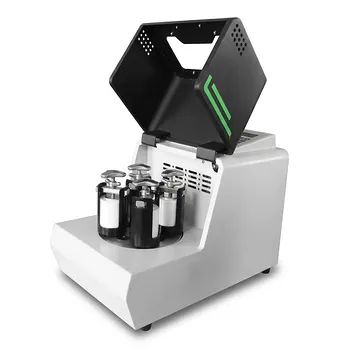
What is the role of a planetary gravity mixer and defoamer in PEDOT:PSS ink prep? Optimize Conductivity & 3D Printing
Updated 4 months ago
The planetary gravity mixer serves as a critical dual-function system that simultaneously homogenizes high-viscosity PEDOT:PSS pastes and eliminates micro-bubbles through powerful centrifugal forces. By utilizing simultaneous rotation and revolution, the mixer ensures the conductive ink achieves the precise rheological stability and uniformity required for uninterrupted Direct Ink Writing (DIW) and high-performance electronic applications.
A planetary gravity mixer provides a blade-free, non-contact method to achieve molecular-level dispersion and degassing in viscous inks. This dual-action process is essential for preventing structural defects and ensuring a continuous conductive network in 3D-printed components.
Achieving Sub-Micron Homogenization
The Mechanics of Centrifugal Force
The mixer operates by rotating the material container while it simultaneously revolves around a central axis. This dual-motion generates powerful centrifugal and shear forces that circulate the material rapidly within the vessel.
Unlike traditional stirrers, this process achieves deep homogenization without the use of physical blades. This non-contact mixing prevents cross-contamination and ensures that delicate chemical ratios in the PEDOT:PSS formulation remain intact.
Handling High-Viscosity PEDOT:PSS
PEDOT:PSS is often formulated as a viscous paste to maintain its shape after extrusion. The high-energy mixing method is capable of dispersing particles at a sub-micron level, even within these thick, thixotropic systems.
By ensuring every part of the paste is subjected to equal force, the mixer creates a consistent rheological profile. This consistency is the foundation for stable extrusion during the 3D printing process.
Ensuring Conductive Network Uniformity
For conductive inks, the uniform distribution of polymers and additives is vital for electrical performance. The planetary mixer ensures that the conductive components are dispersed evenly throughout the polymer matrix.
This uniform dispersion creates a reliable conductive network once the ink is printed and dried. Without this level of homogenization, the final product may suffer from "cold spots" or inconsistent resistance.
The Critical Role of Integrated Defoaming
Preventing Fluid Breakage
Micro-bubbles trapped within the ink are a primary cause of fluid breakage during Direct Ink Writing. When a bubble reaches the print nozzle, it causes a temporary gap in the material flow, leading to line breaks or structural weak points.
The integrated defoaming function uses the same centrifugal forces to force air bubbles to the surface, where they are eliminated. This ensures the ink is dense and defect-free before it ever enters the printer.
Maintaining Extrusion Stability
Air is compressible, meaning bubbles within the ink can cause fluctuations in extrusion pressure. These pressure drops lead to inconsistent line widths and poor resolution in the 3D-printed part.
By removing micro-bubbles, the mixer allows for stable, continuous extrusion. This allows the printer to maintain a precise "green body" density, which is critical for the mechanical integrity of the final object.
Understanding the Trade-offs
Heat Accumulation During High-Speed Mixing
The intense friction generated by high-speed rotation and revolution can cause significant heat buildup within the ink. For temperature-sensitive additives or volatile solvents, this heat can potentially alter the ink's chemical properties if not monitored.
Many industrial mixers address this by incorporating cooling systems or allowing for interval mixing. It is crucial to balance the mixing intensity with the thermal limits of the PEDOT:PSS formulation.
Scalability and Equipment Cost
Planetary gravity mixers are specialized instruments that represent a higher initial investment than simple overhead stirrers. While they offer superior results, their batch size is often limited by the size of the centrifugal arms.
For R&D and high-precision manufacturing, the repeatability and quality usually justify the cost. However, for very large-scale bulk production, the batch-based nature of the equipment requires careful workflow planning.
How to Apply This to Your Formulation
Making the Right Choice for Your Goal
- If your primary focus is maximum electrical conductivity: Prioritize longer mixing cycles at moderate speeds to ensure the most uniform distribution of conductive particles without over-shearing the polymers.
- If your primary focus is high-resolution 3D printing: Utilize the dedicated defoaming mode at maximum centrifugal force to ensure the total removal of micro-bubbles that cause nozzle clogging.
- If your primary focus is material purity: Leverage the non-contact, blade-free nature of the mixer to prevent metallic or cross-batch contamination in sensitive PEDOT:PSS pastes.
The planetary gravity mixer is the definitive tool for transforming raw PEDOT:PSS components into a high-performance, print-ready conductive ink.
Summary Table:
| Key Feature | Role in PEDOT:PSS Preparation | Impact on 3D Printing (DIW) |
|---|---|---|
| Dual-Action Rotation | Achieves sub-micron homogenization of high-viscosity pastes. | Ensures consistent rheology and stable extrusion. |
| Centrifugal Defoaming | Eliminates micro-bubbles that cause fluid breakage. | Prevents line breaks and maintains mechanical integrity. |
| Non-Contact Mixing | Blade-free process prevents metallic or cross-contamination. | Preserves high chemical purity and conductive networks. |
| Shear Force Control | Evenly disperses polymers and conductive additives. | Eliminates "cold spots" and ensures uniform resistance. |
Elevate Your Material Research with Expert Sample Prep Solutions
At [Your Brand Name], we provide complete laboratory sample preparation solutions tailored for material science. We specialize in high-precision powder processing and compaction equipment designed to meet the rigorous demands of advanced electronics and 3D printing applications.
Our extensive product lines include:
- Mixing & Homogenization: Planetary gravity mixers and defoaming mixers for bubble-free, uniform inks.
- Size Reduction & Milling: Planetary ball mills, jet mills, sand/bead mills, and jaw/roll crushers.
- Particle Analysis: Sieve shakers (vibratory/air-jet) with a wide range of test sieves and meshes.
- Compaction & Pressing: A full spectrum of hydraulic presses, including Cold/Warm Isostatic Presses (CIP/WIP), vacuum hot presses, XRF pellet presses, and standard lab presses.
Whether you are refining conductive PEDOT:PSS formulations or developing new ceramic composites, our equipment ensures repeatability and superior material performance.
Ready to optimize your laboratory workflow? Contact us today to find the perfect solution for your application!
References
- Ian M. Hill, Yue Wang. Imparting High Conductivity to 3D Printed PEDOT:PSS. DOI: 10.1021/acsapm.3c00232
Mentioned Products
- 非介入式材料均质机真空脱泡行星搅拌高粘度混合设备
- High Efficiency Vacuum Planetary Centrifugal Mixer and Defoaming Machine for Industrial Material Research and Precise Laboratory Powder Dispersion
- High Viscosity Planetary Centrifugal Mixing and Vacuum Defoaming Machine for Laboratory Material Preparation
- High Viscosity Planetary Centrifugal Vacuum Mixer for Material Defoaming and Uniform Mixing
- Industrial Planetary Centrifugal Vacuum Defoaming Mixer for High Viscosity Paste and Powder Homogenization
People Also Ask
- How does a planetary vacuum defoaming mixer help magnesium calcium phosphate slurries? Achieve Flawless 3D Printed Bone
- Why is vacuum defoaming necessary for PDMS mixtures before microwave irradiation curing? Key to Structural Integrity
- What role does a vacuum defoaming mixer play in BNT MLCC slurry? Ensure High Dielectric Strength & Pinhole-Free Prep
- Why is a vacuum defoaming mixer essential for DLP 3D printing ceramic slurries? Key to Structural Integrity
- What is the purpose of using a high-vacuum defoaming mixer for SiC/Cf composites? Optimize Density and Strength

Tech Team · PowderPreparation
Last updated on Jun 03, 2026
Related Products
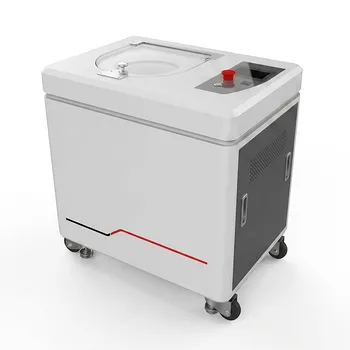
非介入式材料均质机真空脱泡行星搅拌高粘度混合设备
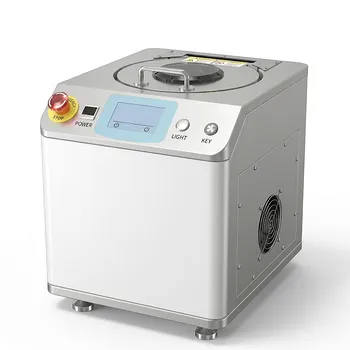
High Efficiency Vacuum Planetary Centrifugal Mixer and Defoaming Machine for Industrial Material Research and Precise Laboratory Powder Dispersion
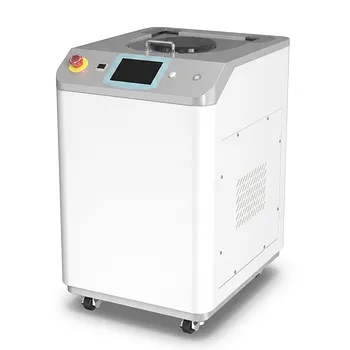
High Viscosity Planetary Centrifugal Mixing and Vacuum Defoaming Machine for Laboratory Material Preparation
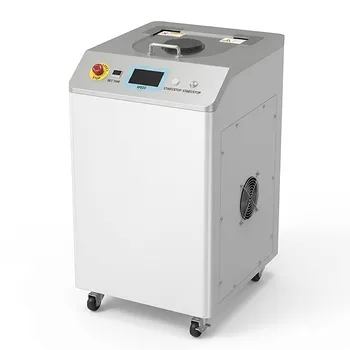
High Viscosity Planetary Centrifugal Vacuum Mixer for Material Defoaming and Uniform Mixing
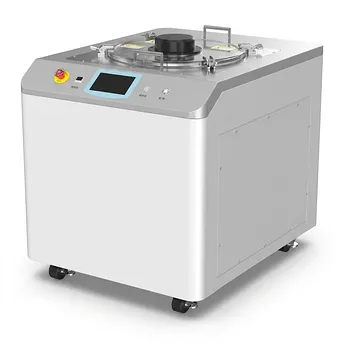
Industrial Planetary Centrifugal Vacuum Defoaming Mixer for High Viscosity Paste and Powder Homogenization
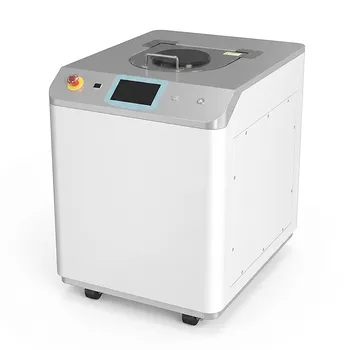
Industrial Planetary Centrifugal Vacuum Defoaming Mixer for High Viscosity Paste and Advanced Material Science
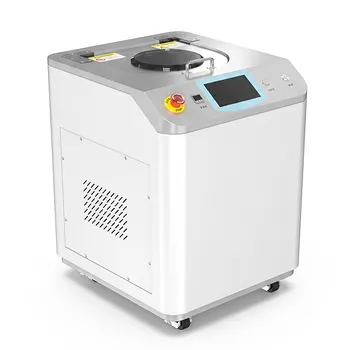
High Speed Vacuum Planetary Centrifugal Mixer and Defoamer for Industrial Paste Processing
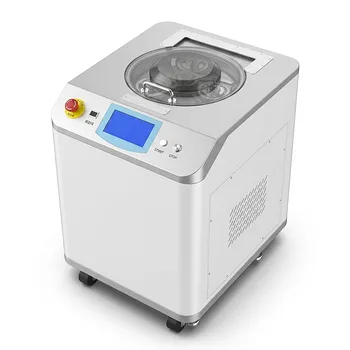
Dual Cup Vacuum Centrifugal Mixer Planetary Paste Defoaming Machine Industrial Material Processor

360° Rotating Omnidirectional Laboratory Planetary Ball Mill for Homogeneous Ultra-Fine Grinding and Mixing
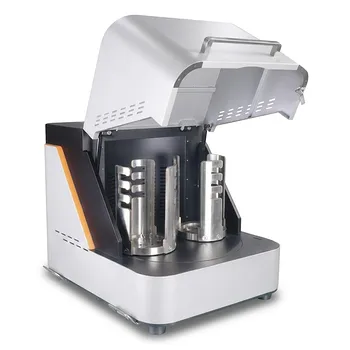
High Energy Laboratory Planetary Ball Mill for Nano Grinding and Colloidal Mixing of Hard and Brittle Materials
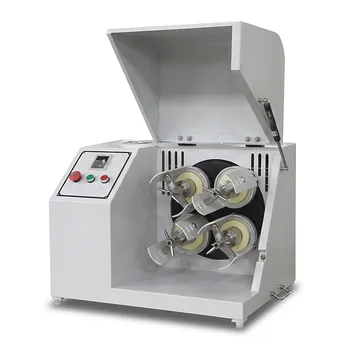
Horizontal Light Duty Planetary Ball Mill for Laboratory Sample Preparation
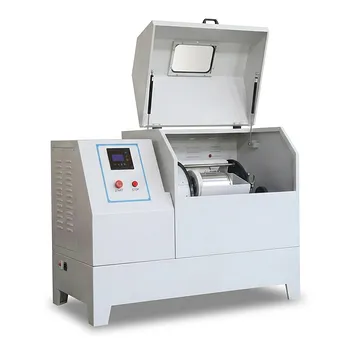
Heavy Duty Horizontal Planetary Ball Mill for Efficient Industrial Grinding and Sample Preparation
High-Speed Simple Disperser for Efficient Mixing, Dispersion, and Emulsification