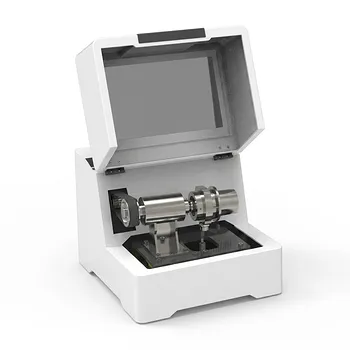
Role of Planetary Ball Mill in Mg-Doped Layered Oxide Synthesis: Achieve Atomic Homogenization
Updated 5 months ago
The planetary ball mill serves as a high-energy mechanical processing unit that ensures atomic-level homogenization and particle size reduction of raw precursors. By utilizing high-speed rotation to generate powerful impact and shear forces, it transforms coarse materials like sodium, nickel, manganese, and magnesium oxides into a highly reactive mixture. This mechanical activation is the critical precursor step required to achieve a pure O3-type layered structure during subsequent high-temperature synthesis.
The planetary ball mill is the physical foundation for chemical uniformity in Mg-doped cathode synthesis. It overcomes the kinetic barriers of solid-phase reactions by maximizing the contact surface area and shortening diffusion paths between disparate chemical components.
Achieving Atomic-Level Homogeneity
Overcoming Multi-Component Separation
In Mg-doped layered oxides, the challenge lies in distributing magnesium atoms uniformly within the nickel-manganese lattice. The planetary ball mill uses high-energy grinding to prevent the segregation of magnesium oxide from other transition metal oxides.
Facilitating Molecular Mixing
The mill’s high-speed rotation generates centrifugal and impact forces that break down raw powders to the sub-micron level. This process ensures that stoichiometric components are mixed at an atomic scale, which is essential for the stability of the final crystalline phase.
Uniform Dopant Integration
Magnesium doping requires precise integration to enhance the structural stability of the cathode. Mechanical milling ensures that the Mg ions are positioned to effectively substitute into the lattice during the calcination stage.
Enhancing Reaction Kinetics
Increasing Effective Surface Area
By refining particle size, the planetary ball mill significantly increases the total surface area available for chemical interaction. This increased contact area provides the "kinetic foundation" necessary for rapid solid-phase reactions at high temperatures.
Shortening Diffusion Path Lengths
In solid-state synthesis, ions must travel through the bulk material to form a new phase. Milling reduces the distance these ions must travel, which accelerates the formation of the layered structure and reduces the time required for high-temperature sintering.
Mechanical Activation of Reactants
The high-energy impact and friction not only reduce size but also increase the surface activity of the powder. This heightened energy state lowers the activation energy required for the formation of the O3-type or P2-type layered structures.
Understanding the Trade-offs
Risk of Impurity Contamination
The high-energy nature of planetary milling can lead to wear and tear of the grinding jars and balls. If the material of the grinding media (such as zirconia or stainless steel) is not chosen carefully, it can introduce unwanted impurities into the cathode material.
Heat Generation and Structural Damage
Long-duration or excessively high-speed milling can generate significant heat within the jars. This thermal energy may cause premature phase transitions or agglomeration of the very particles the process is intended to refine.
Energy and Scalability Constraints
While effective for laboratory-scale synthesis and achieving high phase purity, planetary ball milling is energy-intensive. Balancing the milling time (often 12 hours or more) against the desired particle size is a common optimization challenge in large-scale production.
Making the Right Choice for Your Goal
To optimize the synthesis of Mg-doped layered oxide cathode materials, consider the following technical priorities:
- If your primary focus is Phase Purity: Prioritize longer milling durations at moderate speeds (e.g., 400 rpm) to ensure the atomic-level mixing required for a pure O3-type structure.
- If your primary focus is High-Rate Performance: Focus on maximizing the energy input to achieve the smallest possible particle size, thereby shortening lithium-ion diffusion paths.
- If your primary focus is Preventing Contamination: Use grinding media (jars and balls) made of the same material as one of the major components or high-hardness ceramics like zirconia to minimize wear-related impurities.
By precisely controlling the mechanical energy of the planetary ball mill, researchers can dictate the electrochemical success of the resulting Mg-doped cathode materials.
Summary Table:
| Key Mechanism | Function in Mg-Doped Synthesis | Resulting Benefit |
|---|---|---|
| High-Energy Impact | Breaks precursors to sub-micron level | Ensures atomic-level molecular mixing |
| Mechanical Activation | Increases surface energy/activity | Lowers solid-phase reaction activation energy |
| Size Reduction | Maximizes total surface area | Shortens ion diffusion paths for faster sintering |
| Uniform Integration | Distributes Mg atoms within lattice | Enhances structural stability of the O3-type phase |
Elevate Your Material Research with Precision Powder Processing
Optimizing the synthesis of Mg-doped layered oxides requires precision at every step. At [Your Brand Name], we provide complete laboratory sample preparation solutions for material science, specializing in high-performance powder processing and compaction equipment.
Whether you need to achieve atomic-level homogenization with our planetary ball mills, jet mills, or cryogenic grinders, or require high-density compaction using our Cold/Warm Isostatic Presses (CIP/WIP) and vacuum hot presses, we have the expertise to support your workflow. Our extensive product range includes:
- Size Reduction: Jaw/roll crushers, planetary ball mills, and rotor mills.
- Classification: Vibratory and air-jet sieve shakers with precision test sieves.
- Mixing: High-efficiency powder mixers and defoaming mixers.
- Compaction: Standard lab presses, XRF pellet presses, and specialized hot presses.
Ready to enhance your material stability and electrochemical performance? Contact our experts today to find the ideal equipment configuration for your specific synthesis goals.
References
- Yongchun Li, Philipp Adelhelm. ‘Oxygen Bound to Magnesium’ as High Voltage Redox Center Causes Sloping of the Potential Profile in Mg‐Doped Layered Oxides for Na‐Ion Batteries. DOI: 10.1002/adfm.202519132
Mentioned Products
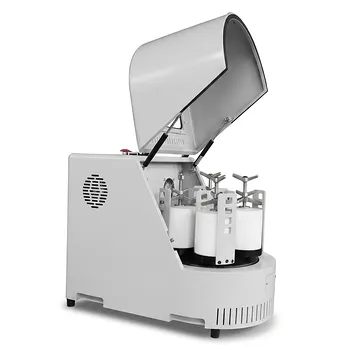
- Vertical Semi Circular Planetary Ball Mill for Laboratory Precision Grinding
- High Energy Planetary Ball Mill for Nano Scale Grinding and Mechanical Alloying
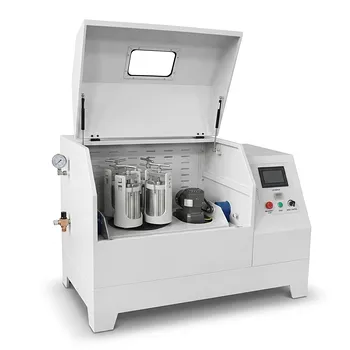
- Vertical Production Planetary Ball Mill for High Throughput Powder Processing
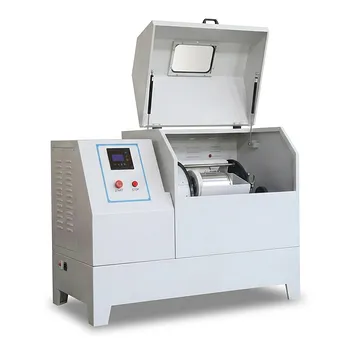
- Heavy Duty Horizontal Planetary Ball Mill for Efficient Industrial Grinding and Sample Preparation
- 360° Rotating Omnidirectional Laboratory Planetary Ball Mill for Homogeneous Ultra-Fine Grinding and Mixing
People Also Ask
- What role does a planetary ball mill play in the synthesis of Li6PS5Cl (LPSCl)? Unlock High Ionic Conductivity
- Why is a planetary ball mill essential for SiBCN-rGO wet-spinning? Achieve Superior Dispersion and Spinnability
- Why is an intermittent grinding process required for perovskites in a planetary ball mill? Ensure Stability & Purity
- Why is a planetary ball mill required for PET micronization? Ensure Accurate Chemical Analysis of Reprocessed PET
- How does mechanized planetary ball milling compare to manual agate grinding? Optimize sulfide standard material precision.

Tech Team · PowderPreparation
Last updated on May 14, 2026
Related Products
Vertical Semi Circular Planetary Ball Mill for Laboratory Precision Grinding

High Energy Planetary Ball Mill for Nano Scale Grinding and Mechanical Alloying
Vertical Production Planetary Ball Mill for High Throughput Powder Processing
Heavy Duty Horizontal Planetary Ball Mill for Efficient Industrial Grinding and Sample Preparation
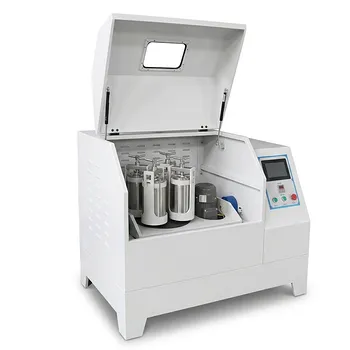
360° Rotating Omnidirectional Laboratory Planetary Ball Mill for Homogeneous Ultra-Fine Grinding and Mixing
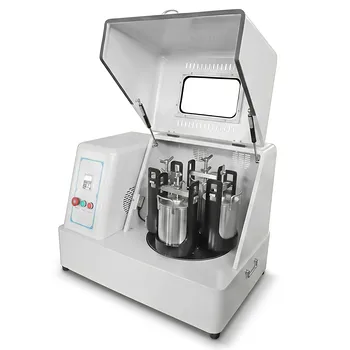
Vertical Square Planetary Ball Mill for Laboratory Sample Preparation and Nanoscale Grinding
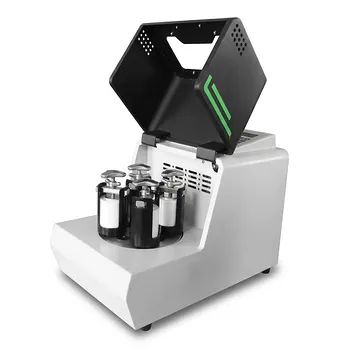
Miniature Planetary Ball Mill with Vacuum Grinding and High Efficiency for Laboratory Sample Preparation
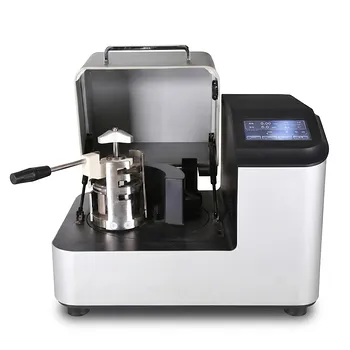
High Energy Laboratory Planetary Ball Mill for Nano Grinding and Material Science Sample Preparation
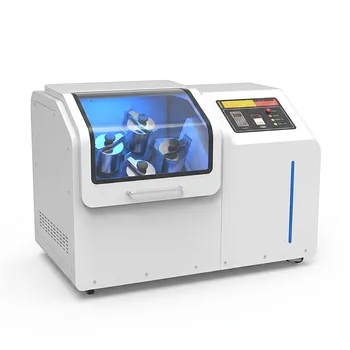
High Energy Omnidirectional Planetary Ball Mill 16L
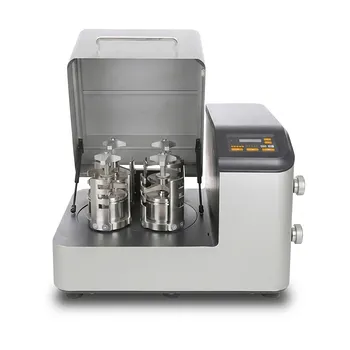
High Energy Planetary Ball Mill for Nano Scale Grinding and Colloidal Mixing in Material Science Research
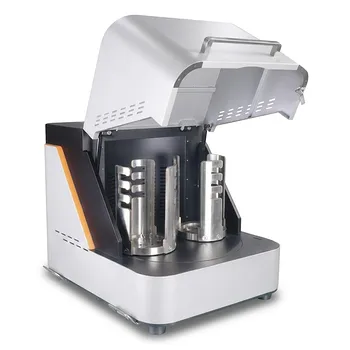
High Energy Laboratory Planetary Ball Mill for Nano Grinding and Colloidal Mixing of Hard and Brittle Materials
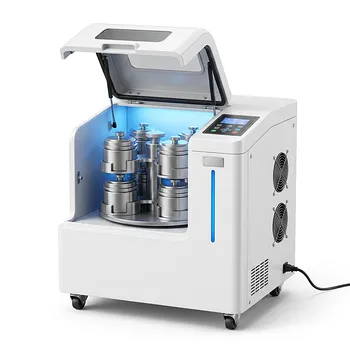
High Energy Omnidirectional Planetary Ball Mill 20L
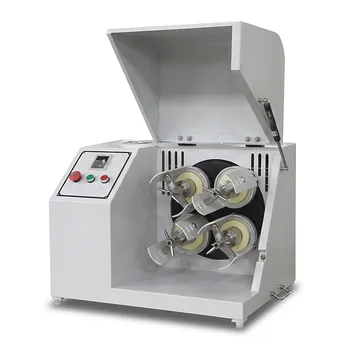
Horizontal Light Duty Planetary Ball Mill for Laboratory Sample Preparation

8L Planetary Ball Mill for Laboratory Grinding and Sample Preparation
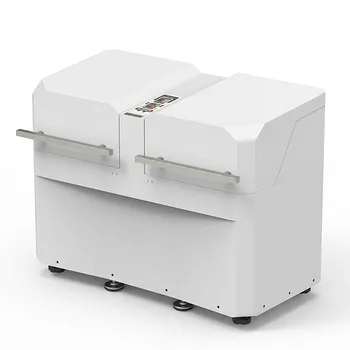
Dual Station Planetary Ball Mill 24L
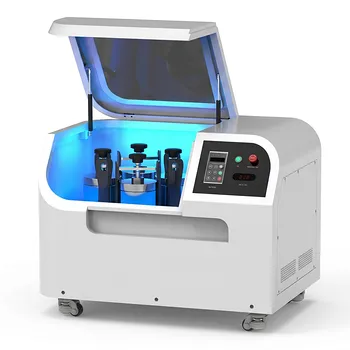
Planetary Ball Mill 12L

Nano High Energy Vibratory Ball Mill for Laboratory Sample Preparation

Multi-Platform Nanoscale High-Energy Vibratory Ball Mill

High Energy Hybrid Vibratory Ball Mill for Grinding Mixing and Cell Disruption