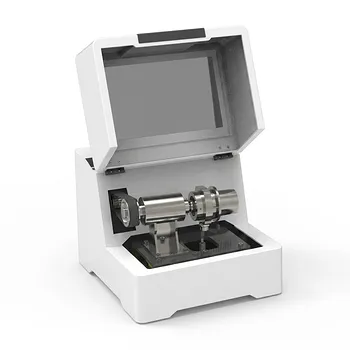
Role of Planetary Ball Mill in NN-CZ-xBNT Ceramic Prep: Achieve Nano-Scale Refinement & High Energy Storage Density
Updated 4 months ago
A planetary ball mill acts as the primary mechanical catalyst for homogenization and particle refinement during the synthesis of energy storage ceramics. By utilizing high-frequency rotation to generate intense impact and shear forces, the mill deeply mixes raw materials like Na2CO3, Nb2O5, and ZrO2 within an alcohol medium. This 24-hour process is essential for reducing particle size to the nano-scale and eliminating agglomeration, which maximizes the contact area between components to facilitate the chemical reactions required for high-performance dielectric materials.
The core role of the planetary ball mill is to convert discrete raw powders into a high-activity, microscopically uniform precursor. This mechanical activation is the foundational step that dictates the phase purity, sintering density, and ultimate energy storage efficiency of the ceramic.
Achieving Microscopic Homogeneity and Particle Refinement
Deep Mixing at the Atomic Level
For NN-CZ-xBNT ceramics, achieving a high degree of microscopic uniformity is critical to prevent compositional segregation. The planetary ball mill ensures that different chemical components are distributed at the molecular level, reducing experimental errors and ensuring representative data for reliability assessments.
Reducing Particle Size to the Nano-Scale
The high-energy milling process refines conventional ceramic particles into ultra-fine powders, often reaching sizes smaller than 100 nanometers. This drastic reduction in size significantly increases the specific surface area, providing the necessary physical foundation for rapid melting and phase synthesis.
Eliminating Agglomeration
Raw material powders naturally tend to clump together, a phenomenon known as agglomeration, which can create defects in the final ceramic structure. The intense shear forces of the mill break these clusters apart, ensuring that each particle is independently available for the subsequent solid-state reaction.
Enhancing Chemical Reactivity for Solid-State Synthesis
Facilitating Pure Phase Perovskite Formation
The primary goal of preparing NN-CZ-xBNT is the formation of a pure phase perovskite structure. By increasing the physical contact area between oxides and carbonates, the planetary ball mill enhances the chemical activity needed to achieve this specific crystalline structure during calcination.
Suppressing Abnormal Grain Growth (AGG)
Uniformity in the initial particle size distribution is a prerequisite for a stable microstructure. By refining the powder and ensuring a narrow size distribution, the milling process helps suppress Abnormal Grain Growth (AGG), which could otherwise compromise the ceramic’s mechanical and electrical properties.
Improving Sintering Activity and Density
High-performance energy storage ceramics require high-density sintering to withstand high electric fields. The increased reactivity of the milled powder promotes a more efficient sintering process, leading to a stable aluminosilicate network and improved microstructural density.
Understanding the Trade-offs
The Risk of Media Contamination
While longer milling durations improve uniformity, they increase the risk of wear and tear on the grinding balls and jars. This can introduce impurities (such as alumina or zirconia) into the NN-CZ-xBNT mixture, potentially altering the dielectric properties and energy storage density.
Heat Generation and Material Stability
High-frequency rotation generates significant thermal energy within the milling jars. If the temperature is not managed—often through the use of an alcohol medium—it can lead to the premature decomposition of certain carbonates or the evaporation of the solvent, affecting the stoichiometric balance.
Balancing Milling Time and Energy Costs
There is a point of diminishing returns where further milling does not significantly reduce particle size but continues to consume energy and increase the risk of contamination. Optimizing the 24-hour window is essential for balancing powder quality with production efficiency.
How to Apply This to Your Project
The effectiveness of your raw material preparation depends on matching your milling parameters to your specific material goals.
- If your primary focus is phase purity: Ensure a full 24-hour milling cycle to maximize the contact area between Na2CO3 and Nb2O5 for complete perovskite formation.
- If your primary focus is high-density sintering: Prioritize high-speed rotation to achieve nano-scale refinement, which increases the driving force for densification.
- If your primary focus is microstructural reliability: Use wet milling in an alcohol medium to prevent agglomeration and ensure a uniform Weibull distribution of grain sizes.
The planetary ball mill is the indispensable tool that transforms raw chemical components into a highly reactive precursor capable of meeting the rigorous demands of modern energy storage applications.
Summary Table:
| Key Milling Function | Technical Objective | Impact on Ceramic Performance |
|---|---|---|
| Particle Refinement | Reduce to <100nm size | Increases specific surface area and sintering activity |
| Deep Homogenization | Atomic-level mixing | Prevents compositional segregation and phase impurities |
| De-agglomeration | Breaking powder clusters | Eliminates structural defects and ensures uniform grain growth |
| Mechanical Activation | Increase chemical reactivity | Lowers calcination temperature and promotes perovskite formation |
Elevate Your Material Research with Precision Sample Preparation
At [Company Name], we provide complete laboratory sample preparation solutions tailored for advanced material science. Whether you are synthesizing high-performance NN-CZ-xBNT energy storage ceramics or developing next-generation dielectrics, our equipment ensures the microscopic uniformity and phase purity your research demands.
Our specialized product lines include:
- Powder Processing: High-energy planetary ball mills, jet mills, disc mills, and rotor mills for nano-scale refinement.
- Crushing & Grinding: Jaw/roll crushers and liquid nitrogen cryogenic grinders for versatile material reduction.
- Sieving & Mixing: Vibratory/air-jet sieve shakers and advanced powder/defoaming mixers for perfect consistency.
- Advanced Compaction: A full spectrum of hydraulic presses, including Cold/Warm Isostatic Presses (CIP/WIP), standard lab presses, and vacuum hot presses for high-density sintering.
Ready to optimize your powder metallurgy and ceramic synthesis? Contact our technical experts today to find the ideal equipment configuration for your laboratory!
References
- Liang Chen, Jun Chen. Design of hierarchical-heterostructure antiferroelectrics for ultrahigh capacitive energy storage. DOI: 10.1038/s41467-025-65694-z
Mentioned Products
- Vertical Semi Circular Planetary Ball Mill for Laboratory Precision Grinding
- High Energy Planetary Ball Mill for Nano Scale Grinding and Mechanical Alloying
- Vertical Production Planetary Ball Mill for High Throughput Powder Processing
- Heavy Duty Horizontal Planetary Ball Mill for Efficient Industrial Grinding and Sample Preparation
- 360° Rotating Omnidirectional Laboratory Planetary Ball Mill for Homogeneous Ultra-Fine Grinding and Mixing
People Also Ask
- What role does a planetary ball mill play in the synthesis of Li6PS5Cl (LPSCl)? Unlock High Ionic Conductivity
- Why is a planetary ball mill essential for SiBCN-rGO wet-spinning? Achieve Superior Dispersion and Spinnability
- Why is an intermittent grinding process required for perovskites in a planetary ball mill? Ensure Stability & Purity
- Why is a planetary ball mill required for PET micronization? Ensure Accurate Chemical Analysis of Reprocessed PET
- How does mechanized planetary ball milling compare to manual agate grinding? Optimize sulfide standard material precision.

Tech Team · PowderPreparation
Last updated on Jun 03, 2026
Related Products
Vertical Semi Circular Planetary Ball Mill for Laboratory Precision Grinding

High Energy Planetary Ball Mill for Nano Scale Grinding and Mechanical Alloying

Vertical Production Planetary Ball Mill for High Throughput Powder Processing

Heavy Duty Horizontal Planetary Ball Mill for Efficient Industrial Grinding and Sample Preparation
360° Rotating Omnidirectional Laboratory Planetary Ball Mill for Homogeneous Ultra-Fine Grinding and Mixing

Vertical Square Planetary Ball Mill for Laboratory Sample Preparation and Nanoscale Grinding

Miniature Planetary Ball Mill with Vacuum Grinding and High Efficiency for Laboratory Sample Preparation
High Energy Laboratory Planetary Ball Mill for Nano Grinding and Material Science Sample Preparation

High Energy Omnidirectional Planetary Ball Mill 16L
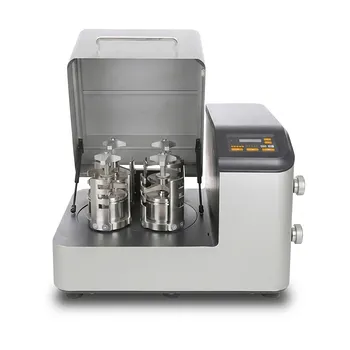
High Energy Planetary Ball Mill for Nano Scale Grinding and Colloidal Mixing in Material Science Research
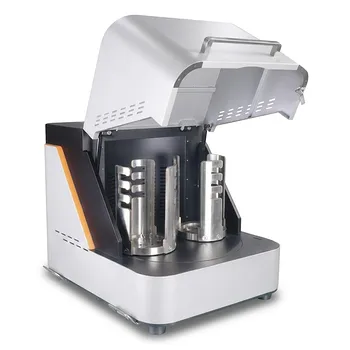
High Energy Laboratory Planetary Ball Mill for Nano Grinding and Colloidal Mixing of Hard and Brittle Materials
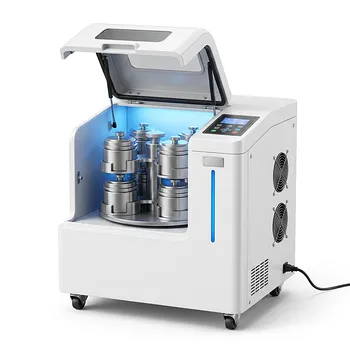
High Energy Omnidirectional Planetary Ball Mill 20L
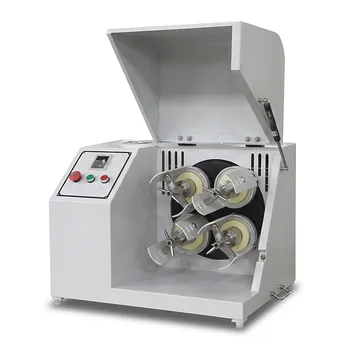
Horizontal Light Duty Planetary Ball Mill for Laboratory Sample Preparation

8L Planetary Ball Mill for Laboratory Grinding and Sample Preparation
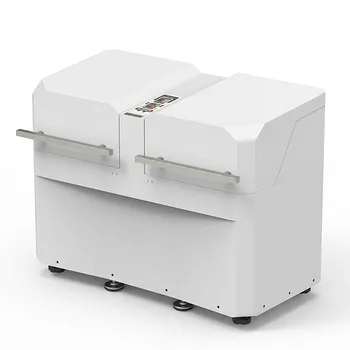
Dual Station Planetary Ball Mill 24L
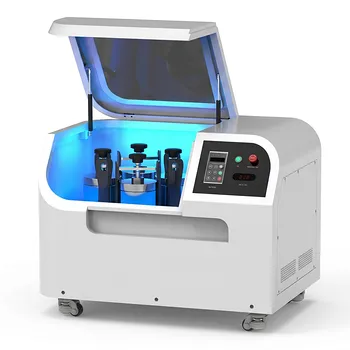
Planetary Ball Mill 12L

Nano High Energy Vibratory Ball Mill for Laboratory Sample Preparation

Multi-Platform Nanoscale High-Energy Vibratory Ball Mill

High Energy Hybrid Vibratory Ball Mill for Grinding Mixing and Cell Disruption