What is the role of a planetary ball mill in PVSZ ceramic slurries? Optimize Homogeneity & 3D Printing Results
Updated 4 months ago
The planetary ball mill is the primary tool for achieving microscopic homogeneity in polyvinylsilazane (PVSZ) precursor ceramic slurries. It utilizes high-energy shearing and impact forces to break down inorganic particle agglomerates, ensuring that fillers like silicon nitride (Si3N4) are uniformly dispersed within the polymer resin matrix. This process is essential for stabilizing the slurry’s rheology and ensuring consistent light scattering during subsequent photo-curing stages.
Core Takeaway: The planetary ball mill transforms a raw mixture into a high-performance precursor slurry by using intense kinetic energy to achieve micron-scale dispersion. This uniformity is the fundamental requirement for successful 3D printing and the production of dense, defect-free ceramic components.
Mechanical Homogenization and De-agglomeration
Breaking Down Particle Clusters
Inorganic fillers like silicon nitride (Si3N4) naturally tend to form clusters or agglomerates due to van der Waals forces. The high-energy impact from the grinding media in a planetary ball mill provides the necessary force to overcome these bonds.
Achieving Micron-Scale Dispersion
By subjecting the slurry to high-speed rotation and revolution, the mill ensures that the PVSZ resin fully penetrates the spaces between individual filler particles. This results in a micron-scale uniform dispersion that prevents the formation of large voids or weak points in the final ceramic structure.
Optimizing Particle Size Distribution
The milling process can also refine the size of the filler particles, creating a more favorable particle size distribution. A well-optimized distribution allows for higher solid loading while maintaining the flowability required for processing.
Enhancing Slurry Stability and Processability
Consistent Rheological Properties
The thorough mixing of solvents, monomers, and photoinitiators directly influences the viscosity of the slurry. A well-milled PVSZ slurry exhibits stable rheological behavior, which is critical for consistent layering during 3D printing processes.
Improving Sedimentation Stability
Without effective ball milling, heavy inorganic fillers would quickly settle out of the resin matrix. The intense shearing action ensures that dispersants are uniformly coated onto the particle surfaces, significantly improving the sedimentation stability of the suspension.
Facilitating Chemical Integration
For precursor ceramics, the interface between the polymer resin and the inorganic filler determines the success of the polymer-to-ceramic conversion. High-energy mixing ensures a high degree of microscopic contact, providing a physical foundation for uniform phase synthesis during pyrolysis.
Impact on Photo-Curing and Final Properties
Controlling Light Scattering
In light-curing 3D printing, the uniformity of the slurry dictates how light travels through the material. A homogeneous dispersion of fillers ensures consistent light scattering, allowing for precise control over the curing depth and lateral resolution.
Maximizing Microstructural Uniformity
The final mechanical properties of the ceramic, such as hardness and fracture toughness, depend on a dense microstructure. The planetary ball mill eliminates "rich" or "lean" zones of filler, leading to a more isotropic and defect-free ceramic product after sintering.
Understanding the Trade-offs
Thermal Management Challenges
The high-energy nature of planetary ball milling generates significant frictional heat. If not managed through intermittent milling cycles, this heat can trigger premature polymerization of the photosensitive resins or degrade the PVSZ precursor.
Potential for Media Contamination
Extended milling durations increase the risk of contamination from the grinding jars or balls (e.g., zirconia or alumina). Users must select grinding media that is chemically compatible with the final ceramic application to avoid degrading electrical or mechanical properties.
Processing Time vs. Stability
While longer milling times generally improve dispersion, there is a point of diminishing returns. Over-milling can lead to re-agglomeration of fine particles or excessive viscosity increases, making the slurry difficult to handle.
How to Apply This to Your Project
Recommendations for Slurry Preparation
- If your primary focus is high-resolution 3D printing: Prioritize longer milling times at moderate speeds to ensure the absolute uniformity of light-scattering particles.
- If your primary focus is high-density final ceramics: Focus on maximizing the solid loading of the slurry by using the mill to integrate the highest possible volume of filler into the PVSZ matrix.
- If your primary focus is material purity: Utilize high-hardness grinding media like silicon nitride balls to match your filler material and minimize cross-contamination.
The planetary ball mill remains the indispensable bridge between raw preceramic polymers and the high-performance, precision-engineered ceramic components of the future.
Summary Table:
| Key Function | Mill Mechanism | Impact on PVSZ Slurry |
|---|---|---|
| De-agglomeration | High-energy shearing & impact | Breaks down Si3N4 clusters for uniform dispersion |
| Rheology Control | Intense mechanical homogenization | Ensures stable viscosity for consistent 3D printing |
| Sedimentation Stability | Uniform coating of dispersants | Prevents inorganic fillers from settling in resin |
| Photo-Curing Quality | Microscopic homogeneity | Provides consistent light scattering and curing depth |
| Microstructure Density | Elimination of filler-lean zones | Results in isotropic, defect-free ceramic components |
Elevate Your Material Science Research with Precision Equipment
Achieving the perfect PVSZ precursor slurry requires more than just a recipe; it requires high-performance processing technology. [Brand Name] provides complete laboratory sample preparation solutions tailored for advanced material science and ceramic engineering.
Whether you are focusing on high-resolution 3D printing or high-density ceramic production, our extensive equipment line supports every stage of your workflow:
- Advanced Milling: High-energy planetary ball mills, jet mills, and cryogenic grinders for micron-scale dispersion.
- Powder Processing: Specialized powder mixers and defoaming mixers to ensure air-free, stable suspensions.
- Compaction Excellence: A full spectrum of hydraulic presses, including Cold/Warm Isostatic Presses (CIP/WIP), standard lab presses, and vacuum hot presses for dense component fabrication.
- Material Analysis Prep: Jaw/roll crushers and vibratory sieve shakers for precise particle size control.
Ready to optimize your ceramic slurries and material performance? Contact our technical experts today to find the ideal solution for your laboratory or production line!
References
- Alper Balkan, Aleksander Gurlo. Influence of Si <sub>3</sub> N <sub>4</sub> fillers and pyrolysis profile on the microstructure of additively manufactured silicon carbonitride ceramics derived from polyvinylsilazane. DOI: 10.1080/14686996.2024.2363170
Mentioned Products
- Vertical Semi Circular Planetary Ball Mill for Laboratory Precision Grinding
- Vertical Production Planetary Ball Mill for High Throughput Powder Processing
- Vertical Square Planetary Ball Mill for Laboratory Sample Preparation and Nanoscale Grinding
- Planetary Ball Mill 12L
- 360° Rotating Omnidirectional Laboratory Planetary Ball Mill for Homogeneous Ultra-Fine Grinding and Mixing
People Also Ask
- What role does a planetary ball mill play in the synthesis of Li6PS5Cl (LPSCl)? Unlock High Ionic Conductivity
- Why is a planetary ball mill essential for SiBCN-rGO wet-spinning? Achieve Superior Dispersion and Spinnability
- Why is an intermittent grinding process required for perovskites in a planetary ball mill? Ensure Stability & Purity
- Why is a planetary ball mill required for PET micronization? Ensure Accurate Chemical Analysis of Reprocessed PET
- How does mechanized planetary ball milling compare to manual agate grinding? Optimize sulfide standard material precision.

Tech Team · PowderPreparation
Last updated on Jun 03, 2026
Related Products
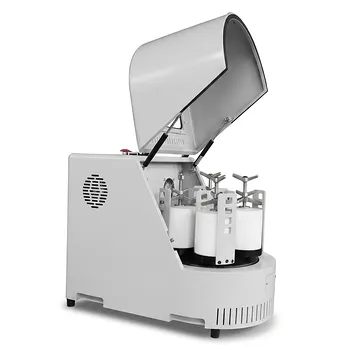
Vertical Semi Circular Planetary Ball Mill for Laboratory Precision Grinding
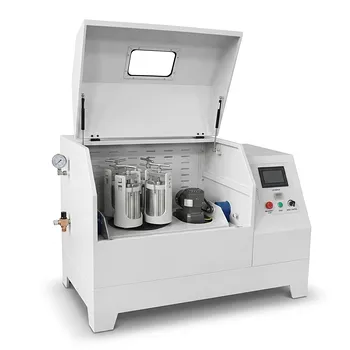
Vertical Production Planetary Ball Mill for High Throughput Powder Processing
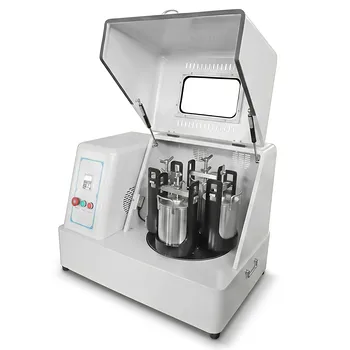
Vertical Square Planetary Ball Mill for Laboratory Sample Preparation and Nanoscale Grinding
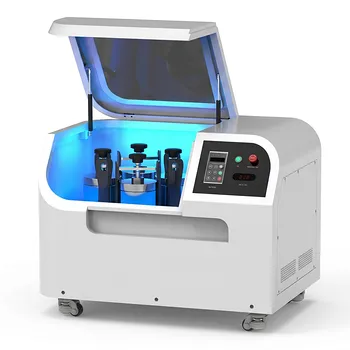
Planetary Ball Mill 12L
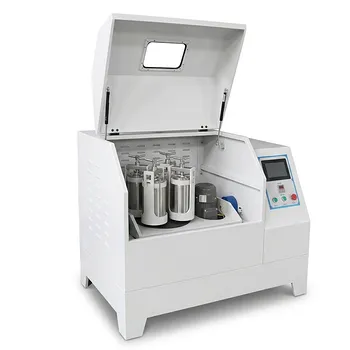
360° Rotating Omnidirectional Laboratory Planetary Ball Mill for Homogeneous Ultra-Fine Grinding and Mixing
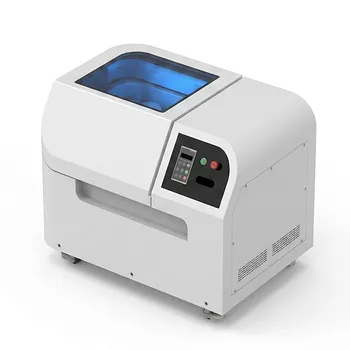
8L Planetary Ball Mill for Laboratory Grinding and Sample Preparation
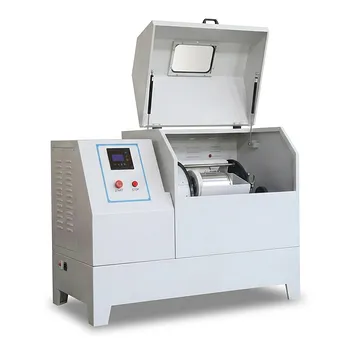
Heavy Duty Horizontal Planetary Ball Mill for Efficient Industrial Grinding and Sample Preparation
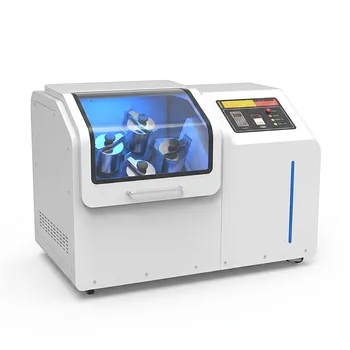
High Energy Omnidirectional Planetary Ball Mill 16L
Horizontal Light Duty Planetary Ball Mill for Laboratory Sample Preparation
High Energy Omnidirectional Planetary Ball Mill 20L
Dual Station Planetary Ball Mill 24L
High Energy Planetary Ball Mill for Nano Scale Grinding and Mechanical Alloying
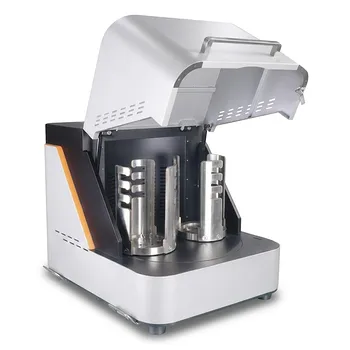
High Energy Laboratory Planetary Ball Mill for Nano Grinding and Colloidal Mixing of Hard and Brittle Materials
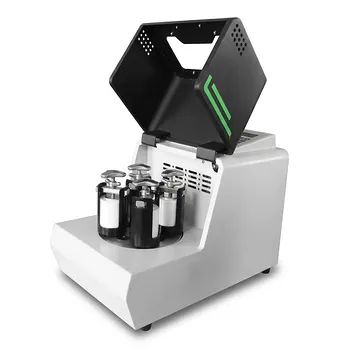
Miniature Planetary Ball Mill with Vacuum Grinding and High Efficiency for Laboratory Sample Preparation
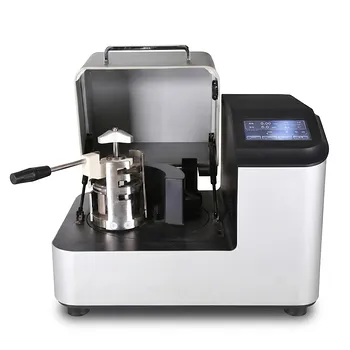
High Energy Laboratory Planetary Ball Mill for Nano Grinding and Material Science Sample Preparation
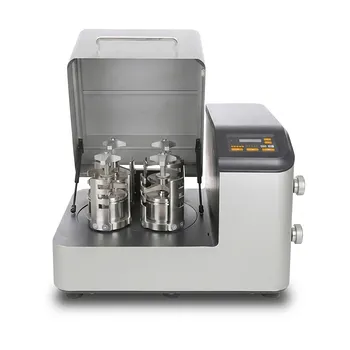
High Energy Planetary Ball Mill for Nano Scale Grinding and Colloidal Mixing in Material Science Research
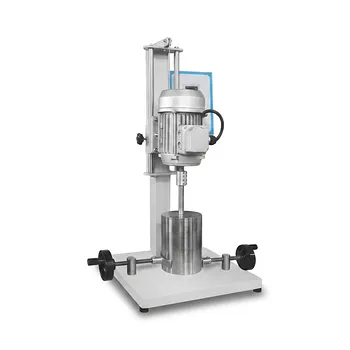
Laboratory Basket Sand Mill for Wet Grinding and Dispersion of Viscous Slurries
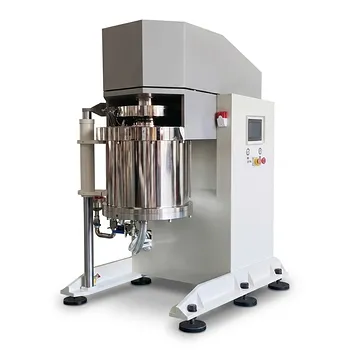
Vertical Nano Bead Mill for Ceramic Materials with Permanent Magnet Motor and High Efficiency Grinding
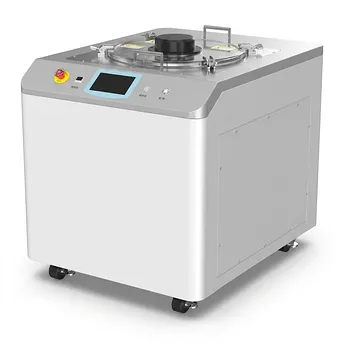
Industrial Planetary Centrifugal Vacuum Defoaming Mixer for High Viscosity Paste and Powder Homogenization