What is the role of a manual hydraulic press in FTIR? Master KBr pellet preparation for accurate adsorbent analysis.
Updated 4 months ago
The role of a manual hydraulic press in FTIR characterization is to compress a mixture of solid adsorbent and Potassium Bromide (KBr) into a transparent, uniform pellet. This process uses high pressure to cause plastic deformation in the KBr, creating a dense medium that allows infrared light to pass through the sample rather than scattering off individual particles. This translucency is essential for obtaining clear, high-resolution spectra that accurately identify surface functional groups and their changes during the adsorption process.
The manual hydraulic press serves as the bridge between raw powder samples and readable optical data by eliminating internal voids and scattering interfaces. It ensures that the resulting infrared spectrum reflects the internal molecular vibrations of the adsorbent rather than optical interference from the sample preparation itself.
The Mechanics of Pellet Formation
Plastic Deformation and Particle Binding
When a manual hydraulic press applies several tons of pressure to a mixture, the KBr acts as a binder. The high pressure causes the KBr to undergo plastic deformation, flowing around the adsorbent particles and locking them into a solid, cohesive matrix.
This binding process is what transforms a loose, opaque powder into a solid, translucent disk. Without this mechanical force, the sample would remain a powder that reflects or blocks the infrared beam.
Eliminating Internal Voids and Air Pockets
A primary function of the press is to exclude air trapped between powder particles. These internal voids are significant sources of light scattering, which can degrade the quality of the infrared signal.
By applying precise, high pressure—often ranging from 5 to 15 tons—the press densifies the material. This creates a uniform path for the infrared beam, ensuring it penetrates the sample evenly.
Enhancing Spectral Quality and Accuracy
Achieving Critical Optical Translucency
For FTIR to be effective, the sample must be thin and transparent enough for the infrared beam to reach the detector. The hydraulic press creates semi-transparent thin pellets that meet this optical requirement.
This translucency is vital for identifying specific surface functional groups, such as hydroxyl (-OH) or carboxyl (-COOH) groups. These groups are often the active sites where metal binding or molecular adsorption occurs on the adsorbent surface.
Improving Signal-to-Noise Ratio
High-quality pellets produced by a hydraulic press result in a stable baseline and clear characteristic peaks. By minimizing scattering, the press improves the signal-to-noise ratio of the final spectrum.
This clarity allows researchers to observe subtle changes in the sample, such as metal-oxygen (Me-O) vibrations or the conversion of structural units within a network. These details are often lost in poorly prepared samples.
Understanding the Trade-offs and Pitfalls
The Risk of Over-Pressurization
While high pressure is necessary, applying excessive force can damage the pellet die or cause the KBr to turn cloudy or "milky." This cloudiness increases light scattering and can lead to a distorted baseline in the FTIR spectrum.
Finding the correct pressure—typically around 5 t/cm²—is a balance between achieving density and maintaining the structural integrity of the pellet and the equipment.
Sample Concentration and Homogeneity
The ratio of the adsorbent sample to KBr is a critical factor; a common standard is a 1:100 ratio. If the sample concentration is too high, the pellet will remain opaque, preventing the infrared beam from passing through.
Furthermore, if the mixture is not thoroughly blended before pressing, the resulting pellet will have non-uniform density. This leads to inconsistent spectral data and unreliable quantification of functional groups.
Moisture Sensitivity and Contamination
KBr is highly hygroscopic, meaning it rapidly absorbs moisture from the air. If the pressing process is not done quickly or in a controlled environment, the pellet will incorporate water, leading to large, unwanted water (O-H) peaks that can mask the adsorbent's actual functional groups.
How to Apply This to Your Project
Recommendations for Effective Sample Preparation
- If your primary focus is Qualitative Identification: Ensure the sample is ground to a fine powder and mixed at a 1:100 ratio with KBr to produce the clearest possible characteristic peaks.
- If your primary focus is Comparative Analysis (Before/After Adsorption): Use a consistent pressure (e.g., 7 tons) and pressing time for every sample to ensure that differences in the spectra are due to chemical changes, not preparation variables.
- If your primary focus is Quantitative Accuracy: Weigh both the sample and the KBr precisely before pressing to ensure the thickness and concentration of the pellet are standardized across all measurements.
By mastering the use of the manual hydraulic press, you ensure that your FTIR data is a true representation of the molecular interactions occurring on your adsorbent's surface.
Summary Table:
| Feature | Optimal Setting / Role | Benefit to FTIR Analysis |
|---|---|---|
| Mechanism | Plastic deformation of KBr | Creates a cohesive, translucent matrix for light passage |
| Pressure Range | 5 – 15 Tons (approx. 5 t/cm²) | Eliminates internal voids and reduces light scattering |
| Sample Ratio | 1:100 (Adsorbent:KBr) | Ensures optical transparency and prevents beam blockage |
| Pellet Quality | Thin & Semi-transparent | Results in stable baselines and high signal-to-noise ratios |
| Sample State | Fine, dry powder | Prevents moisture interference and ensures peak accuracy |
Elevate Your Material Analysis with Precision Sample Preparation
Achieve superior analytical precision and high-resolution spectra with equipment designed for material science excellence. At [Brand Name], we provide complete laboratory sample preparation solutions, specializing in high-performance powder processing and compaction equipment.
Our extensive product line supports every stage of your workflow:
- Sample Preparation: High-efficiency crushers (jaw/roll), liquid nitrogen cryogenic grinders, and various mills (planetary ball, jet, sand/bead, disc, rotor).
- Pelletizing & Compaction: A full spectrum of hydraulic presses, including manual lab presses for FTIR, XRF pellet presses, Cold/Warm Isostatic Presses (CIP/WIP), and advanced vacuum hot presses.
- Refinement & Mixing: Vibratory/air-jet sieve shakers, high-precision powder mixers, and defoaming mixers.
Whether you are a researcher focused on surface functional groups or a distributor looking for reliable OEM/ODM support and high-quality lab standards, we bring the expertise and durability your project demands.
Ready to optimize your laboratory workflow? Contact us today to find the perfect solution for your application!
References
- Conrad K. Enenebeaku, Ikechukwu C. Ukaga. Adsorption and Equilibrium Studies on the Removal of Methyl Red from Aqueous Solution Using White Potato Peel Powder. DOI: 10.56431/p-02ri34
Mentioned Products
- Manual Tablet Press with Dual Scale Pressure Gauge for Pharmaceutical Food Chemical Laboratory Sample Preparation
- 5 Ton Single Punch Tablet Press Laboratory Small Batch Production
- 6-Ton Small Single-Punch Tablet Press — Laboratory Powder & Granule Tableting Equipment / Tablet Forming Machine
- Enhanced 9 Punch Rotary Tablet Press for Powder Compaction
- 6 Ton Variable Frequency Single Punch Tablet Press
People Also Ask
- What is the function of a laboratory press in Cr-Ti alloy evaluation? Quantify Fracture Stress & Strength
- What is the function of a laboratory press in assessing the hydrophobic performance of modified vermiculite fillers?
- What is the core function of a laboratory press in the forming of ceramic filter element green bodies? Maximize Density.
- What is the function of a laboratory press in the preparation of ceramic feed rods? Master Density and Precision
- Why is vacuum sealing and flexible packaging necessary for Aluminum Titanate powders during CIP? Ensure Peak Density

Tech Team · PowderPreparation
Last updated on Jun 03, 2026
Related Products
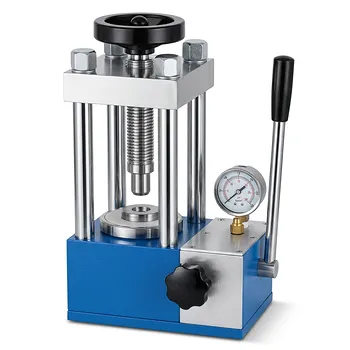
Manual Tablet Press with Dual Scale Pressure Gauge for Pharmaceutical Food Chemical Laboratory Sample Preparation
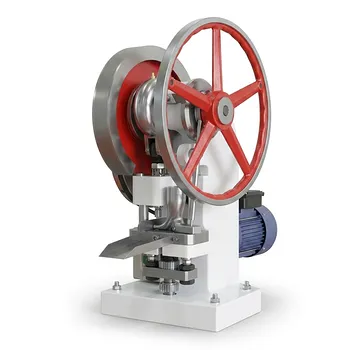
5 Ton Single Punch Tablet Press Laboratory Small Batch Production
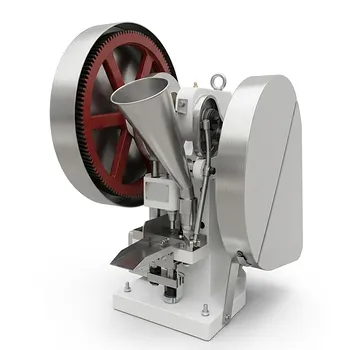
6-Ton Small Single-Punch Tablet Press — Laboratory Powder & Granule Tableting Equipment / Tablet Forming Machine
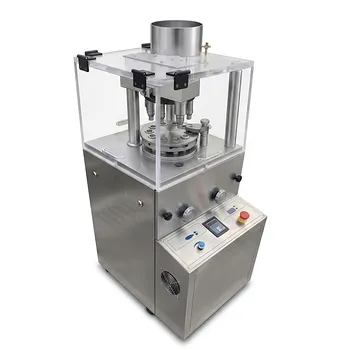
Enhanced 9 Punch Rotary Tablet Press for Powder Compaction
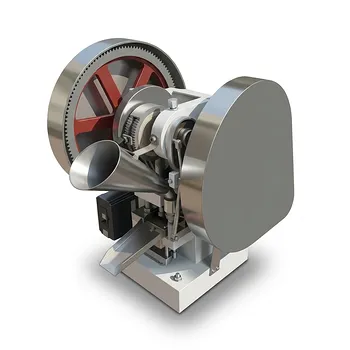
6 Ton Variable Frequency Single Punch Tablet Press
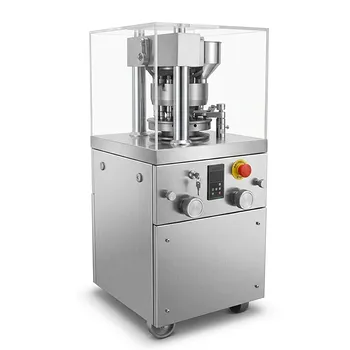
Ordinary Type Rotary Tablet Press for Pharmaceutical Chemical Food Electronic Industries