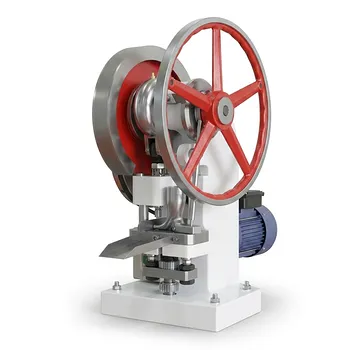
What is the role of a laboratory hydraulic press and wax binders in XRF analysis? Optimize Your Sample Precision.
Updated 4 months ago
The hydraulic press and wax binder are essential tools for transforming loose powders into stable, standardized pellets for XRF analysis.
This combination uses high pressure, typically between 10 and 25 tons, to compress ground samples into dense, circular discs with a perfectly flat surface. The process eliminates air gaps and ensures the sample remains structurally sound, which is a prerequisite for achieving the precision required in quantitative chemical analysis.
By removing physical variables like porosity and surface roughness, the hydraulic press and binder create a uniform sample geometry. This standardization allows X-ray fluorescence systems to generate highly repeatable data with minimal signal scattering.
The Role of the Hydraulic Press
Eliminating Voids and Porosity
The primary function of the hydraulic press is to apply uniaxial pressure to remove the air pockets found in loose powder. By eliminating these voids, the press creates a dense pellet with a fixed density, ensuring that the X-ray beam interacts with a consistent volume of material.
Ensuring Geometric Consistency
A laboratory press uses specialized dies to mold the powder into a specific shape and thickness. This geometric consistency is critical because it ensures the sample is positioned at the correct focal distance from the X-ray excitation source, reducing measurement errors.
Reducing X-ray Scattering
High-pressure molding creates an extremely smooth and flat surface on the pellet. This physical refinement is vital for minimizing X-ray scattering interference, which significantly improves the signal-to-noise ratio during spectral analysis.
The Role of Wax Binders
Providing Mechanical Stability
Many materials, such as certain ores or sediments, do not naturally adhere to one another under pressure. Adding a wax binder acts as a structural adhesive, improving the mechanical stability of the disc and preventing it from cracking or crumbling during handling.
Improving Surface Homogeneity
The binder helps the sample particles distribute evenly within the pellet, creating a highly homogeneous surface. This uniformity ensures that the XRF analysis reflects the true average composition of the entire sample rather than localized variations in the powder.
Protecting the Instrument
Without a binder, fragile pellets may shed fine dust or break apart inside the XRF chamber. The binder ensures the sample remains a solid, durable disc, protecting sensitive internal components of the spectrometer from contamination.
Understanding the Trade-offs
The Impact of Dilution
Adding a wax binder introduces a foreign substance into the sample, which effectively dilutes the concentration of the elements being measured. Analysts must carefully calculate the binder-to-sample ratio to ensure that the resulting data can be accurately corrected for this dilution.
Sample Contamination Risks
While binders are necessary for stability, they can introduce trace impurities if the binder material is not high-purity. It is essential to use laboratory-grade binders to avoid introducing "ghost" elements that could skew the final quantitative results.
Pressure Limits and Over-Compression
Applying excessive pressure can occasionally cause certain minerals to undergo phase changes or lead to internal stresses that cause the pellet to shatter upon release from the die. Finding the optimal pressure—often between 10 and 25 tons—is a balance between density and structural integrity.
How to Apply This to Your Project
Making the Right Choice for Your Goal
- If your primary focus is high-precision quantitative analysis: Use a high-precision hydraulic press to ensure consistent density and eliminate matrix effects caused by powder voids.
- If your primary focus is analyzing fragile or non-cohesive samples: Incorporate a high-quality wax binder or cellulose flakes to provide the mechanical strength necessary to prevent sample cracking.
- If your primary focus is minimizing X-ray interference: Focus on using a clean, polished pellet die and sufficient pressure to achieve the smoothest possible surface finish.
Standardizing your pelletizing process with the right pressure and binder ratio is the most effective way to ensure the long-term repeatability of your XRF data.
Summary Table:
| Component | Primary Role | Key Benefit for XRF |
|---|---|---|
| Hydraulic Press | Applies 10-25 tons of uniaxial pressure | Eliminates voids, ensures uniform density & smooth surface |
| Wax Binder | Acts as a structural adhesive/matrix | Provides mechanical stability & prevents sample cracking |
| Pellet Die | Molds powder into specific geometry | Ensures consistent focal distance and repeatable measurements |
| High Pressure | Compresses particles to maximum density | Reduces X-ray scattering and improves signal-to-noise ratio |
Elevate Your XRF Accuracy with Professional Sample Prep
Achieve flawless analytical results with our complete laboratory sample preparation solutions. At [Your Brand Name], we specialize in high-performance powder processing and compaction equipment tailored for material science.
Our extensive product range includes:
- Crushing & Grinding: Jaw/roll crushers, liquid nitrogen cryogenic grinders, and various mills (planetary ball, jet, sand, disc, rotor).
- Sizing & Mixing: Vibratory/air-jet sieve shakers and high-efficiency powder/defoaming mixers.
- Advanced Compaction: A full spectrum of hydraulic presses, including XRF pellet presses, standard lab presses, vacuum hot presses, and Cold/Warm Isostatic Presses (CIP/WIP).
Whether you need to eliminate matrix effects or ensure the mechanical stability of fragile ores, our equipment provides the precision your research demands. Contact our experts today to discuss your specific application and find the perfect equipment configuration for your laboratory.
References
- Dilami Diana Babakoua, Gado Tchangbédji. Characterization and Pozzolanic Reactivity of Two Togolese Clays for Use as Supplementary Cementitious Materials. DOI: 10.4236/msce.2025.139003
Mentioned Products
- 6 Ton Variable Frequency Single Punch Tablet Press
- Ordinary Type Rotary Tablet Press for Pharmaceutical Chemical Food Electronic Industries
- Enhanced 9 Punch Rotary Tablet Press for Powder Compaction
- 6-Ton Small Single-Punch Tablet Press — Laboratory Powder & Granule Tableting Equipment / Tablet Forming Machine
- 实验室旋转式压片机 多冲模单压式自动连续压片
People Also Ask
- Why is a laboratory hydraulic press required for FT-IR KBr pellets? Achieve Precise Sample Clarity for ZrC–SiC Analysis
- Why is vacuum sealing and flexible packaging necessary for Aluminum Titanate powders during CIP? Ensure Peak Density
- What are the advantages of using hardened steel molds and graphite spray for titanium powder? Ensure structural integrity
- Why is a laboratory hydraulic press required to compress oyster shell powder before XRF analysis? Improve Data Accuracy.
- What role does a high-strength stainless steel mold kit play in the uniaxial die compaction process? Ensuring Precision

Tech Team · PowderPreparation
Last updated on Jun 03, 2026
Related Products
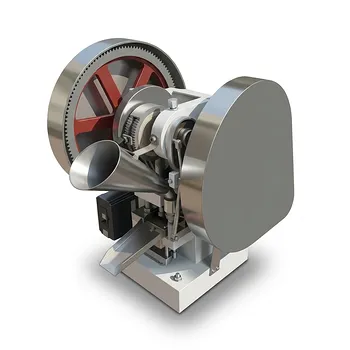
6 Ton Variable Frequency Single Punch Tablet Press
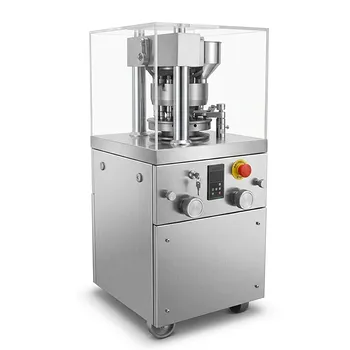
Ordinary Type Rotary Tablet Press for Pharmaceutical Chemical Food Electronic Industries
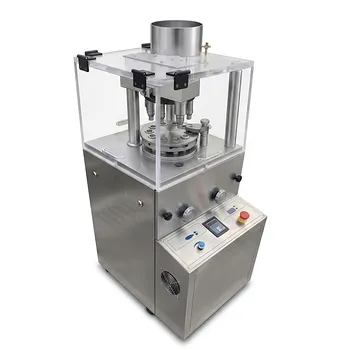
Enhanced 9 Punch Rotary Tablet Press for Powder Compaction
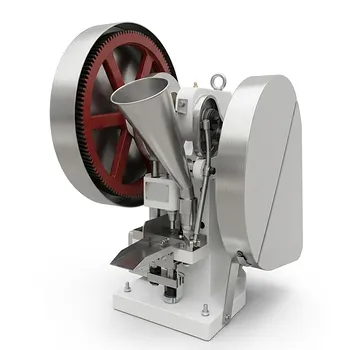
6-Ton Small Single-Punch Tablet Press — Laboratory Powder & Granule Tableting Equipment / Tablet Forming Machine
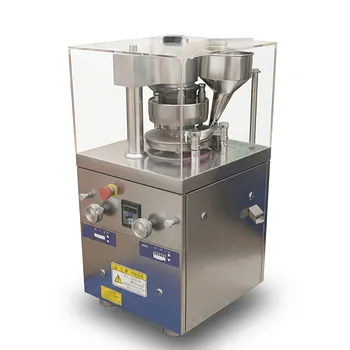
实验室旋转式压片机 多冲模单压式自动连续压片
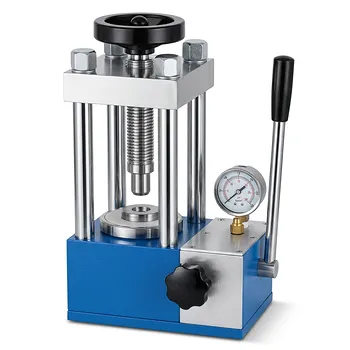
Manual Tablet Press with Dual Scale Pressure Gauge for Pharmaceutical Food Chemical Laboratory Sample Preparation