What is the purpose of using a laboratory press for X-ray fluorescence (XRF) analysis of ironstone powder? Key Benefits
Updated 5 months ago
The primary purpose of using a laboratory press for ironstone powder X-ray fluorescence (XRF) analysis is to transform loose, micron-level particles into a solid, flat, and dense pellet. This standardization process is essential for ensuring uniform X-ray excitation and capturing accurate data for critical elements like iron (Fe), aluminum (Al), and silicon (Si). Without this preparation, the physical state of the powder would introduce significant errors into the chemical analysis.
Core Takeaway: Laboratory presses eliminate physical variables—such as surface roughness, voids, and particle size inconsistencies—that otherwise interfere with X-ray signals. By creating a uniform, high-density pellet, the press ensures that the spectrometer's readings reflect the sample's true chemical composition rather than its physical texture.
Overcoming Physical Interference in XRF
Eliminating Surface Roughness
Raw ironstone powder has an uneven surface that causes unpredictable X-ray scattering and background noise. A hydraulic press applies high axial pressure to create a "mirror-like" flatness on the sample surface. This ensures that the X-ray beam hits the sample uniformly and the emitted fluorescent signals are received by the detector without interference.
Managing Voids and Porosity
Loose powder contains air gaps and voids between particles that dilute the elemental signal. The pressing process removes these voids, creating a dense cylindrical pellet with a consistent distribution of elements. This high density is necessary for the XRF spectrometer to achieve a high signal-to-noise ratio, particularly for minor elemental components.
Enhancing Analytical Precision
Mitigating Particle Size and Matrix Effects
Varying grain sizes within an ironstone sample can lead to "shadowing" or uneven X-ray penetration, where larger particles shield smaller ones. Compression homogenizes the sample presentation, effectively minimizing these particle size effects. This allows for more accurate quantitative analysis of the matrix, ensuring that the results are repeatable across different batches.
Ensuring Mechanical Strength
XRF analysis often involves placing samples into vacuum chambers or automated carousels where they must remain intact. A laboratory press, often used in conjunction with binders like cellulose, provides the pellet with the necessary mechanical strength to withstand handling. This prevents sample contamination of the spectrometer's internal optics from loose dust or crumbling pellets.
Understanding the Trade-offs and Pitfalls
The Necessity of Binders
Not all ironstone powders bond naturally under pressure; some may remain brittle or "cap" (delaminate) after pressing. In these cases, adding a binder like cellulose or boric acid is necessary to ensure the pellet remains solid. However, analysts must account for the dilution effect of the binder when calculating the final elemental concentrations.
Risks of Excessive Pressure
Applying too much pressure can lead to internal stresses that cause the pellet to crack or explode upon release from the die. It is critical to establish a standardized pressure and "dwell time" (the duration the pressure is held) for specific ore types. Finding this balance ensures the pellet is dense enough for accuracy but stable enough for transport.
Applying Pelletizing to Your Project
Recommendations Based on Your Analytical Goals
- If your primary focus is Maximum Quantitative Accuracy: Use a laboratory press with a high-quality binder to create a high-density pellet that minimizes all possible matrix interferences.
- If your primary focus is High-Throughput Screening: Implement a standardized pressing protocol with a fixed dwell time to ensure that every sample is physically identical, allowing for rapid, repeatable comparisons.
- If your primary focus is Trace Element Detection: Ensure the pressing die is thoroughly cleaned between samples to prevent cross-contamination, which is magnified by the high-pressure contact.
By mastering the pelletizing process, you ensure that your XRF data is a precise reflection of the ironstone's mineralogical value.
Summary Table:
| Key Feature | Impact on XRF Analysis | Benefit to Researcher |
|---|---|---|
| Surface Flattening | Eliminates X-ray scattering & background noise | Improves signal-to-noise ratio |
| Void Removal | Increases sample density & element concentration | Enhances detection of trace elements |
| Homogenization | Mitigates particle size & matrix effects | Ensures quantitative accuracy & repeatability |
| Structural Binding | Provides mechanical strength for vacuum/handling | Prevents equipment contamination & sample loss |
Elevate Your XRF Analytical Precision
High-quality data begins with perfect sample preparation. At [Your Brand Name], we provide complete laboratory sample preparation solutions tailored for material science and mining applications. Whether you are analyzing ironstone or advanced ceramics, our equipment ensures your samples meet the most rigorous standards.
Our extensive product line includes:
- Precision Pelletizing: Standard lab presses, high-performance XRF pellet presses, and Cold/Warm Isostatic Presses (CIP/WIP).
- Advanced Milling & Grinding: Planetary ball mills, jet mills, and cryogenic grinders for achieving micron-level particles.
- Material Processing: Jaw/roll crushers, sieve shakers, and high-efficiency powder mixers.
Don't let physical variables compromise your chemical analysis. Contact our technical team today to find the ideal pressing and milling solution for your laboratory's needs!
References
- Adedayo Adeuti, E. O. Ajaka. Concentration of Bauxite and Iron Minerals from Onigboro Ironstone, Ogun State, Nigeria. DOI: 10.11648/j.ijmpem.20251003.11
Mentioned Products
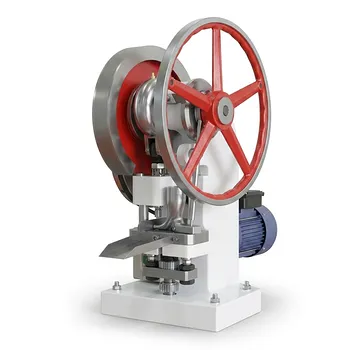
- 6 Ton Variable Frequency Single Punch Tablet Press
- Ordinary Type Rotary Tablet Press for Pharmaceutical Chemical Food Electronic Industries
- Enhanced 9 Punch Rotary Tablet Press for Powder Compaction
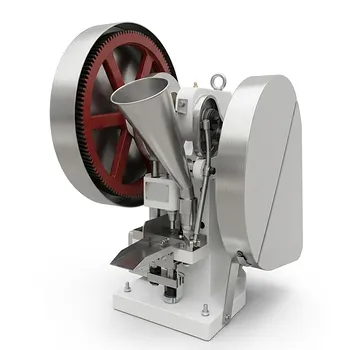
- 6-Ton Small Single-Punch Tablet Press — Laboratory Powder & Granule Tableting Equipment / Tablet Forming Machine
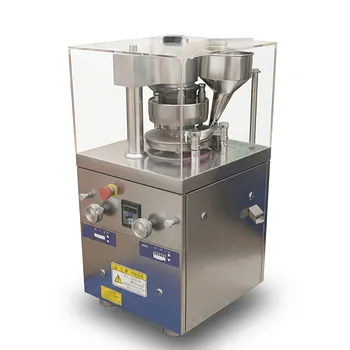
- 实验室旋转式压片机 多冲模单压式自动连续压片
People Also Ask
- Why is a laboratory hydraulic press required for FT-IR KBr pellets? Achieve Precise Sample Clarity for ZrC–SiC Analysis
- Why is vacuum sealing and flexible packaging necessary for Aluminum Titanate powders during CIP? Ensure Peak Density
- What are the advantages of using hardened steel molds and graphite spray for titanium powder? Ensure structural integrity
- Why is a laboratory hydraulic press required to compress oyster shell powder before XRF analysis? Improve Data Accuracy.
- What role does a high-strength stainless steel mold kit play in the uniaxial die compaction process? Ensuring Precision

Tech Team · PowderPreparation
Last updated on May 14, 2026
Related Products
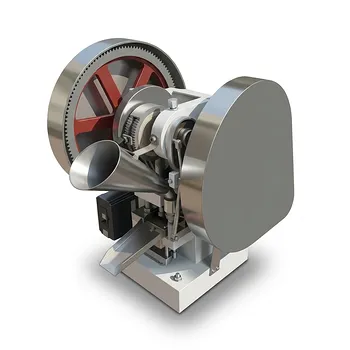
6 Ton Variable Frequency Single Punch Tablet Press
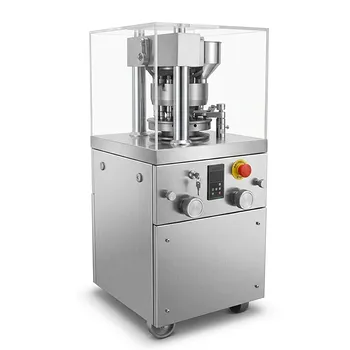
Ordinary Type Rotary Tablet Press for Pharmaceutical Chemical Food Electronic Industries
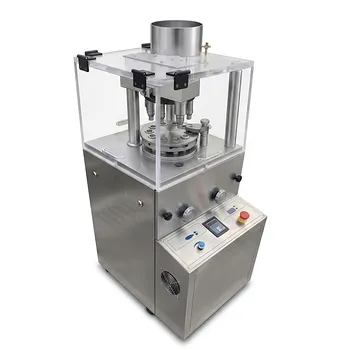
Enhanced 9 Punch Rotary Tablet Press for Powder Compaction
6-Ton Small Single-Punch Tablet Press — Laboratory Powder & Granule Tableting Equipment / Tablet Forming Machine
实验室旋转式压片机 多冲模单压式自动连续压片
Manual Tablet Press with Dual Scale Pressure Gauge for Pharmaceutical Food Chemical Laboratory Sample Preparation