What is the purpose of using a laboratory hydraulic press to prepare green bodies for SSC ASR testing? Ensure Accuracy
Updated 5 months ago
The primary purpose of using a laboratory hydraulic press to prepare Samarium Strontium Cobaltite (SSC) green bodies is to ensure uniform density and precise geometric dimensions. This process eliminates air gaps and maximizes particle contact, which is essential for consistent sintering and the acquisition of accurate, reproducible electrochemical data during Area Specific Resistance (ASR) testing.
A laboratory hydraulic press provides the critical physical foundation for cathode characterization by converting loose SSC powder into dense, structurally sound discs. This uniformity is mandatory because any inconsistency in the green body's initial microstructure will lead to distorted ASR results and poor mechanical stability during high-temperature testing.
Optimizing the Physical Foundation for ASR Testing
Achieving Uniform Particle Packing
The press applies controlled, significant force to overcome internal friction between particles, allowing SSC powders to rearrange and pack tightly. This eliminates uneven internal pore distribution, which is vital for creating a homogeneous cathode layer that responds predictably to electrochemical stress.
Defining Standardized Geometry
ASR calculations depend heavily on the precise measurements of the sample's surface area and thickness. By using high-strength steel molds, the hydraulic press ensures that green bodies have consistent geometric shapes, such as uniform discs, which are necessary for mathematical accuracy in downstream testing.
Establishing Mechanical Strength
Loose powder lacks the structural integrity required for handling and high-temperature processing. The compaction process provides the green body with the necessary mechanical strength to prevent crumbling or breakage before it undergoes the sintering phase.
Promoting Effective Sintering and Densification
Increasing Particle Contact Points
High-pressure compaction increases the number of contact points between SSC particles, which is a prerequisite for atomic diffusion and mass transfer. This increased contact area facilitates the solid-phase reactions and grain growth required for the material to become a functional ceramic.
Eliminating Trapped Air
The application of precise pressure loads (often reaching levels like 200 MPa) forces out trapped air between particles. Removing these voids ensures the final sintered product achieves the required density and prevents the formation of macroscopic defects that could impede electrical conductivity.
Preventing Sintering Deformation
A high-quality green body produced with a hydraulic press reduces density gradients within the sample. This uniformity is critical for preventing severe deformation, warping, or cracking during the high-temperature sintering process, where material shrinkage occurs.
Understanding the Trade-offs of Compaction Pressure
The Risk of Over-Compaction
Applying excessive pressure can lead to "capping" or the development of internal laminations when the pressure is released. These defects often remain invisible in the green state but cause the material to delaminate or crack during sintering, rendering the ASR data invalid.
Consequences of Insufficient Pressure
If the pressing force is too low, the green body will have low initial density and weak particle bonds. This leads to excessive shrinkage and poor electrical connectivity within the SSC material, which artificially inflates the measured Area Specific Resistance.
Impact of Stabilization Time
Failing to maintain the pressure for an adequate stabilization time can lead to elastic recovery of the powder once the load is removed. This "spring-back" effect can introduce micro-cracks that compromise the mechanical stability of the cathode during electrochemical cycling.
How to Apply This to Your Material Preparation
- If your primary focus is Data Accuracy: Maintain a strictly consistent stabilization time and pressure load for every sample to ensure that density-related variables do not skew your ASR results.
- If your primary focus is Material Stability: Use high-precision steel dies and moderate, controlled pressure to achieve the necessary green strength without introducing internal stresses that lead to cracking.
- If your primary focus is Microstructural Control: Carefully regulate the pressing density, as this directly influences the final porosity and gas permeability of the sintered SSC cathode.
By mastering the precision of hydraulic compaction, researchers ensure that the resulting ASR data reflects the true electrochemical properties of the SSC material rather than flaws introduced during sample preparation.
Summary Table:
| Key Factor | Benefit of Hydraulic Pressing | Impact on ASR Testing |
|---|---|---|
| Particle Packing | Eliminates air gaps and ensures uniform density | Prevents skewed data from inhomogeneous layers |
| Geometry | Creates precise, standardized disc shapes | Ensures accurate surface area and thickness calculations |
| Sintering | Increases particle contact points for atomic diffusion | Facilitates solid-phase reactions and optimal conductivity |
| Stability | Provides mechanical strength to the green body | Prevents sample breakage or deformation during heating |
| Defect Control | Regulates pressure to avoid capping or laminations | Ensures the mechanical integrity of the cathode |
Elevate Your Material Research with High-Precision Compaction
Precision in sample preparation is the foundation of reliable electrochemical data. At [Your Brand Name], we provide complete laboratory sample preparation solutions for material science, specializing in advanced powder processing and compaction equipment.
Whether you are testing SSC cathode materials or developing new ceramics, our equipment ensures your green bodies meet the highest standards of uniformity and density. Our extensive product line includes:
- Hydraulic Presses: A full spectrum of solutions including Standard Lab Presses, Cold/Warm Isostatic Presses (CIP/WIP), XRF Pellet Presses, and Vacuum Hot Presses.
- Powder Processing: High-performance crushers (jaw/roll), liquid nitrogen cryogenic grinders, and various mills (planetary ball, jet, rotor).
- Sizing & Mixing: Vibratory/air-jet sieve shakers, powder mixers, and defoaming mixers for perfect material consistency.
Don't let preparation variables compromise your ASR results. Contact our experts today to discuss how our compaction solutions can optimize your laboratory workflow!
References
- Mohammad Fikrey Roslan, Mohamed Saiful Firdaus Hussin. Comparative Study of SSC Cathode Materials for IT-SOFC Applications: Short Review. DOI: 10.64382/mjii.v3i4.73
Mentioned Products
- Ordinary Type Rotary Tablet Press for Pharmaceutical Chemical Food Electronic Industries
- Hydraulic Double Shaft Disperser for High Viscosity Liquid Mixing and Dispersion
- Enhanced 9 Punch Rotary Tablet Press for Powder Compaction
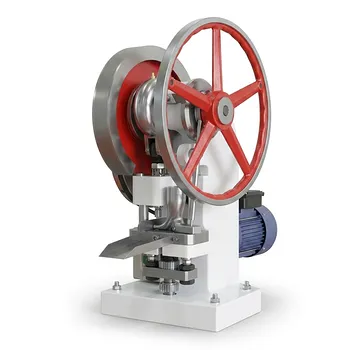
- 6 Ton Variable Frequency Single Punch Tablet Press
- Manual Tablet Press with Dual Scale Pressure Gauge for Pharmaceutical Food Chemical Laboratory Sample Preparation
People Also Ask
- Why is a laboratory hydraulic press required for FT-IR KBr pellets? Achieve Precise Sample Clarity for ZrC–SiC Analysis
- Why is a laboratory hydraulic press required to compress oyster shell powder before XRF analysis? Improve Data Accuracy.
- Why is vacuum sealing and flexible packaging necessary for Aluminum Titanate powders during CIP? Ensure Peak Density
- What are the advantages of using hardened steel molds and graphite spray for titanium powder? Ensure structural integrity
- What role does a high-strength stainless steel mold kit play in the uniaxial die compaction process? Ensuring Precision

Tech Team · PowderPreparation
Last updated on May 14, 2026
Related Products
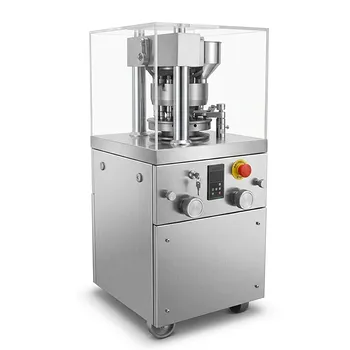
Ordinary Type Rotary Tablet Press for Pharmaceutical Chemical Food Electronic Industries
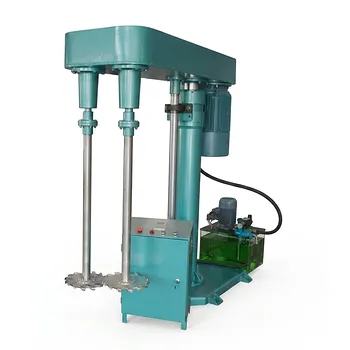
Hydraulic Double Shaft Disperser for High Viscosity Liquid Mixing and Dispersion
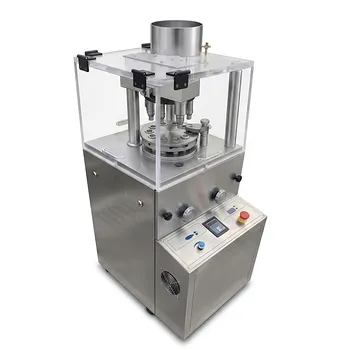
Enhanced 9 Punch Rotary Tablet Press for Powder Compaction
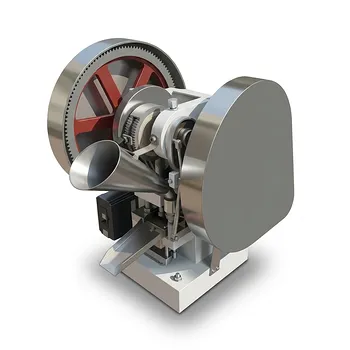
6 Ton Variable Frequency Single Punch Tablet Press
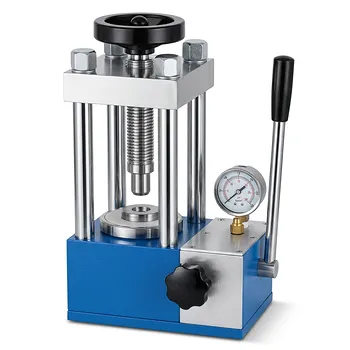
Manual Tablet Press with Dual Scale Pressure Gauge for Pharmaceutical Food Chemical Laboratory Sample Preparation
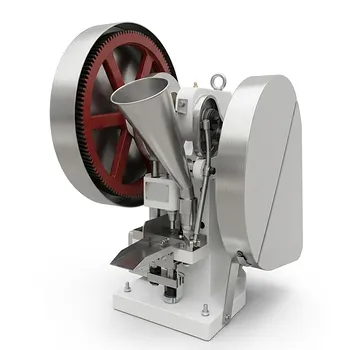
6-Ton Small Single-Punch Tablet Press — Laboratory Powder & Granule Tableting Equipment / Tablet Forming Machine