What is the purpose of using a 50 micrometer standard sieve? Optimize Solid-State Reaction for Superconductors
Updated 4 months ago
Ensuring precise particle size control is fundamental to high-performance material synthesis. In the solid-state reaction of bismuth-based superconductors, a 50-micrometer sieve is used to filter out oversized particles after the initial grinding phase. This step guarantees that all precursor powders possess the high surface area necessary for efficient chemical reactivity and structural homogeneity.
The primary purpose of the 50-micrometer sieve is to optimize the kinetics of the solid-state reaction by facilitating rapid solid-state diffusion. By strictly limiting particle size, researchers ensure a more uniform microstructure and consistent superconducting properties in the final material.
The Role of Particle Size in Solid-State Kinetics
Increasing Reaction Activity
Chemical reactions in the solid state occur at the interfaces where different precursor particles meet. By ensuring all particles are smaller than 50 micrometers, the total surface area available for these interactions increases dramatically.
Higher surface area leads to higher reaction activity, allowing the chemical transformation into the superconducting phase to occur more readily. Without this control, larger particles would react much slower, leading to incomplete synthesis.
Promoting Solid-State Diffusion
Solid-state diffusion involves the movement of atoms through crystal lattices, a process that is naturally slow. Reducing the particle size effectively shortens the diffusion distance that ions must travel to form the desired bismuth-based compounds.
During the calcination process, these shorter distances allow for a faster and more complete transition to the target phase. This efficiency is critical for maintaining the specific stoichiometry required for superconductivity.
Impact on Microstructural Uniformity
Ensuring Stoichiometric Consistency
Bismuth-based superconductors are sensitive to even minor variations in chemical composition. Large particles can create "localized pockets" where the chemical ratio is incorrect, resulting in non-superconducting impurities.
The 50-micrometer limit helps maintain stoichiometric consistency across the entire powder volume. This ensures that every part of the sample has the same potential to become superconducting.
Optimizing Grain Growth During Sintering
The quality of a superconductor's microstructure depends heavily on how grains grow during the final sintering stage. A uniform distribution of small precursor particles leads to more predictable and controlled grain boundaries.
These well-defined grain boundaries are essential for current transport. Large, irregular grains caused by unsieved powders can block the flow of electricity and degrade the material's performance.
Understanding the Trade-offs
Potential for Material Contamination
While sieving is necessary, the process of passing abrasive ceramic powders through a metal mesh can introduce metallic impurities. Even trace amounts of iron or chromium from a stainless steel sieve can poison the superconducting properties of the bismuth phase.
It is vital to use high-quality, wear-resistant sieves and to inspect them regularly for mesh degradation. Some laboratories prefer nylon or specialized coatings to minimize this risk.
Agglomeration and Handling Challenges
Very fine powders (those significantly smaller than 50 micrometers) have a high tendency to agglomerate due to van der Waals forces. These clumps can behave like large particles, effectively negating the benefits of the sieving process.
Furthermore, fine powders are more susceptible to moisture absorption from the atmosphere. In bismuth-based systems, moisture can lead to the formation of hydroxides or carbonates, which interfere with the reaction.
How to Apply This to Your Project
Recommendations for Synthesis Success
Effective particle size management is the bridge between a failed experiment and a high-transition-temperature superconductor.
- If your primary focus is Phase Purity: Ensure the sieving process is repeated after each intermediate grinding step to break down any newly formed aggregates.
- If your primary focus is Current Density (Jc): Use the 50-micrometer limit as a baseline, but consider secondary milling to reach a sub-10-micrometer range for even denser grain structures.
- If your primary focus is Preventing Contamination: Utilize high-purity agate mortars for grinding and specialized non-metallic sieves if the budget allows.
By mastering the particle size distribution through standardized sieving, you provide the ideal kinetic environment for high-quality superconducting materials to form.
Summary Table:
| Key Factor | Role of 50μm Sieving | Impact on Superconductor Quality |
|---|---|---|
| Reaction Activity | Increases surface area of precursor powders | Faster chemical transformation into superconducting phases |
| Diffusion Kinetics | Shortens atomic diffusion distances | Ensures complete transition to target phase during calcination |
| Stoichiometry | Eliminates oversized particles and local pockets | Maintains chemical consistency and prevents non-superconducting impurities |
| Microstructure | Ensures uniform distribution of small particles | Optimizes grain growth for better current transport (Jc) |
Elevate Your Superconductor Research with Precision Sample Prep
Achieving high-transition temperatures and optimal current density requires absolute control over particle size and powder homogeneity. We provide complete laboratory sample preparation solutions tailored for material science and advanced ceramics.
Our specialized equipment ensures your bismuth-based materials meet the strictest standards:
- Grinding & Milling: Achieve sub-micron particles with our planetary ball mills, jet mills, and cryogenic grinders.
- Precision Sieving: Ensure stoichiometric consistency using our vibratory and air-jet sieve shakers with high-purity, wear-resistant test sieves.
- Advanced Compaction: Transform your powders into high-density pellets with our full spectrum of hydraulic presses, including Cold Isostatic Presses (CIP) and vacuum hot presses.
Ready to enhance your lab's efficiency and material performance? Contact our technical team today for a customized solution!
References
- Khulud Habanjar, R. Awad. Effect of BaFe12O19 Nanoparticles Addition on (Bi,Pb)-2223 Superconducting Phase. DOI: 10.5539/mas.v13n4p61
Mentioned Products
- 三维电磁微量振动筛分仪
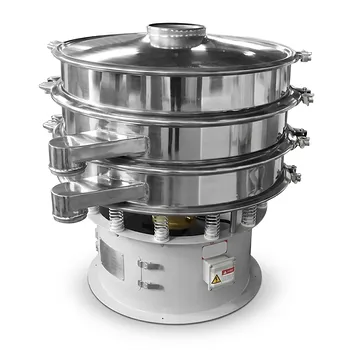
- Stainless Steel Rotary Vibrating Sieve High Precision Circular Vibratory Separator Industrial Powder Grading Machine Multi Layer Sifting Equipment
- Laboratory Air Jet Sieving Machine for Fine Powder Particle Size Analysis and Deagglomeration
- Small Laboratory Vibratory Sieve Shaker for Powder Gradation and Particle Size Analysis
- Three Dimensional Rotary Vibrating Sieve
People Also Ask
- Why is a standard sieve shaker essential for CBA powders in geopolymers? Enhance Reactivity & Material Strength
- Why are standard metal sieves and sieve shakers necessary for 5-aminotetrazole mixtures? Optimize Thermal & Kinetic Data
- Why Use Sieve Shakers for Gangue Slurry Experiments? Optimize Particle Grading for Superior Results
- What are the advantages of mechanical vs. manual sieving for road dust analysis? Achieve Superior Data Standardization.
- How do high-precision sieve shakers and powder mixers facilitate material circularity in metal PBF? Optimize AM Cycles

Tech Team · PowderPreparation
Last updated on Jun 03, 2026
Related Products
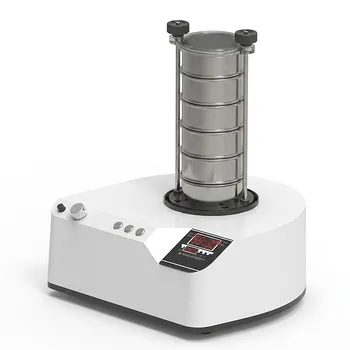
三维电磁微量振动筛分仪

Stainless Steel Rotary Vibrating Sieve High Precision Circular Vibratory Separator Industrial Powder Grading Machine Multi Layer Sifting Equipment
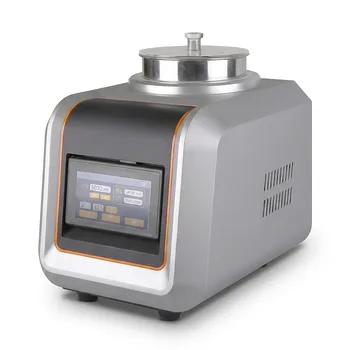
Laboratory Air Jet Sieving Machine for Fine Powder Particle Size Analysis and Deagglomeration
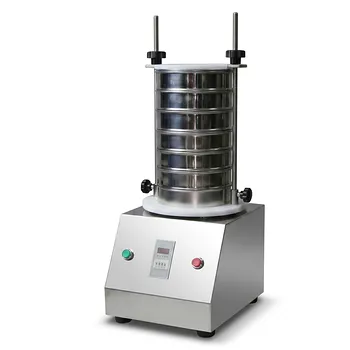
Small Laboratory Vibratory Sieve Shaker for Powder Gradation and Particle Size Analysis