What is the purpose of using a 250 µm standard test sieve to process SiCp/Al powder? Ensure High-Quality Composites
Updated 4 months ago
Sieving SiCp/Al powder with a 250 µm standard test sieve is a critical quality control step designed to eliminate secondary agglomerates. During the drying phase following ball milling, particles often clump together as the solvent evaporates. By removing these oversized aggregates, the sieve ensures the powder maintains a uniform particle size distribution, optimal flowability, and consistent loose density before it is loaded into the hot press mold.
The primary purpose of the 250 µm sieving process is to guarantee a homogenous starting material by removing clusters that would otherwise cause microstructural defects, such as localized voids or phase segregation, in the final sintered composite.
Overcoming the Drying Challenge
The Formation of Secondary Agglomerates
While ball milling effectively refines the SiCp/Al powder, the subsequent drying process introduces a new challenge. As the solvent evaporates, surface tension and chemical forces often cause the refined particles to bind together into secondary agglomerates.
Why the 250 µm Threshold Matters
The 250 µm aperture acts as a definitive filter to catch these clusters without hindering the flow of the primary refined particles. This specific size ensures that only the intended, fine-grained composite powder reaches the mold loading stage.
Maximizing Mold Efficiency and Flowability
Optimizing Powder Flowability
Powder that has been properly screened exhibits significantly better flowability. This allows the material to transition from storage or feeding mechanisms into the mold smoothly and continuously.
Achieving Consistent Loose Density
Sieving ensures that the powder settles into the mold with a consistent loose density. Without this uniformity, the powder may bridge or stack unevenly, leading to "soft spots" in the pre-pressed material.
Impact on Microstructural Integrity
Preventing Localized Voids
If large agglomerates enter the mold, they create irregular packing patterns. During the sintering or hot-pressing process, these irregularities manifest as localized voids, which drastically reduce the mechanical strength of the aluminum matrix composite.
Mitigating Phase Segregation
Uniform particle distribution is essential for preventing microstructural segregation. A consistent powder mix ensures that the silicon carbide reinforcement (SiCp) is distributed evenly throughout the aluminum matrix, rather than clustering in specific zones.
Understanding the Trade-offs
Risk of Sieve Blinding
Using a 250 µm mesh can lead to sieve blinding, where particles become lodged in the mesh openings. If the sieve is not cleaned or vibrated correctly, the screening efficiency drops, potentially leading to inconsistent results across different batches.
Potential for Material Loss
While the goal is to remove only secondary agglomerates, some usable powder may be trapped within larger clumps and discarded. This represents a minor material yield loss that must be balanced against the necessity of high-quality, defect-free final parts.
How to Apply This to Your Process
Sieving is a foundational step that bridges the gap between powder preparation and the final forming process. To maximize its effectiveness, consider your primary production goal:
- If your primary focus is mechanical strength: Ensure the 250 µm sieve is inspected regularly for mesh deformation to prevent large clusters from bypassing the filter and creating structural weak points.
- If your primary focus is production throughput: Use an automated vibratory sieving system to maintain high flow rates and prevent the mesh from clogging during large-scale powder processing.
- If your primary focus is surface finish: Consider a secondary, finer screening step after the 250 µm pass to further refine the particle distribution and ensure a perfectly smooth sintered surface.
By integrating precise 250 µm screening, you transform a raw, inconsistent powder into a high-performance material ready for precision engineering.
Summary Table:
| Key Aspect | Role of 250 µm Sieving | Impact on Final Composite |
|---|---|---|
| Agglomerate Control | Removes secondary clusters formed during drying | Prevents localized voids and structural weak points |
| Powder Flowability | Ensures uniform particle size for smooth mold loading | Increases production efficiency and mold filling accuracy |
| Loose Density | Standardizes the packing density of the powder | Eliminates "soft spots" and ensures consistent sintering |
| Microstructure | Promotes even distribution of SiCp reinforcement | Prevents phase segregation for superior mechanical strength |
Optimize Your Material Science Workflow Today
Achieving perfection in SiCp/Al composites starts with precise powder preparation. At our facility, we provide complete laboratory sample preparation solutions tailored for material science researchers and manufacturers.
From vibratory and air-jet sieve shakers equipped with high-precision test sieves to our advanced powder processing equipment, we ensure your materials meet the highest standards of uniformity. Our expertise extends to a full spectrum of compaction technology, including:
- Crushing & Milling: Jaw/roll crushers, planetary ball mills, jet mills, and cryogenic grinders.
- Mixing: Powder and vacuum defoaming mixers for homogenous blends.
- Hydraulic Presses: A complete range of Cold/Warm Isostatic Presses (CIP/WIP), standard lab presses, and advanced Vacuum Hot Presses for high-performance sintering.
Whether you are refining powder flowability or require robust compaction for your next innovation, our specialized equipment delivers the reliability you need.
Ready to enhance your lab's capabilities? Contact our experts today to discuss your powder processing needs!
References
- Renyu Feng, Zijuan Huang. Effects of SiC Particle Size on SiCp/Al Composite During Vacuum Hot Pressing. DOI: 10.3390/ma19010084
Mentioned Products
- 250x400mm Jaw Crusher Medium Crushing Equipment for Mining Mineral Sample Preparation
- Stainless Steel Laboratory Vibratory Test Sieve Shaker
- Laboratory Vibratory Test Sieve Shaker for Precision Particle Size Analysis and Powder Grading
- Small Laboratory Vibrating Sieve Shaker for Precise Particle Size Analysis
- 三维电磁微量振动筛分仪
People Also Ask
- What is the role of jaw or roll crushers in the initial processing of copper ore samples? Essential Prep for Analysis
- What is the function of a jaw crusher in reservoir sediment geopolymer synthesis? Primary Size Reduction Explained
- What is the primary function of a jaw crusher in RAC raw materials? Efficient Resource Recovery & Sample Preparation
- What is the primary role of a laboratory jaw crusher in the initial stages of tin and tantalum ore reprocessing? Explained
- What is the role of a laboratory jaw crusher in the initial preparation of silicate-type low-grade copper ore?

Tech Team · PowderPreparation
Last updated on Jun 03, 2026
Related Products
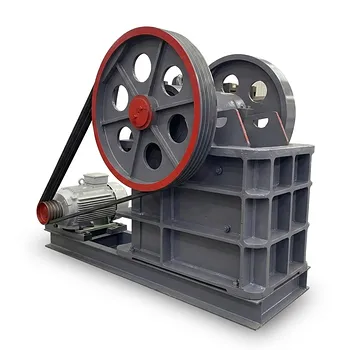
250x400mm Jaw Crusher Medium Crushing Equipment for Mining Mineral Sample Preparation

Stainless Steel Laboratory Vibratory Test Sieve Shaker

Laboratory Vibratory Test Sieve Shaker for Precision Particle Size Analysis and Powder Grading

Small Laboratory Vibrating Sieve Shaker for Precise Particle Size Analysis

三维电磁微量振动筛分仪

Small Laboratory Vibratory Sieve Shaker for Powder Gradation and Particle Size Analysis