What is the purpose of using a 200-mesh standard test sieve for blood clam shell powder? Optimize Cement Replacement
Updated 4 months ago
The primary purpose of using a 200-mesh standard test sieve is to ensure the blood clam shell powder achieves a particle fineness of 0.075 millimeters (75 micrometers) or less. This specific sizing is critical because it aligns the powder's physical dimensions with those of traditional Portland cement. By achieving this fineness, the shell powder can effectively fill microscopic voids within the concrete matrix, significantly enhancing the material's density and overall compressive strength.
Core Takeaway: Utilizing a 200-mesh sieve transforms raw clam shells into a functional cement substitute by standardizing particle size to below 75 microns. This ensures the powder acts as both a physical filler and a reactive component, optimizing the durability and homogeneity of the final concrete composite.
Optimizing the Microstructure of Concrete
Matching Cement Fineness for Uniformity
The most immediate benefit of a 200-mesh sieve is the synchronization of particle sizes between the shell powder and Portland cement.
When the shell powder matches the fineness of cement, it ensures a uniform distribution throughout the concrete matrix.
This uniformity prevents the segregation of materials, which is vital for maintaining the structural integrity of the cured composite.
Enhancing Density through Pore Filling
Ultra-fine particles passing through a 200-mesh screen serve as a micro-filler.
These particles occupy the microscopic pores that naturally occur between larger cement grains and aggregates.
By filling these gaps, the blood clam shell powder increases the packing density of the material, which directly contributes to higher compressive strength and reduced permeability.
Increasing Specific Surface Area
Reducing shell powder to a sub-0.075mm scale drastically increases its specific surface area.
A higher surface area promotes superior chemical bonding between the powder, fibers, and the cement hydration products.
This increased interface activity enhances the hydrophobicity and overall durability of the resulting composite material.
Ensuring Material Consistency and Quality
Removing Agglomerates and Impurities
The sieving process acts as a final quality control step to remove secondary agglomerates formed during grinding or drying.
It also filters out unpulverized particles or coarse impurities that could create weak points in the concrete.
Ensuring the removal of these larger fragments is essential for achieving a homogeneous microstructure and a smooth surface finish.
Eliminating Particle Size Effects in Analysis
For professional applications, the 200-mesh standard is vital for accurate laboratory characterization.
Standardizing the particle size eliminates "particle size effects" during X-ray Fluorescence (XRF) and other chemical analyses.
This ensures that the chemical data gathered from the shell powder is representative and that experimental results are repeatable.
Understanding the Trade-offs
Processing Time vs. Fineness
While finer powder generally yields better mechanical properties, the time and energy required for extended ball milling increase significantly.
Sieving to a 200-mesh standard requires a high degree of dryness; any residual moisture can cause sieve blinding, where particles clog the mesh.
There is a point of diminishing returns where the cost of further refining the powder may outweigh the marginal gains in concrete strength.
Handling and Dust Management
Ultra-fine powder (below 75 microns) is highly susceptible to dusting and wind loss during mixing.
The high surface area that makes it reactive also makes it prone to absorbing atmospheric moisture, which can lead to clumping if not stored in airtight conditions.
Proper personal protective equipment (PPE) is mandatory when handling 200-mesh powder to prevent inhalation of fine calcium carbonate particles.
How to Apply This to Your Project
When integrating blood clam shell powder into your cementitious mixtures, your processing goals should dictate your sieving rigor.
- If your primary focus is Maximum Compressive Strength: Strictly use only the powder that passes through the 200-mesh sieve to ensure optimal micro-filling of the concrete pores.
- If your primary focus is Chemical Analysis and Research: Ensure 100% of your sample passes the 200-mesh standard to eliminate particle size bias in XRF or thermal treatment data.
- If your primary focus is Cost-Effective Mass Production: Consider a multi-stage sieving process to reclaim larger particles for re-grinding, reducing material waste and ensuring a consistent 0.075mm output.
By adhering to the 200-mesh standard, you ensure that blood clam shell powder transitions from a waste product to a high-performance engineering material.
Summary Table:
| Key Feature | Requirement/Standard | Impact on Material Performance |
|---|---|---|
| Particle Fineness | ≤ 0.075 mm (75 Microns) | Matches Portland cement for uniform distribution. |
| Micro-filler Effect | Pore-scale particles | Fills microscopic voids to increase compressive strength. |
| Specific Surface Area | High reactivity scale | Enhances chemical bonding and hydrophobicity. |
| Quality Control | Removal of agglomerates | Ensures a homogeneous microstructure and repeatable data. |
| Analytical Accuracy | Standardized for XRF | Eliminates particle size effects during chemical analysis. |
Elevate Your Material Research with Precision Sample Preparation
Are you looking to optimize the performance of sustainable additives like blood clam shell powder? Contact us today to discover how our professional-grade laboratory equipment can streamline your workflow and ensure consistent, high-quality results.
As experts in material science, we provide complete laboratory sample preparation solutions tailored for powder processing and compaction. Our extensive product line includes:
- Grinding & Milling: Planetary ball mills, jet mills, and liquid nitrogen cryogenic grinders for achieving sub-micron fineness.
- Sieving & Analysis: High-precision vibratory and air-jet sieve shakers with a full range of standard test sieves to meet 200-mesh standards and beyond.
- Compaction & Pressing: A comprehensive spectrum of hydraulic presses, including Cold/Warm Isostatic Presses (CIP/WIP), vacuum hot presses, and XRF pellet presses.
- Mixing: Advanced powder and defoaming mixers for perfectly homogeneous composites.
Whether you are a researcher developing new green cements or a distributor looking for reliable laboratory equipment partners, we deliver the tools you need for success. Let’s discuss your project requirements!
References
- Ifal Rahmadani, Ghina Amalia. PEMANFAATAN LIMBAH CANGKANG KERANG DARA SEBAGAI SUBSTITUSI SEMEN TERHADAP KUAT TEKAN BETON. DOI: 10.24912/jmts.v8i2.32276
Mentioned Products
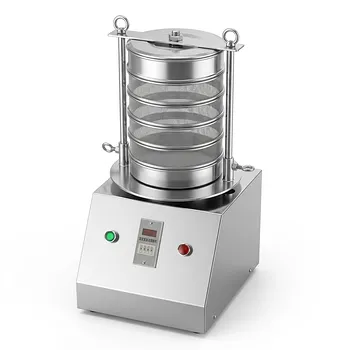
- Stainless Steel Laboratory Vibratory Test Sieve Shaker
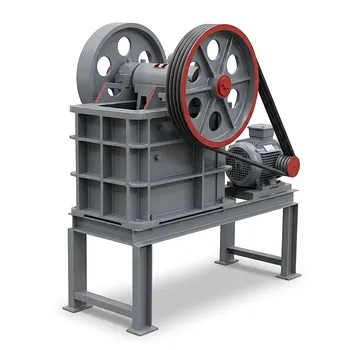
- Laboratory Jaw Crusher 200x300mm Opening for Primary Crushing of Ores and Aggregates
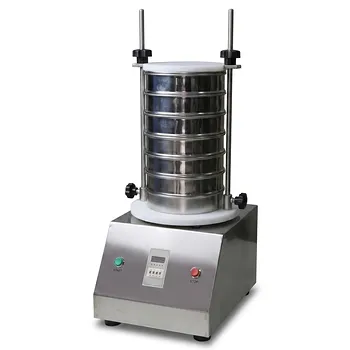
- Laboratory Vibratory Test Sieve Shaker for Precision Particle Size Analysis and Powder Grading
- Small Laboratory Vibrating Sieve Shaker for Precise Particle Size Analysis
- Small Laboratory Vibratory Sieve Shaker for Powder Gradation and Particle Size Analysis
People Also Ask
- What function does a laboratory vibratory sieve shaker serve in the production process of metakaolin? Optimize Reactivity
- Why is a precision laboratory vibratory sieve shaker necessary for particle size control? Optimize Biomass Carbonization
- What is the function of a laboratory vibratory sieve shaker? Enhance Coal Particle Size Distribution (PSD) Analysis
- What role do laboratory vibratory sieve shakers and test sieves play before the molding of Nb-Cu composite powders?
- What is the primary function of a laboratory vibratory sieve shaker in the evaluation of sand liquefaction potential?

Tech Team · PowderPreparation
Last updated on Jun 03, 2026
Related Products
Stainless Steel Laboratory Vibratory Test Sieve Shaker
Laboratory Jaw Crusher 200x300mm Opening for Primary Crushing of Ores and Aggregates
Laboratory Vibratory Test Sieve Shaker for Precision Particle Size Analysis and Powder Grading
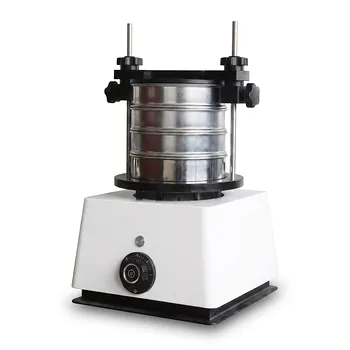
Small Laboratory Vibrating Sieve Shaker for Precise Particle Size Analysis
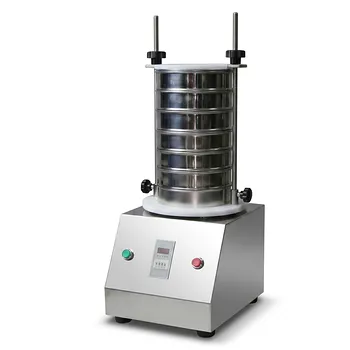
Small Laboratory Vibratory Sieve Shaker for Powder Gradation and Particle Size Analysis