What is the purpose of using a 125 µm standard sieve in the powder granulation process? Optimize Material Consistency
Updated 4 months ago
The 125 µm standard sieve serves as a critical calibration tool in powder metallurgy and composite fabrication. Its primary purpose is to ensure a consistent particle size distribution by physically screening mixed slurries or dried powders. This uniformity is the foundation for superior powder flowability and high packing density, which are essential for the structural integrity of the final material.
The use of a 125 µm sieve ensures that granulated powders possess the precise physical characteristics required for uniform mold filling and stable sintering. By eliminating oversized agglomerates, the process minimizes internal defects and maximizes the density of the final composite.
Optimizing Powder Morphology and Flow
The physical behavior of a powder is dictated by its particle size and shape. The 125 µm sieve acts as a standardized filter to refine these characteristics before the powder reaches the consolidation stage.
Removing Agglomerates and Impurities
During processes like ball milling or drying, powders often form loose lumps or hard agglomerates due to moisture or mechanical forces. Passing the material through a 125 µm sieve breaks down these soft clusters and removes oversized particles that could act as structural weak points.
Enhancing Powder Flowability
Consistent particle size is the primary driver of powder flowability, which describes how easily a powder moves through feeding systems. High flowability is vital for automated processes like Spark Plasma Sintering (SPS) or cold spraying, where a steady material feed is required to maintain uniform layer thickness.
Surface Charge and Adsorption
In specialized applications like electrostatic spraying, the 125 µm sieve ensures that particles are small enough to maintain proper charge adsorption. This prevents equipment clogging and allows for a uniform coating thickness, typically targeted between 40 and 60 microns.
Impact on Consolidation and Sintering
The quality of a sintered composite is often decided by the "green body" phase— the state of the powder before it is heated. Proper sieving ensures this phase is as dense and uniform as possible.
Improving Packing Density
A uniform particle size distribution allowed by the 125 µm aperture ensures that particles can pack closely together within a sintering mold. Higher packing density reduces the volume of air between particles, leading to a more efficient transition from powder to a solid, dense mass.
Reducing Porosity and Density Gradients
Inconsistent particle sizes often lead to "bridging" within a mold, creating large internal pores and porosity irregularities. By ensuring all granules are under 125 µm, manufacturers can significantly reduce density gradients, resulting in a composite with uniform mechanical properties throughout its volume.
Precision in Phase Identification
Beyond manufacturing, 125 µm sieving is used to prepare samples for X-ray diffraction (XRD). Precise screening eliminates the "preferred orientation effect" caused by large, non-uniform particles, ensuring that diffraction peaks are accurate and that the mineral phases within the composite are correctly identified.
Understanding the Trade-offs
While the 125 µm sieve is a versatile standard, it is not a "one-size-fits-all" solution for every composite material.
- Material Loss: Strict screening can lead to significant material waste if the initial grinding or granulation process is not well-controlled, as all particles over 125 µm are discarded or must be reprocessed.
- Sieve Blinding: Fine powders, particularly those with high moisture content or electrostatic charges, can clog the sieve mesh (a phenomenon known as blinding), which reduces screening efficiency and requires frequent cleaning.
- Aperture Limitations: For ultra-high-performance coatings or nanotechnology applications, a 125 µm limit may still be too coarse, potentially allowing particles that are too large for specialized thin-film deposition.
How to Apply This to Your Project
Choosing the right sieving protocol depends on your final manufacturing goals and the nature of your composite.
- If your primary focus is High-Density Sintering: Use the 125 µm sieve immediately after the drying phase to break up loose granules, ensuring maximum mold-filling efficiency.
- If your primary focus is Surface Coating (Cold Spray/Electrostatic): Employ the sieve as a final safety check to remove any mechanical impurities or large clusters that could clog spray nozzles or cause uneven thickness.
- If your primary focus is Analytical Accuracy (XRD): Ensure the entire sample passes through the sieve to eliminate orientation bias, which is essential for accurate mineral phase identification.
Precise control of particle size via standard sieving is the most cost-effective way to guarantee the repeatability and quality of high-performance composite materials.
Summary Table:
| Key Function | Impact on Process | Primary Benefit |
|---|---|---|
| Agglomerate Removal | Breaks down lumps from milling/drying | Eliminates structural weak points |
| Flowability Boost | Ensures steady material feeding | Uniform mold filling for SPS/Cold Spray |
| Density Optimization | Increases particle packing density | Reduces porosity and density gradients |
| XRD Preparation | Eliminates preferred orientation effect | Accurate phase identification |
| Quality Control | Removes mechanical impurities | Prevents nozzle clogging in coatings |
Elevate Your Material Consistency with Expert Solutions
Achieving the perfect 125 µm particle distribution requires more than just a sieve—it demands a precise, repeatable process. At our facility, we provide complete laboratory sample preparation solutions tailored for material science.
Whether you are refining powders or consolidating high-performance composites, our extensive product line supports your entire workflow:
- Powder Processing: High-efficiency vibratory and air-jet sieve shakers, planetary ball mills, and jet mills for perfect granulation.
- Compaction Excellence: A full spectrum of hydraulic presses, including Cold/Warm Isostatic Presses (CIP/WIP), vacuum hot presses, and XRF pellet presses.
- Mixing & Homogenization: Specialized powder and defoaming mixers to ensure slurry uniformity.
Ready to minimize defects and maximize your material density? Contact our technical team today to discover how our specialized equipment can optimize your laboratory’s efficiency and output quality.
References
- Paweł Rutkowski, Paweł Nieroda. Thermal properties of spark plasma sintered Inconel 625 modified by titanium zirconium mixed carbide. DOI: 10.1007/s10973-023-12259-1
Mentioned Products
- Small Laboratory Jaw Crusher 125x100mm Feed Opening for Sample Preparation
- Stainless Steel Rotary Vibrating Sieve High Precision Circular Vibratory Separator Industrial Powder Grading Machine Multi Layer Sifting Equipment
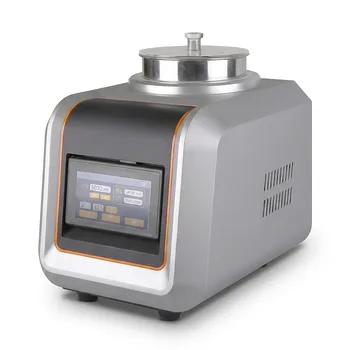
- Laboratory Air Jet Sieving Machine for Fine Powder Particle Size Analysis and Deagglomeration
People Also Ask
- What is the primary function of a laboratory jaw crusher? Master Initial Hard Rock Ore Preparation & Feed Sizing
- What is the primary role of a laboratory jaw crusher in the initial stages of tin and tantalum ore reprocessing? Explained
- What is the role of a laboratory jaw crusher in the initial preparation of silicate-type low-grade copper ore?
- What is the primary function of a laboratory jaw crusher in the pretreatment process of galena ore? Initial Prep Guide
- What is the primary function of a laboratory jaw crusher when processing low-grade copper ore? Expert Guide

Tech Team · PowderPreparation
Last updated on Jun 03, 2026
Related Products
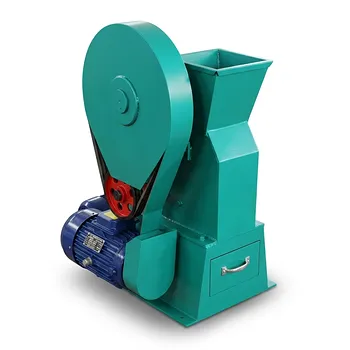
Small Laboratory Jaw Crusher 125x100mm Feed Opening for Sample Preparation
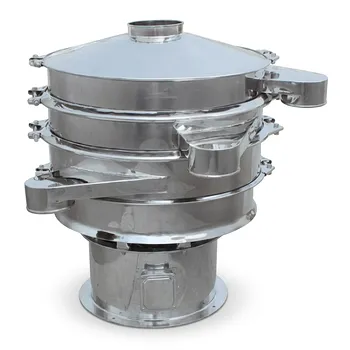
Stainless Steel Rotary Vibrating Sieve High Precision Circular Vibratory Separator Industrial Powder Grading Machine Multi Layer Sifting Equipment