What is the purpose of using a 100-mesh standard test sieve after drying the HfB2-SiC slurry? Ensure Powder Uniformity
Updated 4 months ago
Ensuring material integrity begins with powder uniformity. Using a 100-mesh standard test sieve after drying HfB2-SiC slurry is essential for removing soft agglomerates that form during the evaporation process. This step guarantees a narrow, uniform particle size distribution, which is vital for achieving consistent packing density and preventing structural defects during Spark Plasma Sintering (SPS).
The primary purpose of 100-mesh sieving is to eliminate oversized particle aggregates, ensuring the HfB2-SiC powder achieves the precise flowability and packing density required for high-performance sintering. By normalizing the particle size, engineers can prevent the formation of internal pores and macroscopic flaws in the final ceramic component.
Managing Post-Drying Agglomeration
The Formation of Soft Agglomerates
During the drying of HfB2-SiC slurry—often conducted at temperatures around 60 °C—the removal of liquid can cause particles to cluster. These loose soft agglomerates are significantly larger than the primary particles and can compromise the quality of the raw powder.
Achieving Uniform Particle Distribution
Sieving through a 100-mesh standard test sieve mechanically breaks down or removes these clusters. This result is a powder with a narrower and more uniform particle size distribution, ensuring that every gram of material behaves predictably during subsequent processing.
The Impact on Spark Plasma Sintering (SPS)
Ensuring Consistent Packing Density
In SPS, the powder is loaded into a mold where it is subjected to pressure and current. A uniform particle size allows for consistent initial packing density within the mold, which is the foundation of a successful sinter.
Mitigating Porosity and Macroscopic Defects
Large aggregates create "shadows" or gaps in the mold, leading to uneven pressure distribution. By removing these aggregates, the sieving process reduces internal porosity and prevents the development of macroscopic defects that would weaken the final sintered HfB2-SiC material.
Enhancing Flowability and Filling
A sieved powder possesses excellent flowability, allowing it to fill complex mold geometries evenly. This consistency ensures that the green compact (the unsintered preform) is structurally sound before the thermal phase begins.
Understanding the Trade-offs
Mechanical Screening vs. Agglomerate Strength
While a 100-mesh sieve is highly effective for soft agglomerates, it may not eliminate "hard" aggregates formed by chemical bonding. If the drying process is not carefully controlled, sieving alone may be insufficient to achieve the desired microstructural homogeneity.
Potential for Material Contamination
Every mechanical step introduces a small risk of cross-contamination from the sieve mesh itself. It is critical to use standard test sieves made of materials that will not react with or degrade the HfB2-SiC powder, particularly in high-purity applications.
Material Yield Considerations
Sieving inherently removes oversized particles, which may result in a minor loss of material. However, this is a necessary trade-off, as including those oversized particles would likely result in a failed part that costs far more in time and resources.
Applying This to Your Material Goals
How to Apply This to Your Project
To achieve the best results with HfB2-SiC composites, your sieving protocol should align with your specific manufacturing objectives.
- If your primary focus is Structural Integrity: Prioritize 100-mesh sieving to ensure the elimination of internal pores that act as stress concentrators in the sintered body.
- If your primary focus is Process Repeatability: Use standardized test sieves to ensure that every batch of dried powder has the same particle size distribution, leading to predictable sintering shrinkages.
- If your primary focus is Advanced Analysis: Ensure all particles are below 150 microns (the typical 100-mesh limit) to improve the accuracy of thermogravimetric or chemical composition analysis.
A disciplined approach to post-drying sieving transforms a raw powder into a high-performance engineering material by ensuring microscopic uniformity and macroscopic reliability.
Summary Table:
| Key Feature | Impact on HfB2-SiC Processing |
|---|---|
| Sieve Mesh Size | 100-mesh (Standard Test Sieve) |
| Primary Goal | Removal of soft agglomerates formed during 60°C drying |
| SPS Benefit | Consistent packing density & elimination of internal pores |
| Powder Quality | Improved flowability and narrow particle size distribution |
| Material Integrity | Prevention of macroscopic flaws in final ceramic components |
Elevate Your Material Integrity with Precision Powder Solutions
Achieving the perfect HfB2-SiC ceramic starts with impeccable powder preparation. As specialists in complete laboratory sample preparation solutions for material science, we provide the high-precision equipment necessary to eliminate defects and ensure uniform results.
From vibratory and air-jet sieve shakers equipped with high-quality test sieves to advanced planetary ball mills, jet mills, and cryogenic grinders, we offer the tools you need for superior particle size control. To complete your workflow, we manufacture a full spectrum of compaction equipment, including Cold/Warm Isostatic Presses (CIP/WIP), vacuum hot presses, and standard lab hydraulic presses designed for high-performance sintering like SPS.
Ready to optimize your laboratory workflow?
Contact our technical experts today to discover how our powder processing and compaction solutions can enhance your material research and production efficiency.
References
- M. Sakvand, Leila Nikzad. Effect of Graphite Addition on the Microstructure, Mechanical Properties and Oxidation Resistance of HfB2-SiC Composites Prepared by the SPS Method. DOI: 10.5829/ije.2022.35.10a.06
Mentioned Products
- High Speed Laboratory Grinder Efficient Stainless Steel Powder Pulverizer Universal Material Science Mill for Sample Preparation
- Laboratory Vibratory Test Sieve Shaker for Precision Particle Size Analysis and Powder Grading
- Laboratory Air Jet Sieving Machine for Fine Powder Particle Size Analysis and Deagglomeration
- Three Dimensional Rotary Vibrating Sieve
- Stainless Steel Rotary Vibrating Sieve High Precision Circular Vibratory Separator Industrial Powder Grading Machine Multi Layer Sifting Equipment
People Also Ask
- What role does a laboratory grinder play in the pretreatment of sunflower seed shell-based adsorbents? Boost Efficiency.
- How does a laboratory grinder or mill enhance the adsorption performance of agricultural waste materials? Boost Surface Area
- What is the function of a laboratory high-speed pulverizer in the preparation of eggshell powder? Essential Pretreatment
- What are the technical advantages of using a high-speed laboratory pulverizer for grinding tablets into powders? 20K RPM
- Why must soil samples be ground before XRD or XRF analysis? Ensure Precision & Homogeneity in Lab Results

Tech Team · PowderPreparation
Last updated on Jun 03, 2026
Related Products
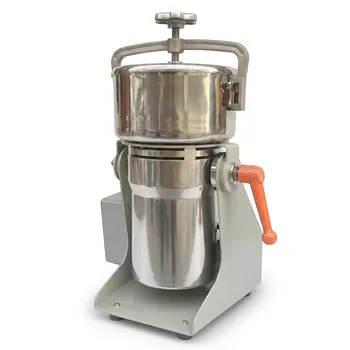
High Speed Laboratory Grinder Efficient Stainless Steel Powder Pulverizer Universal Material Science Mill for Sample Preparation

Laboratory Vibratory Test Sieve Shaker for Precision Particle Size Analysis and Powder Grading
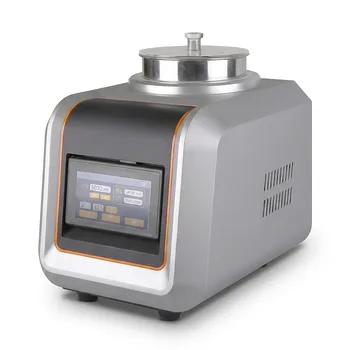
Laboratory Air Jet Sieving Machine for Fine Powder Particle Size Analysis and Deagglomeration

Three Dimensional Rotary Vibrating Sieve
