What is the purpose of adding stearic acid during the XRF pellet preparation process? Ensure Stable Sample Analysis
Updated 4 months ago
Stearic acid serves as a critical chemical binder in XRF pellet preparation.
It coats mineral powder particles to enhance physical bonding under the intense pressure of a hydraulic press. This prevents the resulting pellets from disintegrating or cracking, ensuring the sample maintains its structural integrity while inside the XRF instrument chamber.
The primary purpose of adding stearic acid is to act as a structural stabilizer that transforms loose powder into a durable, homogeneous pellet. This process is essential for creating the flat, dense surface required for accurate and reproducible X-ray fluorescence analysis.
The Role of Stearic Acid as a Binding Agent
Coating and Adhesion Mechanics
Stearic acid is introduced to the finely ground sample to coat the surface of individual mineral particles.
When subjected to high pressure, these coated particles form significantly stronger physical bonds than raw powder could achieve on its own.
This increased adhesion creates a cohesive matrix that holds the pellet together firmly once the hydraulic pressure is released.
Maintaining Structural Integrity
Without a binder, many mineral samples are too brittle to form a stable disc, often resulting in "capping" or total disintegration.
Stearic acid provides the necessary internal strength to withstand the stresses of manual handling and the vacuum environment of the XRF spectrometer.
Maintaining this integrity is vital not only for the sample but also to prevent loose dust from contaminating and damaging the internal components of the instrument.
Enhancing Analytical Accuracy through Compaction
Minimizing Voids and Surface Irregularities
XRF spectroscopy relies on the specimen presenting a flat and homogeneous surface to the X-ray beam.
Loose powders contain voids and surface irregularities that can attenuate low-energy fluorescence lines, leading to degraded precision.
The addition of stearic acid facilitates the compression of the material into a dense disc, effectively eliminating air pockets and surface gaps.
Mitigating Particle-Size Effects
Variability in particle size can lead to inconsistent quantitative results if the sample is not properly compacted.
A pressed pellet provides a reproducible surface finish and uniform density across the entire specimen area.
This uniformity allows the XRF software to more accurately calculate elemental concentrations based on the intensity of the detected fluorescence.
Understanding the Trade-offs and Limitations
Dilution and Matrix Effects
Adding stearic acid introduces an organic matrix—primarily carbon, hydrogen, and oxygen—to the mineral sample.
This creates a dilution effect that must be mathematically accounted for during the calibration process to ensure accurate final readings.
If too much binder is used, it can reduce the signal intensity of lighter elements, potentially lowering the detection limits for those materials.
Risk of Contamination
The purity of the stearic acid used is paramount to avoid introducing trace element contaminants into the analysis.
Any impurities present in the binder will be detected by the XRF and may be incorrectly attributed to the sample itself.
It is standard practice to use analytical-grade reagents and run "blank" pellets to verify the purity of the binding agent.
How to Apply This to Your Project
To achieve the best analytical results, the use of stearic acid should be balanced against your specific testing requirements.
- If your primary focus is mechanical stability: Use a consistent binder-to-sample ratio (typically 10-20% by weight) to ensure the pellet survives high-vacuum conditions and frequent handling.
- If your primary focus is trace element sensitivity: Minimize the amount of stearic acid to the lowest level that still yields a stable pellet, reducing the risk of signal attenuation.
Masterful pellet preparation with the correct use of binding agents is the essential foundation for generating reliable and reproducible XRF data.
Summary Table:
| Feature | Function of Stearic Acid | Benefit for XRF Analysis |
|---|---|---|
| Structural Role | Chemical Binding Agent | Prevents pellet cracking, capping, or disintegration. |
| Surface Quality | Eliminates Voids/Gaps | Creates a flat, dense surface for better X-ray reflection. |
| Homogeneity | Mitigates Particle-Size Effects | Ensures uniform density and reproducible quantitative results. |
| Protection | Particle Encapsulation | Prevents dust contamination inside the XRF instrument. |
Optimize Your Material Analysis with Expert Sample Preparation
High-quality XRF data starts with a perfect pellet. Whether you are addressing mechanical stability or minimizing matrix effects, [Our Brand] provides the complete laboratory sample preparation solutions you need to succeed in material science research.
We specialize in professional-grade powder processing and compaction equipment, including:
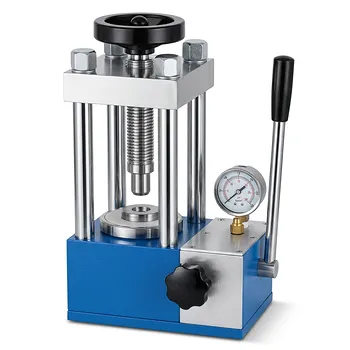
- Hydraulic Presses: XRF pellet presses, standard lab presses, and advanced Cold/Warm Isostatic Presses (CIP/WIP).
- Milling & Grinding: Planetary ball mills, jet mills, and cryogenic grinders for ultra-fine particle reduction.
- Mixing & Sieving: Specialized powder mixers and air-jet sieve shakers for perfect homogeneity.
Ready to enhance your lab's precision and efficiency? Contact our technical team today to find the ideal equipment for your specific sample preparation requirements.
References
- Ezekiel A. Adetoro, Benjamin Ayowole Alo. Potential of Carica Papaya Stem Activated Carbon in Removal of Undesired Compounds from Metakaolin. DOI: 10.48048/tis.2024.7457
Mentioned Products
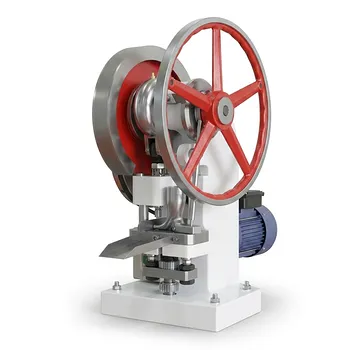
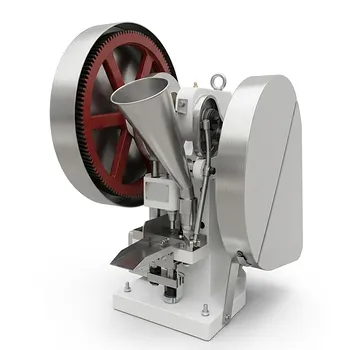
- 6 Ton Variable Frequency Single Punch Tablet Press
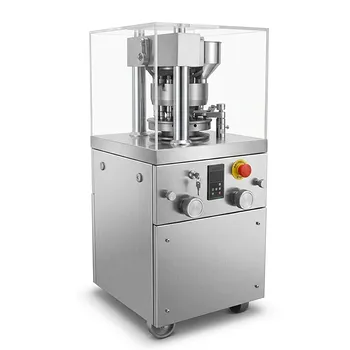
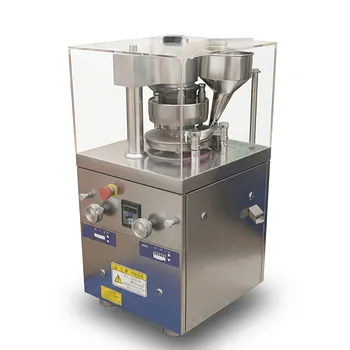
- Ordinary Type Rotary Tablet Press for Pharmaceutical Chemical Food Electronic Industries
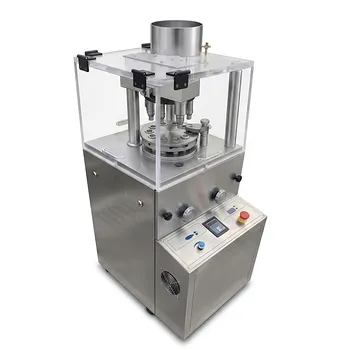
- Enhanced 9 Punch Rotary Tablet Press for Powder Compaction
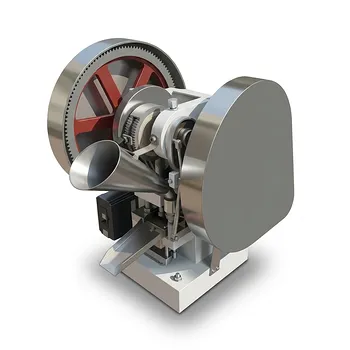
- 6-Ton Small Single-Punch Tablet Press — Laboratory Powder & Granule Tableting Equipment / Tablet Forming Machine
- 实验室旋转式压片机 多冲模单压式自动连续压片
People Also Ask
- Why is a laboratory hydraulic press required for FT-IR KBr pellets? Achieve Precise Sample Clarity for ZrC–SiC Analysis
- Why is vacuum sealing and flexible packaging necessary for Aluminum Titanate powders during CIP? Ensure Peak Density
- What are the advantages of using hardened steel molds and graphite spray for titanium powder? Ensure structural integrity
- Why is a laboratory hydraulic press required to compress oyster shell powder before XRF analysis? Improve Data Accuracy.
- What role does a high-strength stainless steel mold kit play in the uniaxial die compaction process? Ensuring Precision

Tech Team · PowderPreparation
Last updated on May 14, 2026
Related Products
6 Ton Variable Frequency Single Punch Tablet Press
Ordinary Type Rotary Tablet Press for Pharmaceutical Chemical Food Electronic Industries
Enhanced 9 Punch Rotary Tablet Press for Powder Compaction
6-Ton Small Single-Punch Tablet Press — Laboratory Powder & Granule Tableting Equipment / Tablet Forming Machine
实验室旋转式压片机 多冲模单压式自动连续压片
Manual Tablet Press with Dual Scale Pressure Gauge for Pharmaceutical Food Chemical Laboratory Sample Preparation