What is the purpose of adding methanol as a PCA during silver oxide ball milling? Achieve Uniform Particle Size
Updated 5 months ago
Methanol serves as a thermal and surface-stabilizing agent. During the wet ball milling of silver oxide powders, it is primarily used to regulate the temperature of the grinding environment and mitigate sedimentation. By adjusting the surface state of the particles, methanol inhibits abnormal grain growth caused by cold welding, resulting in a significantly narrower and more uniform particle size distribution.
Core Takeaway: Methanol acts as a Process Control Agent (PCA) that balances the competing forces of particle fracturing and cold welding. Its presence ensures that high-energy impacts lead to particle refinement rather than clumping or sedimentation.
Regulating the Milling Environment
Thermal Management and Heat Dissipation
The high-energy impacts between grinding media and the silver oxide powder generate substantial localized heat. Methanol acts as a coolant within the milling jar, absorbing and dissipating this thermal energy to maintain a stable processing temperature. This regulation prevents heat-induced chemical changes or unwanted phase transitions in the silver oxide.
Mitigation of Sedimentation Effects
In a wet milling setup, particles have a natural tendency to settle due to gravity, which can lead to uneven grinding. Methanol acts as a fluid medium that helps keep the silver oxide particles suspended during the milling process. This ensures that the powder is consistently exposed to the high-energy impacts of the grinding balls.
Controlling Particle Morphology and Size
Inhibiting Cold Welding and Grain Growth
Silver oxide particles subjected to high-energy milling can undergo "cold welding," where particles fuse together upon impact. Methanol adsorbs onto the particle surfaces, creating a thin physical barrier that interferes with this fusion. This mechanism effectively slows down abnormal grain growth, allowing the milling process to focus on size reduction.
Achieving Uniform Particle Distribution
By suppressing the fusion of particles, the PCA shifts the equilibrium of the process toward fracturing. This ensures that the energy of the mill is used to break down larger aggregates into smaller, discrete units. The result is a powder with a narrow particle size distribution and improved morphological consistency.
Reduction of Surface Energy
Similar to its role in milling ductile metals, methanol reduces the surface energy of the silver oxide particles. This reduction minimizes the "stickiness" of the powder, preventing it from adhering to the grinding balls or the inner walls of the milling jar. Reducing this adhesion is critical for maintaining high powder recovery rates and ensuring efficient refinement.
Understanding the Trade-offs
Risk of Impurity Contamination
While methanol is effective for process control, it can introduce trace impurities into the silver oxide powder. If the methanol is not of high purity or if it reacts slightly with the powder surface, it may leave carbonaceous residues after the drying process. These residues can interfere with the electrical or chemical properties of the final product.
Processing and Safety Requirements
The use of methanol requires specialized equipment to handle volatile and flammable liquids safely. Additionally, the PCA must be completely removed through a controlled drying stage after milling is complete. This adds an extra step to the production cycle and requires careful management to prevent particle re-agglomeration during solvent evaporation.
How to Apply This to Your Process
Making the Right Choice for Your Goal
- If your primary focus is Particle Uniformity: Utilize methanol to strictly control the balance between cold welding and fracturing, ensuring a narrow size distribution.
- If your primary focus is High Powder Yield: Ensure the methanol concentration is sufficient to coat all particle surfaces, preventing the silver oxide from caking onto the jar walls.
- If your primary focus is Material Purity: Opt for high-purity anhydrous methanol and implement a vacuum-assisted drying stage to remove all PCA residues without oxidizing the powder.
By strategically using methanol as a Process Control Agent, you can transform high-energy milling from a chaotic impact process into a precision refinement technique for silver oxide.
Summary Table:
| Feature | Role of Methanol as PCA | Impact on Final Powder |
|---|---|---|
| Thermal Management | Absorbs and dissipates localized heat | Prevents unwanted phase transitions |
| Morphology Control | Inhibits cold welding and grain growth | Ensures narrow, uniform size distribution |
| Surface Stability | Reduces surface energy and stickiness | Minimizes adhesion for higher powder yield |
| Suspension | Mitigates particle sedimentation | Ensures consistent high-energy grinding |
Elevate Your Material Preparation with Precision Equipment
Achieving the perfect particle morphology requires more than just the right Process Control Agent—it requires high-performance equipment. At [Company Name], we provide complete laboratory sample preparation solutions tailored for material science.
Whether you are refining silver oxide or developing advanced ceramics, our extensive product line supports your entire workflow:
- Advanced Milling: Planetary ball mills, jet mills, and liquid nitrogen cryogenic grinders for ultra-fine refinement.
- Powder Processing: High-efficiency powder mixers, defoaming mixers, and vibratory sieve shakers.
- Compaction Solutions: A full spectrum of hydraulic presses, including Cold/Warm Isostatic Presses (CIP/WIP), vacuum hot presses, and XRF pellet presses.
Our specialists are ready to help you optimize your grinding parameters and equipment selection to ensure maximum purity and yield.
Contact our experts today to find your solution!
References
- Alena Pietriková, Peter Nemergut. Effect of mechanochemical milling on the properties of Ag₂O self-reducing pastes for conductive layers in flexible electronics. DOI: 10.1007/s10854-025-14893-x
Mentioned Products
- Single Tank High Energy Vibratory Ball Mill for Laboratory Grinding and Mixing
- Vertical Square Planetary Ball Mill for Laboratory Sample Preparation and Nanoscale Grinding
- Vertical Production Planetary Ball Mill for High Throughput Powder Processing
- Horizontal Bead Mill for Nanoscale Grinding and Advanced Material Powder Processing
- 8L Planetary Ball Mill for Laboratory Grinding and Sample Preparation
People Also Ask
- What is the primary purpose of using a vibratory ball mill in the preparation of respirable carbon fiber fragments?
- What is the purpose of using a vibratory ball mill for Al-Ni-Fe alloy ribbons? Achieve High Catalytic Activity
- Why is a vibratory ball mill preferred over a planetary ball mill for rapid powder particle refinement? High-Speed Impact
- How does a high-energy vibratory ball mill improve the performance of MgH2? Optimize Hydrogen Storage Kinetics
- What role do high-energy ball mills play in the preparation of reinforcements for hybrid metal matrix composites?

Tech Team · PowderPreparation
Last updated on May 14, 2026
Related Products
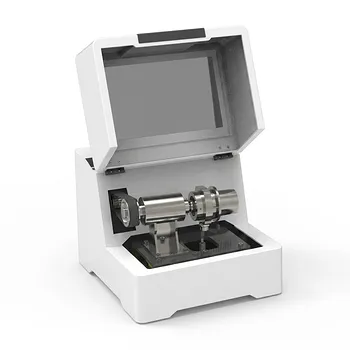
Single Tank High Energy Vibratory Ball Mill for Laboratory Grinding and Mixing
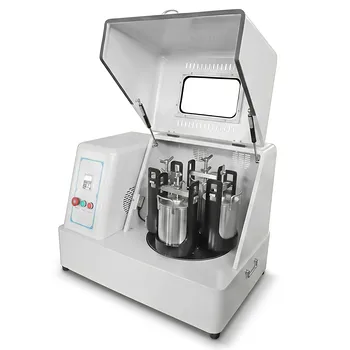
Vertical Square Planetary Ball Mill for Laboratory Sample Preparation and Nanoscale Grinding
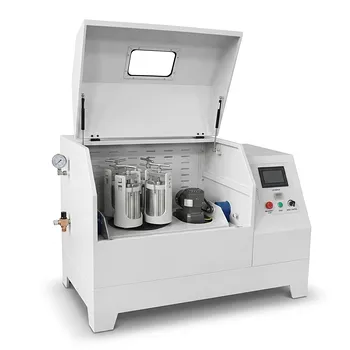
Vertical Production Planetary Ball Mill for High Throughput Powder Processing
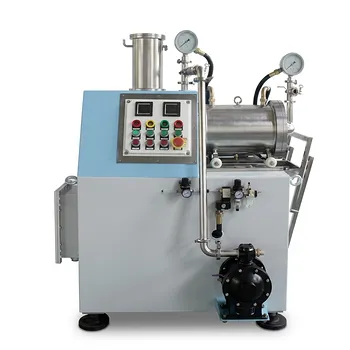
Horizontal Bead Mill for Nanoscale Grinding and Advanced Material Powder Processing
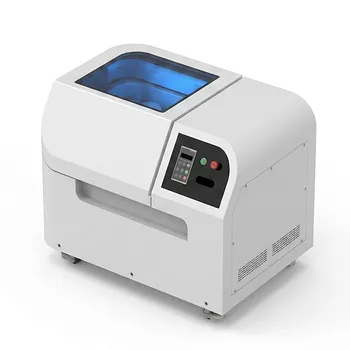
8L Planetary Ball Mill for Laboratory Grinding and Sample Preparation
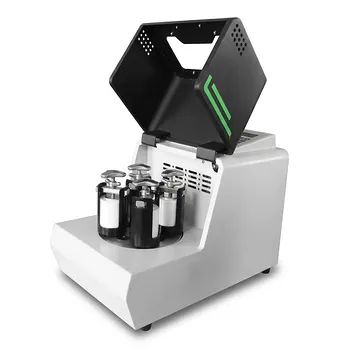
Miniature Planetary Ball Mill with Vacuum Grinding and High Efficiency for Laboratory Sample Preparation
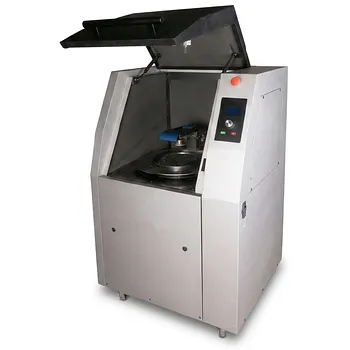
High Speed Vibratory Disc Mill for Spectral Analysis Sample Preparation and Rapid Powder Grinding
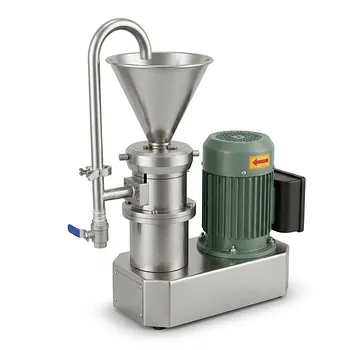
Small Laboratory Colloid Mill for Ultra-Fine Wet Grinding and Emulsification
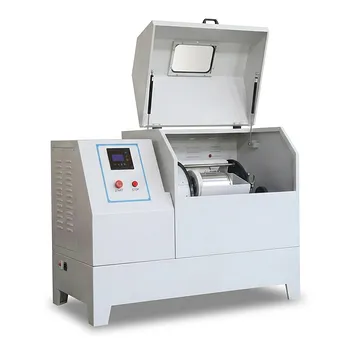
Heavy Duty Horizontal Planetary Ball Mill for Efficient Industrial Grinding and Sample Preparation
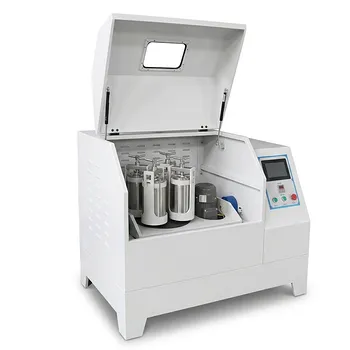
360° Rotating Omnidirectional Laboratory Planetary Ball Mill for Homogeneous Ultra-Fine Grinding and Mixing
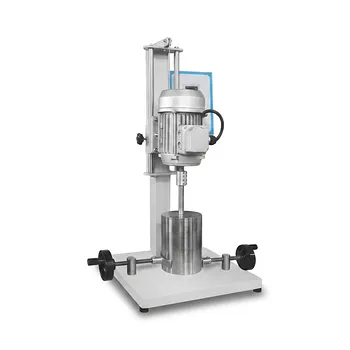
Laboratory Basket Sand Mill for Wet Grinding and Dispersion of Viscous Slurries
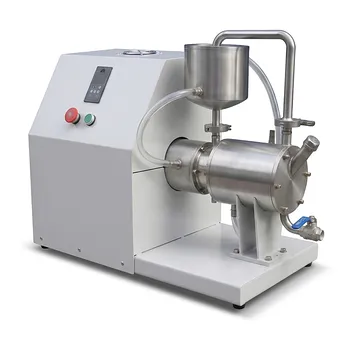
Laboratory Small Horizontal Sand Mill for Nano Materials Wet Grinding
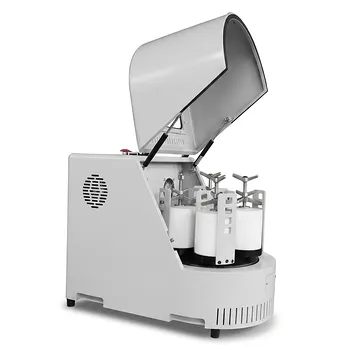
Vertical Semi Circular Planetary Ball Mill for Laboratory Precision Grinding
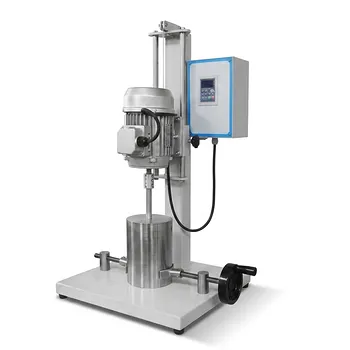
Laboratory Sand Mill Grinding Dispersing Machine for Wet Particle Size Reduction
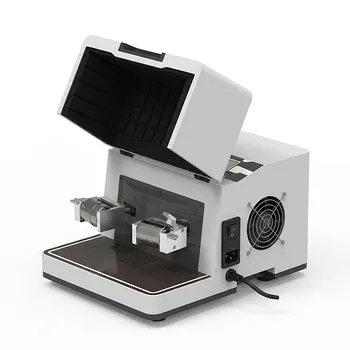
High Energy Hybrid Vibratory Ball Mill for Grinding Mixing and Cell Disruption
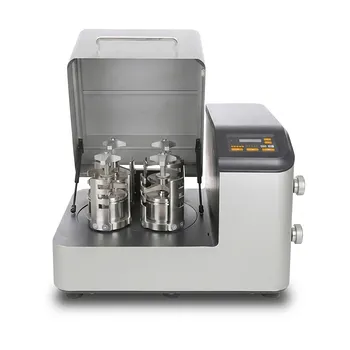
High Energy Planetary Ball Mill for Nano Scale Grinding and Colloidal Mixing in Material Science Research
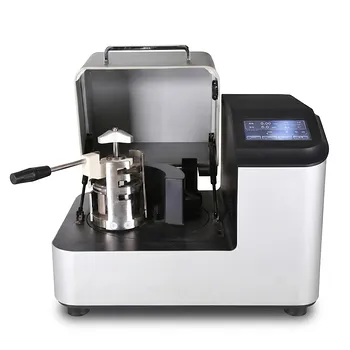
High Energy Laboratory Planetary Ball Mill for Nano Grinding and Material Science Sample Preparation
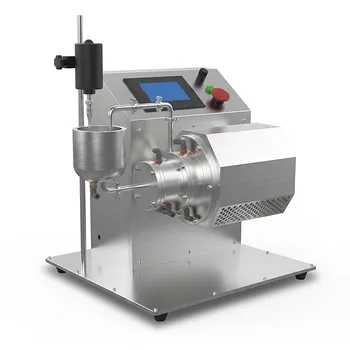
Laboratory Horizontal Pin Nano Sand Mill
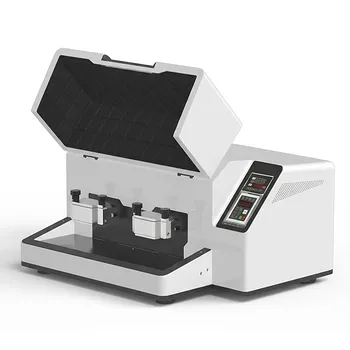
Nanoscale High-Energy Vibratory Ball Mill for Laboratory Sample Preparation, Mechanochemistry, and Mechanical Alloying