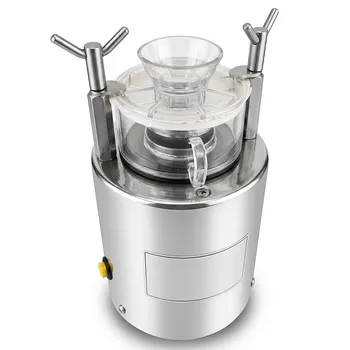
What is the primary role of mechanical micronization equipment? Enhance API Solubility & Bioavailability.
Updated 4 months ago
The primary role of mechanical micronization equipment in pharmaceutical spherical crystallization is to reduce active pharmaceutical ingredient (API) powders to the micrometer scale using high-energy physical impact or shear forces. This process significantly increases the specific surface area of the drug, which is a critical prerequisite for improving solubility and enhancing bioavailability in the final crystalline form.
Mechanical micronization acts as the foundational step in spherical crystallization by engineering the physical dimensions of API particles to maximize surface exposure. This structural transformation ensures that the resulting spherical crystals possess the necessary kinetic properties for effective drug delivery.
The Mechanics of Size Reduction
High-Energy Impact and Shear Forces
Mechanical micronization equipment, such as high-energy grinders, utilizes intense physical forces to break down bulk API solids. These machines employ impact and shear to overcome the lattice energy of the crystals, fracturing them into micrometer-sized particles.
Increasing Specific Surface Area
The most immediate physical outcome of this process is a dramatic increase in specific surface area. By reducing the particle size, a larger portion of the drug's mass is exposed to the surrounding environment, which is the primary driver for improved dissolution rates.
Enhancing Pharmaceutical Efficacy
Improving Solubility and Bioavailability
In the context of spherical crystallization, micronization is essential for drugs with low aqueous solubility. The increased surface area created during the grinding phase allows the API to dissolve more rapidly and completely, directly leading to higher bioavailability in the patient.
Creating a Foundation for Spherical Form
Micronization prepares the raw material for the subsequent steps of spherical agglomeration. By starting with a uniform, fine powder, manufacturers can more easily disperse the API in surfactant solutions, ensuring the final spherical crystals are structurally sound and homogeneous.
Molecular Interaction and Phase Formation
Beyond simple size reduction, high-energy milling can induce physical interactions at the molecular level. This mechanical energy is sometimes used to facilitate the formation of hydrogen bonds or new crystalline phases, which can further stabilize the drug or modify its physicochemical properties.
Understanding the Trade-offs and Pitfalls
Risk of Amorphization
One common pitfall of high-energy micronization is the unintended creation of amorphous regions on the particle surface. Excessive mechanical stress can disrupt the crystalline lattice, leading to stability issues or unpredictable dissolution behavior if not carefully controlled.
Heat Generation and Thermal Degradation
Mechanical grinding generates significant frictional heat, which can be detrimental to thermolabile APIs. If temperatures are not managed through cooling systems, the high-energy impact may cause the drug to degrade or change its polymorphic form prematurely.
Particle Re-aggregation
As particles reach the micrometer level, their high surface energy often causes them to re-aggregate. Without proper stabilization or the immediate move to the next crystallization stage, the benefits of the increased surface area can be lost as particles clump back together.
How to Apply This to Your Project
Making the Right Choice for Your Goal
To achieve the best results in your crystallization process, you must align your micronization strategy with your specific pharmaceutical objectives.
- If your primary focus is maximizing dissolution speed: Prioritize equipment that achieves the smallest possible particle size to maximize specific surface area.
- If your primary focus is maintaining crystal purity: Use lower-energy milling settings or cryogenic cooling to prevent amorphization and thermal degradation of the API.
- If your primary focus is process scalability: Ensure your micronization step produces a consistent particle size distribution to facilitate uniform spherical agglomeration in larger batches.
By mastering the mechanical forces of micronization, you establish the precise physical foundation required to engineer high-performance pharmaceutical spherical crystals.
Summary Table:
| Aspect | Role in Spherical Crystallization | Key Benefit |
|---|---|---|
| Mechanism | High-energy impact and shear forces | Precise size reduction to micrometer scale |
| Physical Change | Massive increase in specific surface area | Faster dissolution and higher bioavailability |
| Structural Prep | Creates fine, uniform API foundation | Facilitates stable spherical agglomeration |
| Process Control | Cooling and energy regulation | Prevents amorphization and thermal degradation |
Ready to Optimize Your Pharmaceutical Particle Engineering?
Achieving the perfect micrometer-scale foundation is critical for high-performance spherical crystals. At [Brand Name], we provide complete laboratory sample preparation solutions for material science, specializing in the precision powder processing and compaction equipment you need to succeed.
Our extensive product line supports every stage of API preparation:
- Precision Micronization: High-energy planetary ball mills, jet mills, rotor mills, and liquid nitrogen cryogenic grinders for thermolabile materials.
- Sizing & Mixing: Vibratory/air-jet sieve shakers and high-efficiency powder or defoaming mixers.
- Advanced Compaction: A full spectrum of hydraulic presses, including Cold/Warm Isostatic Presses (CIP/WIP), XRF pellet presses, and vacuum hot presses.
Whether you are aiming to maximize dissolution speed or ensure crystal purity, our equipment delivers the reliability and precision your research demands.
Contact our technical experts today to find the perfect solution for your lab!
References
- Hema Latha B, P Hyma. SPHERICAL CRYSTALLIZATION: A TOOL TO IMPROVE SOLUBILITY OF DRUGS. DOI: 10.55218/jasr.2022131105
Mentioned Products
- High Energy Laboratory Planetary Ball Mill for Nano Grinding and Material Science Sample Preparation
- High Efficiency High Speed Grinder Laboratory Mill 1300W 25000rpm
- High Efficiency High Speed Grinder 2200W 25000 RPM Laboratory Sample Preparation
- Multifunctional High Efficiency High Speed Laboratory Grinder
- Vertical Square Planetary Ball Mill for Laboratory Sample Preparation and Nanoscale Grinding
People Also Ask
- How does the size distribution of steel ball grinding media affect ore grindability? Optimize Energy & Lab Accuracy
- What role does a laboratory ball mill play in the study of chalcopyrite mineral liberation? Key for Recovery Success
- What are the primary functions of a laboratory ball mill or powder mixer when synthesizing multi-component standard reference materials?
- What core function does a laboratory ball mill perform during phosphate ore grinding? Achieve Monomer Dissociation
- What role does a laboratory ball mill serve in the Berry and Bruce modified Bond method? Standardizing Ore Analysis

Tech Team · PowderPreparation
Last updated on Jun 03, 2026
Related Products
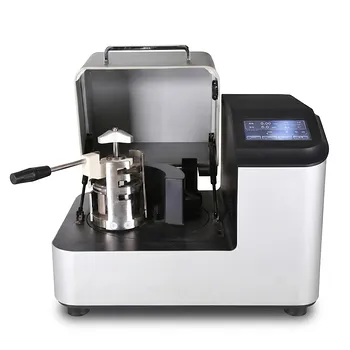
High Energy Laboratory Planetary Ball Mill for Nano Grinding and Material Science Sample Preparation
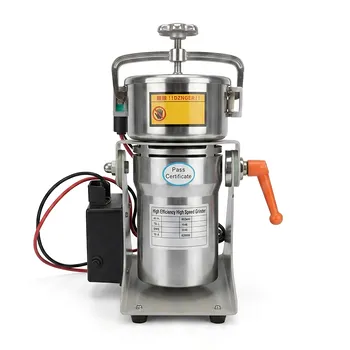
High Efficiency High Speed Grinder Laboratory Mill 1300W 25000rpm

High Efficiency High Speed Grinder 2200W 25000 RPM Laboratory Sample Preparation
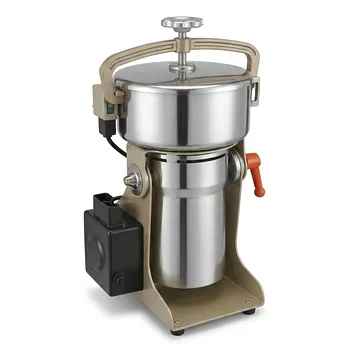
Multifunctional High Efficiency High Speed Laboratory Grinder

Vertical Square Planetary Ball Mill for Laboratory Sample Preparation and Nanoscale Grinding
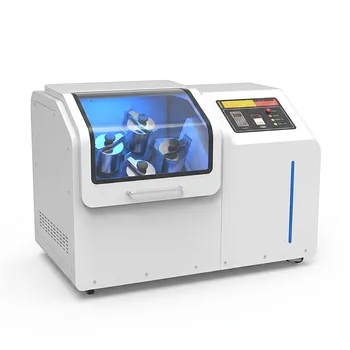
High Energy Omnidirectional Planetary Ball Mill 16L
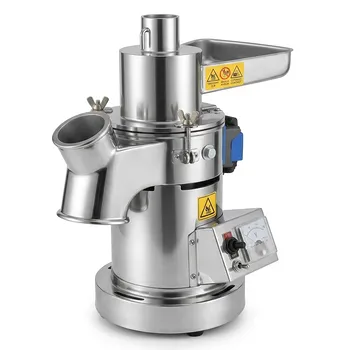
Continuous Feeding Grinder High Efficiency Pulverizer for Lab Sample Preparation
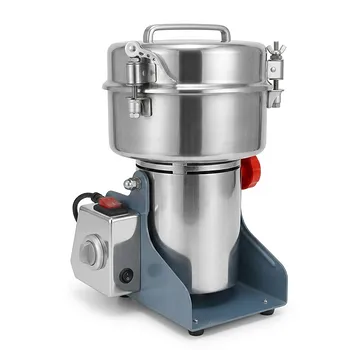
Small High-Speed Grinder for Efficient Laboratory Sample Preparation
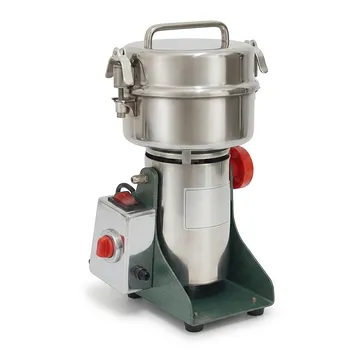
Small High Speed Grinder for Laboratory Sample Preparation
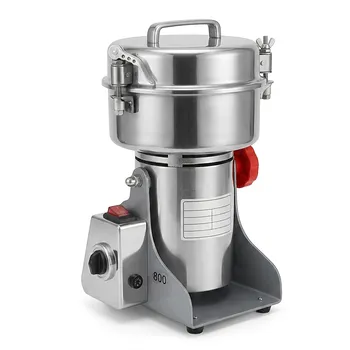
Small High-Speed Laboratory Grinder for Rapid Sample Preparation
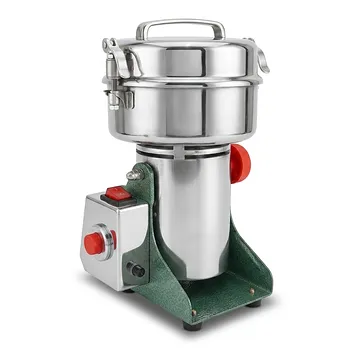
Small High-Speed Laboratory Grinder for Powder Processing
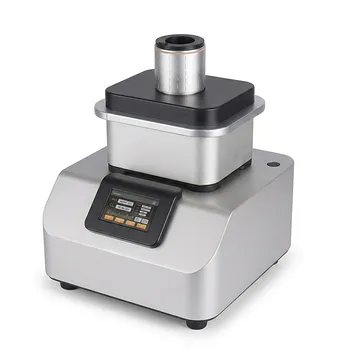
Ultra Centrifugal Mill High Speed Laboratory Grinder for Fibrous and Brittle Sample Preparation
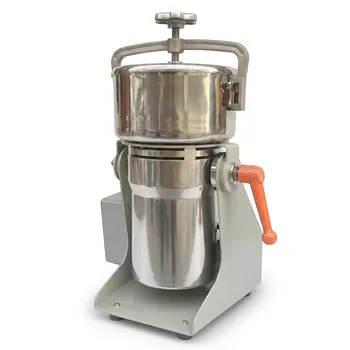
High Speed Laboratory Grinder Efficient Stainless Steel Powder Pulverizer Universal Material Science Mill for Sample Preparation
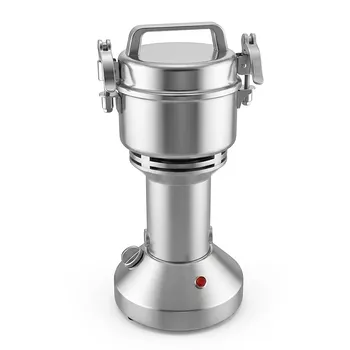
Small High Speed Upright Grinder for Laboratory Sample Preparation
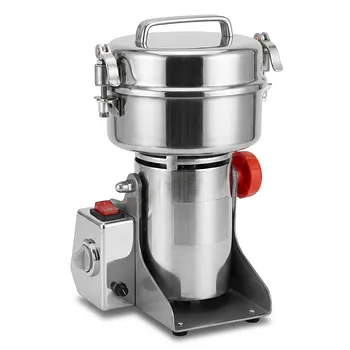
High Speed Laboratory Powder Grinder Small Batch Sample Preparation Mill
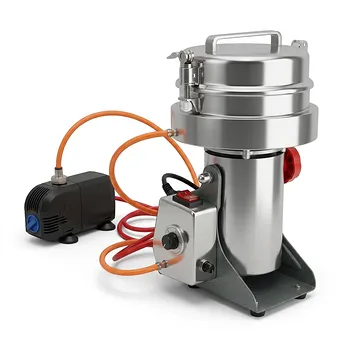
Water Cooled High Speed Grinder with Cryogenic Option for Laboratory Sample Preparation
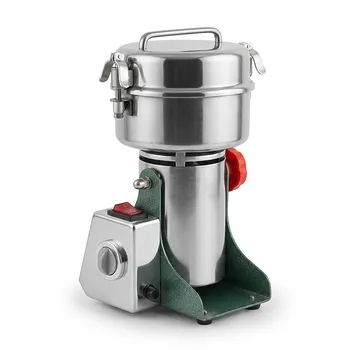
Small High-Speed Swing Grinder for Laboratory Sample Preparation

Industrial Knife Mill for Food and Biological Sample Preparation High Speed Laboratory Homogenizer
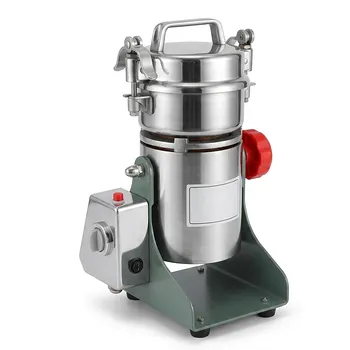
High Speed Swing Type Laboratory Pulverizer for Fine Powder Grinding and Sample Preparation