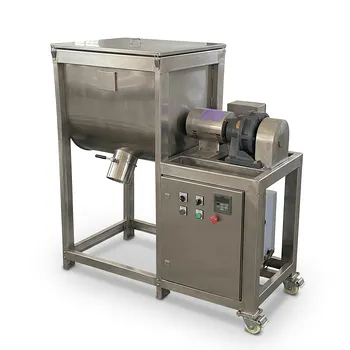
What is the primary role of a high-speed powder mixer in the raw material preparation of HEAs? Ensure Atomic Uniformity
Updated 3 months ago
The primary role of a high-speed powder mixer in Ni-Co-Fe-Cr-Al-Ti HEA preparation is to achieve atomic-level uniform distribution of elemental powders. Through mechanical rotation, the mixer blends disparate elements (Ni, Co, Fe, Cr, Al, Ti) to ensure compositional consistency. This stage is critical for preventing macro-segregation during additive manufacturing and facilitating the formation of a high-configuration entropy single-phase solid solution.
Core Takeaway: Physical homogenization via high-speed mixing is the mandatory prerequisite for entropy stabilization. By ensuring a uniform spatial distribution of elements with varying densities, the mixer prevents chemical segregation and enables the alloy to reach its intended high-strength and thermally stable properties.
Overcoming Physical Disparities in Elemental Powders
Managing Density and Particle Size Variance
The powders used in Ni-Co-Fe-Cr-Al-Ti alloys often possess significantly different densities and particle sizes, which naturally resist uniform blending. High-speed mixers utilize intense mechanical rotation and multi-dimensional motion tracks to force these diverse particles into a homogeneous state. This prevents heavier elements from settling or lighter elements from floating, which would otherwise ruin the alloy's chemical balance.
Mechanically Driven Atomic Homogenization
While the mixing is a physical process, its goal is to reach micro-level uniform distribution across the entire powder batch. This ensures that every localized "pixel" of powder contains the correct stoichiometric ratio of the six constituent elements. This precision is fundamental for achieving in-situ alloying during subsequent thermal processing.
Atmosphere and Duration Controls
To maintain the purity of active components like aluminum and titanium, industrial mixers often operate under an argon protective atmosphere. Long-duration cycles, sometimes lasting up to 24 hours, are employed to ensure that even trace elements are perfectly dispersed. This rigorous approach prevents oxidation and provides a high-quality feedstock for laser-based manufacturing.
The Link Between Mixing and Structural Integrity
Preventing Macro-Segregation in DED
In processes like Directed Energy Deposition (DED), the powder is melted rapidly by a high-energy source. If the raw powder is not perfectly mixed, the resulting melt pool will suffer from macro-segregation, leading to localized weak spots. Uniform mixing ensures the chemical composition remains stable throughout the entire build volume.
Facilitating High-Configuration Entropy
The defining characteristic of HEAs is their high-configuration entropy, which stabilizes the single-phase solid solution structure. This stabilization effect can only occur if the elements are distributed uniformly at the start of the melting process. Proper mixing allows the atoms to arrange themselves efficiently, granting the final part superior corrosion resistance and thermal stability.
Impact on Subsequent Sintering and Reactions
In cases where powders are used for sintering or solid-state reactions, a thorough mixture is required to facilitate complete reactions. Uniform spatial distribution prevents localized compositional deviations, ensuring that no unwanted secondary phases form during heating. This consistency is what allows the alloy to achieve its theoretical mechanical properties.
Understanding the Trade-offs
Physical Mixing vs. Mechanical Alloying
A high-speed powder mixer primarily performs physical blending, which does not change the internal structure of the powder particles. This is distinct from high-energy ball milling, which uses impact forces to induce mechanical alloying and grain refinement. While mixers are faster and gentler, they do not increase the reactive activity of the powder as effectively as ball milling.
Limitations in Grain Refinement
Standard high-speed mixing cannot reduce the grain size of the elemental powders. If the application requires ultra-fine or nanocrystalline structures, mixing alone may be insufficient. In such cases, the process must be supplemented by high-energy milling to achieve the desired refinement and solid-state reaction potential.
Making the Right Choice for Your Project
High-speed mixing is a foundational step, but the specific requirements of your manufacturing process will dictate your mixing parameters.
- If your primary focus is Directed Energy Deposition (DED): Prioritize high-speed mechanical rotation to ensure macroscopic consistency and prevent segregation in the melt pool.
- If your primary focus is preventing oxidation of active elements: Ensure the mixer is equipped with an inert gas (Argon) environment and vacuum-tight seals.
- If your primary focus is achieving solid-state reactions at room temperature: Consider moving beyond a standard mixer to a high-energy planetary ball mill to facilitate mechanical alloying.
The success of a high-entropy alloy depends entirely on the precision of its initial chemical homogenization.
Summary Table:
| Key Function | Role in HEA Preparation | Impact on Material Quality |
|---|---|---|
| Homogenization | Atomic-level distribution of elements | Prevents macro-segregation in DED |
| Density Balancing | Forces diverse particles into a stable state | Ensures consistent stoichiometric ratios |
| Atmosphere Control | Argon/Inert gas protection | Prevents oxidation of Al and Ti |
| Entropy Support | Facilitates single-phase solid solutions | Enhances thermal and structural stability |
Master Your HEA Preparation with Precision Powder Solutions
Achieving the high-configuration entropy required for Ni-Co-Fe-Cr-Al-Ti alloys starts with flawless homogenization. At [Brand Name], we provide complete laboratory sample preparation solutions specifically designed for material science and advanced powder metallurgy.
Our extensive product line supports every stage of your workflow:
- Advanced Mixing: High-speed powder mixers, defoaming mixers, and high-energy planetary ball mills for mechanical alloying.
- Size Reduction: Jaw/roll crushers, liquid nitrogen cryogenic grinders, and jet/rotor mills.
- Sieving & Analysis: Vibratory and air-jet sieve shakers with precision test sieves.
- Compaction & Sintering: Cold/Warm Isostatic Presses (CIP/WIP), standard lab presses, and vacuum hot presses for high-density pelletizing.
Whether you are preventing macro-segregation in additive manufacturing or seeking grain refinement, our equipment delivers the reliability and purity your research demands.
Contact our material science experts today to optimize your alloy preparation process!
References
- Ho-In Jeong, Choon-Man Lee. Manufacturing of Ni-Co-Fe-Cr-Al-Ti High-Entropy Alloy Using Directed Energy Deposition and Evaluation of Its Microstructure, Tensile Strength, and Microhardness. DOI: 10.3390/ma17174297
Mentioned Products
- Air Guided Ultrafine Pulverizer High Speed Laboratory Powder Grinder for Chemical and Material Processing
- High Speed Laboratory Powder Grinder Small Batch Sample Preparation Mill
- Small High-Speed Laboratory Grinder for Powder Processing
- High Speed Laboratory Grinder Efficient Stainless Steel Powder Pulverizer Universal Material Science Mill for Sample Preparation
- Industrial High Speed Small Sample Pulverizer Swing Type Laboratory Grinder for Powder Processing
People Also Ask
- What is the function of a laboratory high-speed pulverizer in the preparation of eggshell powder? Essential Pretreatment
- What are the technical advantages of using a high-speed laboratory pulverizer for grinding tablets into powders? 20K RPM
- Why is high-efficiency ultra-fine grinding required for Portland cement before XRD? Get Accurate Rietveld Results
- What is the function of a laboratory pulverizer in Boerhavia diffusa-based adsorbent prep? Maximize Surface Area
- Why use laboratory pulverizers for blood clam shell concrete additives? Maximize Reactivity and Surface Area

Tech Team · PowderPreparation
Last updated on Jun 03, 2026
Related Products
Air Guided Ultrafine Pulverizer High Speed Laboratory Powder Grinder for Chemical and Material Processing
High Speed Laboratory Powder Grinder Small Batch Sample Preparation Mill
Small High-Speed Laboratory Grinder for Powder Processing
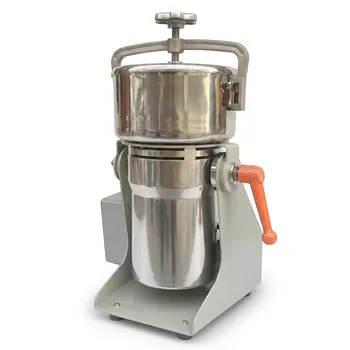
High Speed Laboratory Grinder Efficient Stainless Steel Powder Pulverizer Universal Material Science Mill for Sample Preparation
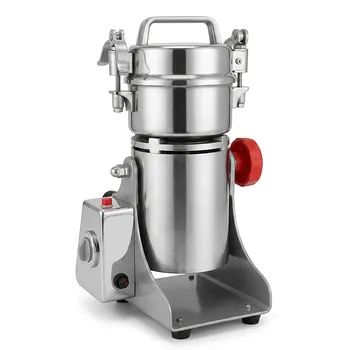
Industrial High Speed Small Sample Pulverizer Swing Type Laboratory Grinder for Powder Processing
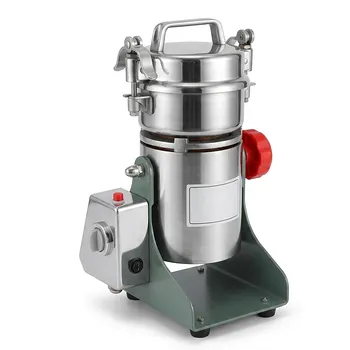
High Speed Swing Type Laboratory Pulverizer for Fine Powder Grinding and Sample Preparation
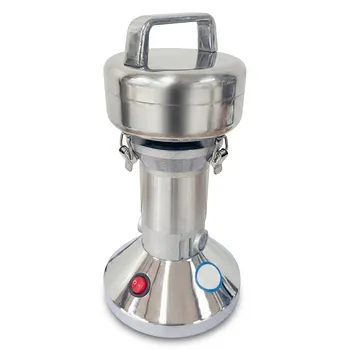
Small Trace Sample High Speed Pulverizer Grinder Laboratory Powder Mill
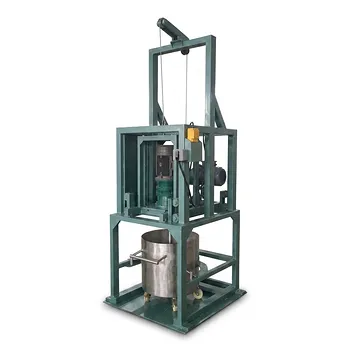
High-Speed Simple Disperser for Efficient Mixing, Dispersion, and Emulsification
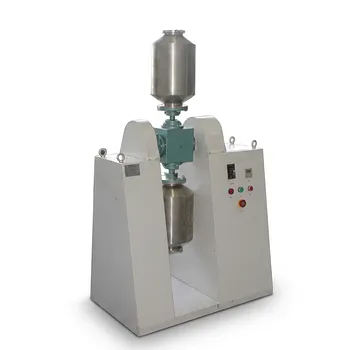
Multi Dimensional Universal Mixer for High Uniformity Powder Blending
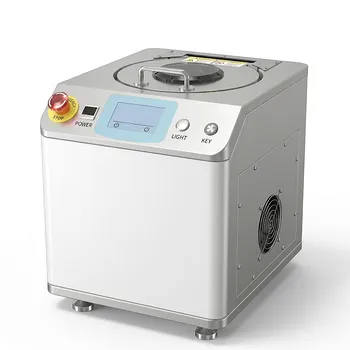
High Efficiency Vacuum Planetary Centrifugal Mixer and Defoaming Machine for Industrial Material Research and Precise Laboratory Powder Dispersion
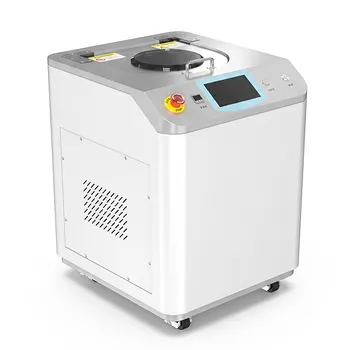
High Speed Vacuum Planetary Centrifugal Mixer and Defoamer for Industrial Paste Processing
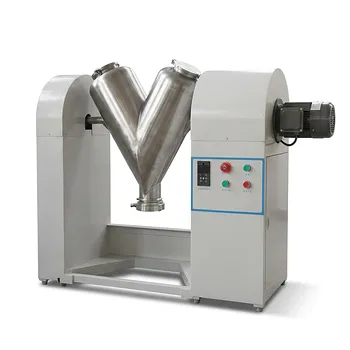
V-Type Powder Mixer for Uniform Blending of Dry Powders and Granules
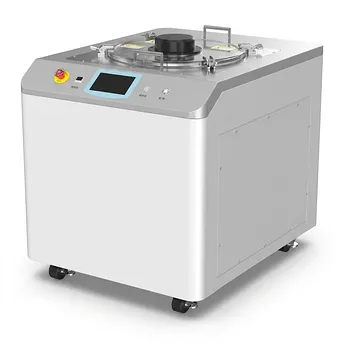
Industrial Planetary Centrifugal Vacuum Defoaming Mixer for High Viscosity Paste and Powder Homogenization
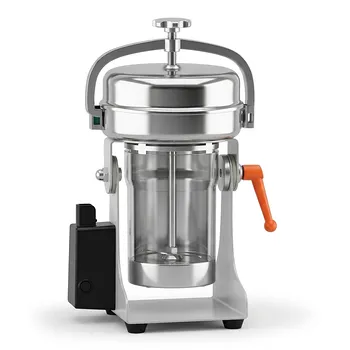
High Efficiency High Speed Grinder 2200W 25000 RPM Laboratory Sample Preparation
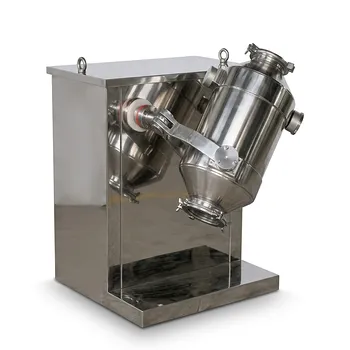
Three-Dimensional Motion Mixer for Laboratory Powder and Granule Blending
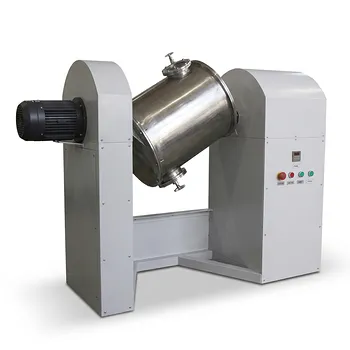
Inclined Mixer for Homogeneous Powder Blending and Grinding
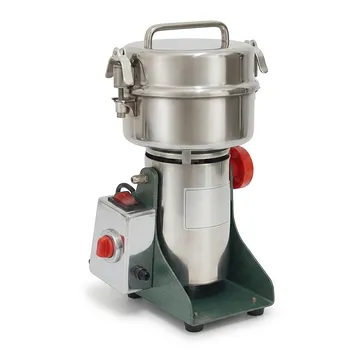
Small High Speed Grinder for Laboratory Sample Preparation
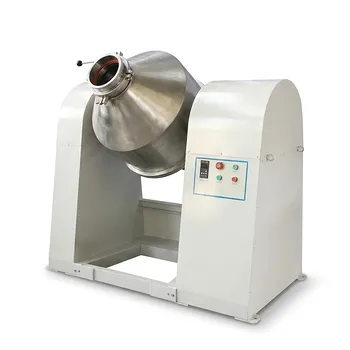
Industrial Double Cone Mixer for Powder Blending and Homogeneous Mixing

Vertical Production Planetary Ball Mill for High Throughput Powder Processing