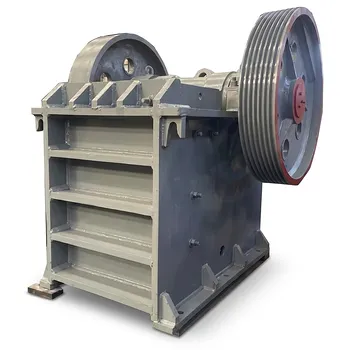
What is the purpose of a three-stage crushing process? Ensure precise feed for Bond Work Index testing.
Updated 4 months ago
The primary purpose of the three-stage crushing process is to achieve a standardized, precise feed for Bond Work Index testing. By utilizing a sequence of jaw, roll, and cone crushers, the quartz-marble mixture is reduced to a particle size that passes 100% through a #6 Tyler standard sieve (3.327 mm). This gradual reduction ensures that the sample is prepared efficiently while maintaining the specific size distribution required for accurate metallurgical analysis.
The combination of jaw, roll, and cone crushers creates a controlled reduction ratio that transforms raw quartz-marble ore into a uniform laboratory feed. This multi-stage approach is essential for achieving the exact particle size benchmarks necessary to calculate mineral grindability and energy requirements.
The Mechanics of Multi-Stage Size Reduction
Initial Fragmentation with the Jaw Crusher
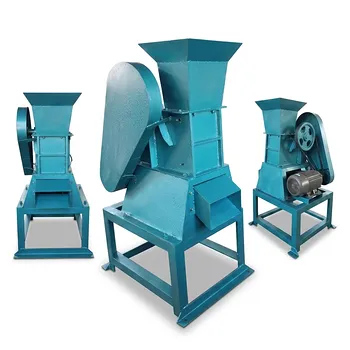
The process begins with the jaw crusher, which handles the primary coarse crushing stage. It utilizes powerful compressive stress to reduce large, hard ore blocks into a more manageable material, typically under 10 mm.
This stage is critical for protecting downstream equipment from oversized feed. It ensures the quartz-marble mixture is reduced to a size that can be effectively processed by secondary machines.
Intermediate Sizing via the Roll Crusher
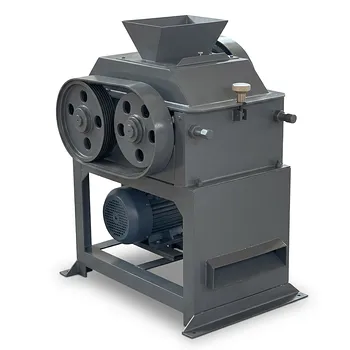
The roll crusher performs the secondary medium and fine crushing of the material. It employs a combination of extrusion and shearing forces between two rotating rollers to further break down the ore fragments.
By focusing on these mechanical forces, the roll crusher helps control the particle size distribution. This prevents the excessive creation of "fines" (ultra-fine dust) while preparing the material for the final precision stage.
Final Precision Refinement with the Cone Crusher
The cone crusher completes the sequence by performing the final fine crushing. Its role is to ensure the output particles have a uniform shape and size, which is vital for standardized testing.
This final stage brings the quartz-marble mixture to its terminal size requirement. The cone crusher’s efficiency allows the material to reach the precise dimensions needed to pass through the #6 Tyler sieve.
Achieving Precision for Bond Work Index Testing
The Significance of the #6 Tyler Sieve Standard
The goal of this specific 3-stage circuit is to ensure 100% of the sample passes a 3.327 mm aperture. This is a non-negotiable requirement for the Bond Work Index, which measures the energy required to grind ore.
If the feed is not sized correctly, the resulting energy calculations will be flawed. This would lead to incorrect sizing of industrial-scale grinding mills in later stages of mine development.
Ensuring Sample Homogeneity
Multi-stage crushing facilitates the liberation of mineral monomers within the quartz-marble mixture. By reducing the size gradually, the process ensures the sample remains representative of the original ore body.
A standardized feed ensures that the results of the laboratory tests can be reliably scaled up. This reliability is the foundation for designing efficient mineral processing plants.
Understanding the Trade-offs
Operational Complexity vs. Precision
Utilizing three distinct machines increases the complexity of the laboratory setup and requires more floor space. However, attempting to reach the #6 sieve size in a single stage would lead to equipment overstrain and poor size distribution.
The primary trade-off is the time required for cleaning and maintenance between stages. Each machine must be thoroughly cleared to prevent cross-contamination between different ore samples.
Maintenance and Wear in Multi-Stage Systems
While multi-stage crushing is efficient, it introduces more wear parts that require monitoring. Jaw plates, rollers, and cone liners all degrade at different rates depending on the abrasiveness of the quartz.
Failing to maintain these components can lead to "oversize" material leaking through the circuit. This forces the operator to re-crush material, which wastes time and can alter the physical properties of the sample.
How to Apply This to Your Project
Making the Right Choice for Your Goal
- If your primary focus is Laboratory Testing Accuracy: Follow the three-stage process strictly to ensure the feed meets the exact #6 Tyler sieve requirements for the Bond Work Index.
- If your primary focus is Material Homogeneity: Prioritize the roll crusher stage to utilize shearing forces, which often produce a more uniform particle distribution than compression alone.
- If your primary focus is Processing High-Hardness Ore: Ensure the jaw crusher is set to a conservative reduction ratio to prevent premature wear before the material reaches the cone crusher.
By mastering this three-stage reduction sequence, you ensure that your metallurgical data is built on a foundation of precision and repeatability.
Summary Table:
| Crushing Stage | Equipment Used | Force Mechanism | Primary Goal |
|---|---|---|---|
| Primary | Jaw Crusher | Compressive Stress | Break large ore blocks to < 10 mm |
| Secondary | Roll Crusher | Extrusion & Shearing | Controlled reduction; prevent excess fines |
| Final | Cone Crusher | Fine Refinement | 100% passing #6 Tyler Sieve (3.327 mm) |
Achieve Unmatched Precision in Your Material Preparation
Reliable metallurgical data starts with perfect sample sizing. At [Brand Name], we provide complete laboratory sample preparation solutions designed for the rigorous demands of material science. Whether you are calculating the Bond Work Index or exploring mineral liberation, our equipment ensures the repeatable accuracy your research requires.
Our specialized equipment line includes:
- Crushing & Sizing: High-durability jaw/roll crushers and precision vibratory/air-jet sieve shakers.
- Advanced Milling: Planetary ball mills, jet mills, and liquid nitrogen cryogenic grinders for fine powder processing.
- Compaction Solutions: A full spectrum of hydraulic presses, including Cold/Warm Isostatic Presses (CIP/WIP), XRF pellet presses, and vacuum hot presses.
- Mixing: Specialized powder and defoaming mixers for uniform material blending.
Don't let inconsistent feed size compromise your energy calculations. Contact our technical experts today to find the ideal crushing and grinding configuration for your project!
References
- Sebastián Pérez, Pamela Jara. Comparison of Statistical versus Stochastic Models for Work Index Determination in Quartz-Marble Mixtures. DOI: 10.37190/msc212810
Mentioned Products
- Heightened Customized Laboratory Double Roll Crusher for Coal Ore Rock Crushing
- Stainless Steel Coarse Crusher for Pharmaceutical Food and Plastic Material Processing
- Heavy Duty Industrial Jaw Crusher for Primary Ore Crushing and High Capacity Mineral Material Size Reduction
- High Speed Small Laboratory Crusher for Dry Material Sample Preparation
- Versatile Industrial Crusher for Laboratory Crushing and Material Processing
People Also Ask
- Why is a double roll crusher used for tin & tantalum? Prevent over-crushing & optimize gravity separation recovery.
- Why use a lab roll crusher after jaw crushing for magnetite? Optimize kinetics and preserve material integrity.
- Why is material selection for crusher rollers critical for abrasive materials? Balance Purity and Tool Longevity
- What is the primary function of laboratory crushing equipment during the clay pretreatment stage? Improve Sample Accuracy
- Why Pre-Crush Bulk ZnFeS Before Ball Milling? Essential Steps for Efficiency and High-Purity Micron Refinement

Tech Team · PowderPreparation
Last updated on May 14, 2026
Related Products
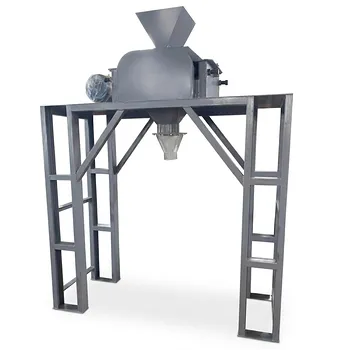
Heightened Customized Laboratory Double Roll Crusher for Coal Ore Rock Crushing
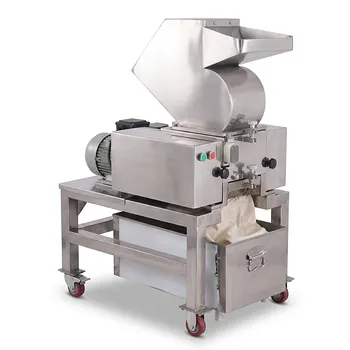
Stainless Steel Coarse Crusher for Pharmaceutical Food and Plastic Material Processing
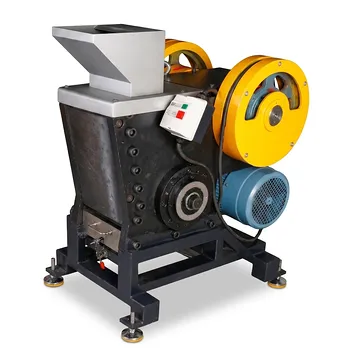
Heavy Duty Industrial Jaw Crusher for Primary Ore Crushing and High Capacity Mineral Material Size Reduction
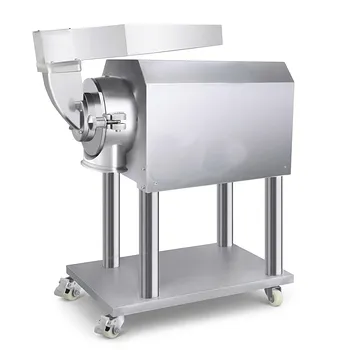
High Speed Small Laboratory Crusher for Dry Material Sample Preparation
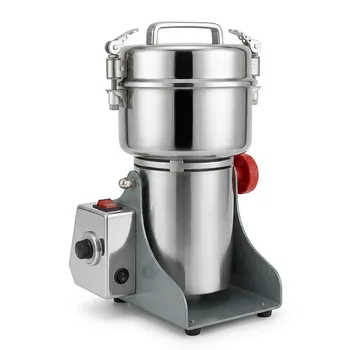
Versatile Industrial Crusher for Laboratory Crushing and Material Processing
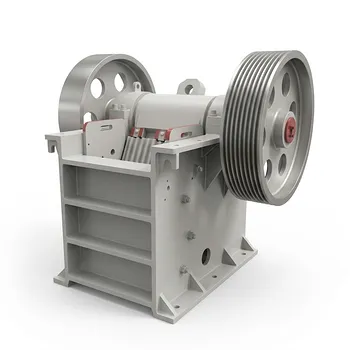
Jaw Crusher with 400x600mm Feed Opening for Primary Rock Crushing in Mining and Construction
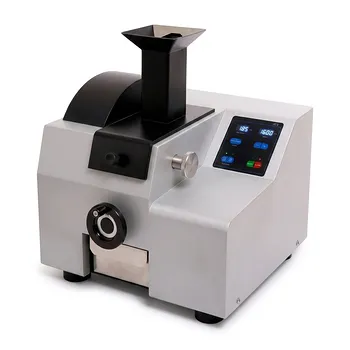
Laboratory Benchtop Jaw Crusher for Hard Brittle Materials Primary Size Reduction and Sample Preparation
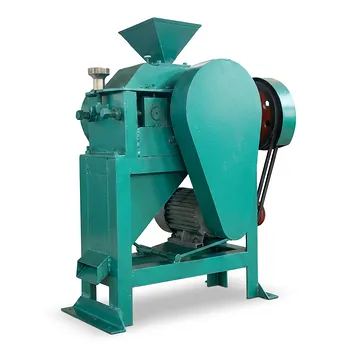
Laboratory Sealed Double Roll Crusher for Coal Ore Rock and Medium Hardness Materials Sample Preparation
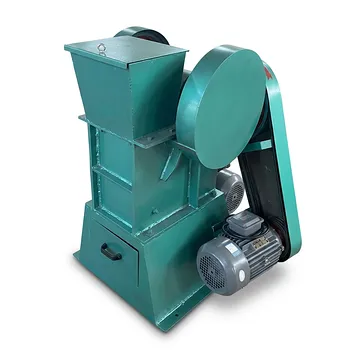
Small Laboratory Jaw Crusher 150x200mm Feed Opening for Sample Preparation and Medium Fine Crushing
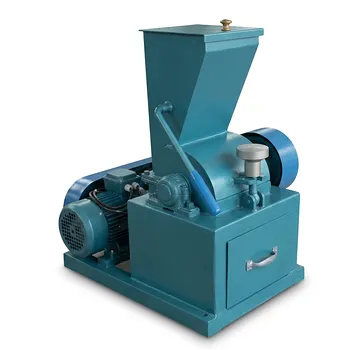
Small Hammer Crusher for Brittle Material Crushing in Mining Metallurgy and Lab Sample Preparation
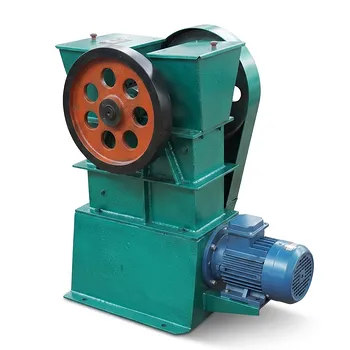
150×125mm Laboratory Jaw Crusher for Medium and Fine Crushing of Brittle Materials
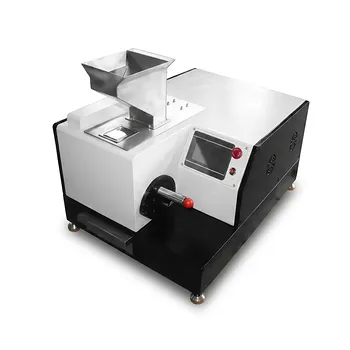
Experimental Jaw Crusher for Laboratory Ore Crushing and Sample Preparation
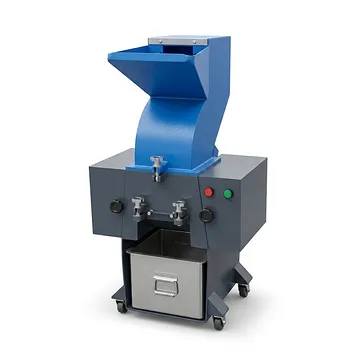
Heavy-Duty Crusher for Laboratory and Industrial Material Size Reduction
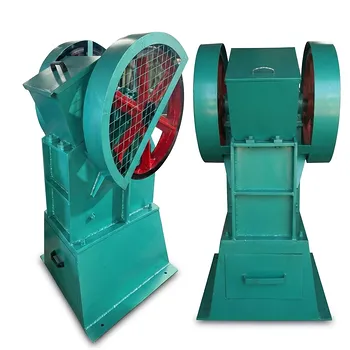
Sealed Jaw Crusher for Laboratory Material Crushing and Sample Preparation
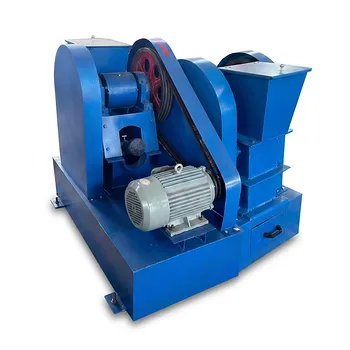
Horizontal Jaw Crusher Medium Hard Material Crushing Laboratory Sample Preparation Equipment
Sealed Laboratory Double Roll Crusher for Coal, Mineral, Ore Sample Preparation
Sealed Double Roll Crusher for Laboratory Sample Preparation of Medium Hardness Materials
Low Temperature Water Cooled Continuous Feed Grinder Two Stage Coarse and Fine Grinding System
Custom Raised Height Laboratory Jaw Crusher for Precision Sample Preparation in Material Science