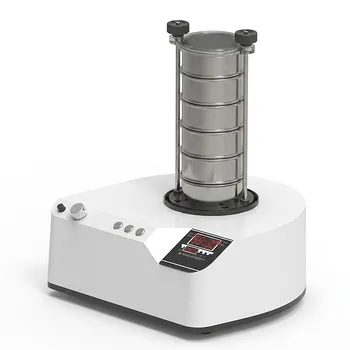
What is the primary purpose of using standard industrial test sieves when grading concrete aggregates? Ensure Mix Quality
Updated 5 months ago
The primary purpose of using standard industrial test sieves is the precise classification and separation of aggregates into specific size fractions. By utilizing standardized mesh apertures, engineers can accurately define the boundary between coarse and fine aggregates, typically at the 4.75mm threshold. This physical separation is the fundamental step required to ensure that the aggregate particle size distribution complies with rigorous engineering standards, such as IS 383, which directly impacts the structural integrity of the final concrete.
Standard test sieves serve as the primary mechanical tool for decomposing complex aggregate samples into discrete, measurable components. This process allows for the scientific grading of materials, which is essential for minimizing void ratios, optimizing cement consumption, and ensuring the predictable compressive strength of the concrete mix.
Achieving Precise Particle Classification
The 4.75mm Separation Benchmark
The most critical function of the test sieve in concrete production is the binary classification of material. Material retained on a 4.75mm sieve is classified as coarse aggregate, while material that passes through is defined as fine aggregate.
Quantitative Grading Analysis
Standard sieves allow laboratory technicians to perform a quantitative weight analysis of each size group. By measuring the weight percentage of particles in various size ranges, professionals can assess the coarseness and continuity of the aggregate grading curve.
Maintaining Material Uniformity
For specialized applications like pervious concrete, sieves ensure that crushed materials, such as coal gangue, meet exact specifications. Precise control over particles (e.g., ensuring powders are under 0.15mm) is a prerequisite for maintaining uniform pore structures and stable mechanical strength.
Engineering Standards and Quality Control
Compliance with Engineering Specifications
The use of standard industrial sieves ensures that raw materials meet international and local design specifications, such as IS 383. This compliance is not merely a formality but a technical guarantee that the particle size distribution will support the intended load-bearing requirements.
Optimization of the Concrete Matrix
Properly graded aggregates, verified through sieving, fill the internal voids within a concrete mix. When these voids are minimized, the volume of cement paste required to bind the particles is optimized, leading to more cost-effective and durable formulations.
Enhancing Density and Strength
Sieve analysis is the foundation for achieving maximum packing density. A well-graded aggregate mix increases the final compressive strength and improves the flowability of the concrete during the pouring process.
Understanding the Trade-offs and Pitfalls
Sieve Wear and Accuracy
Standard sieves are high-precision instruments that degrade over time with heavy industrial use. Mesh deformation or wear can lead to inaccurate grading, which may compromise the density and safety of the concrete structure.
The Risk of Sample Overloading
A common error in sieve analysis is overloading the mesh with too much material at once. This prevents particles from making contact with the apertures, leading to "near-size" particles being incorrectly retained and skewing the grading data.
Manual vs. Mechanical Agitation
While manual shaking is possible, it often lacks the consistency required for high-stakes engineering. Mechanical sieve shakers are preferred to ensure uniform agitation, though they require regular calibration to maintain their accuracy relative to standard reference materials.
How to Apply Grading Data to Your Project
Once the sieve analysis is complete, the resulting data should be used to refine the mix design based on the specific requirements of your construction project.
- If your primary focus is Maximum Compressive Strength: Use the sieve data to create a "continuous grading" profile that minimizes voids and maximizes the contact area between aggregates.
- If your primary focus is Cost Optimization: Analyze the sieve fractions to determine the minimum amount of cement paste needed to coat the aggregate surface area effectively.
- If your primary focus is Pervious or Porous Structures: Use precise sieve classification to ensure the exclusion of fine particles that would otherwise clog the intended pore network.
By mastering the use of standard industrial test sieves, you ensure that your concrete is not just a mixture of stone and paste, but a scientifically engineered material built for performance.
Summary Table:
| Key Purpose | Functional Benefit |
|---|---|
| Classification | Precisely separates coarse (>4.75mm) from fine aggregates. |
| Standard Compliance | Ensures raw materials meet engineering specs like IS 383. |
| Void Optimization | Minimizes internal gaps to reduce required cement paste. |
| Matrix Density | Maximizes packing density for superior compressive strength. |
| Quality Assurance | Identifies sieve wear or overloading to maintain data accuracy. |
Optimize Your Material Analysis with Precision Equipment
Precision in particle sizing is the foundation of high-performance material engineering. At [Brand Name], we provide complete laboratory sample preparation solutions specifically designed for material science and industrial quality control.
Our extensive product range supports your entire workflow:
- Grading & Sizing: High-precision vibratory and air-jet sieve shakers equipped with a full spectrum of test sieves and meshes.
- Sample Reduction: Advanced crushers (jaw/roll), liquid nitrogen cryogenic grinders, and diverse mills (planetary ball, jet, rotor).
- Mixing & Preparation: Specialized powder mixers and defoaming mixers for uniform formulations.
- Compaction & Forming: A full line of hydraulic presses, including Cold/Warm Isostatic Presses (CIP/WIP), vacuum hot presses, and XRF pellet presses.
Whether you are grading aggregates for construction or processing advanced powders, our equipment ensures accuracy, reliability, and compliance with international standards. Contact us today to enhance your laboratory efficiency and let our experts help you find the perfect solution for your testing needs.
References
- S. Arivalagan, R. Sudhakar. Feasible and Experimental Study on Partial Replacement ofFine Aggregate using Construction Debris. DOI: 10.20902/ijctr.2019.130206
Mentioned Products
- Laboratory Vibratory Test Sieve Shaker for Precision Particle Size Analysis and Powder Grading
- Stainless Steel Rotary Vibrating Sieve High Precision Circular Vibratory Separator Industrial Powder Grading Machine Multi Layer Sifting Equipment
- Small Laboratory Vibratory Sieve Shaker for Powder Gradation and Particle Size Analysis
- Three Dimensional Rotary Vibrating Sieve
- Stainless Steel Laboratory Vibratory Test Sieve Shaker
People Also Ask
- What role does a laboratory sieve shaker play in determining PDI? Achieve Precision in Biomass Quality Testing
- What are the functions of sieve shakers for coconut shell powder? Achieve Precise Particle Size & Quality Control.
- What function does a laboratory sieve shaker perform in the PSD analysis of residual soil? Ensure Precise Grading
- What is the role of a laboratory sieve shaker in the preparation of plantain peel adsorbents? Standardize Particle Size
- What is the function of a laboratory vibratory sieve shaker? Enhance Coal Particle Size Distribution (PSD) Analysis

Tech Team · PowderPreparation
Last updated on May 14, 2026
Related Products
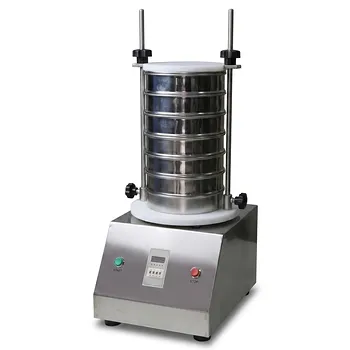
Laboratory Vibratory Test Sieve Shaker for Precision Particle Size Analysis and Powder Grading
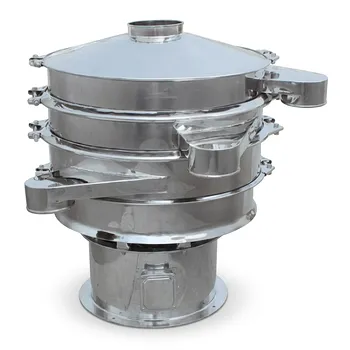
Stainless Steel Rotary Vibrating Sieve High Precision Circular Vibratory Separator Industrial Powder Grading Machine Multi Layer Sifting Equipment
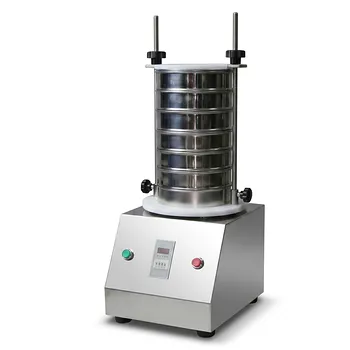
Small Laboratory Vibratory Sieve Shaker for Powder Gradation and Particle Size Analysis
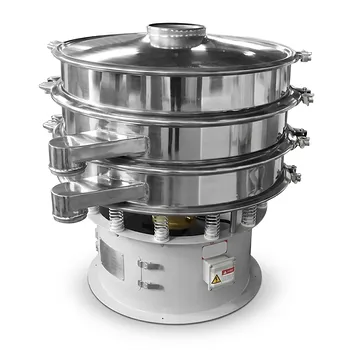
Three Dimensional Rotary Vibrating Sieve
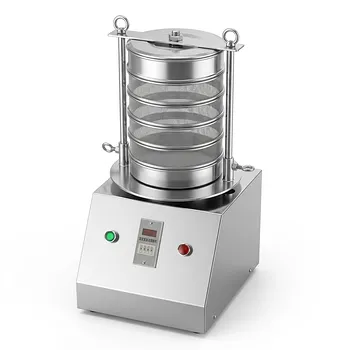
Stainless Steel Laboratory Vibratory Test Sieve Shaker
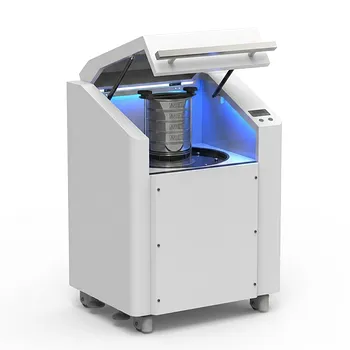
High Frequency Cabinet Type Three-Dimensional Rotary Vibrating Sieve Shaker for Dry Sieving and Particle Classification