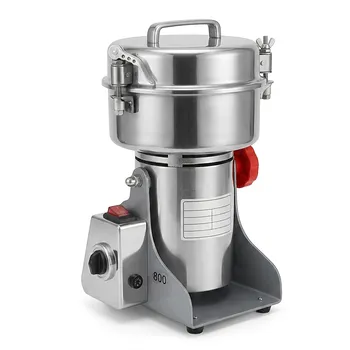
Why use a 150-micron test sieve for halloysite-rich kaolin? Optimize purity and mechanical activation results.
Updated 4 months ago
The primary purpose of the 150-micron standard test sieve in the pretreatment of halloysite-rich kaolin is to achieve preliminary particle size classification. By physically removing oversized impurities from the raw mineral, the sieve ensures that the material entering the next phase of processing—specifically mechanical activation—maintains a consistent and uniform particle size. This standardization is vital for creating a predictable baseline for the modification of halloysite nanotubes and ensuring that experimental results can be reliably reproduced.
Core Takeaway: Utilizing a 150-micron sieve serves as a critical quality control gate that removes coarse contaminants and homogenizes the raw material. This process stabilizes the feed material for downstream mechanical activation, directly impacting the efficiency and consistency of halloysite nanotube modification.
Standardizing the Feed for Mechanical Activation
Removal of Coarse Mineral Impurities
The 150-micron sieve acts as a physical barrier against large-scale impurities often found in raw kaolin, such as quartz fragments and undecomposed silicates. Removing these hard, non-target particles is essential to prevent them from interfering with the delicate structure of halloysite nanotubes during later processing steps.
Preparation for Consistent Ball Milling
In the mechanical activation stage, halloysite-rich kaolin is often subjected to ball milling. If the feed material has a wide or irregular particle size distribution, the energy from the milling media will be distributed unevenly, leading to inconsistent modification. The 150-micron screening ensures that the energy application remains uniform across the entire batch.
Enhancing Reproducibility
For researchers and industrial processors, reproducibility is the cornerstone of success. By establishing a 150-micron limit, you eliminate a major variable in the raw material’s physical profile, ensuring that every batch of treated kaolin behaves predictably during chemical or mechanical stress.
Impact on Downstream Structural Integrity
Protecting Halloysite Nanotube (HNT) Morphology
Halloysite is valued for its unique tubular structure, which can be easily damaged by erratic mechanical forces. By ensuring the raw powder is free of large, abrasive impurities, the 150-micron sieve helps maintain the structural integrity of the nanotubes during intensive activation.
Facilitating Efficient Dehydroxylation
Uniform particle size distribution, facilitated by initial screening, improves the efficiency of subsequent thermal treatments, such as dehydroxylation. Smaller, uniform particles allow for more even heat penetration, preventing localized "over-firing" or "under-processing" within the mineral matrix.
Optimization of Slurry Flowability
In applications where kaolin is used in slurries—such as 3D printing or ceramic casting—pre-screening ensures high flowability. Removing particles larger than 150 microns prevents clogging and promotes an even spread of material, which is critical for achieving high-density green bodies.
Understanding the Trade-offs
Material Loss vs. Purity
While a 150-micron sieve increases the purity and uniformity of the sample, it also results in the rejection of material. If the raw kaolin is poorly weathered or contains significant amounts of large-grain halloysite aggregates, the yield may decrease significantly.
Maintenance and Blinding
Standard test sieves with fine apertures are susceptible to blinding, where particles become lodged in the mesh. This requires careful wet-sieving techniques or ultrasonic cleaning to ensure that the 150-micron threshold remains accurate throughout the entire pretreatment process.
How to Apply This to Your Project
Recommendations Based on Your Processing Goals
- If your primary focus is mechanical activation efficiency: Strict adherence to the 150-micron limit is essential to ensure that ball milling energy is focused on the halloysite nanotubes rather than grinding down quartz impurities.
- If your primary focus is material purity for geopolymers: Combine the 150-micron screening with wet-sieving techniques to more effectively liberate and remove undecomposed silicates from the kaolin matrix.
- If your primary focus is experimental reproducibility: Document the specific mass of the residue retained on the sieve to monitor the consistency of your raw mineral source over time.
By standardizing your raw material at the 150-micron level, you create a stable and high-quality foundation for all subsequent halloysite modification and application.
Summary Table:
| Feature | Action in Pretreatment | Impact on Halloysite Processing |
|---|---|---|
| Classification | Removes particles > 150 microns | Ensures uniform feed for mechanical activation |
| Impurity Removal | Filters quartz and silicates | Protects nanotube morphology from abrasive wear |
| Homogenization | Standardizes particle size | Enables even energy distribution during ball milling |
| Thermal Efficiency | Eliminates large aggregates | Facilitates uniform heat penetration for dehydroxylation |
| Quality Control | Establishes a baseline limit | Enhances experimental reproducibility and batch consistency |
Elevate Your Material Research with Precision Pretreatment
Achieving consistent results in halloysite nanotube modification starts with superior sample preparation. At [Company Name], we provide complete laboratory sample preparation solutions tailored for material science. Whether you are refining minerals or developing advanced geopolymers, our equipment ensures the purity and consistency your project demands.
Our Specialized Product Range Includes:
- Sieve Shakers & Meshes: High-precision vibratory and air-jet sieve shakers for accurate particle size classification.
- Milling & Grinding: Planetary ball mills, jet mills, and cryogenic grinders for efficient mechanical activation.
- Crushing & Mixing: Heavy-duty jaw/roll crushers and high-performance powder/defoaming mixers.
- Advanced Pressing: A full spectrum of Cold/Warm Isostatic Presses (CIP/WIP), vacuum hot presses, and XRF pellet presses.
Don't let impurities compromise your nanotubes. Contact us today to discuss how our powder processing and compaction equipment can optimize your laboratory workflow and maximize your research efficiency!
References
- Siavash Davoodi, Ravi Naidu. Carbon Capture Efficiency of Mechanically Activated Australian Halloysite-Rich Kaolin with Varying Iron Impurities and Its Potential Reuse for Removing Dyes from Water. DOI: 10.3390/min15040399
Mentioned Products
- Small Laboratory Jaw Crusher 150x200mm Feed Opening for Sample Preparation and Medium Fine Crushing
- Laboratory Vibratory Test Sieve Shaker for Precision Particle Size Analysis and Powder Grading
- Small Laboratory Vibrating Sieve Shaker for Precise Particle Size Analysis
- 三维电磁微量振动筛分仪
- Small Laboratory Vibratory Sieve Shaker for Powder Gradation and Particle Size Analysis
People Also Ask
- What is the primary role of a laboratory jaw crusher in the initial stages of tin and tantalum ore reprocessing? Explained
- What is the role of a laboratory jaw crusher in the initial preparation of silicate-type low-grade copper ore?
- What is the primary function of a laboratory jaw crusher? Master Initial Hard Rock Ore Preparation & Feed Sizing
- What is the primary function of a laboratory jaw crusher when processing low-grade copper ore? Expert Guide
- Why is a laboratory jaw crusher necessary for processing biomass materials? Essential Prep for Material Science

Tech Team · PowderPreparation
Last updated on Jun 03, 2026
Related Products
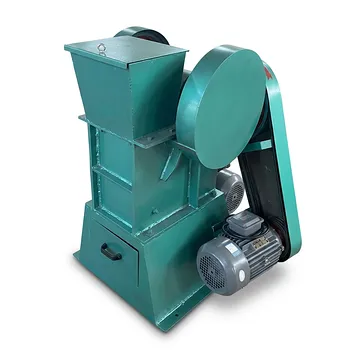
Small Laboratory Jaw Crusher 150x200mm Feed Opening for Sample Preparation and Medium Fine Crushing
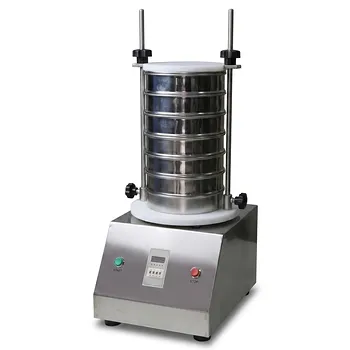
Laboratory Vibratory Test Sieve Shaker for Precision Particle Size Analysis and Powder Grading
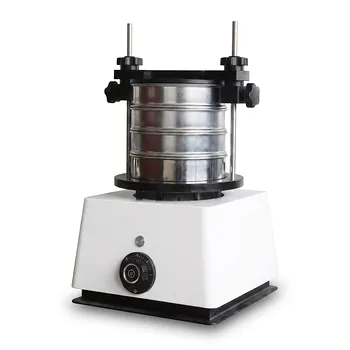
Small Laboratory Vibrating Sieve Shaker for Precise Particle Size Analysis
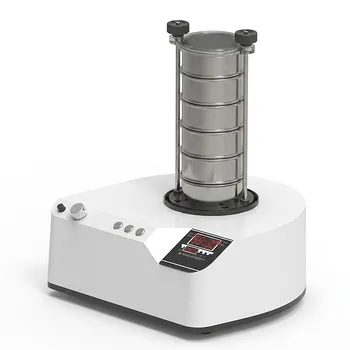
三维电磁微量振动筛分仪
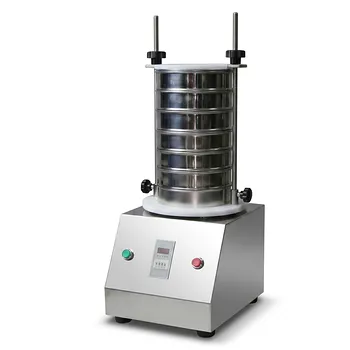
Small Laboratory Vibratory Sieve Shaker for Powder Gradation and Particle Size Analysis
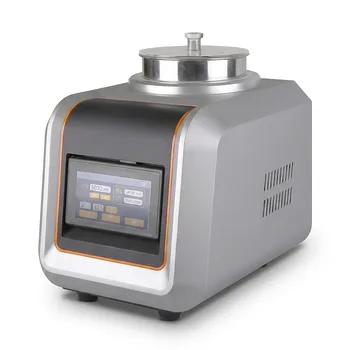
Laboratory Air Jet Sieving Machine for Fine Powder Particle Size Analysis and Deagglomeration