What is the primary function of test sieves during the preparation of orange peel powder? Ensure Precise Particle Grading
Updated 4 months ago
The primary function of test sieves in the preparation of orange peel powder is to grade crushed particles into precise, standardized size fractions. By isolating specific dimensions, such as 0.425 mm and 0.600 mm, researchers and manufacturers can accurately analyze how particle size distribution influences the material's tap density and technical performance as a green filler.
Standardizing particle size through sieving is critical for ensuring experimental data accuracy and material consistency. This process allows for the removal of agglomerates and ensures the filler can be uniformly distributed within a composite matrix for optimal reinforcement.
Achieving Precision in Particle Size Distribution
Standardizing Grading for Comparative Analysis
Test sieves allow for the classification of orange peel particles into exact intervals. This level of precision is necessary to ensure that experimental results are accurate and comparable across different batches of material.
The primary goal is to isolate specific sizes, such as 0.425 mm and 0.600 mm, to establish a baseline for performance. Without this grading, the heterogeneous nature of crushed organic waste would make it impossible to attribute material properties to specific particle dimensions.
Analyzing the Impact on Tap Density
The sieving process is essential for studying how various particle size distributions affect the tap density of the powder. Tap density is a key metric that determines how the filler will settle and occupy space within a composite structure.
Understanding this relationship allows for the optimization of the filler’s volume fraction. High tap density can lead to a more compact reinforcement, while controlled grading ensures predictable behavior during the manufacturing of green composites.
Enhancing Material Flow and Distribution
Eliminating Powder Agglomerates
During mechanical processing or cryogenic ball milling, fine powders often form agglomerates—clumps of particles that stick together. Test sieves act as a quality control gate to remove these clusters before the powder is used.
Ensuring the absence of agglomerates is critical for achieving excellent powder flowability. In industrial applications like cold spraying, consistent flow is required to maintain a stable feed and produce a coating with uniform thickness and quality.
Maximizing Surface Area for Matrix Bonding
While grinding increases the specific surface area of the orange peel, sieving ensures that only the desired fine granules reach the final product. A high surface area is vital for ensuring the reinforcement particles make full contact with the surrounding matrix, such as epoxy resin.
Uniform particle size through sieving prevents "clumping" within the composite. This encourages a uniform distribution of the filler, which is necessary to avoid structural weak points and ensure the organic waste effectively reinforces the final material.
Understanding the Trade-offs
Precision vs. Yield Loss
Strict sieving protocols increase material consistency but often result in a lower yield of usable powder. Significant portions of the organic waste may fall outside the target size range, leading to higher waste levels unless those fractions are repurposed.
Processing Time and Cost
Achieving a very narrow particle size distribution requires longer sieving durations and specialized equipment. While this produces a superior filler, it adds operational overhead and time to the production cycle, which must be balanced against the performance requirements of the final composite.
Applying Sieving Standards to Your Project
Recommendations for Effective Preparation
To utilize orange peel powder effectively as a green filler, your sieving strategy should align with your specific performance objectives.
- If your primary focus is research and data integrity: Use a nested stack of standard test sieves to isolate tight particle fractions (e.g., exactly 0.425 mm) to ensure your tap density measurements are scientifically valid.
- If your primary focus is composite strength and distribution: Focus on using sieves to remove large particles and agglomerates that could act as stress concentrators within the resin matrix.
- If your primary focus is industrial flowability: Prioritize the removal of ultra-fine dust and clumps that might clog feeding mechanisms, ensuring a continuous and stable manufacturing process.
Integrating rigorous sieving protocols transforms raw organic waste into a high-performance technical filler capable of meeting modern engineering standards.
Summary Table:
| Function | Key Benefit | Impact on Material |
|---|---|---|
| Particle Grading | Standardizes size (e.g., 0.425 mm) | Ensures experimental accuracy and comparability |
| Tap Density Analysis | Optimizes volume fraction | Predictable settling within composite structures |
| Agglomerate Removal | Improves powder flowability | Prevents clogging in industrial feeding systems |
| Surface Area Control | Maximizes matrix bonding | Enhances reinforcement and prevents structural weak points |
Elevate Your Material Research with Professional Sample Prep
Turning organic waste into high-performance green fillers requires precision at every step—from initial crushing to final compaction. [Your Brand Name] provides complete laboratory sample preparation solutions for material science, ensuring your powders meet the strictest technical standards.
Our specialized equipment includes:
- Size Reduction: Liquid nitrogen cryogenic grinders, planetary ball mills, jet mills, and jaw/roll crushers.
- Particle Classification: Vibratory and air-jet sieve shakers with a full range of high-precision test sieves.
- Mixing & Homogenization: Powder mixers and vacuum defoaming mixers.
- Compaction & Forming: A full spectrum of hydraulic presses, including Cold/Warm Isostatic Presses (CIP/WIP), hot presses, and XRF pellet presses.
Whether you are optimizing tap density or ensuring uniform filler distribution, our tools are designed for accuracy and durability. Contact our technical experts today to find the perfect equipment for your material processing needs!
References
- Oluwaseyi Ayodele Ajibade, Sunday Ayoola Oke. A Tapped Density Taguchi Optimization for Orange Peel Particulate Green Fillers. DOI: 10.22441/ijiem.v5i2.22415
Mentioned Products
- Laboratory Vibratory Test Sieve Shaker for Precision Particle Size Analysis and Powder Grading
- Laboratory Air Jet Sieving Machine for Fine Powder Particle Size Analysis and Deagglomeration
- Three Dimensional Rotary Vibrating Sieve
- Tapping Oscillating Sieve Shaker for Dry and Wet Particle Size Analysis
- Stainless Steel Rotary Vibrating Sieve High Precision Circular Vibratory Separator Industrial Powder Grading Machine Multi Layer Sifting Equipment
People Also Ask
- What role does a laboratory sieve shaker play in determining PDI? Achieve Precision in Biomass Quality Testing
- What are the functions of sieve shakers for coconut shell powder? Achieve Precise Particle Size & Quality Control.
- What function does a laboratory sieve shaker perform in the PSD analysis of residual soil? Ensure Precise Grading
- What is the role of a laboratory sieve shaker in the preparation of plantain peel adsorbents? Standardize Particle Size
- What is the function of a laboratory vibratory sieve shaker? Enhance Coal Particle Size Distribution (PSD) Analysis

Tech Team · PowderPreparation
Last updated on Jun 03, 2026
Related Products

Laboratory Vibratory Test Sieve Shaker for Precision Particle Size Analysis and Powder Grading
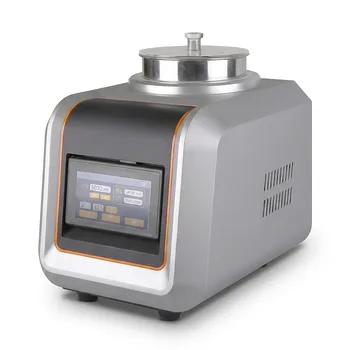
Laboratory Air Jet Sieving Machine for Fine Powder Particle Size Analysis and Deagglomeration

Three Dimensional Rotary Vibrating Sieve

Tapping Oscillating Sieve Shaker for Dry and Wet Particle Size Analysis
