What is the primary function of industrial hydraulic presses in ceramic cold forming? Optimize Your Green Body Density
Updated 5 months ago
The primary function of industrial hydraulic presses in ceramic powder cold forming is to apply precise, controlled axial pressure to rearrange and compact loose particles into a "green body." This mechanical force drives particle rearrangement and plastic deformation, typically utilizing pressures between 60 MPa and 120 MPa, though specific applications like alumina ceramics can reach up to 1200 MPa. The process transforms a loose mixture into a cohesive, dense intermediate product with the structural integrity required for subsequent handling and high-temperature sintering.
By converting raw powder into a high-density green compact, the hydraulic press establishes the foundational mechanical properties—such as density distribution and residual stress—that dictate the success of the final sintering process.
Transforming Powder into Structural Intermediates
Particle Rearrangement and Plastic Deformation
The press provides the controlled axial pressure necessary to force loose powder particles into a tighter configuration. As pressure increases, particles undergo plastic deformation, filling voids and increasing the contact area between individual grains.
Creation of the "Green Body"
This compaction results in a green body, an unfired ceramic part that possesses a specific geometric shape. This intermediate state is critical because it provides the mechanical strength needed for the part to be moved or loaded into sintering furnaces without collapsing.
Elimination of Internal Porosity
The high-pressure application effectively expels air trapped within the powder mixture and reduces internal porosity. Minimizing these gaps is essential for achieving a high green density, which serves as the physical foundation for atomic diffusion during the firing stage.
Impact on Subsequent Processing Stages
Reduction of Sintering Shrinkage
By maximizing the initial packing density of the powder, the hydraulic press significantly reduces the rate of shrinkage during sintering. This ensures that the final ceramic product maintains the required dimensional accuracy and structural integrity after high-temperature densification.
Uniform Density and Load Distribution
Precision control in the hydraulic system ensures that the internal particles are closely and uniformly packed. This uniformity prevents localized defects, such as uneven discharge during flash sintering or internal cracking caused by density gradients.
Preparation for Thermal Densification
Cold pressing acts as a preparatory step that facilitates more uniform pressure transmission if the part undergoes subsequent hot-pressing. It creates a stable, conductive path and established grain boundaries that are necessary for efficient solid-phase reactions.
Understanding the Trade-offs
Pressure Limits and Material Integrity
While higher pressure generally increases density, exceeding the material's limits can lead to internal cracks or "spring-back" effects upon release. If the pressure is not distributed evenly, it can create residual stress states that cause the ceramic to warp or fracture during the cooling phase of sintering.
Tooling Wear vs. Green Strength
Achieving extreme green strength through ultra-high pressure (such as 1200 MPa) increases the wear and tear on precision molds. Manufacturers must balance the need for high initial density with the operational costs of maintaining the tooling and hydraulic components.
How to Apply This to Your Project
Making the Right Choice for Your Goal
To achieve the best results in ceramic powder compaction, the pressing strategy must align with the final material requirements:
- If your primary focus is dimensional precision: Ensure the press settings maximize green density to minimize unpredictable shrinkage during the high-temperature sintering phase.
- If your primary focus is complex geometries: Use precision molds and controlled uniaxial pressure to ensure uniform density distribution across all sections of the part to prevent warping.
- If your primary focus is high-performance structural ceramics: Utilize higher pressure ranges (up to 1200 MPa) to eliminate large internal pores and ensure tight bonding between micron-sized particles.
- If your primary focus is subsequent flash sintering: Prioritize pressure consistency to establish a stable initial conductive path and prevent localized current overloads.
The industrial hydraulic press is the critical link between raw material and a functional ceramic component, defining the structural potential of the final product.
Summary Table:
| Key Function | Impact on Ceramic Process | Operational Advantage |
|---|---|---|
| Particle Rearrangement | Forms a cohesive "green body" | High structural integrity for handling |
| Porosity Elimination | Maximizes initial packing density | Significant reduction in sintering shrinkage |
| Axial Pressure Control | Ensures uniform density distribution | Prevents warping and internal cracking |
| High-Pressure Load | Supports up to 1200 MPa (e.g., Alumina) | Essential for high-performance structural ceramics |
Elevate Your Material Research with Precision Compaction Solutions
Achieving the perfect green body requires more than just raw pressure—it requires precision and the right equipment. We provide complete laboratory sample preparation solutions for material science, specializing in advanced powder processing and compaction technology designed to meet the most rigorous industrial standards.
Whether you are refining complex geometries or developing high-performance structural ceramics, our extensive product line supports every stage of your workflow:
- Precision Compaction: A full spectrum of hydraulic presses, including Cold/Warm Isostatic Presses (CIP/WIP), standard lab presses, XRF pellet presses, hot presses, and vacuum hot presses.
- Powder Processing: Industrial-grade crushers (jaw/roll), liquid nitrogen cryogenic grinders, and specialized mills (planetary ball, jet, sand/bead, disc, rotor).
- Preparation & Analysis: Sieve shakers (vibratory/air-jet) with various test sieves, alongside powder and defoaming mixers.
Ready to enhance your lab's efficiency and product quality? Contact our experts today to discuss your specific application and discover how our specialized equipment can optimize your material performance!
References
- S. Stupkiewicz, Davide Bigoni. Elastoplastic coupling to model cold ceramic powder compaction. DOI: 10.1016/j.jeurceramsoc.2013.11.017
Mentioned Products
- Enhanced 9 Punch Rotary Tablet Press for Powder Compaction
- 6-Ton Small Single-Punch Tablet Press — Laboratory Powder & Granule Tableting Equipment / Tablet Forming Machine
- Water Cooled Graduated Continuous Feed Pulverizer for Industrial Powder Processing and Laboratory Material Preparation
- 6 Ton Variable Frequency Single Punch Tablet Press
- Vertical Production Planetary Ball Mill for High Throughput Powder Processing
People Also Ask
- What is the purpose of adding lubricants like zinc stearate during Al-Al2O3 powder pressing? Achieve Superior Density
- Why is a laboratory hydraulic press required for FT-IR KBr pellets? Achieve Precise Sample Clarity for ZrC–SiC Analysis
- What role does a high-strength stainless steel mold kit play in the uniaxial die compaction process? Ensuring Precision
- Why is a laboratory hydraulic press required to compress oyster shell powder before XRF analysis? Improve Data Accuracy.
- Why is vacuum sealing and flexible packaging necessary for Aluminum Titanate powders during CIP? Ensure Peak Density

Tech Team · PowderPreparation
Last updated on May 14, 2026
Related Products
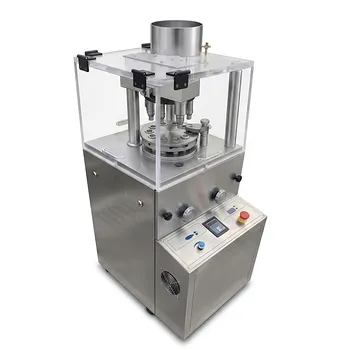
Enhanced 9 Punch Rotary Tablet Press for Powder Compaction
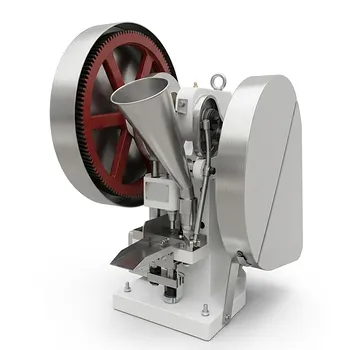
6-Ton Small Single-Punch Tablet Press — Laboratory Powder & Granule Tableting Equipment / Tablet Forming Machine
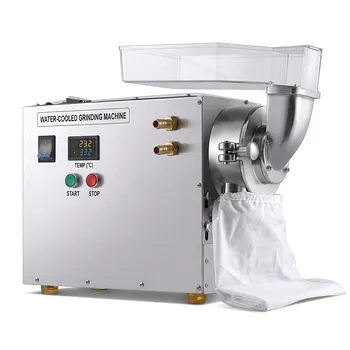
Water Cooled Graduated Continuous Feed Pulverizer for Industrial Powder Processing and Laboratory Material Preparation
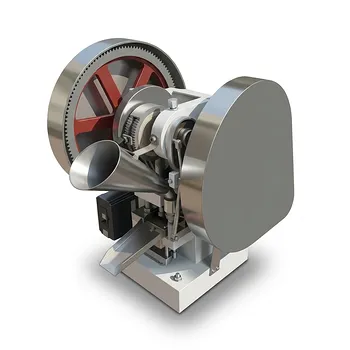
6 Ton Variable Frequency Single Punch Tablet Press
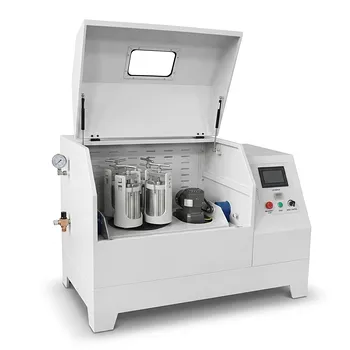
Vertical Production Planetary Ball Mill for High Throughput Powder Processing
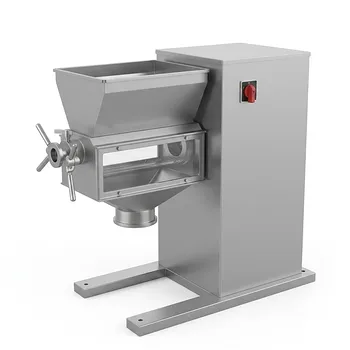
Industrial Swing Granulator for Powder Processing in Pharma Food and Chemical Industries
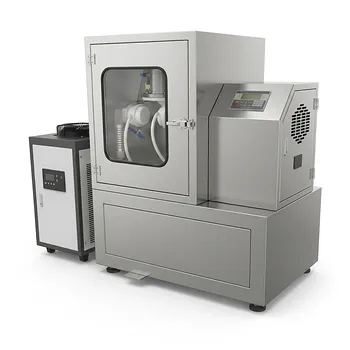
Vibratory Ultra-Low Temperature Ultrafine Grinder for Cryogenic Powder Processing
Manual Tablet Press with Dual Scale Pressure Gauge for Pharmaceutical Food Chemical Laboratory Sample Preparation
5 Ton Single Punch Tablet Press Laboratory Small Batch Production