What is the primary function of fine milling equipment? Achieve Ultra-fine Refinement for Advanced Ceramic Powders
Updated 4 months ago
The primary function of fine milling equipment is the ultra-fine refinement and homogenization of ceramic raw materials. By applying intense mechanical forces—specifically impact, shearing, and friction—these machines reduce particle sizes from large aggregates down to micron, sub-micron, or even nanometer scales. This physical transformation is essential for increasing the specific surface area and surface energy of the powder, which directly dictates the efficiency of the subsequent sintering process.
Fine milling equipment serves as the foundational processing step to maximize the chemical potential of ceramic powders. By achieving precise particle size reduction and uniform component distribution, these tools ensure lower sintering temperatures and superior final material properties.
Mechanical Forces and Particle Reduction
The Role of Impact and Shearing
Fine milling equipment, such as planetary ball mills and vibration mills, utilizes high-energy impact and shear forces. These forces occur when grinding media collide with or rub against the powder particles, forcibly breaking the internal bonds of the raw material.
Achieving Sub-Micron Scales
The goal of this intensive processing is to reach scales that conventional milling cannot. By reducing particles to the sub-micron or nanometer range, the equipment prepares the powder for high-performance applications, such as electrochemical sensor substrates or advanced structural ceramics.
Particle Morphology and Morphology Control
Beyond mere size reduction, mechanical milling is used to alter the morphology of the powder. This physical adjustment helps in optimizing the flowability and packing density of the powder when it is later formed into a "green body."
Driving Sintering Efficiency
Increasing Specific Surface Area
As particles become smaller, their specific surface area increases exponentially. This increase provides more contact points between particles, which significantly enhances the chemical potential difference that drives the sintering process.
Enhancing Sintering Activity
High surface energy allows for grain rearrangement and densification to occur at much lower temperatures than would be possible with coarse powders. This is critical for maintaining a fine-grained microstructure and reducing energy costs during manufacturing.
Facilitating Atomic Diffusion
By refining the powder, milling equipment establishes the foundation for efficient atomic diffusion. This ensures that the final ceramic achieves a high level of density and a consistent, homogeneous microstructure throughout the material.
Material Homogeneity and De-agglomeration
Mixing Multi-Component Systems
For advanced ceramics like Reaction Bonded Aluminum Oxide (RBAO), milling ensures that different phases—such as metallic aluminum and alumina—are mixed uniformly at a microscopic scale. This prevents "clumping" of components and ensures the final product has uniform physical properties.
Breaking Down Agglomerates
Powders often form "agglomerates" or clusters that can create defects in the final ceramic. High-energy milling, particularly in water-based media, effectively de-agglomerates these clusters to create a stable, well-dispersed slurry.
Atomic-Level Uniform Distribution
The intense energy of a jet mill or planetary mill ensures that sintering additives are distributed at an atomic-level. This precision is a prerequisite for achieving high-purity powders and controlling the final electrical or mechanical characteristics of the ceramic.
Understanding the Trade-offs
The Risk of Media Contamination
The primary downside of high-energy ball milling is the potential for contamination from the grinding media (balls and vial). As the media wears down, small amounts of the grinding material can be incorporated into the ceramic powder, potentially altering its purity.
Thermal Management and Energy Costs
Generating the forces necessary for sub-micron refinement requires significant energy, much of which is converted into heat. Excessive heat can lead to unwanted phase changes or the oxidation of sensitive materials, requiring specialized cooling systems or atmosphere control.
Processing Time vs. Particle Size
While longer milling times generally lead to smaller particles, there is a point of diminishing returns. Over-milling can lead to re-agglomeration or "cold welding" in some materials, where particles begin to fuse back together under the pressure of the mill.
How to Apply Milling Strategies to Your Project
When selecting a milling strategy, you must balance the need for refinement with the requirements of your specific material system.
- If your primary focus is maximizing sintering activity: Utilize high-energy planetary ball milling to achieve the highest possible specific surface area and surface energy.
- If your primary focus is preventing contamination: Consider jet milling or using grinding media made of the same material as your ceramic powder (e.g., alumina media for alumina powder).
- If your primary focus is uniform distribution of additives: Prioritize high-frequency vibration or stirred milling to ensure sub-micron level mixing of multi-component systems.
- If your primary focus is producing high-quality slurries: Use wet milling techniques to facilitate de-agglomeration and ensure a stable, homogeneous dispersion in the liquid medium.
Mastering the mechanical milling process allows for precise control over the ceramic's lifecycle, from raw powder to a high-density, high-performance final product.
Summary Table:
| Feature | Primary Function | Key Impact on Sintering |
|---|---|---|
| Size Reduction | Achieves sub-micron or nanometer scales | Increases chemical potential and diffusion |
| Homogenization | Uniform mixing of multi-component systems | Ensures consistent atomic-level distribution |
| De-agglomeration | Breaks down clusters/aggregates | Eliminates defects and improves slurry stability |
| Surface Activation | Increases specific surface area/energy | Lowers sintering temperatures and enhances density |
Optimize Your Material Preparation with Our Precision Equipment
Achieving the perfect ceramic microstructure starts with superior powder processing. At our facility, we provide complete laboratory sample preparation solutions tailored for material science research and industrial production. Whether you are refining powders for advanced ceramics or preparing samples for XRF analysis, we offer the precision tools you need to succeed.
Our extensive product line includes:
- Advanced Milling: High-energy planetary ball mills, jet mills, vibration mills, and liquid nitrogen cryogenic grinders.
- Preparation & Sizing: Jaw/roll crushers, sieve shakers (vibratory/air-jet), and high-efficiency powder mixers.
- Compaction Solutions: A full spectrum of hydraulic presses, including Cold/Warm Isostatic Presses (CIP/WIP), vacuum hot presses, and standard lab pellet presses.
Ready to enhance your material properties and sintering efficiency? Contact us today to find the perfect solution for your lab!
References
- Shigeyuki Sōmiya, Rustum Roy. Ceramic Powders for Advanced Ceramics: What are Ideal Ceramic Powders for Advanced Ceramics?. DOI: 10.14723/tmrsj.35.473
Mentioned Products
- Vibratory Superfine Grinder for Ultra Fine Laboratory Powder Milling
- Small Airflow Ultra-Fine Grinder for Laboratory Sample Preparation
- Laboratory Ultrafine Impact and Airflow Grinder for Precise Particle Size Control
- Laboratory Desktop Ultra Fine Powder Grinder High Speed Micronizing Pulverizer
- Water Cooled Pulse Jet Ultrafine Grinder
People Also Ask
- What role does a laboratory grinder play in the pretreatment of sunflower seed shell-based adsorbents? Boost Efficiency.
- How does a laboratory grinder or mill enhance the adsorption performance of agricultural waste materials? Boost Surface Area
- What is the function of a laboratory vibratory mill? Master StPh/MMT Nanocomposite Preparation via Mechanochemistry
- Why is high-efficiency ultra-fine grinding required for Portland cement before XRD? Get Accurate Rietveld Results
- How does the size of grinding media influence the vibratory milling efficiency? Achieve Optimal Pharmaceutical Fineness

Tech Team · PowderPreparation
Last updated on Jun 03, 2026
Related Products
Vibratory Superfine Grinder for Ultra Fine Laboratory Powder Milling
Small Airflow Ultra-Fine Grinder for Laboratory Sample Preparation
Laboratory Ultrafine Impact and Airflow Grinder for Precise Particle Size Control
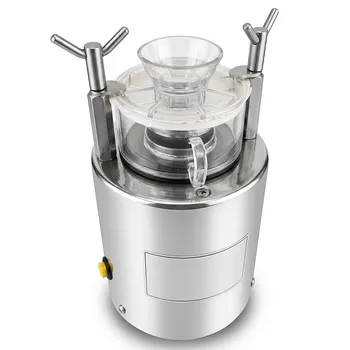
Laboratory Desktop Ultra Fine Powder Grinder High Speed Micronizing Pulverizer
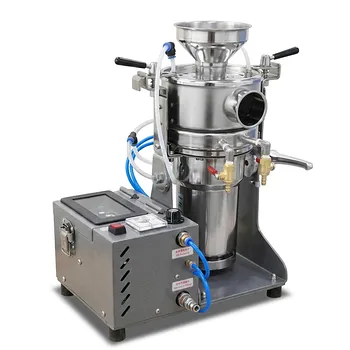
Water Cooled Pulse Jet Ultrafine Grinder
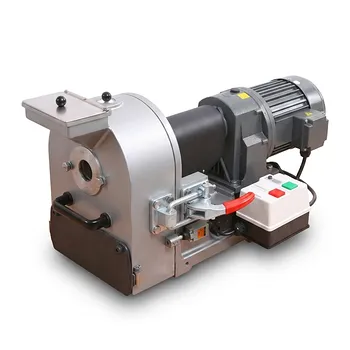
Laboratory Disc Mill for Fine Sample Preparation of Hard and Brittle Materials
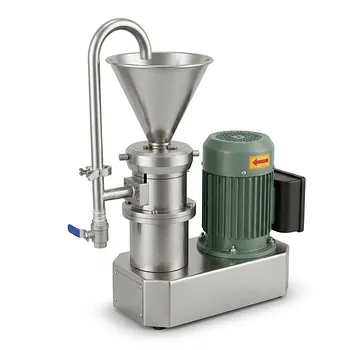
Small Laboratory Colloid Mill for Ultra-Fine Wet Grinding and Emulsification
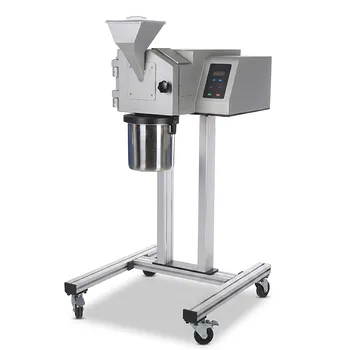
Cross Beater Mill for Brittle Material Grinding and Continuous Fine Crushing Industrial Sample Preparation
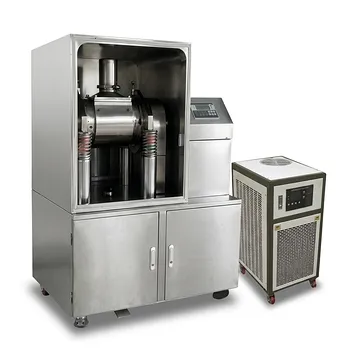
Small Vibrating Ultrafine Grinder for Traditional Chinese Medicine
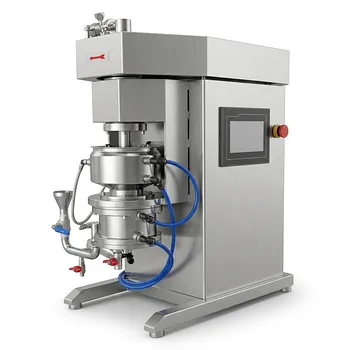
Small Ceramic Structure Laboratory Sand Mill Nanoscale Grinding Dispersion Equipment Seal-less Screen-less Design

Heavy Duty Horizontal Planetary Ball Mill for Efficient Industrial Grinding and Sample Preparation

Vertical Square Planetary Ball Mill for Laboratory Sample Preparation and Nanoscale Grinding
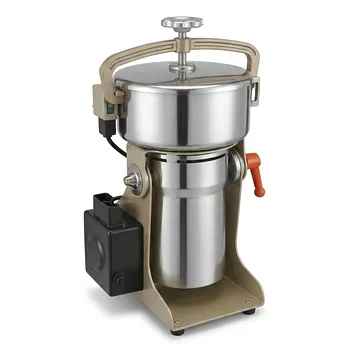
Multifunctional High Efficiency High Speed Laboratory Grinder
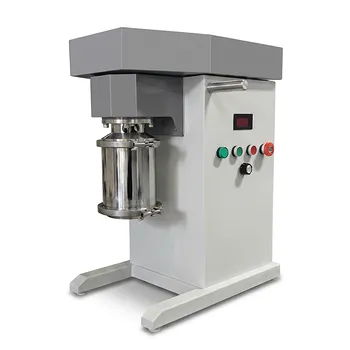
Nano Laboratory Bead Mill Desktop Sub Micron Sand Mill Screenless Seal Less Powder Grinder
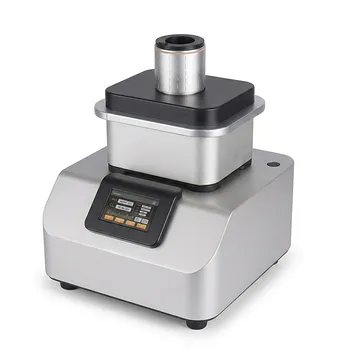
Ultra Centrifugal Mill High Speed Laboratory Grinder for Fibrous and Brittle Sample Preparation

High Energy Planetary Ball Mill for Nano Scale Grinding and Mechanical Alloying
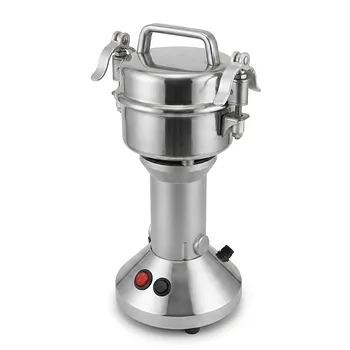
Continuous Feeding Grinding Mill for Dry Fibrous Tough and Hard Materials in Laboratory and Small Production
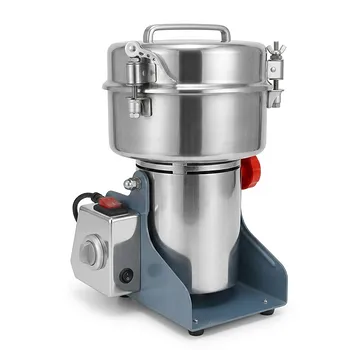
Small High-Speed Grinder for Efficient Laboratory Sample Preparation

High Energy Omnidirectional Planetary Ball Mill 16L