What is the primary function of ball mills during the raw material mixing stage of pressureless sintered silicon carbide (SiC)?
Updated 5 months ago
Achieving micron-level uniform dispersion is the fundamental objective of ball milling. In the preparation of pressureless sintered silicon carbide (SiC), the primary function of the ball mill is to utilize high-energy impact and shear forces to ensure that additives—specifically carbon black, boron carbide ($B_4C$), and binders—are homogeneously distributed throughout the SiC matrix. This process effectively eliminates component agglomeration, creating the critical kinetic conditions required for carbon to reduce surface oxide films during the subsequent sintering phase.
Core Takeaway: Ball milling serves as a high-energy homogenization tool that de-agglomerates powders and ensures a molecular-level distribution of sintering aids, which is essential for uniform densification and the removal of performance-limiting oxide layers.
Achieving Homogenization and De-agglomeration
Micron-Level Dispersion of Additives
The ball mill uses continuous rotation and collision to force additives like boron and carbon into a highly uniform state. This level of dispersion is vital because these trace additives must be present at nearly every grain boundary to be effective.
Without this thorough mixing, localized concentrations of additives can lead to uneven sintering rates. This results in internal stresses and structural weaknesses in the final ceramic component.
Breaking Down Particle Agglomerates
Raw SiC powders, especially nano-sized variants, have a natural tendency to form tight clusters or agglomerates. High-energy milling, often lasting 24 to 48 hours, provides the mechanical force necessary to break these bonds.
By reducing these clusters, the process ensures that the starting "green body" has a consistent density. This uniformity is the primary defense against cracks and pores forming during high-temperature treatment.
Optimizing Sintering Kinetics and Microstructure
Facilitating Oxide Film Reduction
Silicon carbide particles often carry a thin layer of silica ($SiO_2$) on their surface, which inhibits bonding. The ball mill ensures carbon black is in direct, intimate contact with these oxide films.
This proximity allows the carbon to chemically reduce the oxides during sintering. This reaction is a prerequisite for achieving the high densities required in pressureless sintering.
Inhibiting Abnormal Grain Growth
Uniformly distributed boron carbide ($B_4C$) acts as a grain boundary modifier. By ensuring $B_4C$ is spread evenly, the ball mill helps reduce grain boundary energy across the entire material.
This uniform energy state prevents "abnormal grain growth," where a few crystals grow much larger than others. A fine, uniform grain structure is what gives SiC its legendary hardness and thermal shock resistance.
Understanding the Trade-offs and Pitfalls
The Risk of Media Contamination
While longer milling times improve homogeneity, they increase the wear on the grinding media and the mill lining. If metallic media are used, they can introduce impurities that degrade the electrical and mechanical properties of the SiC.
To mitigate this, high-performance applications often require ceramic linings and SiC-based grinding media. This ensures that any wear debris is chemically compatible with the primary powder.
Processing Time vs. Particle Damage
Extensive milling (up to 48 hours) is often necessary for molecular-level mixing but can be energy-intensive. There is also a point of diminishing returns where excessive milling may overly refine the particle size, potentially changing the rheology of the slurry in unexpected ways.
Making the Right Choice for Your Goal
- If your primary focus is Maximum Material Density: Prioritize longer milling cycles (24-48 hours) to ensure every oxide film is in contact with a carbon reductant.
- If your primary focus is High Chemical Purity: Utilize ceramic-lined mills and high-purity SiC grinding media to prevent metallic iron or chrome contamination.
- If your primary focus is Complex Shape Molding: Focus on the ball mill's ability to create a consistent slurry rheology, ensuring the mixture flows perfectly into molds or 3D printing beds.
Effective ball milling transforms a simple mixture of powders into a high-reactivity precursor, dictating the ultimate strength and reliability of the sintered silicon carbide.
Summary Table:
| Key Function | Technical Objective | Impact on Sintering Quality |
|---|---|---|
| Homogenization | Micron-level distribution of $B_4C$ & Carbon | Eliminates internal stress and ensures uniform density |
| De-agglomeration | Breaking down SiC particle clusters | Prevents cracks and pores in the green body |
| Surface Activation | Carbon contact with $SiO_2$ oxide films | Facilitates essential chemical reduction for bonding |
| Microstructure Control | Even dispersion of grain boundary modifiers | Inhibits abnormal grain growth for maximum hardness |
Optimize Your SiC Sintering with Expert Powder Processing
Achieving superior material properties in silicon carbide requires the highest level of homogenization and compaction. At [Our Brand], we provide complete laboratory sample preparation solutions for material science, specializing in high-performance powder processing and advanced compaction equipment.
Whether you are refining raw SiC powders or preparing green bodies for high-temperature treatment, our expert-grade equipment ensures precision at every step:
- Precision Milling: Planetary ball mills, jet mills, and cryogenic grinders for micron-level de-agglomeration.
- Advanced Compaction: A full spectrum of hydraulic presses, including Cold/Warm Isostatic Presses (CIP/WIP), vacuum hot presses, and XRF pellet presses.
- Homogeneous Mixing: High-efficiency powder mixers and defoaming mixers to eliminate component gradients.
- Sizing & Analysis: Vibratory and air-jet sieve shakers for strict particle size control.
Ready to enhance your lab's efficiency and material performance?
Contact us today to discuss your specific application and find the perfect solution for your material science research.
References
- Yeongjun Oh, Hyun‐Sik Kim. Effect of carbon content on electrical, thermal, and mechanical properties of pressureless sintered SiC ceramics. DOI: 10.1111/jace.20562
Mentioned Products
- Heavy Duty Horizontal Planetary Ball Mill for Efficient Industrial Grinding and Sample Preparation
- Vertical Semi Circular Planetary Ball Mill for Laboratory Precision Grinding
- Vertical Production Planetary Ball Mill for High Throughput Powder Processing
- Vertical Square Planetary Ball Mill for Laboratory Sample Preparation and Nanoscale Grinding
- High Energy Planetary Ball Mill for Nano Scale Grinding and Mechanical Alloying
People Also Ask
- Why grind lime-pozzolan specimens for TG/DTA for 3 mins? Master sample prep for high-precision thermal analysis.
- What is the role of a planetary ball mill in the mechanical activation of ZTA powder? Boost Sintering Performance
- What is the function of a planetary ball mill in wollastonite ceramic prep? Achieve Molecular Homogenization & Reactivity
- How does a planetary ball mill contribute to the homogenization of trace elements? Achieve Sub-Micron Uniformity
- What is the function of a high-performance planetary ball mill in AMZ laminates? Master Ceramic Homogenization.

Tech Team · PowderPreparation
Last updated on May 14, 2026
Related Products
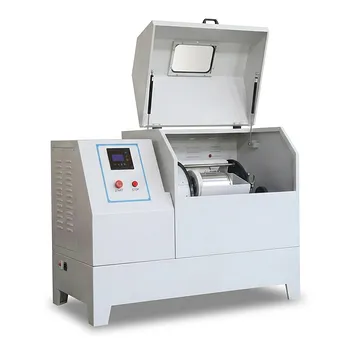
Heavy Duty Horizontal Planetary Ball Mill for Efficient Industrial Grinding and Sample Preparation
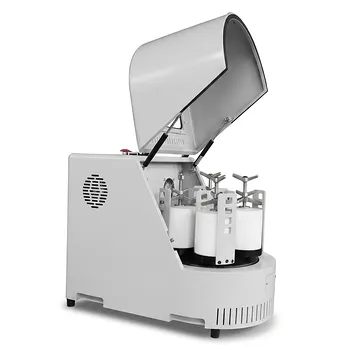
Vertical Semi Circular Planetary Ball Mill for Laboratory Precision Grinding
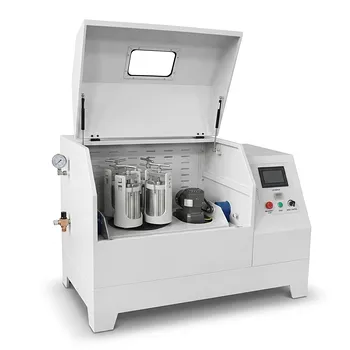
Vertical Production Planetary Ball Mill for High Throughput Powder Processing
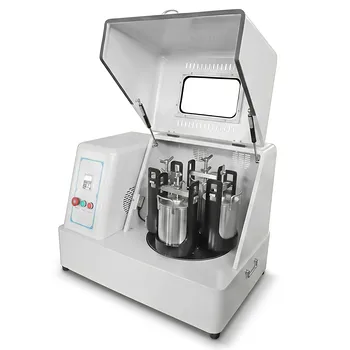
Vertical Square Planetary Ball Mill for Laboratory Sample Preparation and Nanoscale Grinding
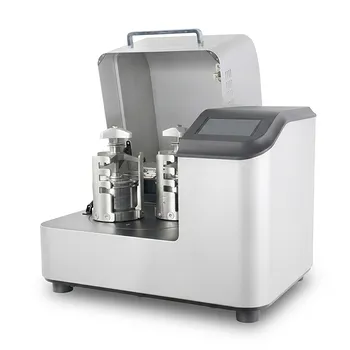
High Energy Planetary Ball Mill for Nano Scale Grinding and Mechanical Alloying
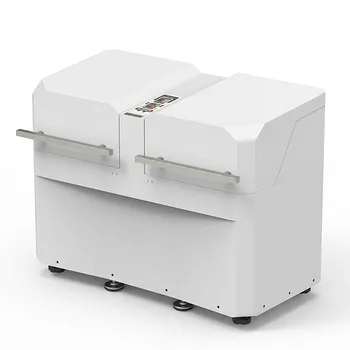
Dual Station Planetary Ball Mill 24L
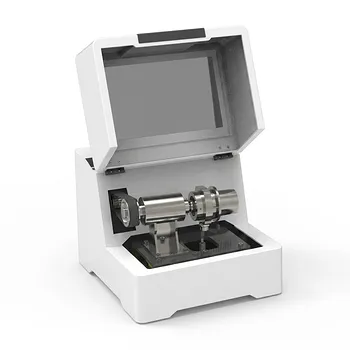
Single Tank High Energy Vibratory Ball Mill for Laboratory Grinding and Mixing
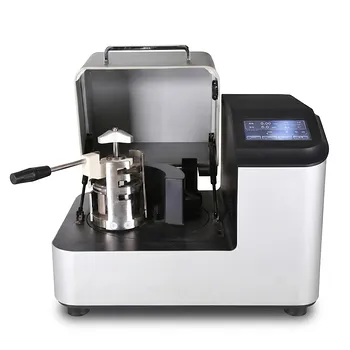
High Energy Laboratory Planetary Ball Mill for Nano Grinding and Material Science Sample Preparation
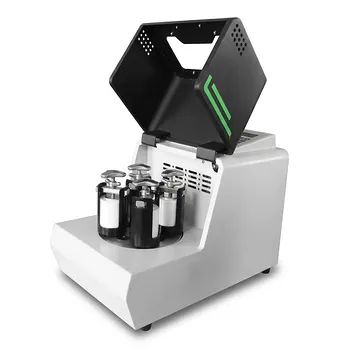
Miniature Planetary Ball Mill with Vacuum Grinding and High Efficiency for Laboratory Sample Preparation
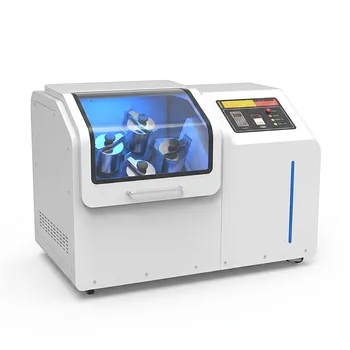
High Energy Omnidirectional Planetary Ball Mill 16L
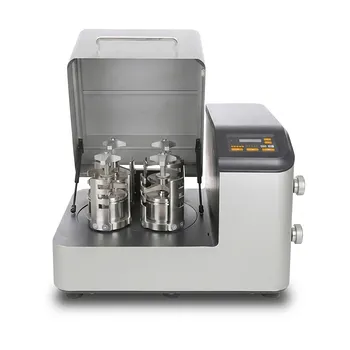
High Energy Planetary Ball Mill for Nano Scale Grinding and Colloidal Mixing in Material Science Research
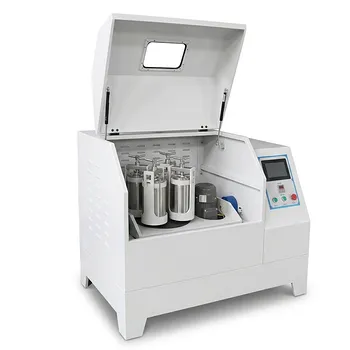
360° Rotating Omnidirectional Laboratory Planetary Ball Mill for Homogeneous Ultra-Fine Grinding and Mixing
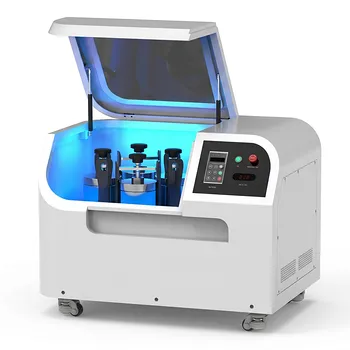
Planetary Ball Mill 12L
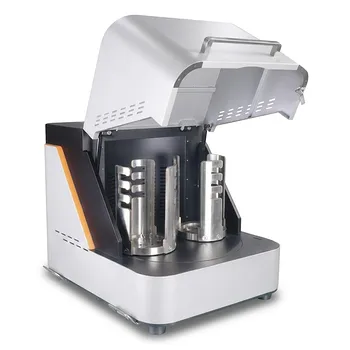
High Energy Laboratory Planetary Ball Mill for Nano Grinding and Colloidal Mixing of Hard and Brittle Materials
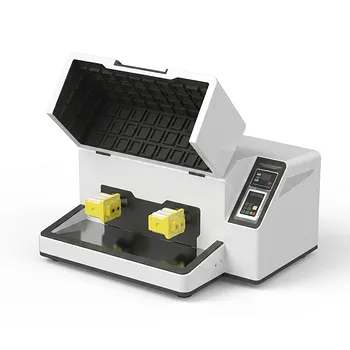
Multi-Platform Nanoscale High-Energy Vibratory Ball Mill
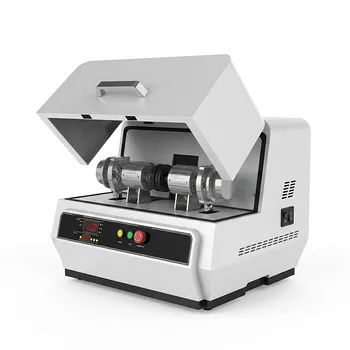
Dual Jar High Energy Vibratory Ball Mill
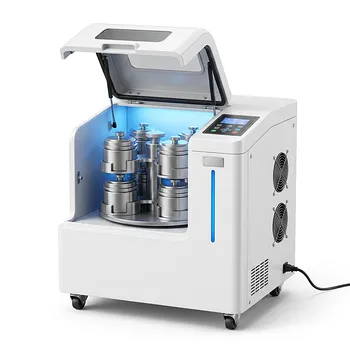
High Energy Omnidirectional Planetary Ball Mill 20L
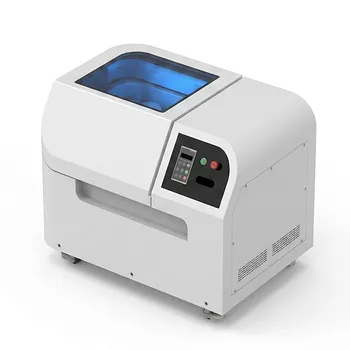
8L Planetary Ball Mill for Laboratory Grinding and Sample Preparation

Nano High Energy Vibratory Ball Mill for Laboratory Sample Preparation