What is the primary function of a vacuum hot press or an isostatic press? Master High-Density Aluminum Consolidation
Updated 5 months ago
The primary function of vacuum hot pressing or isostatic pressing in this context is to transform loose, ultrafine powders into high-density bulk materials while preserving their unique nanocrystalline structure. By applying simultaneous high temperature and high pressure within a vacuum environment, these processes ensure excellent metallurgical bonding between powder particles. This method effectively eliminates internal pores and micro-cracks that would otherwise compromise the integrity of the aluminum alloy.
These consolidation techniques use thermo-mechanical coupling to achieve near-theoretical density at lower temperatures than traditional sintering. This allows engineers to maintain the metastable properties and nanometer-scale grain sizes achieved during the ball-milling process.
Mechanisms of Material Densification
Simultaneous Pressure and Temperature
The combination of heat and pressure facilitates particle rearrangement and plastic flow. Unlike traditional sintering, which relies primarily on heat, the added mechanical force drives the powder particles to fill voids more efficiently.
Atomic Diffusion and Bonding
High-pressure environments promote diffusion bonding at the grain boundaries. This creates a strong metallurgical bond between individual aluminum particles, transforming a fragmented powder into a cohesive, metallic-lustered bulk billet.
Rheological Filling
Under extreme pressure, the powder undergoes rheological filling, where the material behaves somewhat like a fluid to occupy the smallest gaps in the mold. This is critical for achieving a uniform internal structure free of macro-defects.
The Role of the Vacuum Environment
Prevention of Oxidation
Aluminum alloy powders are highly reactive and prone to forming oxide layers when exposed to air at high temperatures. The vacuum environment isolates the powder, preventing oxidation that would otherwise weaken the final material's mechanical properties.
Removal of Residual Air
The vacuum effectively extracts air trapped between ultrafine particles and within the mold itself. By removing this internal pressure resistance, the system accelerates material migration and grain boundary diffusion.
Enhancing Surface Purity
Maintaining a low-pressure environment (often around 0.2 mm Hg) ensures that the particle surfaces remain clean. This purity is essential for ensuring that the subsequent metallurgical bonding is consistent throughout the sample.
Preservation of Nanocrystalline Structures
Controlling Grain Growth
A major challenge with ball-milled alloys is "grain growth," where nanometer-scale structures expand into larger crystals when heated. Vacuum hot presses allow for densification at relatively low temperatures, which minimizes this growth.
Maintaining Metastable States
Ball-milled powders often exist in a metastable nanocrystalline state that provides superior strength. The rapid densification and lower thermal requirements of hot pressing preserve these characteristics in the final bulk product.
Shortening Processing Windows
Because these machines apply pressure and heat simultaneously, the time required to reach full density is significantly reduced. Shorter exposure to high heat further protects the fine-grained microstructure of the aluminum alloy.
Understanding the Trade-offs
Uniaxial vs. Isotropic Limitations
A Vacuum Hot Press (VHP) typically applies uniaxial (one-directional) pressure, which can lead to slight density gradients in complex shapes. In contrast, Isostatic Pressing (HIP/CIP) applies uniform pressure from all directions but often involves more complex sealing and canning procedures.
Equipment and Scale Constraints
While these processes produce superior material properties, they are generally slower and more expensive than continuous casting or traditional powder metallurgy. The size of the final billet is also strictly limited by the dimensions of the vacuum chamber or pressure vessel.
How to Apply This to Your Project
Selecting the Right Consolidation Method
- If your primary focus is uniform density in complex shapes: Use Hot Isostatic Pressing (HIP) to ensure isotropic pressure distribution and the elimination of internal voids from all angles.
- If your primary focus is rapid prototyping of simple billets: Use a Vacuum Hot Press (VHP) for its ability to apply high uniaxial pressure and temperature with faster setup times for simple geometries.
- If your primary focus is creating stable preforms for further processing: Utilize Cold Isostatic Pressing (CIP) to create high-density "green bodies" that can then be degassed and extruded.
Successful consolidation of ball-milled aluminum depends on balancing pressure, temperature, and vacuum to lock in the high-performance microstructure of the powder.
Summary Table:
| Consolidation Method | Pressure Type | Best For | Key Advantage |
|---|---|---|---|
| Vacuum Hot Press (VHP) | Uniaxial (One-way) | Simple billets & rapid prototyping | Fast setup; prevents oxidation |
| Hot Isostatic Press (HIP) | Isotropic (All-way) | Complex shapes & high-performance parts | Uniform density; no internal voids |
| Cold Isostatic Press (CIP) | Isotropic (Room Temp) | High-density green bodies/preforms | Stable preforms for further extrusion |
Elevate Your Material Synthesis with Expert Consolidation Solutions
Achieving near-theoretical density while preserving delicate nanocrystalline structures requires precision-engineered equipment. At [Insert Brand Name], we provide complete laboratory sample preparation solutions tailored for advanced material science.
We specialize in high-performance powder processing and compaction equipment, including:
- Advanced Milling: Planetary ball mills, liquid nitrogen cryogenic grinders, and jet mills to achieve optimal powder states.
- Precision Pressing: A full spectrum of hydraulic presses, including Cold/Warm Isostatic Presses (CIP/WIP), Vacuum Hot Presses, and XRF pellet presses.
- Support Equipment: Sieve shakers, powder mixers, and defoaming mixers to ensure sample homogeneity.
Ready to transform your ball-milled powders into high-performance bulk materials? Our technical experts are here to help you select the right pressure and temperature parameters for your specific alloy.
Contact us today to find your solution!
References
- D.I. Sadykov, T. S. Orlova. Enhanced Ductility of High-Strength Ultrafine-Grained Aluminum Alloys at Ambient Temperature (Review). DOI: 10.17586/2687-0568-2022-4-2-1-14
Mentioned Products
- Dual Cup Vacuum Centrifugal Mixer Planetary Paste Defoaming Machine Industrial Material Processor
- 非介入式材料均质机真空脱泡行星搅拌高粘度混合设备
- High Efficiency Vacuum Planetary Centrifugal Mixer and Defoaming Machine for Industrial Material Research and Precise Laboratory Powder Dispersion
- High Speed Vacuum Planetary Centrifugal Mixer and Defoamer for Industrial Paste Processing
- Industrial Vacuum Kneader for High-Viscosity Silicone, Rubber, and Compound Mixing
People Also Ask
- Why is a vacuum centrifugal defoaming mixer required to process ceramic slurry before 3D printing? Ensure High Density
- Why is a vacuum centrifugal de-foaming mixer required before DIW of PZT ink? Achieve Dense, Bubble-Free Piezo Ceramics
- What are the advantages of centrifugal defoaming mixers for recycled slurries? Achieve Superior Electrode Quality
- Why is centrifugal defoaming necessary for magnetic composite inks? Ensure Void-Free Extrusion for 3D Printing
- Why is vacuum defoaming necessary for PDMS mixtures before microwave irradiation curing? Key to Structural Integrity

Tech Team · PowderPreparation
Last updated on May 14, 2026
Related Products
Dual Cup Vacuum Centrifugal Mixer Planetary Paste Defoaming Machine Industrial Material Processor
非介入式材料均质机真空脱泡行星搅拌高粘度混合设备
High Efficiency Vacuum Planetary Centrifugal Mixer and Defoaming Machine for Industrial Material Research and Precise Laboratory Powder Dispersion
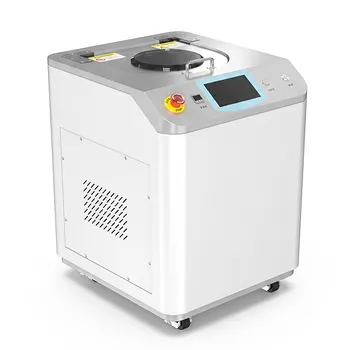
High Speed Vacuum Planetary Centrifugal Mixer and Defoamer for Industrial Paste Processing
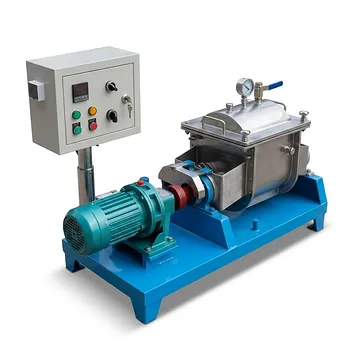
Industrial Vacuum Kneader for High-Viscosity Silicone, Rubber, and Compound Mixing
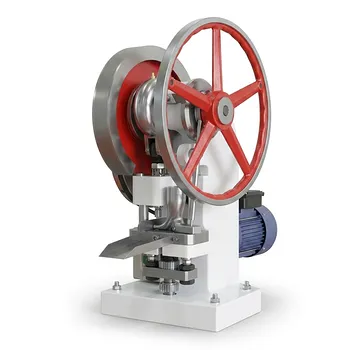
5 Ton Single Punch Tablet Press Laboratory Small Batch Production
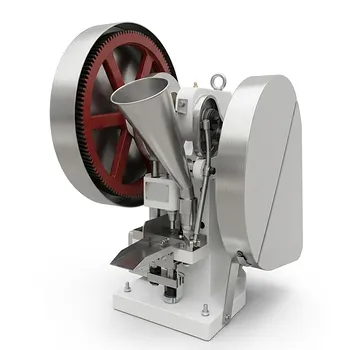
6-Ton Small Single-Punch Tablet Press — Laboratory Powder & Granule Tableting Equipment / Tablet Forming Machine

High Viscosity Planetary Centrifugal Mixing and Vacuum Defoaming Machine for Laboratory Material Preparation
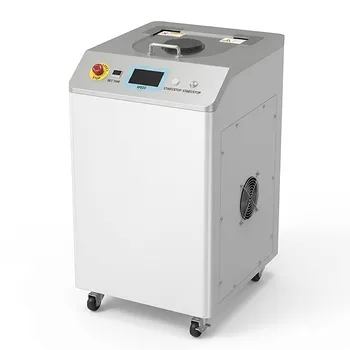
High Viscosity Planetary Centrifugal Vacuum Mixer for Material Defoaming and Uniform Mixing
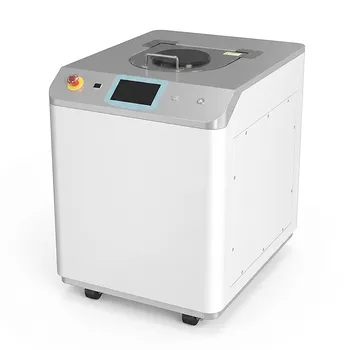
Industrial Planetary Centrifugal Vacuum Defoaming Mixer for High Viscosity Paste and Advanced Material Science
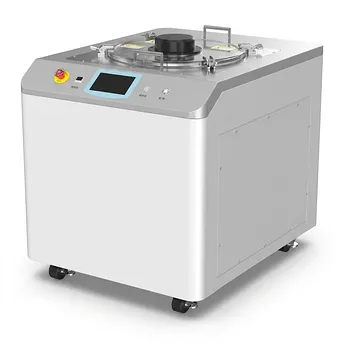
Industrial Planetary Centrifugal Vacuum Defoaming Mixer for High Viscosity Paste and Powder Homogenization
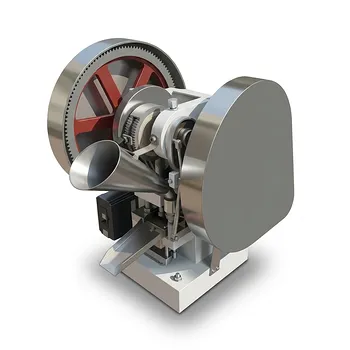
6 Ton Variable Frequency Single Punch Tablet Press