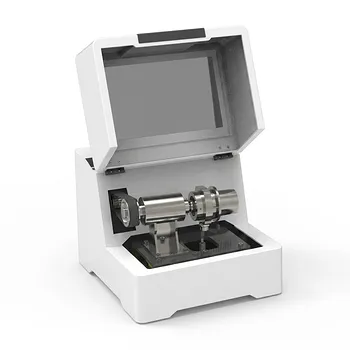
What is the primary function of a Planetary Ball Mill in the dry-process mechanical alloying of doped zirconia ceramics?
Updated 3 months ago
The primary function of a planetary ball mill in the dry-process mechanical alloying of doped zirconia is to facilitate atomic-level solid solution and grain refinement through high-energy impact. By utilizing intense shear and collision forces, the mill transforms a simple mixture of zirconia and dopants (such as neodymium or cerium oxides) into a nanostructured precursor powder. This process forces chemical integration at room temperature, creating a highly reactive material ready for advanced sintering techniques.
The planetary ball mill acts as a high-energy chemical reactor that uses mechanical force to drive solid-state reactions. It bridges the gap between raw powder mixing and the final ceramic phase by ensuring microscopic homogeneity and enhanced reaction activity.
The Mechanism of Mechanical Energy Transfer
Generating Intensive Impact and Shear
The planetary ball mill operates through a complex rotation of grinding jars that creates high centrifugal forces. These forces accelerate the grinding media (balls) to collide with the zirconia powder and dopants with extreme kinetic energy.
Inducing Severe Plastic Deformation
Repeated collisions cause the powder particles to undergo a continuous cycle of flattening, cold welding, and fracturing. In the context of zirconia, this mechanical energy is sufficient to disrupt crystalline structures, allowing dopant atoms to diffuse into the zirconia lattice.
Achieving Nanostructured Refinement
As the milling continues, the average particle size is reduced from the micron scale to the nanometer scale. This refinement increases the surface area significantly, which is a critical factor for the powder's performance during subsequent processing stages.
Driving Chemical and Phase Transformations
Atomic-Level Forced Mixing
Unlike traditional mixing, mechanical alloying forces the dopants (like cerium or neodymium) into a supersaturated solid solution within the zirconia matrix. This ensures that the chemical composition is uniform at the microscopic scale, preventing "islands" of unreacted dopants.
Preliminary Phase Transitions
The high energy levels can induce phase transitions at room temperature that would normally require high heat. This creates a "pre-activated" state in the zirconia, lowering the energy barrier for the final phase stabilization during sintering.
Enhancement of Reaction Activity
By refining the grain size and introducing lattice defects through mechanical stress, the mill produces a powder with high stored energy. This increased activity allows for faster and more complete reactions during Spark Plasma Sintering (SPS) or traditional heat treatments.
Understanding the Trade-offs
Risk of Material Contamination
The intensity of the milling process can lead to wear of the grinding jars and media. If the milling balls are made of a different material than the powder, small amounts of debris can contaminate the zirconia, potentially altering its electrical or mechanical properties.
Thermal Management Challenges
Mechanical alloying generates significant frictional heat within the grinding jars. In dry-process milling, if the temperature is not controlled, it can lead to unplanned powder oxidation or the unwanted growth of grains, defeating the purpose of nanorefinement.
Processing Time vs. Energy Efficiency
While planetary ball mills are highly efficient, achieving a true solid-state solution requires extended milling durations. There is a point of diminishing returns where additional milling time no longer refines the powder but increases the risk of contamination and energy waste.
How to Apply This to Your Project
When preparing doped zirconia via mechanical alloying, your milling strategy should align with your final material requirements.
- If your primary focus is Phase Stability: Ensure long milling durations to achieve complete atomic-level diffusion of dopants like Yttria or Ceria into the zirconia lattice.
- If your primary focus is Sintering Density: Prioritize high-speed rotation to maximize particle refinement, as smaller, nanostructured particles will densify more readily at lower temperatures.
- If your primary focus is Chemical Purity: Use grinding jars and media made of stabilized zirconia to ensure that any wear debris is chemically identical to your target material.
Mastering the mechanical alloying process allows you to engineer zirconia ceramics with superior structural integrity and precise chemical uniformity.
Summary Table:
| Key Function | Physical Mechanism | Resulting Benefit |
|---|---|---|
| Atomic Mixing | Forced diffusion via impact | Homogeneous solid solution |
| Grain Refinement | Severe plastic deformation | Nanostructured precursor powder |
| Phase Transition | Mechanical energy transfer | Lowered sintering temperature |
| Surface Activation | Introduction of lattice defects | Enhanced reaction activity during sintering |
Elevate Your Material Research with Precision Powder Solutions
Achieving the perfect nanostructured material requires more than just mixing—it requires the right mechanical energy. At our company, we provide complete laboratory sample preparation solutions tailored for advanced material science.
Starting with your raw materials, our high-energy planetary ball mills, jet mills, and disc mills ensure precise grain refinement and atomic-level alloying. To transform your reactive powders into high-density components, we offer a full spectrum of manufacturing equipment, including:
- Powder Processing: Sieve shakers, powder mixers, and specialized grinding jars to prevent contamination.
- Advanced Pressing: Cold/Warm Isostatic Presses (CIP/WIP), vacuum hot presses, and XRF pellet presses for maximum material integrity.
Ready to optimize your doped zirconia processing? Contact us today to find the ideal equipment for your lab!
References
- Marcin Brykała, Marcin Chmielewski. Microstructural characterization and thermal analysis of sintered Ce/Nd doped zirconia ceramics for nuclear applications. DOI: 10.1007/s10973-025-14503-2
Mentioned Products
- Vertical Semi Circular Planetary Ball Mill for Laboratory Precision Grinding
- High Energy Planetary Ball Mill for Nano Scale Grinding and Mechanical Alloying
- Vertical Production Planetary Ball Mill for High Throughput Powder Processing
- Heavy Duty Horizontal Planetary Ball Mill for Efficient Industrial Grinding and Sample Preparation
- 360° Rotating Omnidirectional Laboratory Planetary Ball Mill for Homogeneous Ultra-Fine Grinding and Mixing
People Also Ask
- What role does a planetary ball mill play in the synthesis of Li6PS5Cl (LPSCl)? Unlock High Ionic Conductivity
- Why is a planetary ball mill essential for SiBCN-rGO wet-spinning? Achieve Superior Dispersion and Spinnability
- Why is an intermittent grinding process required for perovskites in a planetary ball mill? Ensure Stability & Purity
- Why is a planetary ball mill required for PET micronization? Ensure Accurate Chemical Analysis of Reprocessed PET
- How does mechanized planetary ball milling compare to manual agate grinding? Optimize sulfide standard material precision.

Tech Team · PowderPreparation
Last updated on Jun 03, 2026
Related Products
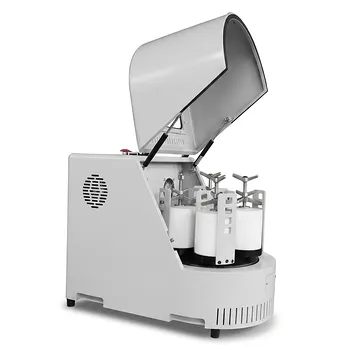
Vertical Semi Circular Planetary Ball Mill for Laboratory Precision Grinding
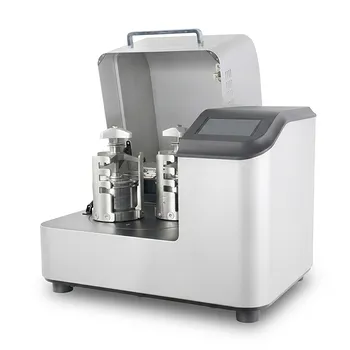
High Energy Planetary Ball Mill for Nano Scale Grinding and Mechanical Alloying

Vertical Production Planetary Ball Mill for High Throughput Powder Processing
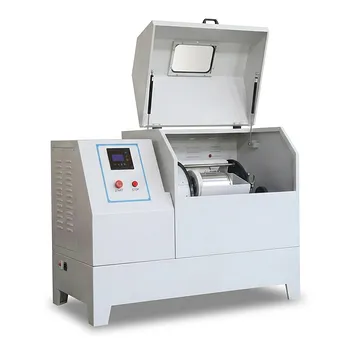
Heavy Duty Horizontal Planetary Ball Mill for Efficient Industrial Grinding and Sample Preparation

360° Rotating Omnidirectional Laboratory Planetary Ball Mill for Homogeneous Ultra-Fine Grinding and Mixing

Vertical Square Planetary Ball Mill for Laboratory Sample Preparation and Nanoscale Grinding

Miniature Planetary Ball Mill with Vacuum Grinding and High Efficiency for Laboratory Sample Preparation
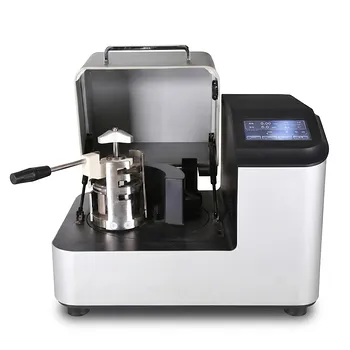
High Energy Laboratory Planetary Ball Mill for Nano Grinding and Material Science Sample Preparation

High Energy Omnidirectional Planetary Ball Mill 16L
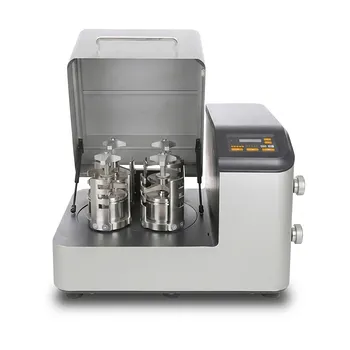
High Energy Planetary Ball Mill for Nano Scale Grinding and Colloidal Mixing in Material Science Research
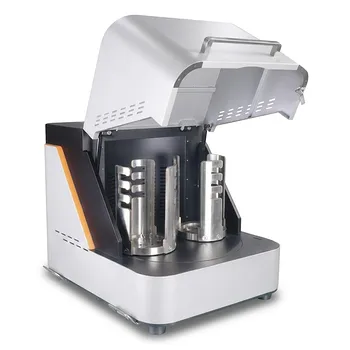
High Energy Laboratory Planetary Ball Mill for Nano Grinding and Colloidal Mixing of Hard and Brittle Materials
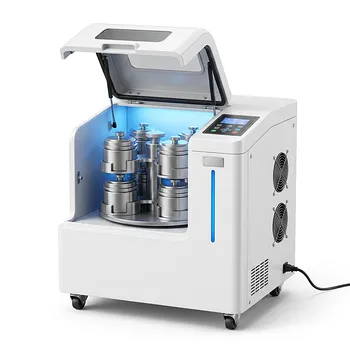
High Energy Omnidirectional Planetary Ball Mill 20L
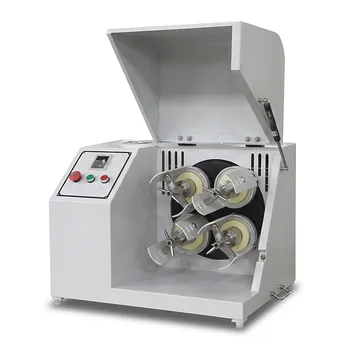
Horizontal Light Duty Planetary Ball Mill for Laboratory Sample Preparation
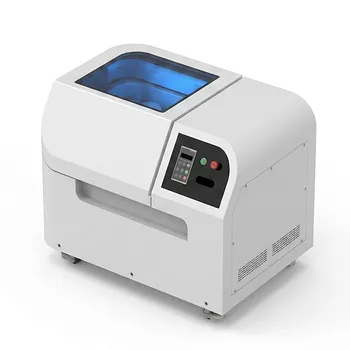
8L Planetary Ball Mill for Laboratory Grinding and Sample Preparation
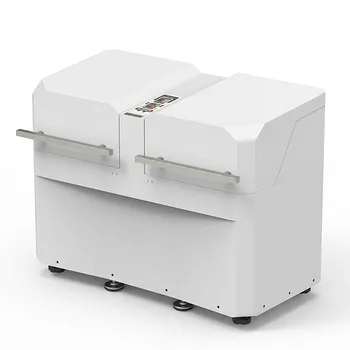
Dual Station Planetary Ball Mill 24L
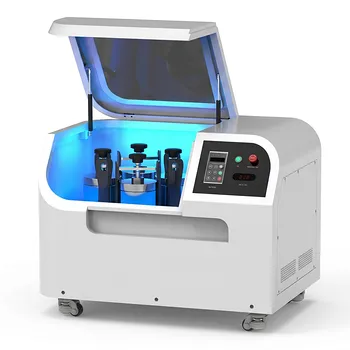
Planetary Ball Mill 12L

Nano High Energy Vibratory Ball Mill for Laboratory Sample Preparation
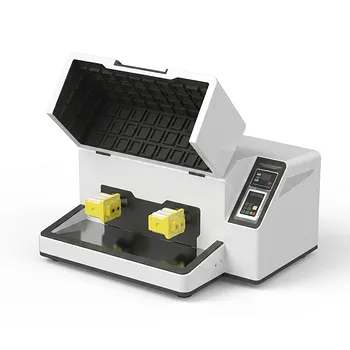
Multi-Platform Nanoscale High-Energy Vibratory Ball Mill
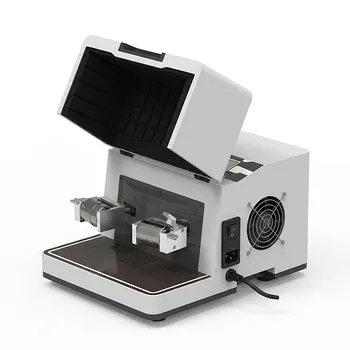
High Energy Hybrid Vibratory Ball Mill for Grinding Mixing and Cell Disruption