What is the primary function of a laboratory ball mill in alumina mixing? Achieve Microscopic Homogenization & Coating
Updated 4 months ago
The primary function of a laboratory ball mill during the mixing stage of alumina ceramic powder preparation is to achieve microscopic homogenization through the uniform coating of additives. By applying mechanical force over several hours, the mill ensures that binders, lubricants, and solvents are distributed evenly across the surface of every alumina particle, creating a composite powder with the precise flowability and compaction performance required for downstream processing.
While often associated with simple size reduction, the ball mill’s critical role in the mixing stage is the transformation of individual raw components into a cohesive, uniform system. This process ensures that trace additives—often present in minute quantities—are perfectly integrated to prevent defects during forming and sintering.
Achieving Microscopic Homogenization
Uniform Coating of Organic Additives
In the mixing stage, the ball mill’s mechanical energy is used to coat alumina particles with organic binders (such as PVA or petroleum wax) and lubricants at a microscopic level. This coating is essential because it dictates the inter-particle friction and the overall flow characteristics of the powder. Without this uniform distribution, the powder may clump or fail to fill molds evenly, leading to structural weaknesses in the final ceramic.
De-agglomeration and Dispersion
Raw alumina powder often contains agglomerates, or clusters of particles that stick together due to moisture or electrostatic forces. The impact and shear forces of the grinding media break these clusters apart, ensuring that sintering aids and other additives can penetrate the entire volume of the matrix. This leads to a stable suspension or slurry where particles are dispersed rather than settled.
Facilitating Deep Mixing of Trace Elements
In many formulations, trace sintering aids or secondary powders like hematite or iron oxide must be distributed throughout the alumina matrix. The ball mill facilitates "deep mixing," which ensures these trace elements are positioned exactly where they are needed to promote liquid phase sintering. This prevents the "patchy" densification that occurs when sintering aids are poorly distributed.
Enhancing Material Properties for Sintering
Surface Activation of Raw Materials
Beyond simple blending, the high-energy impact within the mill can activate the surface of the alumina particles. This mechanical activation increases the surface energy of the powder, which can lower the required sintering temperature. By providing a more reactive surface, the ball mill helps inhibit abnormal grain growth, resulting in a finer and stronger ceramic microstructure.
Particle Size Refinement and Distribution
While the primary focus is mixing, the attrition and impact of the media simultaneously refine the particle size distribution. A well-managed milling process creates a foundation of raw materials with an ideal size range for the specific molding technique being used. This refinement is critical for achieving a high green body density before the material ever enters the kiln.
Understanding the Trade-offs
Milling Duration vs. Contamination Risk
Extended milling times—sometimes up to 24 hours—are often necessary to achieve a stable suspension or complete homogenization. However, longer milling increases the risk of media wear, where small amounts of the grinding balls (e.g., alumina or zirconia) wear down and contaminate the powder. Engineers must balance the need for homogeneity with the purity requirements of the final product.
Energy Input and Heat Generation
High-energy ball milling generates significant heat, which can affect the viscosity of binders or cause the premature evaporation of solvents. If the temperature is not monitored or the milling speed is too high, the chemical properties of the organic additives may change. This can lead to a "sticky" powder that is difficult to process during the spray drying or pressing stages.
How to Optimize Your Mixing Process
Selecting the right parameters for your ball mill depends heavily on the intended forming method and the desired properties of the final alumina component.
- If your primary focus is dry pressing or molding: Prioritize a milling duration that ensures a uniform coating of binders and lubricants to maximize flowability and mold release.
- If your primary focus is slip casting or slurries: Focus on de-agglomeration and the use of dispersants to achieve a stable, low-viscosity suspension with high solid loading.
- If your primary focus is high-purity applications: Select high-hardness grinding media (such as zirconia) and minimize milling time to reduce the introduction of impurities from media wear.
The laboratory ball mill is the bridge between raw chemical components and a high-performance engineering material, ensuring that every grain of alumina is perfectly prepared for its final transformation.
Summary Table:
| Key Function | Mechanism | Impact on Ceramic Quality |
|---|---|---|
| Microscopic Homogenization | Uniformly coats alumina with binders/lubricants | Ensures precise flowability and defect-free forming |
| De-agglomeration | Breaks clusters via impact and shear forces | Creates stable slurries and prevents structural weak points |
| Deep Mixing | Distributes trace elements (e.g., iron oxide) | Promotes liquid phase sintering and uniform density |
| Surface Activation | Increases surface energy through high-energy impact | Lowers sintering temperature and inhibits grain growth |
| Size Refinement | Attrition and media impact | Optimizes green body density for downstream processing |
Elevate Your Material Research with Precision Powder Solutions
At [Brand Name], we provide complete laboratory sample preparation solutions tailored for material science. Achieving the perfect alumina ceramic starts with superior homogenization and ends with precise compaction.
Our extensive equipment line is designed to support every stage of your workflow:
- Advanced Milling: Planetary ball mills, jet mills, and cryogenic grinders for perfect particle size and mixing.
- Precision Pressing: A full spectrum of hydraulic presses, including Cold/Warm Isostatic Presses (CIP/WIP), XRF pellet presses, and vacuum hot presses.
- Processing Essentials: Sieve shakers, powder mixers, and high-performance crushers.
Need to optimize your alumina preparation or scaling up your lab process? Contact our technical experts today to find the ideal equipment configuration for your specific material requirements.
References
- Maja Kokunešoski, Aleksandra Šaponjić. The effect of acrylate on the properties and machinability of alumina ceramics. DOI: 10.2298/sos2301103k
Mentioned Products
- 360° Rotating Omnidirectional Laboratory Planetary Ball Mill for Homogeneous Ultra-Fine Grinding and Mixing
- Vertical Semi Circular Planetary Ball Mill for Laboratory Precision Grinding
- High Energy Laboratory Planetary Ball Mill for Nano Grinding and Material Science Sample Preparation
- Laboratory Nano High Energy Ball Mill Ultrafine Grinding Mechanical Alloying
- Vertical Square Planetary Ball Mill for Laboratory Sample Preparation and Nanoscale Grinding
People Also Ask
- What role does an omni-directional planetary ball mill play in brass/cobalt antimonide pretreatment? Achieve Nano-Scale Homogeneity.
- What is the function of an omni-directional planetary ball mill? Achieve Streak-Free Glass Homogenization
- Why is an intermittent grinding process required for perovskites in a planetary ball mill? Ensure Stability & Purity
- Why is a planetary ball mill essential for SiBCN-rGO wet-spinning? Achieve Superior Dispersion and Spinnability
- What role does a planetary ball mill play in the synthesis of Li6PS5Cl (LPSCl)? Unlock High Ionic Conductivity

Tech Team · PowderPreparation
Last updated on Jun 03, 2026
Related Products
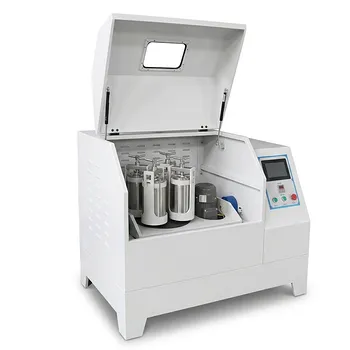
360° Rotating Omnidirectional Laboratory Planetary Ball Mill for Homogeneous Ultra-Fine Grinding and Mixing
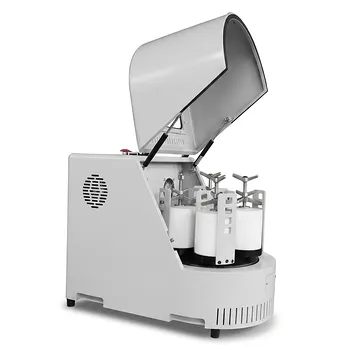
Vertical Semi Circular Planetary Ball Mill for Laboratory Precision Grinding

High Energy Laboratory Planetary Ball Mill for Nano Grinding and Material Science Sample Preparation
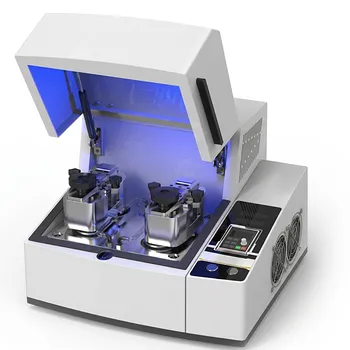
Laboratory Nano High Energy Ball Mill Ultrafine Grinding Mechanical Alloying

Vertical Square Planetary Ball Mill for Laboratory Sample Preparation and Nanoscale Grinding

Miniature Planetary Ball Mill with Vacuum Grinding and High Efficiency for Laboratory Sample Preparation
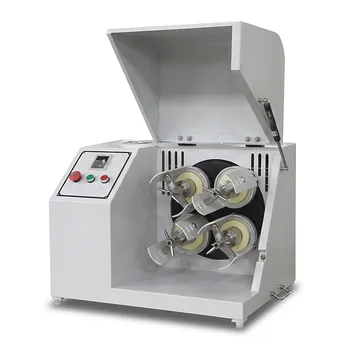
Horizontal Light Duty Planetary Ball Mill for Laboratory Sample Preparation
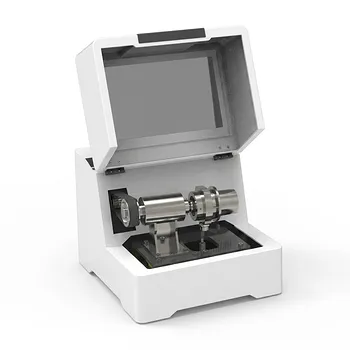
Single Tank High Energy Vibratory Ball Mill for Laboratory Grinding and Mixing

Nano High Energy Vibratory Ball Mill for Laboratory Sample Preparation
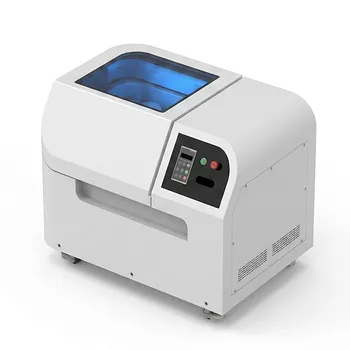
8L Planetary Ball Mill for Laboratory Grinding and Sample Preparation
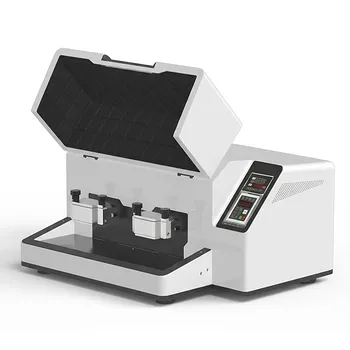
Nanoscale High-Energy Vibratory Ball Mill for Laboratory Sample Preparation, Mechanochemistry, and Mechanical Alloying
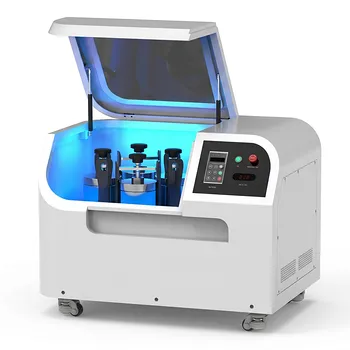
Planetary Ball Mill 12L
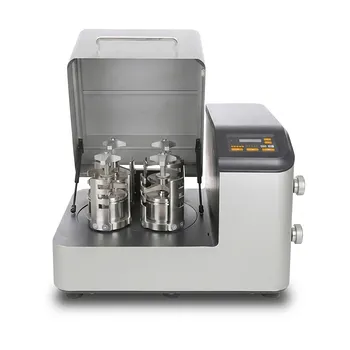
High Energy Planetary Ball Mill for Nano Scale Grinding and Colloidal Mixing in Material Science Research

High Throughput Micro Ball Mill for Cryogenic Grinding and Laboratory Cell Disruption
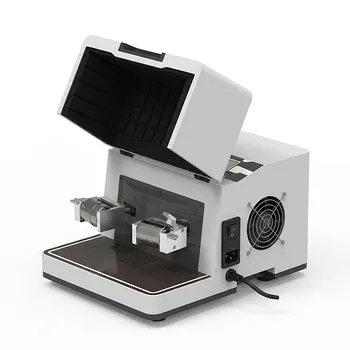
High Energy Hybrid Vibratory Ball Mill for Grinding Mixing and Cell Disruption
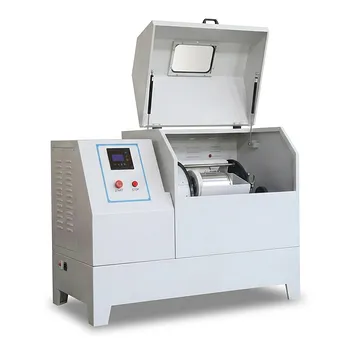
Heavy Duty Horizontal Planetary Ball Mill for Efficient Industrial Grinding and Sample Preparation
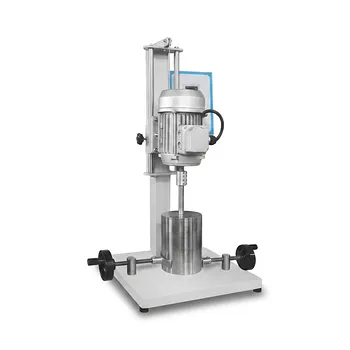
Laboratory Basket Sand Mill for Wet Grinding and Dispersion of Viscous Slurries
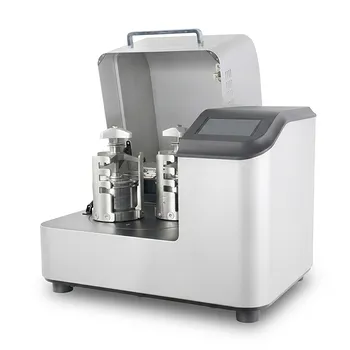
High Energy Planetary Ball Mill for Nano Scale Grinding and Mechanical Alloying

Vertical Production Planetary Ball Mill for High Throughput Powder Processing