What is the primary function of a ball mill in the preparation of mineral fillers for asphalt mixtures? Optimize Pavements
Updated 5 months ago
The primary function of a ball mill in asphalt filler production is the mechanical refinement of fine aggregates into high-quality mineral powder. By applying continuous impact and attrition forces, the mill grinds materials like granite or basalt waste into particles smaller than 63 micrometers. This process transforms raw rock waste into a functional mineral filler that meets the rigorous performance standards required for durable road construction.
The ball mill serves as the critical transition point between raw mineral waste and high-performance asphalt. It utilizes mechanical energy to achieve the specific fineness and increased surface area necessary for the filler to bond effectively within the asphalt mixture.
The Mechanics of Particle Refinement
Continuous Impact and Attrition
The ball mill operates by rotating a cylinder filled with grinding media, typically steel balls, which strike the raw aggregate. This action creates a combination of impact forces (shattering the rock) and attrition (grinding surfaces together).
These dual forces ensure that the material is not just broken, but consistently worn down to a fine, uniform state. This mechanical action is essential for processing hard-wearing materials like granite or basalt.
Achieving Micron-Level Fineness
For asphalt mixtures, the target particle size is typically below 63 micrometers. The ball mill is uniquely suited for this because it can operate continuously until the desired "fineness" is achieved.
Reaching this micron-level threshold is vital because it determines how the filler will interact with the bitumen. Finer particles ensure a more stable and cohesive asphalt mastic.
Enhancing Material Performance
Increasing Specific Surface Area
As the ball mill reduces particle size, it exponentially increases the specific surface area of the mineral filler. A higher surface area allows for better coating by the asphalt binder, leading to a stronger bond.
This increased surface activity is a primary driver behind the improved density and ultimate strength of the final pavement. Without this mechanical activation, the filler would remain a passive void-filler rather than a reinforcing agent.
Transforming Waste into Value
One of the most significant roles of the ball mill in this context is the conversion of rock waste into a valuable resource. It allows manufacturers to take byproduct fines from crushing operations and upgrade them into specification-grade fillers.
This process supports sustainability in road construction by reducing the need for virgin material extraction. It turns a low-value waste product into a critical component for road longevity.
Understanding the Trade-offs
Energy Intensity and Operational Costs
Ball milling is an energy-intensive process that requires significant power to rotate the drum and grinding media. The longer the material stays in the mill to reach extreme fineness, the higher the operational cost per ton.
Operators must balance the need for particle fineness with the diminishing returns of extended grinding times. Finding the "sweet spot" in residence time is critical for maintaining economic viability.
Media Wear and Maintenance
The constant impact and attrition within the mill lead to the gradual wear of the grinding balls and the internal liners. As the media wears down, grinding efficiency decreases, and the steel fragments can potentially contaminate the filler.
Regular maintenance and media recharging are non-negotiable for consistent output. Failure to manage liner wear can lead to catastrophic equipment failure or inconsistent particle size distribution.
How to Apply This to Your Project
When integrating a ball mill into your mineral filler preparation process, your strategy should align with your specific material requirements and performance goals.
- If your primary focus is maximizing road durability: Prioritize longer grinding cycles to ensure a high specific surface area, which enhances the chemical bonding between the filler and the bitumen.
- If your primary focus is sustainability and waste management: Optimize the mill settings to process local basalt or granite quarry fines, turning existing waste streams into usable road-grade fillers.
- If your primary focus is cost-efficiency: Implement automated size-monitoring systems to ensure the mill stops as soon as the 63-micrometer threshold is reached, preventing unnecessary energy expenditure.
By mastering the mechanical forces of the ball mill, you can transform simple rock waste into a precision-engineered component for high-performance asphalt.
Summary Table:
| Feature | Ball Mill Function in Asphalt Prep | Benefit to Final Mixture |
|---|---|---|
| Particle Size | Refinement to <63 micrometers | Ensures a stable, cohesive asphalt mastic |
| Mechanism | Continuous impact and attrition | Achieves uniform fineness for hard materials like basalt |
| Surface Area | Exponentially increases specific surface area | Stronger chemical bond between filler and bitumen |
| Resource Use | Converts rock waste/fines into filler | Promotes sustainable construction and reduces waste |
Elevate Your Material Testing with Precision Preparation
At [Brand Name], we provide complete laboratory sample preparation solutions for material science, specializing in high-performance powder processing and compaction equipment. Whether you are refining mineral fillers for asphalt or developing new composite materials, our extensive product line ensures your samples meet the most rigorous standards.
Our specialized equipment includes:
- Milling & Grinding: Planetary ball mills, jet mills, disc mills, and liquid nitrogen cryogenic grinders.
- Crushing & Sizing: Jaw/roll crushers and vibratory/air-jet sieve shakers with precision meshes.
- Compaction & Pressing: Manual and automatic hydraulic presses, including Cold/Warm Isostatic Presses (CIP/WIP), XRF pellet presses, and vacuum hot presses.
- Mixing: Powder mixers and advanced defoaming mixers for uniform material distribution.
Transform your raw materials into high-value engineered components with our industry-leading technology. Contact us today to find the perfect solution for your lab!
References
- M. Wasilewska, Natalia Ignatiuk. Evaluation of Different Mineral Filler Aggregates for Asphalt Mixtures. DOI: 10.1088/1757-899x/245/2/022042
Mentioned Products
- Heavy Duty Horizontal Planetary Ball Mill for Efficient Industrial Grinding and Sample Preparation
- Vertical Semi Circular Planetary Ball Mill for Laboratory Precision Grinding
- Vertical Production Planetary Ball Mill for High Throughput Powder Processing
- Vertical Square Planetary Ball Mill for Laboratory Sample Preparation and Nanoscale Grinding
- High Energy Planetary Ball Mill for Nano Scale Grinding and Mechanical Alloying
People Also Ask
- Why grind lime-pozzolan specimens for TG/DTA for 3 mins? Master sample prep for high-precision thermal analysis.
- What is the role of a planetary ball mill in the mechanical activation of ZTA powder? Boost Sintering Performance
- What is the function of a planetary ball mill in wollastonite ceramic prep? Achieve Molecular Homogenization & Reactivity
- How does a planetary ball mill contribute to the homogenization of trace elements? Achieve Sub-Micron Uniformity
- What is the function of a high-performance planetary ball mill in AMZ laminates? Master Ceramic Homogenization.

Tech Team · PowderPreparation
Last updated on May 14, 2026
Related Products

Heavy Duty Horizontal Planetary Ball Mill for Efficient Industrial Grinding and Sample Preparation

Vertical Semi Circular Planetary Ball Mill for Laboratory Precision Grinding

Vertical Production Planetary Ball Mill for High Throughput Powder Processing

Vertical Square Planetary Ball Mill for Laboratory Sample Preparation and Nanoscale Grinding

High Energy Planetary Ball Mill for Nano Scale Grinding and Mechanical Alloying

Dual Station Planetary Ball Mill 24L
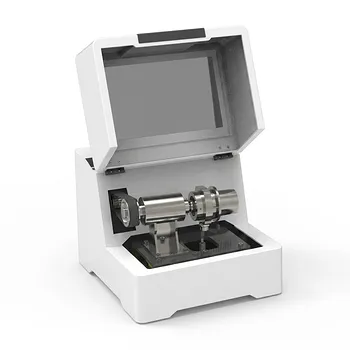
Single Tank High Energy Vibratory Ball Mill for Laboratory Grinding and Mixing

Miniature Planetary Ball Mill with Vacuum Grinding and High Efficiency for Laboratory Sample Preparation

High Energy Laboratory Planetary Ball Mill for Nano Grinding and Material Science Sample Preparation

High Energy Omnidirectional Planetary Ball Mill 16L

High Energy Planetary Ball Mill for Nano Scale Grinding and Colloidal Mixing in Material Science Research

360° Rotating Omnidirectional Laboratory Planetary Ball Mill for Homogeneous Ultra-Fine Grinding and Mixing
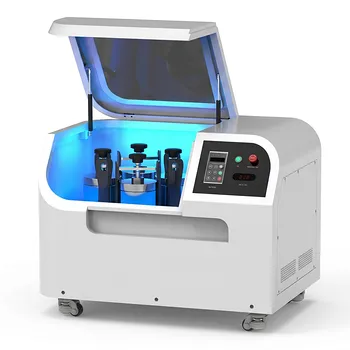
Planetary Ball Mill 12L

High Energy Laboratory Planetary Ball Mill for Nano Grinding and Colloidal Mixing of Hard and Brittle Materials
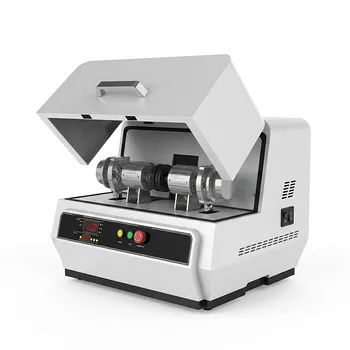
Dual Jar High Energy Vibratory Ball Mill
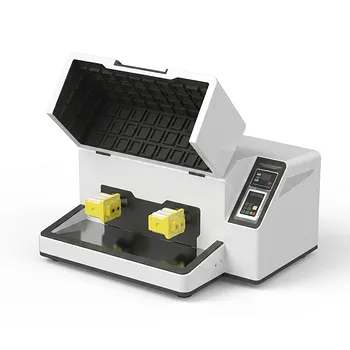
Multi-Platform Nanoscale High-Energy Vibratory Ball Mill

High Energy Omnidirectional Planetary Ball Mill 20L

8L Planetary Ball Mill for Laboratory Grinding and Sample Preparation

Nano High Energy Vibratory Ball Mill for Laboratory Sample Preparation