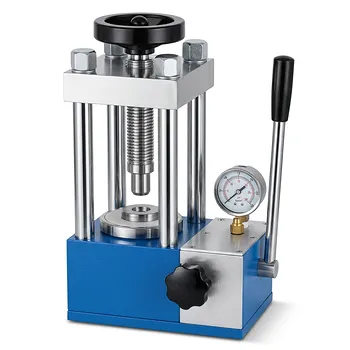
What is the necessity of using a high-precision hydraulic press in self-healing rubber? Ensure Experimental Integrity
Updated 4 months ago
The precision of a laboratory hydraulic press is the foundation of experimental integrity in self-healing rubber research.
By providing simultaneous high temperature (e.g., 160°C) and high pressure (e.g., 20 MPa), these systems facilitate the uniform cross-linking reactions required for vulcanization. High-precision control is essential to eliminate internal micro-voids and density gradients, ensuring that data collected during cyclic deformation and recovery reflects the material's actual self-healing capabilities rather than manufacturing flaws.
A high-precision hydraulic press ensures specimen uniformity and density, which are critical for isolating self-healing mechanisms from structural defects. Without precise pressure and temperature control, inconsistent cross-linking and internal voids will compromise the accuracy and reproducibility of mechanical recovery data.
Achieving Structural Integrity and Density
Elimination of Internal Micro-voids
High-precision pressure is required to force the rubber compound to flow completely into the mold cavity, effectively expelling trapped air. This process eliminates micro-voids and pores that would otherwise act as stress concentrators, which could prematurely fail during the cyclic loading phases of a self-healing test.
Ensuring Uniform Density Distribution
A stable pressure environment ensures that "green bodies" have a highly consistent density distribution. Eliminating density gradients is critical for small-sample reliability; manufacturing defects can increase fluctuations in the Weibull modulus, making it impossible to accurately predict material characteristics.
Establishing Isotropic Initial Conditions
By regulating pressure values and holding times, a high-precision press ensures uniform particle rearrangement within the mold. This creates an isotropic and complete initial condition for the specimen, which is essential for ensuring that cracking patterns during subsequent testing are reproducible and not dictated by pre-existing micro-cracks.
Precise Control Over Chemical and Thermal States
Facilitating Consistent Cross-Linking
Vulcanization requires the rubber compound to undergo specific chemical reactions under stable thermal-pressure environments. Accurate temperature compensation and pressure control ensure that the cross-link density is uniform throughout the specimen, which directly dictates core properties like tensile strength and modulus.
Managing Crystallization and Warping
Advanced presses equipped with integrated cooling systems allow for controlled pressure during the cooling phase. This management of the thermal cycle prevents panel warping and regulates the crystallization of the material, providing flat panels with uniform thickness for standardized mechanical evaluation.
Enhancing Interfacial Bonding
In composite or modified rubber samples, high pressure significantly enhances the interfacial bonding between the rubber powder and the matrix. This ensures that the mechanical property tests accurately reflect the effects of the modification or healing agent rather than a lack of physical adhesion between components.
Understanding the Trade-offs and Pitfalls
The Risk of Improper Calibration
If a press is not properly calibrated, inconsistent heating can lead to "under-curing" or "over-curing" in different zones of the same specimen. This creates a non-uniform material state that makes self-healing data—which relies on molecular mobility—entirely unreliable.
Pressure Over-Shoot and Flash
Excessive pressure can lead to "flash," where material escapes the mold, potentially altering the final geometry and density of the specimen. Conversely, insufficient pressure fails to eliminate micro-voids, leading to a porous structure that masks the true healing efficiency of the polymer.
Standardization vs. Complexity
While high-precision presses offer superior control, they require standardized cutting dies and rigorous maintenance. Using clean-cutting dies is essential because burr-free edges are required by standards like ISO 527 to obtain valid tensile data; a high-precision press provides the stable force necessary for these clean cuts.
How to Apply This to Your Research Goal
Choosing the Right Protocol for Your Objective
Depending on whether your research focuses on molecular mechanisms or industrial scalability, your use of the hydraulic press will vary.
- If your primary focus is reproducible mechanical data: Ensure your press utilizes automated pressure compensation to maintain a constant environment during the entire vulcanization cycle.
- If your primary focus is characterizing new chemical bonds: Use high-precision thermal-pressing to create fully dense bulk samples that can be accurately compared against other manufacturing methods like laser sintering.
- If your primary focus is long-term reliability and fatigue: Prioritize the elimination of density gradients and micro-voids to ensure that the Weibull modulus of your samples remains high and consistent.
By mastering the precise control of pressure and temperature, you ensure that your self-healing rubber specimens are a true reflection of your material's innovative potential.
Summary Table:
| Key Factor | Technical Benefit | Impact on Research Data |
|---|---|---|
| Pressure Precision | Eliminates micro-voids and air pockets | Prevents structural flaws from masking self-healing effects |
| Thermal Control | Ensures uniform cross-link density | Guarantees consistent tensile strength and recovery modulus |
| Cooling Management | Prevents warping and regulates crystallization | Provides flat, standardized panels for repeatable mechanical evaluation |
| Density Uniformity | Removes internal density gradients | Increases Weibull modulus for reliable material property prediction |
Elevate Your Material Science Research with Precision Equipment
To achieve reproducible results in self-healing rubber research, your laboratory requires equipment that eliminates manufacturing variables. At [Brand Name], we provide complete laboratory sample preparation solutions specialized for powder processing and material compaction.
Our extensive product lines include:
- Crushers & Grinders: Jaw/roll crushers and liquid nitrogen cryogenic grinders.
- Milling & Mixing: Planetary ball, jet, and rotor mills; powder and defoaming mixers.
- Sizing: Vibratory and air-jet sieve shakers with a full range of test sieves.
- Advanced Pressing: A full spectrum of hydraulic presses, including Cold/Warm Isostatic Presses (CIP/WIP), standard lab presses, XRF pellet presses, and vacuum hot presses for high-precision specimen preparation.
Don't let structural defects compromise your data. Contact us today to discover how our high-precision hydraulic systems can optimize your specimen preparation and enhance your experimental integrity.
References
- Javier Araujo‐Morera, Miguel A. López‐Manchado. Giving a Second Opportunity to Tire Waste: An Alternative Path for the Development of Sustainable Self-Healing Styrene–Butadiene Rubber Compounds Overcoming the Magic Triangle of Tires. DOI: 10.3390/polym11122122
Mentioned Products
- Hydraulic Double Shaft Disperser for High Viscosity Liquid Mixing and Dispersion
- Enhanced 9 Punch Rotary Tablet Press for Powder Compaction
- 5 Ton Single Punch Tablet Press Laboratory Small Batch Production
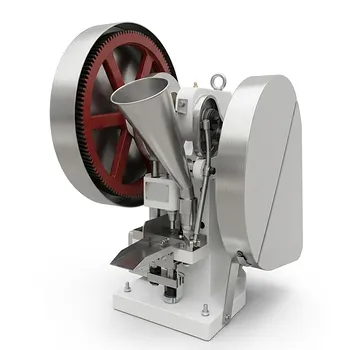
- 6-Ton Small Single-Punch Tablet Press — Laboratory Powder & Granule Tableting Equipment / Tablet Forming Machine
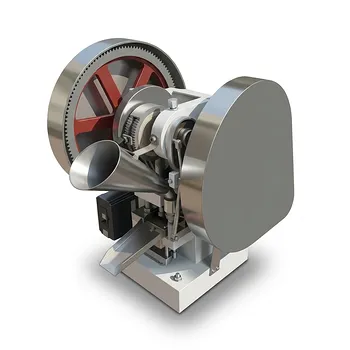
- 6 Ton Variable Frequency Single Punch Tablet Press
People Also Ask
- Why is it necessary for an industrial hydraulic press to provide high unit pressure when preparing MMC green bodies? Optimize Densification
- What role does high-speed mixing play in photoanode slurry prep? Optimize Nanoparticle Dispersion for Solar Efficiency
- What are the advantages of a customized dual-blade mixer? High-Shear Mixing for High-Viscosity Pastes
- How does high-precision mixing ensure phase stability in BaO–MgO–ZrO2 ceramics? Achieve Pure Dielectric Performance
- What is the function of high-efficiency mixing and defoaming equipment in catalyst systems? Achieve Molecular Uniformity

Tech Team · PowderPreparation
Last updated on Jun 03, 2026
Related Products
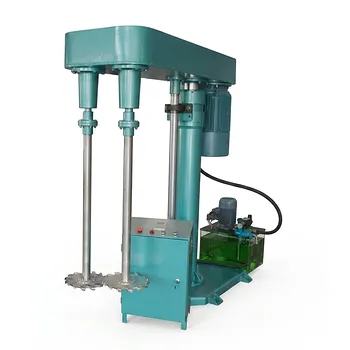
Hydraulic Double Shaft Disperser for High Viscosity Liquid Mixing and Dispersion
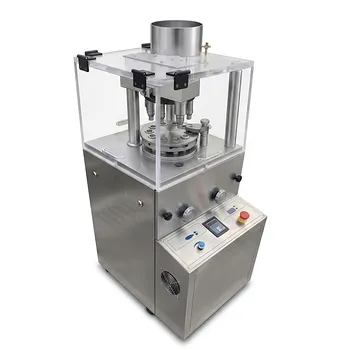
Enhanced 9 Punch Rotary Tablet Press for Powder Compaction
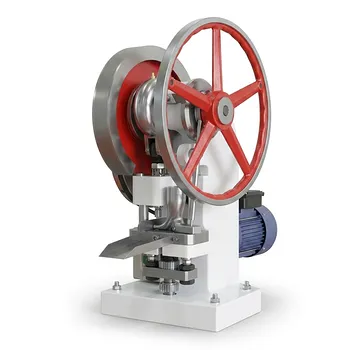
5 Ton Single Punch Tablet Press Laboratory Small Batch Production
6-Ton Small Single-Punch Tablet Press — Laboratory Powder & Granule Tableting Equipment / Tablet Forming Machine
6 Ton Variable Frequency Single Punch Tablet Press
Ordinary Type Rotary Tablet Press for Pharmaceutical Chemical Food Electronic Industries